AOD9604 (CAS 221231-10-3) – 99% High Purity Factory Manufactured
$58.00Original price was: $58.00.$52.00Current price is: $52.00.
AOD9604 (CAS 221231-10-3) is a high-purity, factory-manufactured research peptide supplied as a freeze-dried powder. Produced under controlled conditions with verified analytical documentation, it is designed exclusively for in vitro laboratory research, structural analysis, receptor-binding assays, and computational modeling studies.(For research use only. Not for human or veterinary use.)
AOD9604 (CAS 221231-10-3) is a synthetic research peptide derived from the C-terminal fragment of human growth hormone, supplied as a freeze-dried powder optimized for controlled laboratory applications. Manufactured in a GMP-aligned environment and supported by HPLC and MS verification, AOD9604 provides researchers with a highly consistent and stable reagent suitable for a wide range of molecular, biochemical, and analytical investigations. Its sequence stability and robust purity profile allow researchers to obtain repeatable results in assays examining receptor-ligand interactions, peptide conformational dynamics, analytical quantification, and computational modeling.
As a research-only peptide, AOD9604 enables precise examination of biochemical processes at the in vitro level. Its molecular characteristics make it valuable for studies involving structural biology, proteomics, molecular docking, SAR modeling, and physicochemical investigations. The freeze-dried formulation enhances shelf-life, reduces degradation, and ensures the peptide maintains integrity during transport, storage, and experimental handling.
AOD9604’s consistent molecular behavior facilitates its use as a reference standard in analytical method validation. Laboratories working with LC–MS, HPLC, spectroscopy, or multi-omics pipelines frequently utilize AOD9604 as a benchmark peptide for calibration curves, retention time mapping, and reproducibility testing. These applications are supported by precise manufacturing controls and batch-level analytical documentation that accompanies each shipment.
The peptide is also widely used as a structural model in computational workflows. Molecular docking analysis, molecular dynamics simulations, and comparative peptide modeling benefit from its well-characterized sequence and conformational predictability. As multi-omic approaches continue to expand, AOD9604 serves as an essential component for data integration across proteomic, metabolomic, and transcriptomic frameworks in mechanistic studies.
Importantly, AOD9604 is intended solely for laboratory research. It is not approved for human or veterinary use and must be handled by trained laboratory personnel following all applicable safety and handling guidelines. Its chemical stability, high purity, and reproducibility make it an ideal choice for institutions requiring dependable peptide reagents for routine and advanced research programs.
COA, HPLC chromatogram, and MS report provided per batch
Intended Use
For in vitro laboratory research only; not for human or veterinary applications
High-Purity Manufacturing Standards This AOD9604 preparation follows controlled synthetic workflows designed for research reproducibility, ensuring researchers receive consistent peptide quality across batches. Quality metrics—including HPLC purity profile, MS identity confirmation, and manufacturing traceability—are provided to support experimental reliability.
Stability & Storage Insights Long-term integrity is best preserved under frozen storage (−20°C), protecting the peptide backbone and reducing hydrolysis risk. For short-term handling, refrigeration (2–8°C) is acceptable, provided the material remains sealed and moisture exposure is minimized during transfer.
Solubility Considerations AOD9604 dissolves readily in sterile aqueous systems suitable for in-vitro workflows. If higher-concentration stock solutions are required, pre-wetting with a small volume of dilute acidified buffer can improve solubilization without compromising integrity.
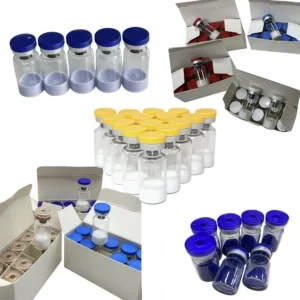
Packaging & Bulk Supply Advantages Individual vial packaging supports precise aliquoting and reduced handling contamination. Bulk or OEM-customized packaging can be provided for institutional facilities, peptide screening programs, or large-scale methodological development.
Mechanism of Action
The mechanism of action of AOD9604 (CAS 221231-10-3) is rooted in its design as a synthetic fragment-analog of the C-terminal region of human growth hormone (GH), specifically the 176–191 segment, which is known to participate in metabolic-related signaling pathways. AOD9604 does not replicate the global biological profile of full-length GH; instead, it focuses on the restricted biochemical motifs associated with metabolic regulation in controlled laboratory systems. Its behavior in in vitro assays makes it a useful molecular tool for metabolic research, peptide-receptor profiling, and pathway-specific mechanistic studies.
In cell-based laboratory experiments, AOD9604 has been shown to influence AMPK-associated metabolic pathways, leading to measurable shifts in substrate utilization and energy-related biochemical markers. AMPK is a central cellular sensor of energy availability, and peptide modulators affecting this axis are commonly used as research tools to study nutrient-responsive signaling cascades. AOD9604’s structural configuration supports interactions with metabolic signaling checkpoints, allowing researchers to evaluate changes in downstream transcriptional factors, phosphorylation events, and transporter expression within in vitro frameworks.
A second mechanistic focus involves lipid-modulating biochemical cascades. AOD9604’s fragment-derived structure has been investigated in the context of enzymatic pathways involved in lipid turnover, such as hormone-sensitive lipase regulatory systems and biosynthetic checkpoints. These interactions make the peptide applicable for studies involving metabolic homeostasis, intracellular lipid trafficking, membrane dynamics, and lipid-enzyme kinetics in cultured cells or biochemical preparations.
Additionally, research indicates that AOD9604 may affect cAMP-mediated signaling under specific laboratory conditions. Cyclic AMP is a well-established second messenger that influences gene transcription, enzymatic activity, and receptor-mediated signal propagation. By modulating cAMP-linked pathways, AOD9604 can be applied in investigations exploring how peptide fragments influence receptor communication, G-protein–linked cascades, or cross-talk between cAMP and AMPK axes.
From a molecular-interaction standpoint, AOD9604’s activity is also relevant to studies examining peptide–receptor selectivity, structural mimicry, and post-receptor signal routing. Its compact design enables researchers to dissect which specific amino-acid motifs contribute to metabolic-related pathways without engaging the broader systemic effects associated with intact growth hormone molecules. Because it operates as a fragment analog, AOD9604 provides a controlled model for separating GH-derived structural components from functionally distinct regions.
Overall, AOD9604 serves as a versatile peptide tool for exploring metabolic pathway behavior, receptor–ligand interactions, peptide structure–function relationships, and multi-omic signal integration in strictly in vitro laboratory environments. It is not intended for human or veterinary applications, and all research should adhere to appropriate institutional safety standards.
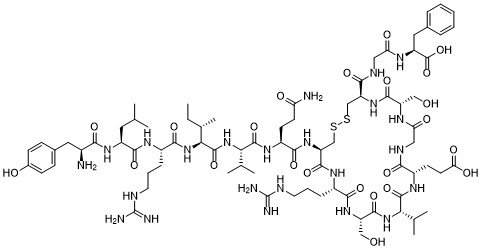
AOD9604 Chemistry Structure
Applications
AOD9604 (CAS 221231-10-3) is widely utilized as a specialized research peptide for in vitro studies focused on metabolic, biochemical, and molecular regulatory pathways. Its design as a fragment analog of the GH 176–191 region makes it a valuable tool for dissecting pathway-specific behaviors without the broader complexity of full-length growth hormone. The following expanded applications highlight its relevance across multiple laboratory research domains while maintaining strict research-only compliance.
A key application area involves its use in cellular metabolism studies, where AOD9604 enables researchers to observe shifts in AMPK-associated signals, energy balance markers, and nutrient-sensing biochemical checkpoints. This allows laboratories to map metabolic cascade behavior, quantify phosphorylation changes, evaluate mitochondrial activity markers, and analyze downstream transcriptional effects under controlled in vitro conditions. Because its structure targets a narrow functional region, the peptide is frequently incorporated into pathway-dissection studies designed to isolate specific metabolic regulatory events.
AOD9604 is also valuable in lipid turnover and lipid-enzyme regulation experiments. In cell-line models, researchers may investigate lipid transporters, lipid droplet dynamics, lipolytic processes, or enzymatic activities tied to lipid homeostasis. Its ability to modulate lipid-related biochemical pathways provides a platform for studying membrane remodeling, intracellular lipid flux, and enzymatic substrate responsiveness in laboratory systems. These insights contribute to broader metabolic mapping workflows and lipidomics methodologies.
Another major application is in signal-transduction pathway research, particularly those involving cAMP-mediated cascades. AOD9604’s influence on second-messenger systems allows its integration into studies analyzing receptor communication, G-protein–linked events, transcription factor activity, and cross-pathway signal coordination. Laboratories focusing on peptide–receptor interaction profiling, structural mimicry analysis, or multi-target pathway routing frequently integrate AOD9604 into comparative signaling assays.
In addition, the peptide supports structure–function and peptide-engineering studies, where researchers evaluate how specific amino-acid motifs influence biological pathway outcomes. Its fragment-analog nature makes it ideal for examining truncated sequence activity, motif-specific interactions, and analog comparison within series-based peptide screening programs. These studies often extend into computational modeling workflows, where experimental data are combined with structural predictions.
Finally, AOD9604 is used in multi-omic benchmarking, including transcriptomic, proteomic, phosphoproteomic, and metabolomic mapping. By providing a reproducible and well-characterized metabolic pathway modulator, it offers a consistent reference point for laboratories establishing or validating multi-omic data pipelines. This includes high-throughput screening environments, metabolic profiling projects, or integrated systems-biology investigations.
If you want, I can now expand Research Models or any other remaining section。
Research Models
AOD9604 is used across diverse in vitro models, including:
Receptor–ligand binding platforms for affinity and kinetics profiling.
Biochemical assay systems for pathway investigation under controlled laboratory conditions.
Spectroscopic and structural platforms such as NMR and CD for conformational evaluation.
Analytical method validation models, including LC–MS and HPLC quantification tests.
Computational and multi-omic reference models, improving algorithm accuracy and dataset alignment.
Experimental Design Considerations
Careful experimental design is essential when using AOD9604 (CAS 221231-10-3) to ensure reproducible, high-quality data in in vitro and analytical workflows. Begin by defining clear objectives and measurable endpoints (for example: receptor affinity constants, AMPK phosphorylation readout, cAMP changes by assay, or LC–MS limit-of-detection). Choose the assay format that best matches the endpoint — ligand–receptor binding platforms for kinetic profiling, plate-based biochemical assays for pathway markers, and LC–MS/HPLC for quantitative and stability studies.
Optimize concentration ranges empirically. Perform small pilot titrations to identify the linear response window for your assay rather than assuming a single working concentration. Typical starting stocks for AOD9604 are prepared at 0.5–10 mg/mL (stock), with working dilutions commonly ranging from 0.1–5.0 mg/mL depending on assay sensitivity and sample volume. Make serial dilutions in compatible buffers and document exact dilutions and solvent compositions. Use low-binding tubes and pipette tips to reduce adsorption losses when working at low concentrations.
Controls and replication are critical. Include blank (buffer-only) controls, negative controls (irrelevant peptide or scrambled sequence where appropriate), and positive/benchmark controls (a validated lot of AOD9604 or another reference peptide). Run technical replicates (≥3) to assess precision and biological-model replicates where relevant to measure variability between preparations. If using plate-based assays, randomize sample positions and include inter-plate controls to allow normalization across runs.
Reconstitution and handling best practices preserve peptide integrity. Reconstitute lyophilized AOD9604 in sterile water or compatible neutral buffer with gentle pipetting—avoid vigorous vortexing. If solubility is slow, pre-wet the pellet with a small volume and allow to dissolve with gentle rocking. Aliquot reconstituted stocks into single-use volumes and store short-term at 4°C for ≤48 hours or frozen in aliquots to avoid multiple freeze–thaw cycles. Prefer low-protein-binding vial material to minimize losses.
Buffer selection and matrix effects should be validated for each method. Neutral pH buffers (PBS, HEPES) are generally compatible with AOD9604 structural stability, but salt, detergent, or protein components can alter binding behavior, chromatographic retention, and ionization efficiency in MS. When transferring methods between platforms, run spike-and-recovery experiments and matrix-matched calibration curves to quantify recovery and correct for suppression or enhancement.
Analytical method validation must be performed for quantitative work. For HPLC/LC–MS assays validate linearity, accuracy, precision, limit of detection (LOD) and limit of quantitation (LOQ), and recovery in the intended matrix. Record retention times and fragmentation patterns for the AOD9604 lot in use, and include stable internal standards where feasible to correct for instrument drift and extraction variability.
Data quality, documentation, and traceability are non-negotiable. Record lot number, COA reference, reconstitution protocol, solvent composition, exact concentrations, incubation times, temperature, and instrument parameters. Store raw and processed data in an organized, version-controlled system to facilitate reanalysis and reproducibility. Include metadata needed to reproduce the experiment exactly.
Troubleshooting common issues:
Low signal: confirm peptide identity/purity by HPLC/MS, reduce adsorption with low-binding consumables, increase injection volume or concentration within validated ranges.
High background/noise: run matrix blanks, check reagent purity, and increase wash cycles or blank injections between samples.
Aggregation/cloudiness: dilute sample, change buffer ionic strength, reduce peptide concentration, or filter (if compatible) through low-protein-binding filters.
Finally, ensure all work remains within laboratory research boundaries: follow institutional safety procedures, dispose of wastes per regulations, and never use AOD9604 in contexts outside controlled in vitro or analytical research. Detailed SOPs based on the above considerations will greatly improve reproducibility and accelerate reliable experimental outcomes.
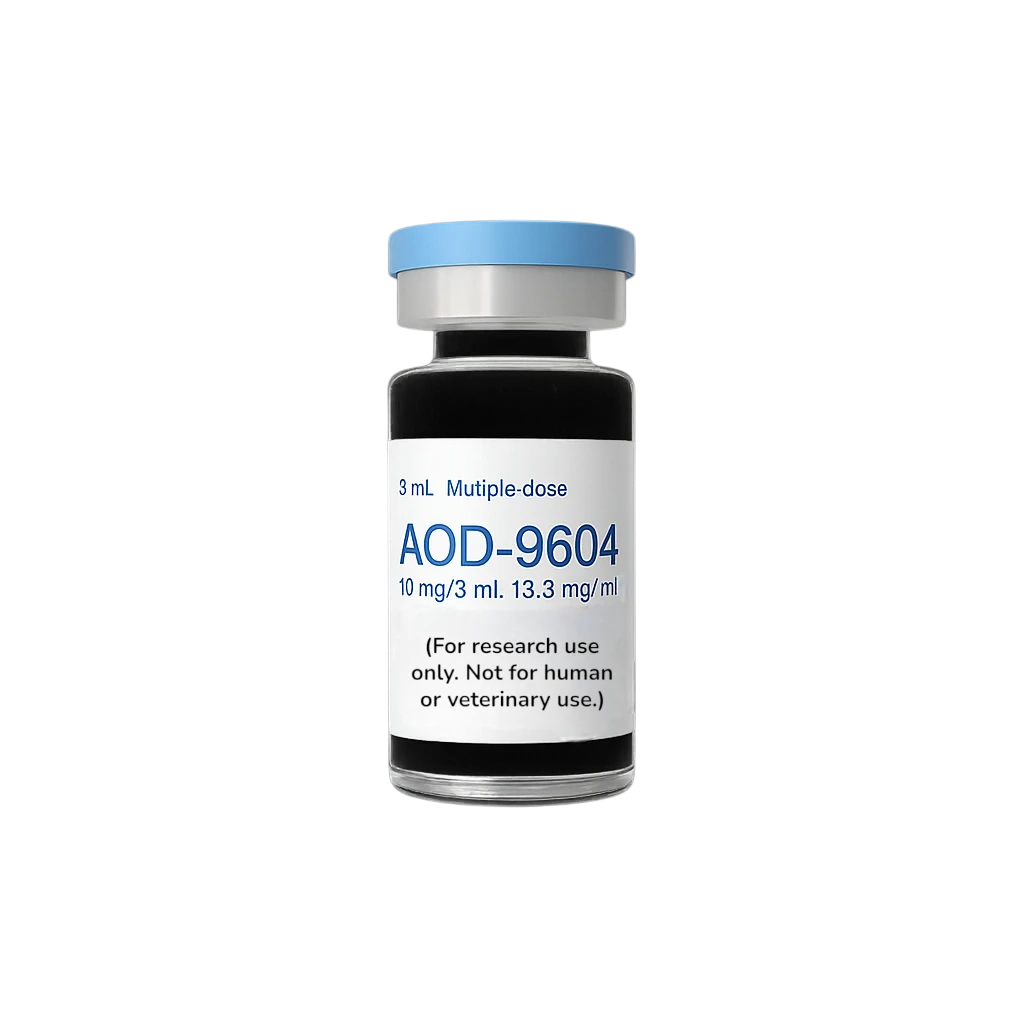
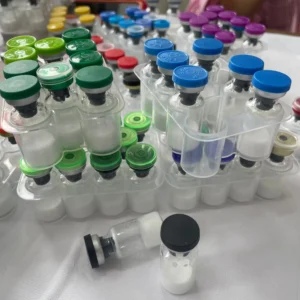
aod9604 vial lyophilized powder
Laboratory Safety & Handling Guidelines
Working with AOD9604 (CAS 221231-10-3) requires strict adherence to laboratory research protocols to maintain safety, preserve sample integrity, and ensure consistent experimental results. This peptide is intended exclusively for in vitro investigations, and all handling should follow institutional chemical hygiene standards, laboratory biosafety procedures, and documented internal workflows. Personnel should be familiar with the material’s characteristics, review all accompanying documentation, and incorporate appropriate PPE—including lab coats, gloves, and protective eyewear—before opening or manipulating any vial.
When receiving AOD9604, verify package integrity and confirm that temperature conditions remained within the recommended range during transport. Store the peptide immediately in a −20°C environment to maintain long-term stability. Avoid storing reconstituted solutions for extended periods, and never refreeze thawed aliquots. Use sterile, low-binding containers and pipette tips to reduce adsorption and contamination risks. Maintain a clean workspace, and perform all handling steps within a designated chemical-handling or sterile preparation area to prevent cross-contamination with other research peptides or reagents.
Reconstitution should be performed gently to preserve the structural integrity of the peptide. Use sterile water or an appropriate buffer validated for your assay system. Do not vortex aggressively; instead, allow the peptide to dissolve through gentle inversion or slow mixing. After preparation, aliquot solutions into single-use volumes to reduce repeated freeze–thaw cycles, which may compromise purity or biochemical behavior. Label all aliquots clearly with concentration, buffer composition, date of preparation, and lot number.
Spill management and waste disposal should follow institutional chemical-waste protocols. Absorb spills with appropriate laboratory materials, disinfect surfaces, and discard waste in approved containers. Do not dispose of peptide-containing materials through sinks or general waste streams. Maintain meticulous documentation throughout handling, including storage logs, reconstitution notes, and usage tracking.
Finally, AOD9604 must be treated strictly as a research-use-only material. It is not intended for human or veterinary use under any circumstances. Conduct all laboratory procedures responsibly, uphold all regulatory requirements, and ensure all researchers are trained in safe handling and disposal practices.
Integration with Multi-Omic & Computational Studies
AOD9604 (CAS 221231-10-3) offers strong compatibility with multi-omic and computational research frameworks, making it a versatile tool for laboratories investigating metabolic regulation, peptide–receptor interactions, and pathway-level system behavior. Its well-defined structure and targeted biochemical activity allow researchers to generate clean, high-resolution datasets across transcriptomic, proteomic, phosphoproteomic, metabolomic, and lipidomic platforms, supporting integrated systems-analysis workflows with minimal confounding variables compared to full-length hormone models.
In transcriptomic studies, AOD9604 can be applied to measure how specific metabolic pathway perturbations influence gene-expression profiles in cultured cells. RNA-seq, microarray, or single-cell sequencing approaches can identify transcriptional signatures, highlight regulatory networks, and differentiate direct vs. secondary pathway responses. Because AOD9604 acts on restricted biochemical pathways, it enables focused mapping of AMPK-linked genes, lipid-regulation transcripts, and cAMP-associated transcription factors in in vitro settings.
Within proteomic and phosphoproteomic frameworks, the peptide supports evaluation of pathway activation markers, protein–protein interactions, and post-translational modifications. Mass spectrometry–based approaches—such as label-free quantification, TMT labeling, or targeted MRM/PRM workflows—can capture changes in phosphorylation states, transport proteins, metabolic enzymes, and signaling intermediates. These datasets allow researchers to build quantitative models describing peptide-driven signaling routes and cross-pathway relationships.
Metabolomic and lipidomic analyses further extend the depth of insight. Because AOD9604 interacts with energy-regulation and lipid-related pathways, metabolite profiling can reveal shifts in substrate utilization, organic acid patterns, amino acid turnover, and lipid intermediates. LC–MS, GC–MS, and NMR platforms can be used to construct metabolic flux maps, identify rate-limiting steps, and quantify pathway sensitivity to peptide modulation.
On the computational side, AOD9604 supports structure–activity modeling, receptor-docking simulations, pathway inference modeling, and machine-learning–based predictive analyses. In silico docking can be combined with wet-lab validation to refine ligand–target hypotheses. Network-based modeling—integrating multi-omic layers—helps identify key regulatory hubs, feedback loops, and potential synthetic interactions. Systems-biology tools can merge transcriptomic, proteomic, and metabolomic datasets to create comprehensive mechanistic maps illustrating how AOD9604 influences metabolic pathways in controlled experimental environments.
Finally, AOD9604’s consistent purity profile and reproducible lot-to-lot behavior make it suitable for cross-platform data harmonization, inter-laboratory benchmark studies, and multi-omic pipeline validation. Its specificity supports clearer attribution of observed signals, enabling computational researchers to calibrate predictive models and improve pathway-resolution accuracy.
Keywords
AOD9604 peptide, CAS 221231-10-3, research peptide, high-purity peptide, in vitro peptide studies, analytical reference peptide, structural biology peptide, receptor-binding peptide, wholesale peptide supply, factory manufactured peptide, lyophilized peptide powder, peptide modeling, SAR analysis peptide.
Shipping Guarantee
Temperature-controlled delivery ensures stability: Peptides are transported using regulated environments that prevent degradation and preserve molecular integrity throughout the entire logistics chain.
Tamper-proof packaging secures integrity: Sealed, impact-resistant containers protect against contamination and ensure the product arrives exactly as manufactured.
Global logistics coverage supports reliable delivery: International express routes guarantee timely delivery to laboratories worldwide with full tracking.
Bulk packaging available for institutional research: Large-volume packaging options are offered with enhanced protection for industrial or multi-department research programs.
Trade Assurance
Factory-direct sourcing guarantees authenticity: All AOD9604 batches originate from controlled production facilities, ensuring traceability and consistent quality.
Verified COA documents accompany each batch: Full analytical validation, including purity and structural confirmation, is provided for regulatory and documentation needs.
Stable supply chain supports ongoing research needs: High-volume manufacturing ensures reliable availability for long-term projects.
OEM packaging and labeling available: Tailored vial sizes, barcodes, and institutional branding can be accommodated.
Payment Support
Bank transfer, PayPal, and major credit cards accepted: Multiple secure payment choices simplify procurement for global institutions.
Corporate procurement channels supported: Dedicated support is available for large organizations requiring recurring, contract-based purchases.
Flexible international payment options: Multi-currency invoicing and cross-border settlement options streamline international research operations.
Disclaimer
AOD9604 is intended solely for laboratory research. It is not for human or veterinary use. All handling must comply with institutional safety protocols. Researchers should follow appropriate PPE and chemical handling procedures at all times.
References
1、Detection and in vitro metabolism of AOD9604 — Holly D. Cox, Stacy J. Smeal, Cole M. Hughes, James E. Cox, Daniel Eichner, 2014. PubMed
2、 Metabolic studies of a synthetic lipolytic domain (AOD9604) of human growth hormone — in obese Zucker rats, Karger, 2001. PubMed
3、 The effects of human GH and its lipolytic fragment (AOD9604) on lipid metabolism following chronic treatment in obese and β₃‑AR knock-out mice — Endocrinology 2001. PubMed+1
4、 Safety and Metabolism of AOD9604, a Novel Nutraceutical Ingredient for Improved Metabolic Health — J Endocrinol Metab, 2014. jofem.org+1
Additional information
Weight
1.2 kg
Dimensions
53 × 42 × 53 cm
Reviews
There are no reviews yet.
Be the first to review “AOD9604 (CAS 221231-10-3) – 99% High Purity Factory Manufactured” Cancel reply
1. What is AOD9604?
AOD9604 is a synthetic peptide fragment derived from the C-terminal segment (176–191) of human growth hormone. It is designed for laboratory research purposes to study metabolic signaling pathways, receptor interactions, and lipid-related biochemical processes. It is not intended for human or veterinary use.
2. What is the CAS number for AOD9604?
The chemical identifier for AOD9604 is CAS 221231-10-3, which uniquely identifies this peptide fragment in scientific literature and chemical databases.
3. What is the molecular formula and weight?
AOD9604 has the molecular formula C₇₂H₁₁₀N₂₄O₂₀ and a molecular weight of approximately 1815.0 g/mol. This information is important for quantitative analytical assays and in vitro studies.
4. What form does AOD9604 come in?
It is supplied as a white to off-white freeze-dried (lyophilized) powder, suitable for reconstitution in sterile buffers for in vitro research applications. Proper storage and handling are required to maintain stability.
5. What is the purity of AOD9604?
The peptide is typically ≥98% pure (HPLC), ensuring reproducible experimental results. A Certificate of Analysis (COA) and analytical data (HPLC, MS) are provided for each batch.
6. How should AOD9604 be stored?
Store freeze-dried powder at −20°C for long-term stability. Short-term storage at 2–8°C is permissible, but repeated freeze-thaw cycles should be avoided to maintain structural integrity.
7. How is AOD9604 reconstituted?
Reconstitute gently using sterile water or a compatible buffer. Avoid vigorous vortexing. Aliquot solutions into single-use volumes and store frozen to prevent degradation.
8. What applications is AOD9604 suitable for?
AOD9604 is used in metabolic pathway studies, receptor-ligand profiling, lipid-enzyme regulation research, cAMP signaling studies, structure–function analysis, and multi-omic investigations. All applications must remain in controlled laboratory settings.
9. Can AOD9604 be used in humans or animals?
No. AOD9604 is strictly for research use only. It is not approved for human or veterinary use. All experiments must adhere to institutional biosafety guidelines.
10. What experimental models are recommended?
Common models include cell culture systems, biochemical assays, receptor-binding assays, in vitro lipid turnover studies, and multi-omic integration experiments. Animal models can provide mechanistic insights but require separate ethical approvals.
11. How should AOD9604 be handled safely?
Always wear lab coats, gloves, and eye protection. Use designated chemical or sterile workspaces. Avoid direct contact, inhalation, or ingestion, and follow all institutional safety procedures.
12. How should waste containing AOD9604 be disposed of?
Dispose of peptide-containing materials in accordance with institutional chemical and biological waste protocols. Do not release peptides into sinks or general waste streams.
13. Is AOD9604 soluble?
Yes. It is soluble in sterile water, PBS, or compatible buffers. Solubility may be enhanced by pre-wetting the lyophilized powder or adjusting buffer pH slightly within compatible ranges.
High-purity Octreotide freeze-dried powder produced in GMP-aligned facilities, suitable for laboratory-only biochemical, receptor-binding, and molecular-mechanism research. Factory-direct pricing and bulk availability support large-scale institutional studies.(For research use only. Not for human or veterinary use.)
$42.00Original price was: $42.00.$28.00Current price is: $28.00.
GHK-Cu is a high-purity copper tripeptide widely used in research on wound healing, tissue regeneration, and cellular repair mechanisms. Produced under GMP-compliant conditions, it is available in bulk for research institutions, with COA, MSDS, and QC documentation ensuring reproducible laboratory results.
$23.00Original price was: $23.00.$18.00Current price is: $18.00.
High-purity Oxytocin Acetate (CAS 6233-83-6) produced in GMP-aligned facilities for laboratory research in receptor signaling, peptide interaction studies, and neuroendocrine regulatory investigations.(For research use only. Not for human or veterinary use.)
$36.00Original price was: $36.00.$32.00Current price is: $32.00.




Reviews
There are no reviews yet.