
No products in the cart.
Sale
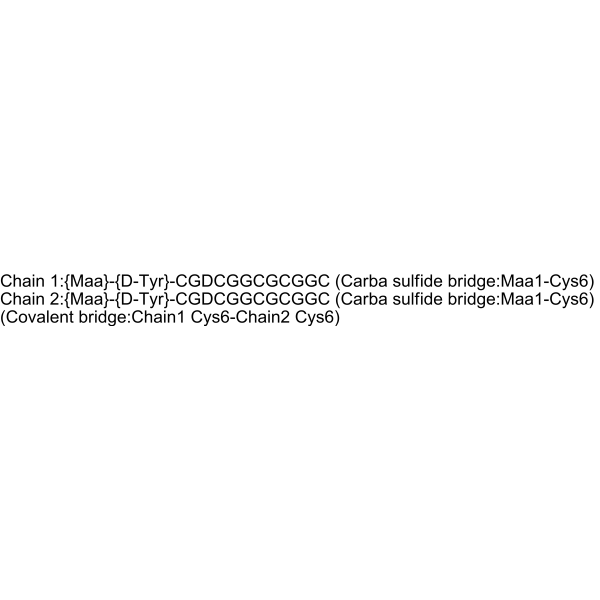
Bibapcitide (CAS No. 153507-46-1) | GMP Research Peptide for Thrombosis Inhibition
Original price was: $28.00.$23.00Current price is: $23.00.
Bibapcitide (CAS No. 153507-46-1) is a 26-residue synthetic peptide that inhibits thrombosis by interfering with platelet aggregation and clot formation. It is widely used in research on antithrombotic therapies, vascular biology, and cardiovascular disease models. Available in GMP-grade quality for research use only.
Description
Product Description
Bibapcitide is a synthetic peptide composed of 26 amino acids, specifically designed as an inhibitor of thrombosis. Its development reflects ongoing scientific efforts to better understand and control the mechanisms of blood clot formation, a process that plays a central role in both normal hemostasis and pathological conditions such as myocardial infarction, ischemic stroke, pulmonary embolism, and venous thromboembolism.
Scientific Background
Thrombosis is the pathological formation of blood clots within blood vessels, obstructing blood flow and potentially leading to life-threatening events. At the core of thrombus formation lies the interplay between platelets, coagulation factors, and vascular endothelium. Platelets adhere to sites of vascular injury, become activated, and aggregate to form a platelet plug. While this process is essential for wound healing, excessive platelet aggregation can lead to arterial occlusion and ischemic damage.
Bibapcitide was developed as a research tool to specifically target these thrombotic pathways. By interfering with platelet aggregation and fibrin clot formation, it provides a model system for studying antithrombotic mechanisms and testing therapeutic strategies.
Structural Characteristics
Bibapcitide is a 26 amino acid peptide, which makes it considerably larger than many short therapeutic peptides but smaller than full-length proteins. This structural balance provides several advantages:
Defined sequence for reproducibility across experiments
Enhanced specificity in targeting platelet interactions
Synthetic production for consistent purity and scalability
Flexibility in formulation, allowing modifications for enhanced stability or conjugation
Research Value
Bibapcitide is widely studied in:
Cardiovascular research – evaluating prevention of arterial thrombosis
Hematology – investigating platelet function and coagulation cascades
Pharmacology – testing antithrombotic drug combinations
Translational medicine – serving as a peptide-based lead for therapeutic innovation
As thrombosis remains a leading cause of morbidity and mortality worldwide, Bibapcitide represents a highly relevant peptide for advancing our understanding of clot biology and improving antithrombotic therapies.
Product Specifications
| Parameter | Details |
|---|---|
| Product Name | Bibapcitide |
| CAS Number | 153507-46-1 |
| Molecular Formula | (Exact sequence-dependent; peptide-based, ~C100–C150 range) |
| Molecular Weight | Approx. 2.7–3.0 kDa (based on 26 amino acid composition) |
| Synonyms | Antithrombotic peptide Bibapcitide; 26-aa thrombosis inhibitor |
| Sequence Length | 26 amino acids |
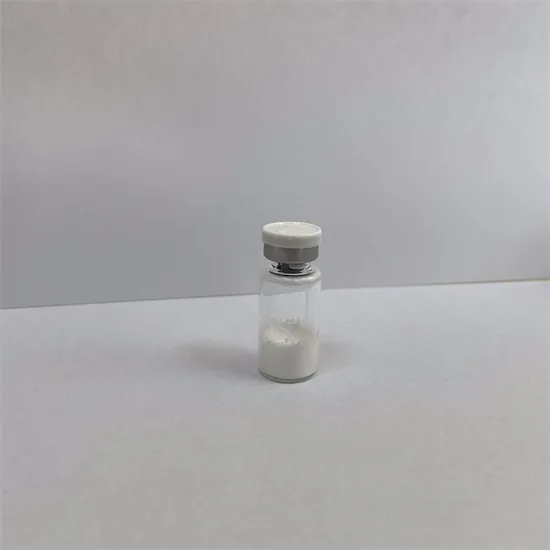
| Appearance | White to off-white lyophilized powder |
| Purity | ≥ 98% (HPLC) |
| Solubility | Soluble in water, PBS, and mild aqueous buffers |
| Stability | Lyophilized form stable ≥ 24 months at -20°C |
| Storage Conditions | Store at -20°C; protect from light and moisture |
| Mechanism | Inhibition of platelet aggregation and thrombosis |
| GMP Compliance | Produced in GMP-certified peptide synthesis facilities |
| Applications | Cardiovascular disease research, hematology, vascular biology, pharmacology |
| Availability | Bulk and retail GMP-grade formats |
Specification Notes
Purity: ≥ 98% purity ensures low contamination risk in sensitive coagulation assays.
Sequence length: 26 amino acids make Bibapcitide highly specific while retaining manageable synthesis and handling properties.
Solubility: Broad solubility in physiological buffers facilitates in vitro and in vivo use.
Applications: Especially valuable in platelet function assays, clotting studies, and in vivo thrombosis models.
Mechanism of Action & Research Applications
Mechanism of Action
Bibapcitide functions as a direct inhibitor of thrombosis by interfering with platelet aggregation. Research indicates it works through:
Blocking platelet adhesion at the vascular injury site.
Preventing activation and shape change of platelets, which is normally triggered by ADP, thrombin, or collagen.
Inhibiting fibrin cross-linking, thereby reducing clot stability.
Maintaining vascular patency by preventing occlusive thrombus formation.
Unlike classical anticoagulants (e.g., heparin, warfarin), which target coagulation pathways, Bibapcitide focuses primarily on the platelet component of thrombosis, making it an excellent research tool for dissecting platelet-specific mechanisms.
Research Applications
Cardiovascular Disease Models
Used in preclinical research to study myocardial infarction, unstable angina, and ischemic stroke, where platelet-driven clots play a central role.Platelet Function Studies
Allows researchers to measure platelet adhesion, spreading, and aggregation under controlled conditions.Pharmacological Testing
Serves as a model antithrombotic agent for combination studies with anticoagulants, antiplatelet drugs (aspirin, clopidogrel), or thrombolytics.Vascular Biology Research
Provides insights into how endothelial injury leads to thrombosis and how targeted inhibition can preserve vascular flow.Translational Oncology
Cancer patients often suffer from thromboembolic complications. Bibapcitide enables the study of tumor-associated thrombosis and potential intervention strategies.Drug Discovery Platform
Because it is a peptide with well-defined activity, Bibapcitide is used as a template for analogs or peptidomimetics with enhanced pharmacokinetics.Comparative Hematology
Used in both small and large animal models to compare cross-species platelet biology and thrombotic responses.
Broader Impact
Bibapcitide contributes significantly to modern hematology and cardiovascular science. By enabling targeted analysis of thrombosis, it supports the development of next-generation antithrombotic agents with improved safety profiles, aiming to reduce the risk of bleeding while maintaining strong antithrombotic effects.
Side Effects (Research Context Only)
Although Bibapcitide is not intended for clinical use, certain laboratory observations highlight potential side effects:
Excessive Antithrombotic Activity
Over-inhibition of platelet aggregation may lead to prolonged bleeding times in in vivo models.Hemostatic Imbalance
Disruption of normal clotting balance may result in experimental bleeding complications.Immune Reactions
As a synthetic peptide, Bibapcitide may elicit antibody formation in repeated or long-term animal studies.Off-target Effects
High concentrations could interfere with other platelet signaling pathways or non-platelet proteins.Species-Specific Responses
Variations in platelet receptor expression across species may alter activity profiles.Combination Studies
When tested with anticoagulants or thrombolytics, exaggerated bleeding risk may occur in models.Stability-Linked Issues
Degradation due to improper storage or repeated freeze-thaw cycles may reduce activity and introduce artifacts.
These effects are strictly observed in controlled research models and do not imply clinical outcomes.
Disclaimer
For laboratory research use only. Not for human or veterinary use.
Keywords
Bibapcitide
26 amino acid thrombosis inhibitor peptide
Antithrombotic peptide
Platelet aggregation inhibitor peptide
Cardiovascular research peptide
Hematology peptide
Synthetic peptide for vascular biology
Research-use-only peptide

Additional information
| Weight | 0.8 kg |
|---|---|
| Dimensions | 26 × 53 × 26 cm |
What is Bibapcitide?
A 26-amino acid synthetic peptide that inhibits thrombosis.
What is the CAS number of Bibapcitide?
CAS No. 153507-46-1.
What is its primary mechanism?
It inhibits platelet aggregation and thrombus formation.
What is its molecular weight?
Approx. 2.7–3.0 kDa (based on sequence composition).
Is Bibapcitide GMP-grade?
Yes, available in GMP-certified quality.
How pure is the peptide?
≥ 98% purity confirmed by HPLC.
What storage conditions are recommended?
Store lyophilized at -20°C; avoid repeated freeze-thaw cycles.
Can it be used in cardiovascular research?
Yes, it is commonly used in thrombosis and platelet studies.
Does it have clinical approval?
No, it is strictly for laboratory research only.
What is its main application?
Research in hematology, cardiovascular biology, and antithrombotic drug development.
Related products
Semaglutide Raw Material Factory: Low-Price Wholesale for High-Purity Peptides
Semaglutide Compound CID: 56843331 MF: C187H291N45O59Purity: 99%
Form: Lyophilized powder
Dosage Options: 5mg, 10mg, 15mg per vial
Packaging: Secure box packaging
Shelf Life: 2 years (store in a cool, dry place)
MOQ: 1 box
Tirzepatide Raw Material Factory: Low-Price Wholesale for High-Purity Peptides
Tirzepatide Compound CID: 163285897 MF: C225H348N48O68 diabetes [9][13][14][15] and for weight loss Original price was: $38.00.$23.00Current price is: $23.00.Best Price with Peptides 10mg Vials – High-Purity Weight Loss Peptide in Stock with Safe Delivery
Weight Loss Peptide Moq: 10 vials per box Package: plastic or paper box Purity:99% Original price was: $36.00.$24.00Current price is: $24.00.High Purity 99.9% Weight Loss Peptide – Raw Material Factory Wholesale at Low Price
Weight Loss Peptide Appearance:Lyophilized powder Grade Standard:Top Quality $2.00


Reviews
There are no reviews yet.