
No products in the cart.
Sale
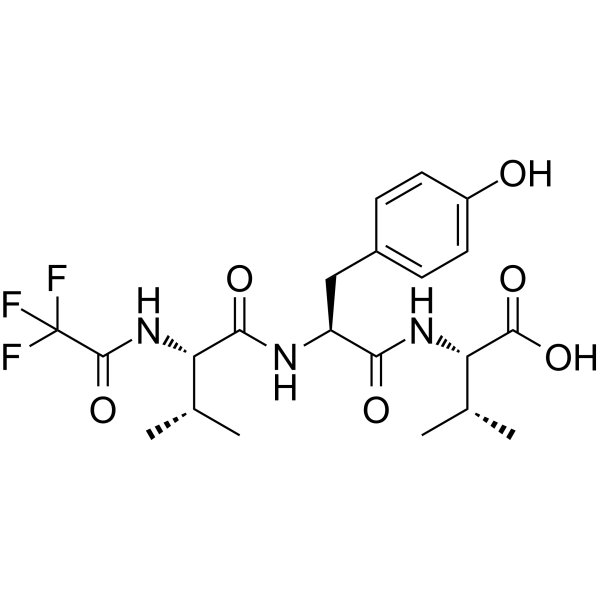
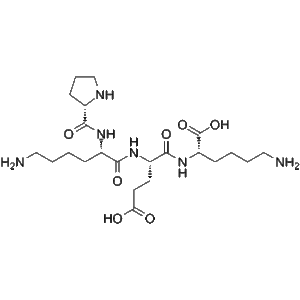
Trifluoroacetyl Tripeptide-2 | CAS 64577-63-5 | Anti-Wrinkle Peptide for Skin Firming and Elasticity
Original price was: $3.00.$1.00Current price is: $1.00.
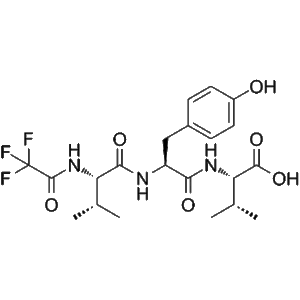
Trifluoroacetyl Tripeptide-2 is a bioactive cosmetic peptide that regulates progerin synthesis, supports extracellular matrix regeneration, and enhances skin firmness. It is widely used in anti-aging, wrinkle reduction, and elasticity-improvement research.
Description
Product Description
Trifluoroacetyl Tripeptide-2 is a synthetic tripeptide designed to mimic and modulate natural biological signaling pathways associated with aging and dermal structure maintenance. This peptide has emerged as a leading molecule in cosmetic research for its ability to regulate progerin synthesis, stimulate extracellular matrix (ECM) renewal, and restore mechanical strength to aging skin. It is an innovative ingredient for laboratory studies focused on skin firming, wrinkle reduction, and elasticity recovery.
In aging skin, structural proteins such as collagen, elastin, and fibronectin become fragmented or degraded, leading to visible wrinkles and sagging. Furthermore, cellular senescence triggers the accumulation of progerin, a defective form of the nuclear envelope protein lamin A, which accelerates tissue aging. Trifluoroacetyl Tripeptide-2 helps reduce progerin accumulation, thereby maintaining nuclear stability and healthy cell division. By downregulating this aging marker, the peptide offers a unique approach to combating visible signs of skin aging at the molecular level.
Laboratory experiments have demonstrated that Trifluoroacetyl Tripeptide-2 enhances the biosynthesis of ECM components, including collagen type I, fibrillin, and hyaluronic acid. These macromolecules are crucial for dermal integrity and hydration. Enhanced ECM structure contributes to improved skin elasticity, firmness, and surface smoothness. Research formulations incorporating this tripeptide have been shown to increase fibroblast activity and stimulate the repair of mechanical damage caused by environmental stress, UV exposure, and oxidative imbalance.
Another essential property of Trifluoroacetyl Tripeptide-2 is its anti-inflammatory and antioxidant potential. Chronic oxidative stress accelerates cellular aging, leading to reduced collagen synthesis and impaired tissue repair. By modulating pro-inflammatory cytokines and supporting antioxidant enzyme pathways, the peptide helps create a more balanced dermal environment conducive to regeneration.
Its trifluoroacetyl modification enhances chemical stability, membrane permeability, and bioavailability, making it suitable for experimental use in a wide range of cosmetic formulations—serums, emulsions, gels, and peptide-enriched creams. It can be combined with other well-known cosmetic actives such as Palmitoyl Tetrapeptide-7, Argireline, and Copper Tripeptides for synergistic anti-aging and skin-restoring effects.
In cosmetic peptide research, Trifluoroacetyl Tripeptide-2 is valued for its multifunctional mechanism: reducing progerin synthesis, stimulating ECM proteins, enhancing tissue elasticity, and providing firming and smoothing effects. Its ability to act on both cellular and extracellular levels distinguishes it as one of the most effective peptides for investigating peptide-based skin rejuvenation strategies.

Product Specifications
| Property | Description |
|---|---|
| Product Name | Trifluoroacetyl Tripeptide-2 |
| CAS Number | 64577-63-5 |
| Purity | ≥99% |
| Synonyms | TFA-Tripeptide-2, Anti-Wrinkle Tripeptide, Firming Peptide |
| Molecular Formula | C₁₆H₂₄F₃N₅O₆ (approx.) |
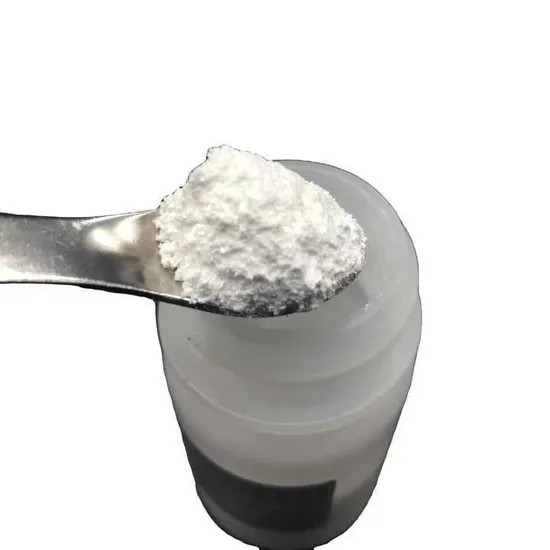
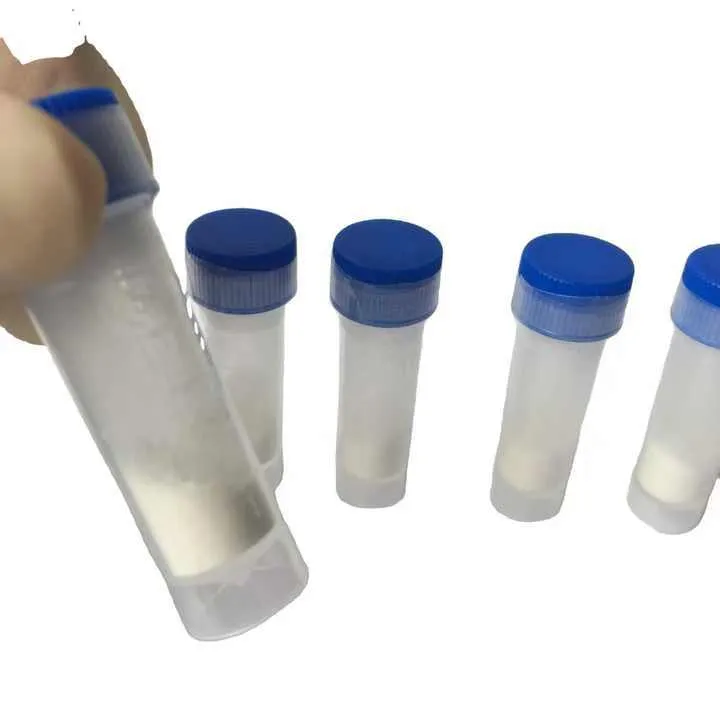
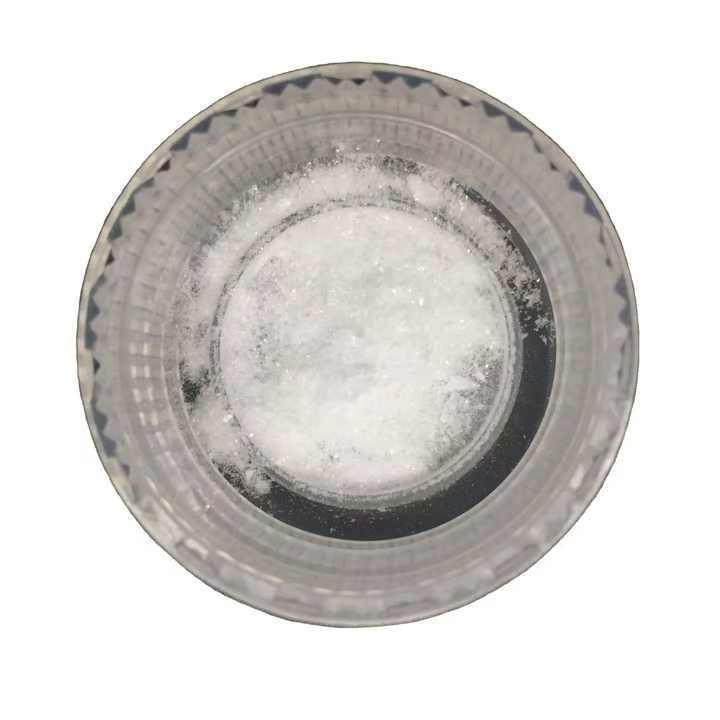
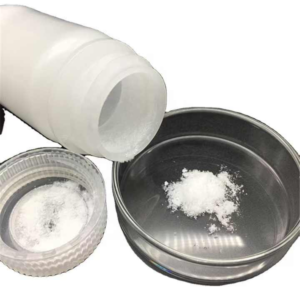
| Appearance | White to off-white lyophilized powder |
| Solubility | Soluble in water, ethanol, and aqueous buffer systems |
| Storage | Store at -20°C, protected from light and moisture |
| Stability | Stable under dry, cold conditions; stable in peptide formulations |
| Category | Cosmetic Peptide / Anti-Wrinkle Peptide |
| Mechanism | Regulates progerin synthesis, promotes ECM synthesis, improves skin elasticity |
| Applications | Anti-aging research, wrinkle reduction, dermal elasticity studies, cosmetic formulation development |
| Origin | Synthetic peptide |
| Shelf Life | 3 years under proper storage conditions |
Mechanism of Action
The biological activity of Trifluoroacetyl Tripeptide-2 is primarily based on cellular signaling modulation and extracellular matrix rejuvenation.
Regulation of Progerin Synthesis
Progerin, a truncated form of lamin A, is a biomarker of cellular aging. Overexpression of progerin disrupts nuclear architecture, leading to cellular senescence and dermal degradation. Trifluoroacetyl Tripeptide-2 helps reduce progerin synthesis, restoring normal nuclear morphology and promoting healthier skin cell behavior in vitro.Stimulation of ECM Protein Production
The peptide stimulates fibroblast proliferation and upregulates the synthesis of ECM components such as collagen I, elastin, and fibronectin. Enhanced ECM density leads to firmer, smoother, and more resilient skin.Enhancement of Elasticity and Firmness
By promoting synthesis of elastic fibers and glycoproteins, it improves mechanical skin properties. Experimental data show increased skin firmness and elasticity, along with reduced wrinkle depth in peptide-treated models.Protection Against Inflammation and Oxidative Stress
Trifluoroacetyl Tripeptide-2 reduces inflammatory cytokine activity, protecting fibroblasts from oxidative damage. It also indirectly enhances antioxidant enzyme expression, minimizing damage from UV exposure and pollutants.Synergistic Potential
The peptide works synergistically with Palmitoyl Pentapeptide-4 (Matrixyl), Acetyl Hexapeptide-8, and Copper Tripeptides to maximize anti-aging efficacy in research formulations.
Overall, Trifluoroacetyl Tripeptide-2 acts as a multifunctional dermal optimizer, addressing aging both at the cellular and extracellular levels, making it an ideal compound for studying advanced peptide-based anti-aging mechanisms.
Side Effects
Trifluoroacetyl Tripeptide-2 exhibits excellent biocompatibility and safety in laboratory research. No cytotoxic or genotoxic effects have been reported at standard experimental concentrations.
Optimal usage: Maintain working concentrations under recommended limits to preserve cell viability.
Handling: Use standard laboratory safety precautions. Avoid inhalation, ingestion, or direct contact with skin and eyes.
Storage: Store at -20°C and protect from light to maintain peptide integrity.
Formulation stability: The trifluoroacetyl modification enhances resistance to oxidation and degradation, ensuring peptide stability during research use.
Due to its synthetic origin and high purity, Trifluoroacetyl Tripeptide-2 is suitable for in vitro and ex vivo research studies on skin aging, elasticity, and collagen restoration.
Keywords
Trifluoroacetyl Tripeptide-2, anti-aging peptide, cosmetic peptide, wrinkle reduction, skin firming peptide, progerin regulator, China peptide manufacturer, factory peptide supplier, peptide wholesale China, cosmetic raw material manufacturer, high-purity cosmetic peptides, OEM peptide production.
Shipping Guarantee
All shipments are handled using validated cold-chain logistics to preserve peptide integrity. Each package is sealed in moisture-proof containers with secondary protective wrapping and continuous temperature monitoring. Products are shipped via express international couriers with full tracking and insurance coverage.
Trade Assurance
We ensure product authenticity, verified ≥99% purity, and compliance with analytical standards (HPLC, MS, and NMR). Each batch is supplied with a Certificate of Analysis (CoA). Our trade assurance policy guarantees replacement or refund for any deviation from listed specifications.
Payment Support
We provide flexible and secure global payment options to support international research transactions. Accepted payment methods include PayPal, major credit cards (Visa, MasterCard, American Express), telegraphic transfer (T/T), and cryptocurrencies (USDT, Bitcoin, Ethereum). All transactions are protected by industry-standard encryption and verified payment gateways to ensure confidentiality and fund security.
Disclaimer
All products listed are intended for laboratory research use only and not for human or veterinary use. They are not drugs, medical devices, or diagnostics and should not be administered to humans or animals. Researchers must handle all materials in accordance with institutional biosafety and chemical safety guidelines. The information provided is for scientific reference only and does not imply therapeutic efficacy, safety, or regulatory approval.

Additional information
| Weight | 1.5 kg |
|---|---|
| Dimensions | 53 × 42 × 53 cm |
What is Trifluoroacetyl Tripeptide-2 used for?
It is used in cosmetic peptide research to study anti-aging, wrinkle reduction, and skin elasticity enhancement.
How does it work?
It regulates progerin synthesis, promotes collagen and elastin production, and improves dermal matrix structure.
What is the purity of this peptide?
Each batch is ≥99% pure, validated by HPLC and mass spectrometry.
Can it be used in anti-aging formulations?
Yes, it is widely studied in peptide-enriched cosmetic formulations for skin firming and rejuvenation.
Is Trifluoroacetyl Tripeptide-2 stable?
Yes, the trifluoroacetyl modification enhances its chemical stability and bioavailability.
Do you provide bulk peptide supply?
Yes, we are a factory peptide supplier offering low-price peptide wholesale from China.
Can it be customized for OEM formulations?
Yes, we support OEM & bulk peptide production for cosmetic research partners.
What are the benefits for the skin?
It improves elasticity, firmness, smoothness, and reduces wrinkle depth in laboratory studies.
Is it compatible with other peptides?
Yes, it combines well with Palmitoyl Tetrapeptide-7, Argireline, and Copper Tripeptides.
What is progerin and why is it important?
Progerin is a protein associated with premature cellular aging; regulating it helps delay visible signs of skin aging.
Are you a peptide manufacturer or reseller?
We are a China peptide manufacturer specializing in high-purity cosmetic peptides.
Do you provide a Certificate of Analysis (CoA)?
Yes, every batch includes a CoA confirming identity, purity, and analytical data.
Do you ship internationally?
Yes, with validated cold-chain logistics and full tracking support.
Is Trifluoroacetyl Tripeptide-2 used for research only?
Correct. It is for laboratory research use only, not for human or veterinary applications.
Why choose your company as a supplier?
As a cosmetic raw material manufacturer and factory peptide supplier, we provide high-purity, low-cost peptides with complete trade assurance and global shipping support.
Related products
SPACE Peptide | CAS 1621717-95-0 | Skin-Penetrating Peptide for Enhanced Cosmetic Ingredient Delivery
SPACE Peptide (CAS 1621717-95-0) is a skin-penetrating peptide (SPP) designed to enhance the transdermal delivery of macromolecules such as hyaluronic acid. It is widely used in cosmetic research for improving active ingredient absorption and optimizing topical formulation performance. Original price was: $3.00.$1.00Current price is: $1.00.Tetrapeptide-30 | CAS 1036207-61-0 | Skin-Brightening Cosmetic Peptide for Melanin Inhibition Research
Tetrapeptide-30 is a synthetic cosmetic peptide composed of four amino acids, designed for skin-brightening research. It functions as a tyrosinase inhibitor, helping reduce hyperpigmentation and even out skin tone in laboratory studies. Original price was: $3.00.$2.00Current price is: $2.00.Palmitoyl hexapeptide-12 | CAS 171263-26-6 | Bioactive Anti-Aging Peptide for Skin Repair and Photoaging Research
Palmitoyl hexapeptide-12 is a bioactive cosmetic peptide that reduces IL-6 expression, promotes extracellular matrix regeneration, and supports skin elasticity. It is widely used in anti-aging and photoaging research to explore cellular repair and dermal collagen synthesis. Original price was: $3.00.$1.00Current price is: $1.00.Myristoyl tetrapeptide-12 dihydrochloride | Bioactive Cosmetic Peptide for Hair Care and Strengthening Research
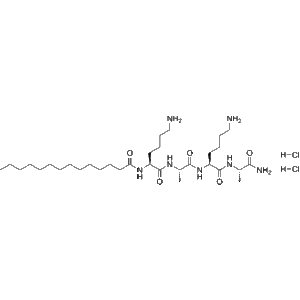
Myristoyl tetrapeptide-12 dihydrochloride is a lipid-modified peptide containing lysine and alanine residues, widely studied as a cosmetic ingredient for hair care formulations. It supports research on strengthening hair structure and promoting scalp vitality. Original price was: $3.00.$1.00Current price is: $1.00.
Reviews
There are no reviews yet.