No products in the cart.
Carperitide (Atrial Natriuretic Peptide, ANP): Receptor Signaling and Cardiovascular Research Applications
Product Description
Carperitide is a synthetic form of atrial natriuretic peptide (ANP), a 28–amino acid endogenous peptide hormone primarily secreted by atrial cardiomyocytes in response to mechanical stretch and volume overload. Since its discovery, ANP has been recognized as a central regulator of cardiovascular homeostasis, exerting coordinated effects on vascular tone, renal sodium handling, and neurohormonal balance.
In experimental research, Carperitide serves as a structurally and functionally defined ANP analog, enabling reproducible investigation of natriuretic peptide biology under controlled laboratory conditions. Its well-characterized amino acid sequence and receptor specificity make it an important tool for dissecting peptide-mediated signaling pathways involved in cardiovascular and renal physiology.
Research use of Carperitide spans molecular, cellular, and systemic models, allowing investigators to explore both acute signaling events and longer-term regulatory mechanisms. Compared with heterogeneous endogenous peptide preparations, synthetic Carperitide provides greater experimental consistency, supporting mechanistic studies and comparative analyses across research platforms.
Product Specifications
Carperitide used in research settings is typically supplied as a high-purity synthetic peptide with verified identity and structural integrity. Analytical characterization commonly includes high-performance liquid chromatography and mass spectrometry to confirm sequence accuracy and batch consistency. These properties allow Carperitide to function as a reference peptide in cardiovascular and endocrine research workflows.
Mechanism of Action
The biological activity of Carperitide is mediated primarily through binding to natriuretic peptide receptor-A (NPR-A), a membrane-bound receptor possessing intrinsic guanylyl cyclase activity. Upon ligand binding, NPR-A undergoes conformational changes that stimulate the conversion of GTP to cyclic guanosine monophosphate (cGMP), initiating downstream signaling cascades.
Elevated intracellular cGMP acts as a second messenger regulating multiple effectors, including protein kinase G (PKG), cyclic nucleotide–gated ion channels, and phosphodiesterases. Through these pathways, Carperitide influences vascular smooth muscle relaxation, endothelial function, and cellular ion transport.
In renal research models, Carperitide-mediated cGMP signaling has been shown to modulate glomerular filtration dynamics and tubular sodium reabsorption. In cardiovascular tissues, NPR-A activation contributes to reduced vascular resistance and altered myocardial preload, providing a mechanistic basis for studying peptide-regulated hemodynamic control.
Importantly, Carperitide signaling is tightly regulated by receptor expression levels, peptide degradation, and intracellular phosphodiesterase activity. These regulatory features make it a valuable probe for studying signal amplification, desensitization, and cross-talk with other hormonal systems such as the renin–angiotensin–aldosterone axis.
Applications
Carperitide is widely used in experimental research focused on cardiovascular and renal signaling mechanisms. Its applications extend across several interconnected domains of peptide biology.
In cardiovascular research, Carperitide is employed to study vascular smooth muscle responsiveness, endothelial signaling, and myocardial peptide receptor distribution. These studies provide insights into how natriuretic peptides modulate vascular tone and cardiac workload at the molecular and tissue levels.
Renal physiology research utilizes Carperitide to investigate sodium and water balance, glomerular filtration regulation, and tubular transport mechanisms. By selectively activating NPR-A, researchers can isolate natriuretic peptide–specific effects from other hormonal regulators of renal function.
At the cellular level, Carperitide is applied in in vitro systems to examine cGMP-dependent signaling, transcriptional regulation, and peptide–receptor interaction kinetics. These studies are often integrated with pharmacological inhibitors or genetic manipulation to dissect pathway-specific contributions.
For experimental use, researchers frequently reference standardized Carperitide preparations to ensure reproducibility across studies. In this context, high-purity Carperitide Acetate research material is commonly used as a benchmark compound in laboratory investigations.
Research Models
Carperitide research spans multiple experimental models, reflecting the systemic nature of natriuretic peptide signaling.
In vitro models include cultured vascular smooth muscle cells, endothelial cells, and renal epithelial cells expressing NPR-A. These systems enable precise control of peptide concentration and exposure time, facilitating dose–response and pathway-mapping studies.
Ex vivo tissue preparations, such as isolated vascular rings or perfused kidney models, allow researchers to assess functional responses to Carperitide under near-physiological conditions. These models bridge the gap between cellular assays and whole-organism studies.
In vivo research models employ Carperitide to explore integrated cardiovascular and renal responses, including changes in vascular resistance, fluid balance, and hormone interaction networks. Such models are essential for understanding how natriuretic peptide signaling operates within complex biological systems.
Across these research contexts, Carperitide serves as a reliable experimental ligand for evaluating NPR-A–dependent mechanisms and cGMP-driven physiological regulation.
Experimental Design Considerations
When designing experiments involving Carperitide, careful attention should be paid to peptide stability, storage conditions, and assay timing. Lyophilized peptide is generally preferred for long-term storage, while reconstituted solutions should be prepared using appropriate buffers to preserve biological activity.
Dose selection should be guided by experimental objectives, receptor expression levels, and model sensitivity. Because cGMP signaling can exhibit rapid kinetics, temporal resolution is often critical for capturing early signaling events.
Researchers should also consider potential interactions with phosphodiesterase activity and nitric oxide signaling, as these pathways can modulate cGMP availability and downstream responses.
Laboratory Safety & Handling Guidelines
Carperitide is intended strictly for research use. Standard laboratory safety procedures should be followed when handling peptide materials, including the use of appropriate personal protective equipment and sterile techniques during reconstitution and aliquoting.
Avoid repeated freeze–thaw cycles, and store peptide stocks at recommended temperatures to maintain stability and experimental reliability.
Integration with Multi-Omic & Computational Studies
Carperitide-based experiments are increasingly integrated with transcriptomic, proteomic, and metabolomic analyses to capture system-wide effects of natriuretic peptide signaling. These approaches enable comprehensive profiling of downstream responses and facilitate network-level interpretation of cGMP-mediated regulation.
Computational modeling of receptor–ligand dynamics and signaling cascades further enhances the interpretation of experimental data, supporting hypothesis-driven exploration of cardiovascular peptide biology.
FAQs
What distinguishes Carperitide from endogenous ANP in research studies?
Carperitide provides a standardized, synthetic form with consistent purity and sequence.Which receptor primarily mediates Carperitide signaling?
Natriuretic peptide receptor-A (NPR-A).What is the main second messenger involved?
Cyclic guanosine monophosphate (cGMP).Can Carperitide be used in both in vitro and in vivo research?
Yes, across cellular, tissue, and animal models.Why is cGMP signaling important in cardiovascular research?
It regulates vascular tone, renal function, and cellular signaling pathways.Are renal effects commonly studied with Carperitide?
Yes, particularly sodium handling and glomerular function.How does Carperitide support mechanistic research?
Through selective receptor activation and defined signaling outcomes.Is Carperitide suitable for comparative peptide studies?
Yes, it is often used as a reference natriuretic peptide.Can Carperitide data be integrated with omics analyses?
Yes, it is frequently combined with multi-omic approaches.Is Carperitide intended for clinical use in this context?
No, it is strictly for research purposes.
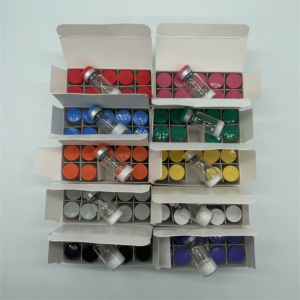
Carperitide Acetate lyophilized powder in a vial.