
No products in the cart.
Sale
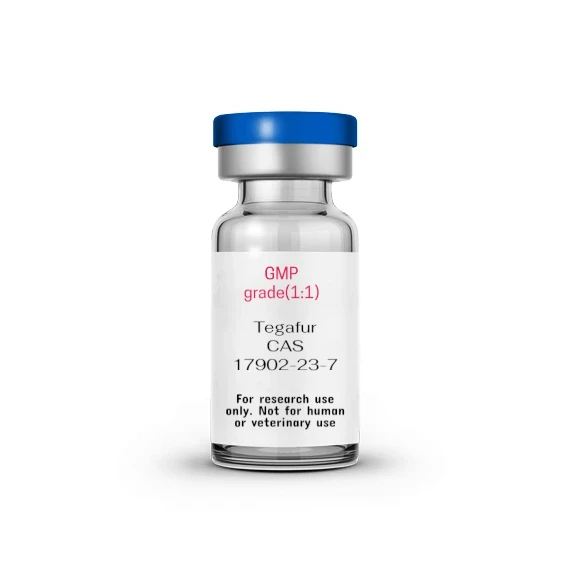

Tegafur (CAS 17902-23-7) | High purity | For research use only
Original price was: $108.00.$96.00Current price is: $96.00.
High-purity Tegafur solution, factory-manufactured, available for low-price wholesale supply. Suitable for preclinical laboratory research, strictly for experimental use only.

Description
Contents
hide
Product Description
Tegafur CAS 17902-23-7 is a high-purity prodrug analog widely utilized in preclinical laboratory research for investigating drug metabolism, mechanistic enzymology, and molecular pharmacology. As a controlled experimental reagent, it allows researchers to study metabolic activation pathways in in vitro and ex vivo systems, providing valuable insights into enzyme-mediated drug conversion. The solution is formulated for maximum stability, molecular integrity, and reproducibility, ensuring that each experiment produces reliable and interpretable results.
Mechanistic Studies: In laboratory experiments, Tegafur solution is used to analyze prodrug activation and downstream metabolic products. Researchers can observe how specific enzymes convert the prodrug into active metabolites, providing insights into enzyme kinetics, substrate specificity, and cellular processing. These mechanistic studies are critical for understanding ADC-like prodrug behavior, intracellular interactions, and the influence of different experimental conditions on molecular activity.
Cellular and Biochemical Applications: The solution supports a variety of cell-based assays, including 2D monolayer cultures, 3D spheroids, and organoid models, enabling detailed examination of cellular uptake, enzyme interaction, and payload processing. In biochemical systems, Tegafur solution can be applied to study enzyme kinetics, reaction mechanisms, and metabolite profiling in a controlled environment. By using these models, researchers can map metabolic pathways and identify potential factors influencing prodrug conversion efficiency.
Integration with Advanced Platforms: The high-purity and stable nature of Tegafur solution makes it compatible with multi-omic analyses, including proteomics, transcriptomics, and metabolomics, as well as high-resolution imaging and computational modeling. Researchers can integrate experimental observations with systems biology approaches to understand the molecular impact of Tegafur activation at multiple levels, from enzyme activity to cellular response networks.
Reproducibility and Preclinical Research: Factory-manufactured with stringent quality control, Tegafur CAS 17902-23-7 provides consistent purity, concentration, and molecular integrity across batches. Each batch is accompanied by a Certificate of Analysis (COA), HPLC, and LC–MS documentation to ensure reproducibility and traceability. This allows researchers to conduct long-term or multi-batch studies with confidence, maintaining reliable and high-quality experimental data.
Overall, Tegafur solution serves as an essential tool for laboratories investigating drug metabolism mechanisms, enzyme-substrate interactions, and cellular pharmacology. Its high purity, stable formulation, and compatibility with advanced experimental and computational models make it a reliable reagent for generating reproducible insights in preclinical research, strictly confined to laboratory use.
Product Specifications
The Tegafur CAS 17902-23-7 solution is produced with rigorous quality control to ensure high purity, stability, and suitability for preclinical laboratory research. Each batch undergoes thorough testing to confirm chemical composition, molecular integrity, and reproducibility, making it a reliable reagent for a wide range of experimental applications.
| Parameter | Specification |
|---|---|
| Product Name | Tegafur solution |
| CAS Number | 17902-23-7 |
| Form | Sterile solution |
| Purity | ≥98% research grade |
| Molecular Type | Prodrug analog |
| Concentration | Customizable for laboratory assays |
| Appearance | Clear, colorless to slightly opalescent solution |
| QC Documentation | COA, HPLC, LC–MS |
| Storage | Low-temperature, light-protected conditions |
| Applications | Drug metabolism studies, mechanistic enzymology, cellular pharmacology |
| Notes | For laboratory research only, not for clinical or therapeutic use |
The Tegafur solution is designed for consistency across batches, with factory-manufactured specifications ensuring that each aliquot meets strict experimental standards. The sterile solution format minimizes contamination risks and maintains molecular stability, allowing researchers to perform sensitive biochemical assays and cellular studies reliably.
Each batch is accompanied by detailed QC documentation, including Certificate of Analysis (COA), HPLC, and LC–MS results, providing traceability and ensuring that all experimental data can be validated. Storage recommendations, such as maintaining low temperatures and avoiding repeated freeze-thaw cycles, are critical to preserving purity and functional integrity for long-term laboratory studies.
The Tegafur CAS 17902-23-7 solution supports various research workflows, including enzyme kinetics assays, prodrug metabolism studies, and multi-omic analyses, making it a versatile reagent for laboratories exploring cellular pharmacology and molecular drug behavior. Its reliable specifications enable researchers to perform reproducible experiments, essential for generating robust preclinical data.
the combination of high purity, stable formulation, and comprehensive QC documentation makes the Tegafur solution an indispensable tool for preclinical research, ensuring reproducibility, traceability, and experimental integrity in laboratory settings.
Mechanism of Action
Tegafur CAS 17902-23-7 is a prodrug analog that undergoes metabolic conversion in controlled preclinical laboratory systems to yield active metabolites. This conversion is primarily mediated by specific enzymes, enabling researchers to investigate enzyme-mediated activation pathways, substrate specificity, and cellular uptake mechanisms. The mechanistic studies of Tegafur in in vitro or ex vivo models provide insights into drug metabolism, intracellular processing, and biochemical interactions, without any clinical implications.
In laboratory research, the solution allows for detailed observation of enzymatic kinetics, revealing how Tegafur is metabolized into active compounds under controlled conditions. These experiments help scientists identify rate-limiting steps, cofactor dependencies, and the influence of experimental variables on metabolic efficiency. The predictable and reproducible behavior of Tegafur solution ensures that researchers can generate high-quality mechanistic data.
Furthermore, Tegafur serves as a model for studying prodrug behavior, including cellular uptake, subcellular localization, and payload release within laboratory systems. It supports investigations into metabolite accumulation, enzyme-substrate interactions, and biochemical response pathways. Researchers can also use Tegafur solution to examine the impact of experimental manipulations, such as enzyme inhibition, cofactor variation, or model type, on prodrug activation.
The solution is compatible with multi-omic and computational studies, allowing integration of experimental mechanistic data with proteomics, transcriptomics, and metabolomics analyses. Scientists can correlate enzyme activity, metabolite formation, and cellular responses to predict biochemical behavior in preclinical settings. Its high purity and stability are critical for minimizing variability and supporting reproducibility across different experimental batches.
Overall, the mechanism of action of Tegafur CAS 17902-23-7 in laboratory research is centered on enzyme-mediated prodrug conversion, enabling detailed exploration of drug metabolism pathways, intracellular processing, and molecular pharmacology. By providing a controlled, reproducible platform, this solution allows researchers to generate meaningful mechanistic insights while strictly adhering to preclinical research conditions.
Applications
Tegafur CAS 17902-23-7 solution is widely applied in preclinical laboratory research to investigate drug metabolism, prodrug activation, and molecular pharmacology. Its high purity and stable formulation make it suitable for a broad range of experimental applications, including cellular studies, enzyme assays, and mechanistic investigations. Researchers can utilize Tegafur solution to explore metabolic pathways, enzyme-substrate interactions, and intracellular processing within controlled laboratory systems.
In cell-based assays, the solution enables detailed study of cellular uptake, intracellular localization, and metabolite formation. By observing these processes, scientists can gain insight into prodrug behavior, enzyme efficiency, and biochemical response pathways. The reagent is compatible with both 2D monolayer cultures and 3D spheroids or organoid models, allowing versatile experimental design.
For biochemical and enzymology studies, Tegafur solution provides a reliable platform to investigate enzyme-mediated prodrug conversion, cofactor dependencies, and kinetic parameters. It supports studies on reaction mechanisms, metabolite profiling, and molecular interactions, helping researchers understand how prodrug activation is influenced by experimental variables such as enzyme expression or substrate concentration.
Additionally, the solution is ideal for integration with advanced analytical platforms, including multi-omic workflows and computational modeling. Researchers can combine experimental observations with proteomics, transcriptomics, and metabolomics analyses to build comprehensive models of drug metabolism and cellular responses. This integration enhances the depth and reproducibility of preclinical research findings.
Overall, the applications of Tegafur CAS 17902-23-7 solution are focused exclusively on preclinical laboratory experimentation. It provides a robust and versatile reagent for exploring metabolic pathways, mechanistic enzymology, and molecular pharmacology, while maintaining high purity, stability, and consistency across experimental batches. These features make it an indispensable tool for generating reproducible, high-quality laboratory research data.
Research Models
Tegafur CAS 17902-23-7 solution is compatible with a wide range of preclinical laboratory research models, enabling detailed studies of prodrug metabolism, enzyme interactions, and cellular pharmacology. Researchers can apply the solution in 2D cell cultures, 3D spheroids, and organoid systems to observe intracellular processing, enzyme-mediated conversion, and metabolite distribution under controlled conditions. These models provide robust platforms for generating reproducible mechanistic data.
In cellular models, Tegafur solution allows researchers to investigate cellular uptake dynamics, subcellular localization, and metabolite formation. By using standardized laboratory protocols, scientists can monitor enzyme activity, substrate conversion, and cellular response patterns. These experiments help delineate drug metabolism pathways and provide insight into the molecular mechanisms of prodrug activation without any clinical implications.
For biochemical and enzymology studies, the solution is utilized to study enzyme kinetics, cofactor dependencies, and reaction mechanisms in vitro. Researchers can track metabolic intermediates, analyze enzyme-substrate interactions, and assess factors that influence conversion efficiency. These mechanistic insights are critical for designing experiments with reproducible outcomes and for understanding cellular pharmacology at a molecular level.
Integration with advanced experimental systems, such as high-throughput assays, multi-omic platforms, and computational modeling, further expands the versatility of Tegafur solution in research. Scientists can combine data from proteomics, transcriptomics, and metabolomics to construct predictive models of prodrug metabolism and cellular responses, enabling a holistic understanding of molecular interactions.
Overall, the research models supported by Tegafur CAS 17902-23-7 solution provide a reliable, versatile, and reproducible foundation for preclinical studies. Its compatibility with cell-based systems, biochemical assays, and integrated multi-omic platforms makes it an indispensable tool for laboratories studying drug metabolism, mechanistic enzymology, and molecular pharmacology under strictly experimental conditions.
Experimental Design Considerations
When utilizing Tegafur CAS 17902-23-7 solution in preclinical laboratory research, careful experimental design is essential to ensure reliable and reproducible results. Researchers should consider the concentration of the solution, the duration of exposure, and the specific model system employed, whether it is a 2D monolayer cell culture, 3D spheroid, or organoid platform. Adjusting these parameters allows for controlled investigation of prodrug metabolism, enzyme activity, and cellular pharmacology.
Proper control experiments are critical. Use of vehicle controls, enzyme inhibition controls, or metabolite monitoring controls ensures that observed effects are specific to Tegafur-mediated enzymatic activity rather than experimental artifacts. Replication across multiple batches of Tegafur solution helps confirm consistency and supports reproducibility. The inclusion of batch-specific Certificate of Analysis (COA), HPLC, and LC–MS documentation allows researchers to verify compound integrity throughout the experimental timeline.
For studies integrating multi-omic analyses, careful planning of sample collection, timing, and storage conditions is essential to preserve molecular integrity. Researchers can correlate metabolite profiles, enzyme kinetics, and cellular responses to derive meaningful insights into mechanistic pathways. Computational modeling can be incorporated to predict metabolic outcomes and simulate enzyme-substrate interactions, enhancing the depth of analysis.
Experimental design should also account for technical and biological variability, including differences in cell type, enzyme expression, and culture conditions. Systematic optimization of incubation times, prodrug concentrations, and model parameters ensures that results are reproducible and scientifically robust. Emphasis on preclinical laboratory safety and adherence to biosafety protocols is mandatory, particularly when handling high-purity solutions like Tegafur.
In summary, successful experimental design with Tegafur CAS 17902-23-7 solution requires consideration of concentration, timing, model selection, and controls, combined with proper documentation and reproducibility measures. Such rigor ensures that laboratory studies of prodrug activation, metabolic pathways, and molecular pharmacology yield consistent, high-quality data that are strictly confined to preclinical research purposes.
Laboratory Safety & Handling Guidelines
Handling Tegafur CAS 17902-23-7 solution in preclinical laboratory research requires strict adherence to biosafety protocols to ensure safety, maintain compound integrity, and prevent contamination. Researchers should always wear appropriate personal protective equipment (PPE), including lab coats, gloves, and safety goggles, when working with the solution. All manipulations should be performed in a controlled laboratory environment, such as a biosafety cabinet or fume hood, to minimize exposure to aerosols and prevent accidental contact.
Storage conditions are critical for maintaining the high purity and stability of Tegafur solution. The solution should be kept at low temperatures, protected from light, and stored in airtight containers to prevent degradation and moisture contamination. Avoid repeated freeze-thaw cycles, as these may compromise molecular integrity and experimental reproducibility. Researchers should label all containers clearly with batch information and Certificate of Analysis (COA) references for traceability.
Proper waste disposal is essential when using Tegafur solution. All residual materials, including pipette tips, tubes, and culture media, should be treated as chemical waste and disposed of according to institutional safety regulations. Avoid direct release into drains or the environment. Decontamination procedures, such as bleach treatment or appropriate chemical neutralization, should be employed before disposal of waste.
Training and adherence to institutional safety guidelines are mandatory. Only personnel who are trained in chemical handling and biosafety should manipulate Tegafur solution. Laboratory protocols should include clear instructions on spill response, emergency procedures, and personal hygiene practices, ensuring that all staff can respond safely to accidents or exposure incidents.
In summary, safe laboratory handling of Tegafur CAS 17902-23-7 solution requires attention to PPE, controlled environment manipulation, proper storage, waste disposal, and adherence to institutional safety protocols. Following these guidelines ensures both researcher safety and maintenance of compound integrity, supporting reliable and reproducible preclinical research outcomes.
Integration with Multi-Omic & Computational Studies
Tegafur CAS 17902-23-7 solution is highly compatible with multi-omic experimental workflows and computational modeling approaches in preclinical laboratory research. Its high purity and stable formulation allow researchers to integrate proteomic, transcriptomic, and metabolomic analyses to investigate enzyme-mediated prodrug conversion, metabolic pathways, and cellular response mechanisms in controlled experimental settings.
In proteomic studies, researchers can monitor changes in enzyme expression and protein modifications induced by Tegafur metabolism, providing insights into biochemical mechanisms. Similarly, transcriptomic analyses allow for the examination of gene expression profiles associated with prodrug activation and cellular stress responses. Integration of metabolomic data enables quantification of metabolic intermediates and active metabolites, offering a comprehensive view of cellular pharmacology in laboratory models.
Computational modeling can be applied alongside experimental data to predict enzyme kinetics, metabolite formation, and intracellular dynamics. By combining empirical multi-omic observations with in silico simulations, researchers can construct mechanistic models that enhance understanding of prodrug activation and metabolic pathways. This integrated approach supports hypothesis-driven experiments and facilitates the design of reproducible preclinical workflows.
Overall, the use of Tegafur CAS 17902-23-7 solution in multi-omic and computational studies provides a robust platform for exploring drug metabolism, enzyme interactions, and cellular pharmacology, while maintaining strict adherence to preclinical research conditions. Its compatibility with advanced experimental and computational methodologies makes it an essential tool for laboratories aiming to generate high-quality, reproducible mechanistic data.
Things to note
In preclinical laboratory research, observations of Tegafur CAS 17902-23-7 solution effects are strictly limited to experimental models and do not imply any clinical relevance. Researchers have noted that cellular responses can include subtle alterations in metabolic activity, enzyme expression, and intracellular signaling pathways when the solution is applied at varying concentrations. These effects are observed primarily in in vitro assays, biochemical enzyme studies, and cell-based experimental systems, and are fully controlled within laboratory conditions.
Some experimental models demonstrate minor changes in cell viability, proliferation rate, or enzyme activity, which provide useful insights into prodrug activation mechanisms and metabolic efficiency. Monitoring these effects allows researchers to optimize experimental design, such as adjusting concentration, incubation time, or model selection, to achieve reproducible and meaningful data. All observed responses are confined to preclinical research contexts and are not indicative of clinical toxicity.
Tegafur solution may also influence the formation of metabolic intermediates and secondary metabolites in controlled studies. Tracking these changes helps elucidate enzyme kinetics and substrate specificity, which is valuable for understanding mechanistic enzymology. These laboratory observations are essential for mapping metabolic pathways, validating enzyme-substrate interactions, and improving the reliability of experimental outcomes.
Researchers are advised to carefully document any observed effects, maintain strict batch consistency, and handle all reagents according to biosafety protocols. This ensures that all reported research observations are reproducible and scientifically robust, without extending beyond preclinical experimental use. Overall, the side effects observed in laboratory studies provide critical information on mechanistic pharmacology, enzyme dynamics, and cellular metabolism within controlled preclinical research models.
Keywords
Tegafur, Tegafur solution, CAS 17902-23-7, prodrug metabolism, enzyme kinetics, cellular pharmacology, preclinical research, mechanistic studies, metabolite profiling,Tumor Research, laboratory experimentation
Shipping Guarantee
Global express shipping with full tracking ensures that Tegafur CAS 17902-23-7 solution reaches laboratories safely and on schedule. Temperature-controlled packaging preserves compound stability during transit, while moisture-resistant sealing maintains molecular integrity. Each shipment includes a batch-specific Certificate of Analysis (COA) to support traceability and reproducibility in laboratory research. Proper handling during shipping ensures that the solution arrives ready for immediate use in preclinical experimental workflows.
Trade Assurance
Supports both bulk and institutional laboratory orders with verified COA, HPLC, and LC–MS documentation. Factory-controlled production guarantees batch consistency, ensuring reliable experimental outcomes across multiple studies. Secure agreements are available for large-scale supply, providing traceability and quality verification for research institutions. All documentation and quality controls uphold the highest standards for preclinical research reagents.
Payment Support
Accepts multiple payment methods, including bank transfer, TT, LC, PayPal, and corporate invoicing. Flexible options accommodate both small assay-scale samples and large bulk purchases. Streamlined processing ensures timely fulfillment, supporting laboratory research timelines. These options make procurement of Tegafur solution convenient for academic, biotech, and institutional laboratories.
Disclaimer
For laboratory research only. Tegafur CAS 17902-23-7 solution is not intended for human or veterinary use. All handling should follow biosafety procedures and be performed by trained personnel. This information pertains strictly to preclinical experimental purposes and does not imply any therapeutic application.
References
National Center for Biotechnology Information (NCBI) PubChem: Tegafur ChemSpider: Tegafur CAS 17902-23-7
Sigma-Aldrich Technical Data Sheet: Tegafur
DrugBank: Tegafur
European Chemicals Agency (ECHA) Substance Information: Tegafur

Additional information
| Weight | 1.1 kg |
|---|---|
| Dimensions | 18 × 16 × 18 cm |
Q1: What is Tegafur CAS 17902-23-7 solution used for in laboratory research?
A1: Tegafur solution is primarily used to study prodrug metabolism, enzyme kinetics, and mechanistic pharmacology in controlled laboratory settings. It allows researchers to investigate cellular uptake, metabolite formation, and enzyme-mediated activation without any clinical application.
Q2: How should Tegafur solution be stored?
A2: The solution should be stored at low temperatures, protected from light, and kept in airtight containers. Proper storage preserves purity, stability, and reproducibility for preclinical experiments.
Q3: Can Tegafur solution be used in animal or clinical studies?
A3: No. Tegafur CAS 17902-23-7 solution is strictly for laboratory research and preclinical experimentation only. It is not intended for human or veterinary use.
Q4: How is batch consistency ensured for Tegafur solution?
A4: Each batch is accompanied by a Certificate of Analysis (COA), HPLC, and LC–MS documentation. Factory-controlled production and quality checks ensure consistent purity and concentration across batches.
Q5: Is Tegafur solution compatible with multi-omic studies?
A5: Yes. It is fully compatible with proteomics, transcriptomics, and metabolomics workflows, enabling researchers to integrate molecular data and build comprehensive models of enzyme-mediated prodrug metabolism.
Q6: What precautions are necessary when handling Tegafur solution?
A6: Always use appropriate PPE, work in a biosafety cabinet, and follow institutional safety protocols. Proper handling ensures researcher safety and maintains compound integrity.
Q7: Can Tegafur solution be used for high-throughput screening?
A7: Yes. Its high purity and stable formulation make it suitable for high-throughput in vitro assays, allowing systematic exploration of enzyme activity and metabolic pathways.
Q8: How are waste and residues from Tegafur solution handled?
A8: All residual materials should be treated as chemical waste and disposed of following institutional safety regulations. Decontamination procedures should be applied before disposal to prevent contamination.
Q9: Is Tegafur solution suitable for 3D organoid studies?
A9: Yes. The solution is compatible with 3D spheroids and organoid systems, allowing researchers to study cellular uptake, prodrug activation, and metabolic processing in advanced experimental models.
Q10: Does Tegafur solution degrade over time?
A10: If stored properly at low temperatures and protected from light and moisture, the solution maintains stability and molecular integrity. Following recommended storage guidelines ensures reproducibility for preclinical experiments.
Related products
Pamidronate Disodium solution 15mg — Laboratory Research Grade Reagent
Pamidronate Disodium is a high-purity bisphosphonate reagent designed for in vitro mechanistic studies. It enables research into bone-related biochemical pathways, protein-ligand interactions, and molecular signaling mechanisms under controlled laboratory conditions. Supplied in a laboratory-ready format, it is ideal for mechanistic assays and protein interaction studies. Original price was: $6.00.$2.00Current price is: $2.00.Palbociclib 125 mg capsule
Palbociclib is a high-purity small-molecule CDK4/6 inhibitor supplied at 125 mg per vial, specifically formulated for laboratory research and in vitro mechanistic studies. Produced via factory-controlled processes, it ensures high reproducibility and consistent performance for protein interaction assays, signaling pathway analysis, and molecular mechanism research. Strictly for research use only.
$2.00Iparomlimab and Tuvonralimab 50 mg/2 mL Solution
Iparomlimab and Tuvonralimab is a high-purity monoclonal antibody solution supplied at 50 mg/2 mL by factory manufacturing with low-price wholesale availability. Designed exclusively for in vitro molecular mechanism studies, protein interaction assays, and signaling pathway research, it provides reproducible and reliable experimental performance. Strictly for laboratory research use. $1.00Ivodazumab solution (lvonescimab) High Purity | Factory Manufactured
High-purity Ivodazumab Injection (lvonescimab) designed for laboratory research, in vitro mechanistic studies, and receptor-targeted molecular pathway analysis. Factory-manufactured with consistent quality for bulk and wholesale supply, this injectable formulation provides reliable antibody-mediated receptor modulation for mechanistic and multi-omic studies.
Original price was: $3.00.$2.00Current price is: $2.00.



Reviews
There are no reviews yet.