
No products in the cart.
Sale

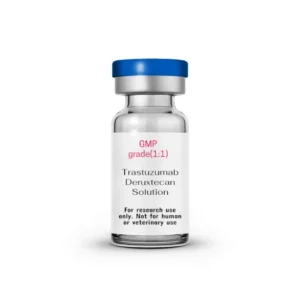
Trastuzumab Deruxtecan Solution — High Purity Factory Manufactured | For research use only
Original price was: $1,206.00.$1,184.00Current price is: $1,184.00.
Trastuzumab Deruxtecan solution is a high-purity research-grade conjugate designed for controlled laboratory experimentation involving antibody–drug conjugate (ADC) behavior, payload delivery dynamics, linker stability, and molecular interaction analysis. Factory-manufactured under strict QC with full traceability.

Description
Contents
hide
Product Description
Trastuzumab Deruxtecan solution is a high-purity, factory-manufactured antibody–drug conjugate (ADC) designed exclusively for laboratory research applications. Its meticulously controlled production ensures exceptional molecular stability and batch-to-batch consistency, making it an ideal reagent for preclinical investigations into ADC dynamics, receptor-ligand interactions, and intracellular trafficking pathways. Researchers rely on Trastuzumab Deruxtecan solution for its ability to maintain consistent physicochemical properties across multiple experiments, enabling reproducible results in complex experimental workflows.
The solution format of Trastuzumab Deruxtecan allows for straightforward integration into a wide variety of in vitro and ex vivo models. Its stability supports precise quantitative analyses, whether evaluating receptor binding kinetics, tracking intracellular uptake, or measuring payload release under controlled laboratory conditions. By providing a ready-to-use formulation, Trastuzumab Deruxtecan solution minimizes preparation time and reduces the risk of variability introduced during sample handling, ensuring reliable experimental outcomes.
In addition to its primary application in mechanistic studies, Trastuzumab Deruxtecan solution serves as a valuable tool in multi-omic research platforms. Proteomic, transcriptomic, and metabolomic studies benefit from its predictable behavior and minimal interference with analytical techniques, allowing researchers to map downstream molecular responses to ADC interactions. High-purity characteristics reduce background noise and enhance signal clarity in high-resolution imaging, flow cytometry, and other sensitive analytical assays.
Trastuzumab Deruxtecan solution is also widely employed in studies examining antibody structure-function relationships, linker stability, and intracellular processing mechanisms. Its reliable performance supports the exploration of cleavage kinetics, payload release profiles, and receptor recycling, offering researchers a detailed understanding of ADC behavior in a controlled laboratory context. Researchers can confidently apply the solution to both 2D cell cultures and 3D spheroid systems, as well as to biochemical assays designed to dissect molecular interactions at high resolution.
This product is intended strictly for preclinical research use and is not suitable for human or veterinary applications. Laboratory personnel must follow appropriate biosafety protocols when handling Trastuzumab Deruxtecan solution. Its factory-grade purity, stability, and consistency make it an indispensable reagent for academic, industrial, and CRO laboratories conducting cutting-edge molecular and cellular research. The solution’s scalability and reliable quality further support long-term projects and multi-batch studies without compromising reproducibility or analytical precision.
Product Specifications
| Parameter | Specification |
|---|---|
| Product Name | Trastuzumab Deruxtecan solution |
| CAS Number | — |
| Form | Sterile filtered solution |
| Purity | ≥98% research grade |
| Molecular Type | Antibody–drug conjugate (ADC) |
| Concentration | Customizable or standard laboratory concentrations |
| Appearance | Clear to slightly opalescent solution |
| QC Documentation | COA, HPLC, LC–MS, purity profile |
| Storage | Controlled low-temperature storage conditions |
| Applications | ADC mechanistic studies, linker analysis, molecular interaction experiments |
| Notes | For laboratory research only; not for clinical use |
Trastuzumab Deruxtecan solution is supplied with comprehensive documentation and quality control, ensuring that every batch meets strict research-grade standards. The purity and structural integrity are verified using HPLC, LC–MS, and batch-specific COA, allowing researchers to confidently integrate this reagent into preclinical mechanistic studies and analytical workflows.
The solution form offers high stability and minimizes variability during experimental handling. Researchers can employ it across various platforms, including cell-based assays, biochemical assays, and multi-omic studies, without compromising data consistency. The sterile filtered preparation also reduces contamination risk, supporting reliable outcomes in both short-term and long-term experimental setups.
Storage recommendations are optimized to maintain the stability and activity of Trastuzumab Deruxtecan solution, with controlled low-temperature conditions ensuring minimal degradation over time. Researchers can select from standard or customized concentrations to suit specific laboratory requirements, whether for intracellular trafficking experiments, linker cleavage assessments, or payload release analyses.
By providing a fully documented, high-purity, and factory-manufactured ADC reagent, Trastuzumab Deruxtecan solution supports reproducible results in complex preclinical workflows. Its reliable molecular integrity, coupled with consistent quality assurance, makes it an indispensable tool for laboratories investigating antibody–drug conjugate behavior, targeted molecular interactions, and mechanistic pharmacology in controlled research environments.
Mechanism of Action
Trastuzumab Deruxtecan solution functions as a research-grade antibody–drug conjugate (ADC) composed of a targeting antibody, a cleavable linker, and a cytotoxic payload, specifically designed for controlled laboratory experiments. In preclinical settings, this molecule allows researchers to investigate receptor-mediated internalization, intracellular trafficking, and linker cleavage dynamics without any clinical or therapeutic implications. The combination of antibody specificity and payload delivery provides a model to study the mechanistic aspects of ADC behavior in controlled experimental environments.
The antibody component of Trastuzumab Deruxtecan solution facilitates selective binding to target antigens, enabling the study of binding kinetics, affinity parameters, and receptor engagement. Researchers can track internalization pathways, analyze receptor recycling, and evaluate cellular uptake mechanisms using various in vitro systems. The predictable behavior of the antibody ensures reproducibility and allows detailed exploration of molecular recognition processes, which is critical for understanding ADC functionality in a laboratory setting.
The cleavable linker incorporated in Trastuzumab Deruxtecan solution enables controlled studies of payload release mechanisms. In laboratory assays, researchers can observe enzymatic cleavage, lysosomal processing, and other factors influencing linker stability. This provides insight into how ADCs behave under different biochemical conditions, allowing evaluation of linker robustness, degradation intermediates, and potential structural alterations without implying any in vivo effect.
The payload component allows detailed analysis of intracellular release kinetics, molecular activation, and the resulting effects on cellular models. By measuring changes in protein interactions, signaling pathways, and molecular responses, researchers gain a mechanistic understanding of ADC function in controlled systems. Such observations are strictly limited to preclinical experimentation and are critical for elucidating structure-function relationships within the ADC framework.
Overall, Trastuzumab Deruxtecan solution offers a robust platform for laboratory exploration of ADC dynamics, including antibody binding specificity, linker cleavage behavior, and payload activation. Its high purity and consistent formulation support mechanistic studies, multi-omic analyses, and advanced computational modeling. Researchers can utilize this solution to simulate ADC interactions, analyze molecular outcomes, and validate experimental designs with confidence in reproducibility and data integrity.
Applications
Trastuzumab Deruxtecan solution is widely applied in preclinical laboratory research focused on understanding antibody–drug conjugate (ADC) mechanisms, molecular interactions, and intracellular processes. Its high-purity, factory-manufactured formulation makes it ideal for binding affinity assays, receptor-mediated internalization studies, and intracellular trafficking investigations, providing consistent and reproducible results for detailed mechanistic analyses. Researchers rely on this solution to model ADC behavior under controlled experimental conditions without any implication of clinical use.
In addition to cellular assays, Trastuzumab Deruxtecan solution is employed in biochemical experiments such as linker stability evaluation, payload release kinetics, and enzymatic processing studies. These applications enable precise mapping of molecular interactions, assessment of cleavage dynamics, and measurement of structural stability within antibody–drug constructs. Its consistent formulation ensures that variability is minimized, allowing researchers to compare results across multiple experiments and experimental setups.
The solution is also highly suitable for integration into multi-omic studies, including proteomic, transcriptomic, and metabolomic workflows, where the impact of ADCs on cellular and molecular pathways can be explored. Researchers can monitor downstream molecular responses, assess signaling pathway modulation, and identify potential interactions between the antibody and intracellular components. High-purity characteristics reduce background interference, supporting accurate quantitative measurements in sensitive analytical assays such as flow cytometry, high-resolution imaging, and mass spectrometry.
Moreover, Trastuzumab Deruxtecan solution is frequently used in experimental workflows that investigate antibody structure-function relationships, linker engineering, and payload release profiles. By applying it to both 2D cell cultures and 3D spheroid systems, researchers can simulate complex biological environments, evaluate intracellular processing, and validate mechanistic hypotheses. Its reliable performance and scalable production make it a critical reagent for laboratories aiming to conduct long-term studies or multi-batch experiments with consistent results.
Overall, the applications of Trastuzumab Deruxtecan solution span multiple preclinical research domains, providing a versatile platform for mechanistic studies, molecular interaction analyses, and ADC behavior characterization in strictly laboratory-controlled settings. Its high-purity, reproducibility, and compatibility with advanced analytical techniques ensure reliable and interpretable outcomes for experimental research.
Research Models
Trastuzumab Deruxtecan solution is utilized across a variety of preclinical research models designed to explore the mechanistic behavior of antibody–drug conjugates (ADCs). In controlled laboratory experiments, it is applied to in vitro cell culture systems, including both 2D monolayer cultures and 3D spheroid models. These systems allow researchers to study receptor binding, antibody internalization, and intracellular trafficking pathways with high reproducibility. By using standardized cell models, scientists can observe payload release dynamics and assess linker stability in a controlled environment, ensuring consistent and interpretable results.
In addition to traditional cell-based assays, Trastuzumab Deruxtecan solution is employed in biochemical and enzymatic models to dissect cleavage kinetics and payload activation mechanisms. These models provide detailed insight into the molecular processes that regulate ADC function, enabling the identification of critical factors that influence antibody-target interactions and intracellular delivery pathways. Researchers can manipulate experimental parameters, such as enzyme concentrations, pH conditions, or temperature, to simulate different cellular contexts and examine their effects on ADC behavior.
The solution is also compatible with advanced multi-omic and imaging platforms. Proteomic, transcriptomic, and metabolomic models benefit from its consistent molecular integrity, which allows researchers to map downstream cellular responses to ADC engagement. High-resolution imaging, live-cell tracking, and fluorescence-based assays can be applied to these models to visualize intracellular distribution, receptor co-localization, and trafficking patterns. Such approaches provide a mechanistic understanding of how Trastuzumab Deruxtecan solution interacts with cellular machinery at a molecular level.
Furthermore, Trastuzumab Deruxtecan solution is suitable for mechanistic modeling in experimental workflows that evaluate antibody structure-function relationships, linker design, and payload release profiles. Researchers can use both standard and customized laboratory models to simulate complex biological environments, validate hypotheses, and generate reproducible data for long-term studies. The high-purity and stable formulation ensures that all research models produce reliable, interpretable outcomes, supporting advanced laboratory investigations into ADC behavior.
Overall, Trastuzumab Deruxtecan solution serves as a versatile tool across multiple research model systems, providing consistent and reproducible data in preclinical mechanistic studies, molecular interaction assays, and intracellular trafficking experiments.
Experimental Design Considerations
When utilizing Trastuzumab Deruxtecan solution in laboratory research, careful consideration of experimental design is critical to ensure reproducibility and accurate interpretation of results. Researchers should first define the model system, selecting appropriate 2D or 3D cell culture systems that allow for precise evaluation of receptor binding, antibody internalization, and intracellular trafficking. Proper controls, including untreated cells or cells treated with non-targeting antibodies, should be included to validate experimental outcomes.
The concentration of Trastuzumab Deruxtecan solution must be carefully optimized for each assay type. Over- or under-dosing can influence observed payload release kinetics, linker cleavage efficiency, and cellular uptake, potentially introducing variability. Pilot studies may be necessary to determine the ideal range for each experimental condition, while ensuring that the high-purity reagent maintains molecular integrity throughout the procedure.
Timing and incubation conditions also play a crucial role in experimental design. Trastuzumab Deruxtecan solution exhibits predictable antibody–drug conjugate dynamics, allowing researchers to map intracellular trafficking and payload distribution at multiple time points. Adjustments to temperature, pH, or enzyme concentrations can be systematically explored to simulate specific cellular microenvironments or stress conditions, enhancing the mechanistic insights derived from the experiments.
Integration with analytical platforms is another key consideration. Researchers employing multi-omic approaches, high-resolution imaging, or flow cytometry should ensure that the solution formulation does not interfere with detection methods. Proper calibration, controls, and standardized handling procedures support reliable and interpretable measurements of molecular responses, antibody binding, and payload processing.
Batch-to-batch consistency and storage conditions must also be factored into experimental planning. Trastuzumab Deruxtecan solution is factory-manufactured to ensure uniform purity and stability, but adherence to recommended storage conditions and careful handling will prevent degradation, preserving experimental reliability. Long-term studies or multi-batch experiments can be confidently conducted when these factors are properly managed.
Overall, thoughtful experimental design with Trastuzumab Deruxtecan solution ensures reproducible, high-quality data across preclinical research applications. Optimization of model systems, reagent concentrations, timing, and analytical methods provides a robust framework for investigating ADC mechanisms, intracellular trafficking, and molecular interactions, while maintaining strict laboratory research safety standards.
Laboratory Safety & Handling Guidelines
Proper laboratory safety and handling of Trastuzumab Deruxtecan solution are essential to ensure the integrity of experiments and the protection of personnel. This high-purity antibody–drug conjugate (ADC) is intended exclusively for preclinical research use, and strict adherence to institutional biosafety protocols is required. Laboratory personnel should wear appropriate personal protective equipment (PPE), including gloves, lab coats, and eye protection, when handling the solution to prevent accidental exposure.
Trastuzumab Deruxtecan solution should be stored under recommended conditions, typically at low temperatures to maintain molecular stability and purity. Avoid repeated freeze-thaw cycles, which can compromise the structural integrity of the ADC and influence experimental reproducibility. Researchers must handle all aliquots using sterile techniques to minimize contamination and ensure consistent results across multiple assays.
During experimental procedures, it is important to work within a biological safety cabinet when preparing or dispensing Trastuzumab Deruxtecan solution, especially for extended incubations or manipulations. Proper waste disposal protocols should be followed for all materials that come into contact with the ADC, including pipette tips, tubes, and culture plates, in accordance with institutional regulations and preclinical research safety standards.
Laboratories should also maintain detailed records of batch numbers, COA documentation, and handling conditions for each use of Trastuzumab Deruxtecan solution. This ensures traceability and supports reproducibility for long-term studies or multi-batch experiments. Proper labeling of storage containers and experimental samples helps prevent accidental misuse or confusion with other reagents.
Overall, following these laboratory safety and handling guidelines ensures that Trastuzumab Deruxtecan solution retains its high purity, stability, and functional integrity. Adherence to proper storage, sterile techniques, and biosafety measures not only protects researchers but also guarantees reliable and reproducible outcomes in preclinical investigations. These precautions are critical for safe and effective experimental research using ADCs in controlled laboratory environments.
Integration with Multi-Omic & Computational Studies
Trastuzumab Deruxtecan solution is highly compatible with multi-omic and computational research approaches, providing a reliable platform to study complex molecular interactions in controlled laboratory settings. Researchers can integrate this high-purity antibody–drug conjugate (ADC) into proteomic, transcriptomic, and metabolomic workflows to analyze downstream cellular responses, receptor engagement, and payload effects on molecular pathways. Its stable formulation ensures that experimental variability is minimized, supporting reproducible data generation across different omics platforms.
In computational studies, Trastuzumab Deruxtecan solution can be incorporated into systems biology models, network analysis, and predictive simulations to map intracellular trafficking, receptor-ligand interactions, and ADC behavior. Researchers can combine experimental multi-omic datasets with computational models to visualize molecular responses, quantify binding kinetics, and identify patterns in intracellular processing. High purity and predictable performance of the solution enhance the accuracy of these integrative analyses.
Additionally, Trastuzumab Deruxtecan solution supports mechanistic studies that link experimental observations with computational predictions, facilitating the design of more refined laboratory experiments. Its reproducible behavior allows for comparative studies across different datasets, improving confidence in conclusions drawn from both wet-lab assays and in silico analyses. By bridging multi-omic data with computational modeling, researchers can better understand ADC dynamics, linker cleavage behavior, and intracellular payload distribution in preclinical research environments.
Overall, Trastuzumab Deruxtecan solution provides an essential resource for laboratories seeking to integrate experimental biology with computational and multi-omic approaches, enabling comprehensive mechanistic insights while maintaining high reproducibility and experimental integrity.
Things to note
In controlled laboratory studies, Trastuzumab Deruxtecan solution demonstrates predictable behavior as a high-purity antibody–drug conjugate (ADC). Research observations indicate that its effects are strictly confined to experimental models and do not imply any clinical or therapeutic outcomes. Scientists using this reagent in cell-based assays, biochemical experiments, and multi-omic analyses have reported that its impact is primarily observed in terms of intracellular payload distribution, linker cleavage dynamics, and receptor-mediated internalization.
During preclinical experiments, minor changes in cell morphology, transient intracellular stress responses, or measurable alterations in molecular signaling pathways may be observed when cells are exposed to Trastuzumab Deruxtecan solution. These observations are relevant only within in vitro or ex vivo systems and provide critical mechanistic insights into ADC behavior, including antibody binding, payload processing, and molecular interaction networks. No systemic or organismal effects are associated with these laboratory studies, and all findings are confined to experimental contexts.
Laboratory researchers also note that variations in concentration, incubation time, and cellular model type can influence measurable outcomes, such as receptor saturation, linker cleavage efficiency, or intracellular payload accumulation. Careful experimental design, adherence to recommended handling protocols, and proper monitoring ensure that these observations remain consistent, reproducible, and informative for mechanistic analyses.
Trastuzumab Deruxtecan solution provides a safe and highly reliable reagent for studying ADC dynamics and intracellular molecular processes in strictly preclinical research environments. Observed laboratory effects are limited to molecular and cellular responses, reinforcing that this product is intended exclusively for experimental research. By following proper laboratory safety and handling guidelines, researchers can generate reproducible data regarding antibody–drug conjugate behavior, receptor interactions, and payload distribution without any clinical implications.
Keywords
Trastuzumab Deruxtecan, ADC research, antibody–drug conjugate studies, intracellular trafficking assays, receptor-binding analysis, biochemical pathway mapping, molecular interaction profiling, high-purity ADC reagent, preclinical mechanistic investigations, Tumor Research, in-vitro molecular research.
Shipping Guarantee
Global express shipping with full tracking ensures timely and secure delivery of Trastuzumab Deruxtecan solution. Temperature-controlled packaging preserves molecular stability and purity during transit, while moisture-resistant sealing prevents degradation. Each shipment includes a batch-specific Certificate of Analysis (COA) to support reproducibility and traceability in laboratory research. This comprehensive shipping process ensures that the reagent arrives ready for immediate experimental use.
Trade Assurance
Supports institutional and bulk orders with verified COA, HPLC, and LC–MS documentation. Factory-controlled production guarantees consistent purity and molecular integrity across batches. Secure agreements are available for large-scale preclinical research supply, ensuring laboratories have reliable access to Trastuzumab Deruxtecan solution for ongoing studies. All documentation ensures traceability, supporting reproducible experimental workflows.
Payment Support
Accepts bank transfer, PayPal, TT, LC, and corporate invoicing. Flexible options accommodate both small assay-scale samples and high-volume procurement. Streamlined processing ensures timely fulfillment while maintaining documentation for institutional compliance. Researchers can focus on experimental work without logistical interruptions.
Disclaimer
For laboratory research only. Not intended for human or veterinary use. Must be handled by trained personnel under institutional biosafety procedures. All information pertains exclusively to preclinical, non-clinical research environments. No clinical interpretation or application is implied.
References
The DNA repair pathway as a therapeutic target in trastuzumab deruxtecan–resistant HER2+ breast cancer — Journal of Experimental & Clinical Cancer Research BioMed Central
Pharmacokinetics and biodistribution of trastuzumab deruxtecan in HER2‑positive tumor–bearing mice — PubMed PubMed
Preclinical and clinical evaluation of T‑DXd in breast cancer brain metastasis models — Clinical Cancer Research via PMC PMC
Discovery, development, and bystander antitumor effect of trastuzumab deruxtecan: a review of its preclinical mechanism — International Journal of Molecular Sciences (MDPI) MDPI
Trastuzumab deruxtecan exhibits stable linker and effective tumor-specific payload release in non-human primate pharmacokinetics — PubMed PubMed

Additional information
| Weight | 1.1 kg |
|---|---|
| Dimensions | 18 × 16 × 18 cm |
Q1: What is Trastuzumab Deruxtecan solution used for in research?
A1: Trastuzumab Deruxtecan solution is used in laboratory research to study antibody–drug conjugate (ADC) mechanisms, receptor-mediated internalization, and intracellular trafficking. It provides a high-purity reagent for reproducible preclinical experiments.
Q2: Can this solution be used in humans or animals?
A2: No. Trastuzumab Deruxtecan solution is intended strictly for preclinical laboratory research. It is not approved for human or veterinary use.
Q3: What types of experimental models are compatible with this solution?
A3: The solution is compatible with 2D and 3D cell culture systems, biochemical assays, and multi-omic platforms. Researchers can investigate ADC behavior, linker cleavage, and payload release.
Q4: How should I store Trastuzumab Deruxtecan solution?
A4: Store under recommended low-temperature conditions to maintain purity and stability. Avoid repeated freeze-thaw cycles and use sterile techniques for aliquoting.
Q5: Does the solution include quality control documentation?
A5: Yes. Each batch comes with a Certificate of Analysis (COA), HPLC, and LC–MS data to ensure reproducibility and traceability in experiments.
Q6: Can I use this solution for imaging studies?
A6: Yes. Its high-purity formulation is suitable for high-resolution imaging, fluorescence tracking, and receptor localization studies in preclinical models.
Q7: How should I handle this solution safely?
A7: Follow appropriate biosafety protocols, including PPE, sterile techniques, and proper waste disposal. Handle only by trained personnel in a controlled laboratory environment.
Q9: Is the concentration customizable?
A9: Yes. Researchers can use standard or customized concentrations depending on the experimental design and assay requirements.
Q10: What kind of intracellular effects can be observed?
A10: Researchers may observe receptor internalization, linker cleavage, and payload distribution. All effects are limited to laboratory models and do not imply clinical outcomes.
Q11: Can this solution be used in high-throughput assays?
A11: Yes. Its stability and purity support high-throughput screening and reproducible measurements in multiple experimental setups.
Q12: Can I combine this solution with computational modeling?
A12: Yes. It is suitable for in silico simulations, systems biology modeling, and predictive studies of ADC dynamics in combination with experimental data.
Q13: Are there any special requirements for handling large-scale batches?
A13: Bulk handling requires proper labeling, temperature control, and batch-specific documentation to ensure reproducibility and traceability across experiments.
Q14: Is it suitable for long-term studies?
A14: Yes. Its factory-manufactured purity and stability support multi-batch, long-term preclinical studies without compromising experimental integrity.
Related products
Elranatamab 76mg solution — Laboratory Research Grade Reagent
Elranatamab is a high-purity bispecific monoclonal antibody designed for in vitro studies of target engagement, molecular signaling, and cellular interaction mechanisms. It is intended exclusively for laboratory research, enabling precise mechanistic investigations in controlled experimental systems.
Original price was: $6.00.$3.00Current price is: $3.00.Irinotecan Hydrochloride Liposome 43mg for scientific research
High-purity Irinotecan Hydrochloride Liposome Solution, factory-manufactured for in vitro molecular mechanism studies and controlled biochemical pathway research. Supplied as a stable liposomal solution suitable for laboratories requiring bulk, wholesale, or customized research-grade supply. Original price was: $2.00.$1.00Current price is: $1.00.Aprepitant 80mg | 99% High Purity | Laboratory Research Use Only
High-purity Aprepitant, factory-manufactured for in vitro mechanistic studies and molecular pathway research. Supplied as a stable powder for laboratories requiring bulk, wholesale, or customized research-grade supply. $1.00Temozolomide 100mg — Laboratory Research Grade Chemical
Temozolomide is a high-purity alkylating research compound widely used in in vitro molecular mechanism studies focusing on DNA methylation, damage response pathways, and cell cycle regulation. It is suitable for laboratory-based biochemical and mechanistic research applications only.
Original price was: $6.00.$3.00Current price is: $3.00.


Reviews
There are no reviews yet.