
No products in the cart.
Sale
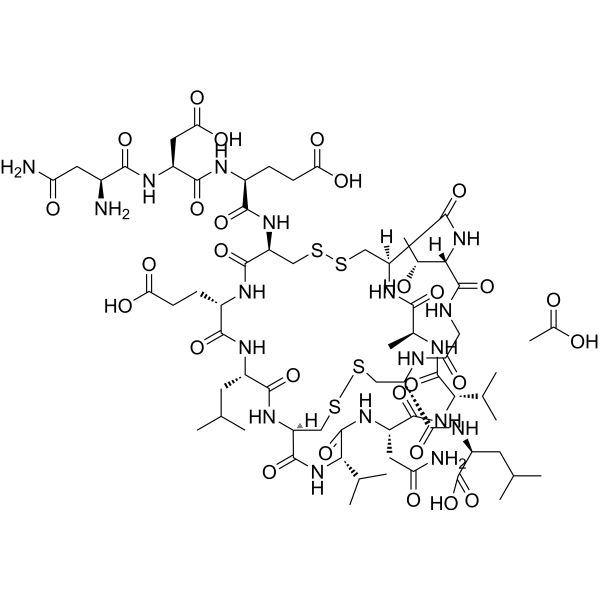
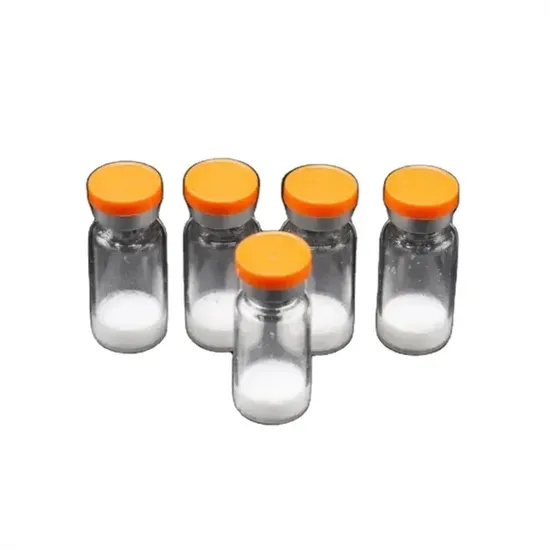
Plecanatide Acetate – High Purity Uroguanylin Analogue – GMP Peptide (99.01%)
Original price was: $16.00.$15.00Current price is: $15.00.
Plecanatide acetate is an orally active, GMP-grade guanylate cyclase-C (GC-C) receptor agonist analogue of uroguanylin with 99.01% purity. It stimulates cGMP production and shows anti-inflammatory effects in colitis models. Available for wholesale and retail laboratory research use.?For wholesale prices, other specifications and uses, please consult our staff?

Description
Plecanatide acetate is a chemically synthesized peptide analogue of the naturally occurring human peptide uroguanylin, designed for enhanced stability and biological activity in experimental settings. This compound is a potent and selective agonist of the guanylate cyclase-C (GC-C) receptor, a transmembrane enzyme expressed predominantly in the intestinal epithelium. By binding to and activating GC-C, Plecanatide acetate triggers the conversion of GTP to cyclic GMP (cGMP), initiating intracellular signaling pathways that regulate fluid secretion, epithelial cell function, and intestinal motility.
With an EC?? of approximately 190 nM in T84 cell assays, Plecanatide acetate demonstrates robust receptor activation in vitro. Its selectivity for GC-C receptors makes it a valuable research tool for studying gastrointestinal physiology, epithelial ion transport, and barrier integrity.
In experimental models, Plecanatide acetate has shown promise in the research of chronic idiopathic constipation (CIC) and other motility disorders by promoting intestinal fluid secretion and facilitating bowel transit. Beyond gastrointestinal motility, it exhibits notable anti-inflammatory effects, particularly in murine models of colitis, where GC-C activation correlates with reduced pro-inflammatory cytokine production and improved mucosal healing.
Due to its stability and activity profile, Plecanatide acetate is a preferred choice for preclinical studies investigating the role of GC-C signaling in both gastrointestinal health and systemic inflammatory responses. Manufactured under Good Manufacturing Practice (GMP) conditions, each batch undergoes rigorous purity testing (?99.01%) to ensure consistency and reproducibility in laboratory experiments.
For laboratory research use only. Not intended for human or veterinary applications.
Product Specifications
| Parameter | Value |
|---|---|
| Product Name | Plecanatide acetate |
| CAS Number | 1075732-84-1 |
| Chemical Formula | C??H???N??O??S? |
| Molecular Weight | 1680.78 g/mol |
| Purity | 99.01% (HPLC) |
| Appearance | White to off-white powder |
| Storage | -20°C, protected from light and moisture |
| Form | Lyophilized powder |
| Manufacturing Standard | GMP-compliant production |
| Synonyms | Uroguanylin analogue, GC-C receptor agonist |
Mechanism of Action & Research Applications
Plecanatide acetate exerts its biological effects through selective activation of the GC-C receptor, a membrane-bound guanylyl cyclase that plays a pivotal role in intestinal homeostasis. Upon receptor activation, intracellular cGMP levels increase, leading to stimulation of the cystic fibrosis transmembrane conductance regulator (CFTR) chloride channel. This action promotes chloride and bicarbonate secretion into the intestinal lumen, resulting in osmotic water movement that softens stools and enhances bowel movement frequency.
In gastrointestinal research, Plecanatide acetate is valuable for:
Studying GC-C receptor pharmacology and ligand-binding dynamics.
Investigating epithelial ion transport mechanisms and barrier function.
Modeling disorders such as chronic idiopathic constipation and irritable bowel syndrome with constipation (IBS-C).
Exploring anti-inflammatory mechanisms in colitis and other intestinal inflammation models.
Evaluating GC-C receptor signaling as a therapeutic target for gut-brain axis studies.
Preclinical findings suggest Plecanatide acetate may influence pain signaling pathways and modulate visceral hypersensitivity, making it a candidate for pain modulation research in gastrointestinal disorders.
Development & Formulation Notes
Plecanatide acetate was developed as a second-generation uroguanylin analogue with optimized amino acid substitutions to improve peptide stability in the acidic environment of the gastrointestinal tract. Unlike its endogenous counterpart, which is rapidly degraded by proteases, Plecanatide acetate is resistant to enzymatic breakdown, ensuring sustained receptor activation during in vitro and in vivo experiments.
The compound’s molecular structure retains the two disulfide bridges essential for GC-C receptor binding, preserving biological activity while enhancing shelf stability. Formulated as a lyophilized powder, Plecanatide acetate maintains high purity and structural integrity under recommended storage conditions (-20°C, light-protected).
Each production batch is manufactured in GMP-certified facilities with stringent quality control, including HPLC purity analysis, mass spectrometry verification, and microbial testing. This guarantees that researchers receive material with consistent composition and activity across experimental runs.
For experimental use, Plecanatide acetate can be reconstituted in sterile water or physiological buffers. Solutions should be aliquoted and stored at -20°C to avoid repeated freeze-thaw cycles, which may reduce activity.
Side Effects (For Reference Only in Models)
In research models, high doses of Plecanatide acetate may cause diarrhea, abdominal cramping, or electrolyte imbalances due to excessive fluid secretion. These effects are dose-dependent and generally reversible upon discontinuation in experimental protocols.
Disclaimer
Plecanatide acetate is intended for laboratory research use only. Not for use in humans, animals, or clinical applications. Handle in accordance with standard laboratory safety procedures.
Keywords
Plecanatide acetate, CAS 1075732-84-1, uroguanylin analogue, GC-C receptor agonist, chronic idiopathic constipation research, murine colitis model, gastrointestinal peptide research, GMP peptide supplier, high purity guanylate cyclase agonist, intestinal motility research
Additional information
| Weight | 0.8 kg |
|---|---|
| Dimensions | 86 × 56 × 86 cm |
Related products
Cosmetic Peptide Raw Material Factory – Low Price Wholesale Direct from China
Cosmetic Peptide Appearance: Lyophilized powder Dose 2mg 5mg 10mg 15mg 20mg Higher Original price was: $42.00.$22.00Current price is: $22.00.Wholesale 99% Purity Epitalon Peptide Raw Powder for Skin Repair
Epitalon Peptide Raw Powder for Skin Repair Original price was: $33.00.$22.00Current price is: $22.00.GLP-1 Retatrutide Weight Loss Slimming low price wholesale
GLP-1 peptide slimming product, 5mg 10mg 15mg vials, metabolic health- Application: Health Care Supplement
- Form: Disposable vials
- Dosages: 5mg, 10mg, 15mg
- Purity: >99%
Tesamorelin Raw Material Factory: Low-Price Wholesale for High-Purity Peptides
Tesamorelin Egrifta; Tesamorelin; 218949-48-5; 804475-66-9; TH9507; ... Compound CID: 16137828 MF: C221H366N72O67S Original price was: $38.00.$23.00Current price is: $23.00.

Reviews
There are no reviews yet.