
No products in the cart.
Sale
SHLP-1 Freeze-dried powder manufacturer-wholesaler
Original price was: $86.00.$56.00Current price is: $56.00.
SHLP-1 is a bioactive mitochondrial microprotein derived from the MT-RNR2 gene. It regulates mitochondrial function, reduces oxidative stress, and promotes insulin sensitivity. SHLP-1 is widely used in studies related to metabolic and neurodegenerative diseases.

Description
Product Description
SHLP-1 (Small Humanin-Like Peptide 1) is a mitochondrial-derived peptide (MDP) encoded within the 16S ribosomal RNA (MT-RNR2) region of mitochondrial DNA. As one of the Humanin-like peptides, SHLP-1 represents a recently identified class of bioactive microproteins that play crucial roles in cellular metabolism, stress resistance, and intercellular signaling.
Originally identified through mitochondrial transcriptome analyses, SHLP-1 belongs to a family of small open reading frame (sORF)-encoded peptides that function as mitochondrial signaling molecules, bridging communication between mitochondria and the rest of the cell. These peptides are involved in regulating energy homeostasis, apoptosis, and age-associated pathologies.
Biological Background
Mitochondria are not merely the “powerhouses” of the cell but also serve as signaling centers that regulate oxidative stress, apoptosis, and inflammatory processes. SHLP-1, along with other MDPs such as Humanin and MOTS-c, mediates mitochondrial-to-nuclear communication (retrograde signaling) that influences metabolic adaptation and survival under stress conditions.
SHLP-1 expression has been observed in multiple tissues, including the liver, skeletal muscle, heart, and brain. Experimental findings suggest that SHLP-1 levels decline with aging, paralleling mitochondrial dysfunction and increased oxidative burden.
Research Relevance
SHLP-1 is an emerging therapeutic target and biomarker in several disease models:
Diabetes and Metabolic Disorders: SHLP-1 enhances insulin sensitivity and glucose metabolism.
Neurodegeneration: Exhibits neuroprotective properties in models of Alzheimer’s disease by reducing oxidative stress and β-amyloid toxicity.
Cardiovascular Health: Improves endothelial function and mitigates atherosclerosis by controlling mitochondrial ROS.
Oncology: Influences apoptosis and metabolic reprogramming in prostate cancer and other tumors.
Structural and Functional Insights
SHLP-1 is a short peptide of 20–25 amino acids, encoded by a cryptic reading frame within mitochondrial 16S rRNA. Despite its small size, SHLP-1 displays potent bioactivity through receptor-mediated and intracellular pathways. Studies indicate that SHLP-1 interacts with cell-surface receptors and may activate AMPK, PI3K/AKT, and STAT3 pathways, leading to increased mitochondrial biogenesis and stress resilience.
Summary of Benefits
Promotes mitochondrial health and energy production.
Reduces reactive oxygen species (ROS) and oxidative damage.
Enhances insulin responsiveness and glucose uptake.
Provides cytoprotective effects against apoptotic stimuli.
Supports cardiovascular and neural function in aging models.
SHLP-1 thus represents a multifunctional mitochondrial messenger peptide with applications across metabolic, neurodegenerative, and oncological research fields.
Product Specifications
| Attribute | Description |
|---|---|
| Product Name | SHLP-1 |
| CAS Number | — (Mitochondrial peptide; sequence-specific) |
| Chemical Class | Mitochondrial-derived peptide (MDP) |
| Source Gene | MT-RNR2 (16S rRNA gene) |
| Molecular Formula | Peptide (sequence-dependent) |
| Molecular Weight | Approx. 2–3 kDa |
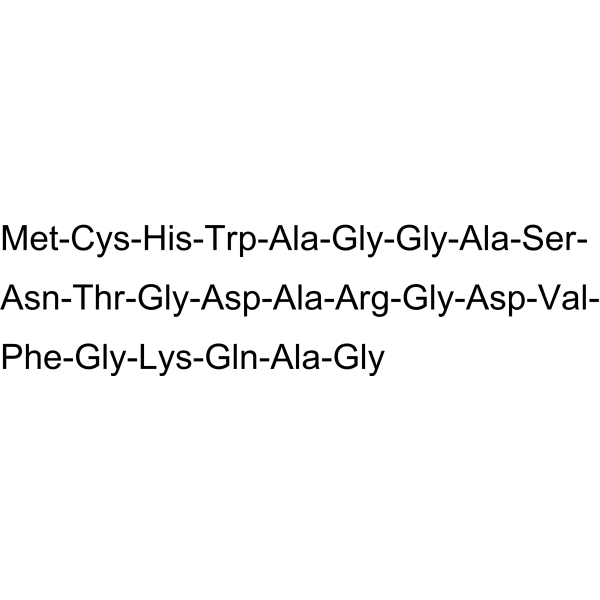
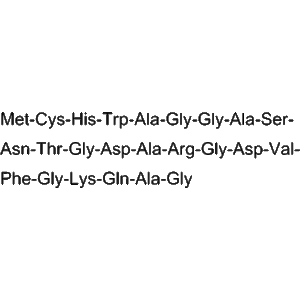
| Sequence | Small Humanin-like peptide 1 |
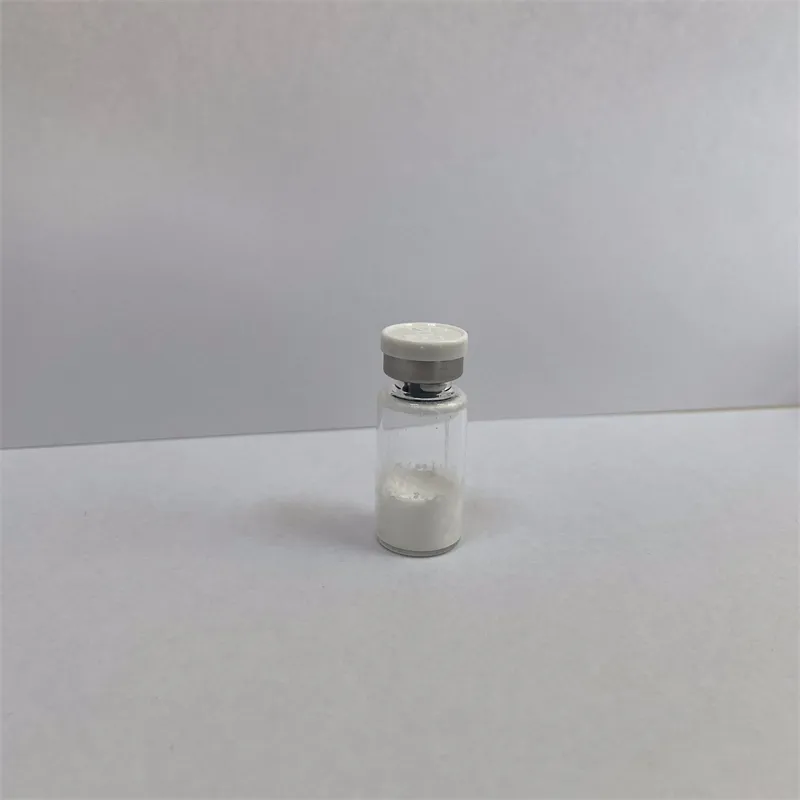
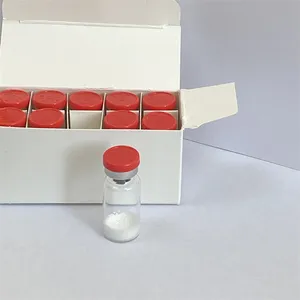
| Appearance | White to off-white lyophilized powder |
| Purity | ≥98% (HPLC) |
| Solubility | Water, PBS, DMSO |
| Storage Conditions | –20°C, desiccated, light-protected |
| Stability | Stable ≥2 years under recommended conditions |
| Applications | Mitochondrial biology, diabetes, neurodegeneration, cancer |
| Safety Level | For research use only |
| QC Tests | HPLC, Mass spectrometry, peptide sequencing |
Mechanism of Action
SHLP-1 functions as a mitochondrial signaling peptide that modulates cellular energy balance, oxidative stress, and survival through multiple intracellular pathways. Its activity is mediated by both autocrine and endocrine mechanisms, acting as a messenger between mitochondria and the nucleus or other organ systems.
1. Mitochondrial-Nuclear Crosstalk
SHLP-1 serves as a retrograde signaling molecule that communicates mitochondrial status to the nucleus. Under stress conditions (e.g., oxidative damage or nutrient deprivation), SHLP-1 levels increase to activate transcriptional responses that enhance cellular antioxidant capacity and mitochondrial biogenesis. This effect involves activation of AMP-activated protein kinase (AMPK) and PGC-1α, leading to improved mitochondrial turnover and energy efficiency.
2. Regulation of Insulin Sensitivity and Metabolism
SHLP-1 improves glucose metabolism by promoting AKT phosphorylation and increasing GLUT4 translocation to the plasma membrane, thereby enhancing glucose uptake in skeletal muscle and adipose tissue. These metabolic effects are accompanied by reductions in circulating insulin levels and lipid peroxidation.
3. Antioxidant Defense and ROS Modulation
Through the PI3K/AKT–Nrf2 axis, SHLP-1 upregulates antioxidant enzymes such as superoxide dismutase (SOD) and catalase. This reduces mitochondrial ROS accumulation, protecting cells from oxidative stress-induced apoptosis.
4. Neuroprotective Effects
In neuronal models, SHLP-1 inhibits the accumulation of amyloid-β aggregates and prevents mitochondrial fragmentation. By stabilizing mitochondrial membranes, SHLP-1 preserves ATP production and calcium homeostasis, contributing to neuronal survival in Alzheimer’s disease models.
5. Cardiovascular and Endothelial Functions
SHLP-1 enhances endothelial nitric oxide synthase (eNOS) activation and maintains vascular relaxation. It reduces endothelial ROS and inflammation, providing anti-atherogenic effects. These findings suggest potential cardioprotective roles through mitochondrial optimization and redox control.
6. Antitumor and Apoptotic Modulation
SHLP-1 may regulate apoptosis in cancer cells via cytochrome c release control and Bcl-2/Bax modulation. In prostate cancer models, it can shift the balance from pro-survival to pro-apoptotic signaling, suppressing tumor growth and proliferation.
Overall, SHLP-1 acts as a multifunctional mitochondrial hormone-like peptide, orchestrating a balance between metabolism, redox signaling, and cell fate determination.
Side Effects
As a mitochondrial peptide under preclinical research, SHLP-1’s adverse profiles are limited to experimental observations:
Metabolic Modulation: Overexpression or high concentrations may alter insulin signaling in non-target tissues.
Mitochondrial Overactivation: Excessive mitochondrial biogenesis could disrupt cellular energy balance.
ROS Undershoot: Over-suppression of ROS may impair redox-dependent signaling necessary for normal adaptation.
Immune Effects: In some models, SHLP-1 influences cytokine secretion and may alter immune tolerance.
Potential Hormonal Cross-talk: As a peptide hormone mimic, it could influence endocrine networks in vivo.
Researchers are advised to use controlled dosages and well-characterized systems when exploring SHLP-1 mechanisms.
Disclaimer
For research use only. Not intended for human or veterinary use, diagnosis, or treatment.
Keywords
SHLP-1, mitochondrial-derived peptide, MT-RNR2, Humanin-like peptide, mitochondrial signaling, AMPK, Nrf2, oxidative stress, insulin sensitivity, diabetes research, neuroprotection, Alzheimer’s disease, mitochondrial biology, cancer metabolism.
Shipping Guarantee
All products are shipped with tax-inclusive clearance and damage/loss insurance.
Transaction Guarantee
We accept T/T, PayPal, cryptocurrency, and other secure payment options. Contact staff for details.
Additional information
| Weight | 0.8 kg |
|---|---|
| Dimensions | 56 × 28 × 56 cm |
What is SHLP-1?
A mitochondrial-derived peptide encoded by the 16S rRNA gene, involved in cellular metabolism and oxidative stress regulation.
Does SHLP-1 have a CAS number?
No specific CAS number is assigned; it is a mitochondrial endogenous peptide.
What are its biological functions?
Regulates metabolism, enhances mitochondrial activity, and reduces oxidative stress.
What signaling pathways does it affect?
Primarily AMPK, PI3K/AKT, and Nrf2 antioxidant pathways.
Is SHLP-1 related to Humanin?
Yes, SHLP-1 is part of the Humanin-like peptide family derived from the same mitochondrial gene (MT-RNR2).
What diseases is SHLP-1 studied in?
Diabetes, Alzheimer’s disease, cardiovascular disorders, and prostate cancer.
How is SHLP-1 used in research?
In vitro and in vivo models to explore mitochondrial function, aging, and metabolic regulation.
Is SHLP-1 a therapeutic peptide?
Currently under research; not approved for clinical use.
How should SHLP-1 be stored?
At –20°C, protected from light and moisture.
Is SHLP-1 water-soluble?
Yes, it is soluble in water, PBS, and DMSO.
Does SHLP-1 affect apoptosis?
Yes, it can modulate apoptotic pathways and protect cells from mitochondrial stress.
Is SHLP-1 available for in vivo studies?
Yes, under research-grade quality and purity standards.
Related products
Semaglutide Raw Material Factory: Low-Price Wholesale for High-Purity Peptides
Semaglutide Compound CID: 56843331 MF: C187H291N45O59Purity: 99%
Form: Lyophilized powder
Dosage Options: 5mg, 10mg, 15mg per vial
Packaging: Secure box packaging
Shelf Life: 2 years (store in a cool, dry place)
MOQ: 1 box
Wholesale Cibinetide Peptide Sterile Solution
Cibinetide Sterile Solution is a synthetic, tissue-protective erythropoietin-derived peptide engineered for research use in inflammation, neuroprotection, and cellular stress-response models. Its high purity, GMP-compliant preparation, and ready-to-use sterile formulation make it ideal for laboratories requiring consistent, reproducible peptide performance in advanced mechanistic studies.(For research use only. Not for human or veterinary use) Original price was: $38.00.$22.00Current price is: $22.00.99% Pure Peptide Reta Trutide Epitalon in Stock Factory wholesale
Peptide Reta Purity 99%Over Original price was: $39.00.$26.00Current price is: $26.00.Best Price with Peptides 10mg Vials – High-Purity Weight Loss Peptide in Stock with Safe Delivery
Weight Loss Peptide Moq: 10 vials per box Package: plastic or paper box Purity:99% Original price was: $36.00.$24.00Current price is: $24.00.




Reviews
There are no reviews yet.