
No products in the cart.
Sale
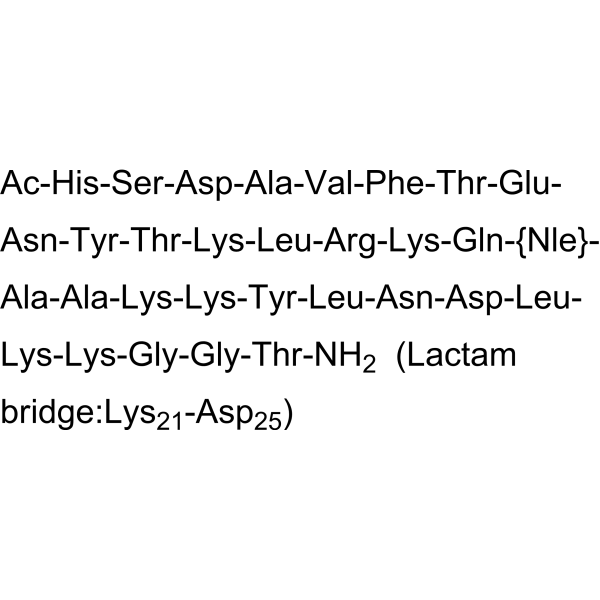
Ro 25-1553 | CAS 159427-08-4 | VPAC2 Receptor Agonist for Pulmonary
Original price was: $42.00.$36.00Current price is: $36.00.
Ro 25-1553 is a VIP analog and selective VPAC2 receptor agonist with strong bronchodilatory activity. It serves as an essential research compound for studying airway smooth muscle relaxation, neuropeptide signaling, and respiratory diseases.

Description
Contents
hide
Product Description
Ro 25-1553 is a synthetic 31-amino-acid peptide analog of vasoactive intestinal peptide (VIP), specifically engineered to act as a highly selective VPAC2 receptor agonist. It mimics the natural neuropeptide VIP while improving receptor selectivity, metabolic stability, and pharmacological potency.
VIP, a member of the secretin/glucagon family of neuropeptides, is distributed widely throughout the central and peripheral nervous systems, lungs, and gastrointestinal tract. It exerts diverse biological actions including vasodilation, bronchodilation, smooth muscle relaxation, and modulation of immune responses. However, native VIP is rapidly degraded by peptidases, limiting its research and therapeutic utility.
Ro 25-1553 was developed to overcome these limitations by incorporating structural modifications that confer resistance to enzymatic degradation and enhance selectivity for the VPAC2 receptor subtype (also known as VIP2 receptor). This analog provides researchers with a reliable and longer-acting tool for exploring respiratory physiology, neuropeptide pharmacology, and pulmonary disorders such as asthma and chronic obstructive pulmonary disease (COPD).
Key Features
Selective VPAC2 receptor agonist with reduced VPAC1 affinity
Enhanced metabolic stability compared to native VIP
Potent bronchodilator and smooth muscle relaxant
Non-tachyphylactic action with prolonged activity
Useful for studies in airway physiology, pulmonary pharmacology, and neuroimmunology
Research Background
VIP and its receptors (VPAC1 and VPAC2) are G protein–coupled receptors (GPCRs) involved in smooth muscle tone regulation, glandular secretion, and vasodilation. VPAC2 receptors are primarily expressed in the respiratory tract, pancreas, immune cells, and central nervous system. Selective activation of VPAC2 leads to bronchodilation without triggering major cardiovascular effects, making Ro 25-1553 a valuable pharmacological probe.
Preclinical studies show that Ro 25-1553 induces dose-dependent relaxation of airway smooth muscle in guinea pig models exposed to carbachol or electrical field stimulation. It demonstrates prolonged bronchodilation due to resistance against degradation by neutral endopeptidases and dipeptidyl peptidase IV (DPP-IV).
Product Specifications
| Attribute | Description |
|---|---|
| Product Name | Ro 25-1553 |
| CAS Number | 159427-08-4 |
| Synonyms | VPAC2 agonist Ro 25-1553, VIP analog Ro25-1553, vasoactive intestinal peptide analog |
| Chemical Class | Peptide analog of vasoactive intestinal peptide (VIP) |
| Sequence | HSDAVFTDNYTRLRKQMAVKKYLNSILN |
| Molecular Formula | C₁₄₆H₂₃₉N₄₃O₃₉S |
| Molecular Weight | ~3290 Da |
| Receptor Target | VPAC2 receptor (VIP2 receptor) |
| Activity | Selective VPAC2 agonist, bronchodilator |
| Purity | ≥98% (HPLC) |
| Appearance | White to off-white lyophilized powder |
| Solubility | Soluble in water and PBS |
| Stability | Stable ≥ 2 years under recommended storage |
| Storage Conditions | –20°C, desiccated, light-protected |
| Applications | Pulmonary pharmacology, airway smooth muscle studies, neuropeptide receptor signaling |
| QC Tests | HPLC, MS, amino acid analysis |
| Safety Level | For research use only |
Mechanism of Action
1. VPAC2 Receptor Selectivity
Ro 25-1553 is a highly selective agonist for the VPAC2 receptor, a subtype of the vasoactive intestinal peptide receptors (VPAC1 and VPAC2). Both receptors are coupled to Gs proteins that stimulate adenylyl cyclase and elevate intracellular cAMP levels. However, VPAC2 activation primarily mediates bronchodilation, vasodilation, and smooth muscle relaxation, while VPAC1 is more involved in gastrointestinal secretion and vasomotor control.
By favoring VPAC2 over VPAC1, Ro 25-1553 minimizes unwanted side effects such as gastrointestinal motility changes or hypotension, thereby offering cleaner pharmacological specificity.
2. Airway Smooth Muscle Relaxation
Ro 25-1553 binds to VPAC2 receptors on airway smooth muscle cells, stimulating adenylyl cyclase and increasing cAMP levels. The elevated cAMP activates protein kinase A (PKA), leading to:
Inhibition of myosin light-chain kinase (MLCK) activity
Reduction in intracellular Ca²⁺ levels
Relaxation of contracted tracheal smooth muscle fibers
This sequence of intracellular events culminates in potent and sustained bronchodilation, which can reverse constriction induced by cholinergic agents such as carbachol or acetylcholine.
3. Neural and Immune Modulation
VPAC2 receptors are also expressed in immune and neural tissues. Ro 25-1553 has been shown to:
Suppress pro-inflammatory cytokine release from macrophages and T-cells
Modulate cholinergic nerve transmission in airway regulation
Protect against oxidative and inflammatory stress in pulmonary models
These actions highlight its potential role not only as a bronchodilator but also as a neuroimmune modulator that contributes to the maintenance of airway homeostasis.
4. Signaling Pathways
The main downstream effects of VPAC2 activation by Ro 25-1553 include:
cAMP accumulation → PKA activation → smooth muscle relaxation
Phosphorylation of CREB → gene regulation for cytoprotection
Inhibition of NF-κB → reduced inflammatory cytokine transcription
NO synthesis enhancement → vascular and airway smooth muscle relaxation
Collectively, these mechanisms make Ro 25-1553 an indispensable research tool for dissecting the roles of VPAC2 in pulmonary and vascular systems.

Side Effects
As a VIP analog, Ro 25-1553 shares several pharmacodynamic properties with its natural counterpart, but its selectivity for VPAC2 minimizes side effects associated with VPAC1 or PAC1 activation. In preclinical settings, the following have been observed:
Mild hypotension at high concentrations due to vasodilation
Transient flushing or vascular relaxation effects
Minor gastrointestinal motility changes (less pronounced than native VIP)
Receptor desensitization with prolonged high-dose exposure
Reduced inflammation through immunomodulation, typically beneficial
No significant toxicity or mutagenicity has been reported in controlled laboratory models. The compound is stable and safe under recommended experimental conditions but is not intended for therapeutic or diagnostic use in humans.
Disclaimer
For research use only. Not for human or veterinary use, diagnosis, or treatment.
Keywords
Ro 25-1553, VPAC2 receptor agonist, VIP analog, bronchodilator, vasoactive intestinal peptide mimetic, airway smooth muscle relaxation, pulmonary pharmacology, GPCR ligand, cAMP signaling, neuropeptide research.
Shipping Guarantee
All products are shipped with tax-inclusive clearance and full logistics insurance against damage or loss.
Transaction Guarantee
We accept T/T, PayPal, and cryptocurrency payments. Secure delivery and refund guarantee are provided for all orders.
Additional information
| Weight | 0.7 kg |
|---|---|
| Dimensions | 83 × 46 × 83 cm |
What is Ro 25-1553?
A synthetic vasoactive intestinal peptide (VIP) analog and selective VPAC2 receptor agonist.
What is the CAS number?
159427-08-4.
What is the peptide length?
It is a 31-amino acid analog of VIP.
Which receptor does it target?
Primarily the VPAC2 (VIP2) receptor.
What biological effect does it have?
Induces bronchodilation and smooth muscle relaxation.
What are its applications?
Pulmonary pharmacology, respiratory physiology, and neuropeptide signaling research.
Does it affect blood pressure?
Only mild hypotensive effects at high concentrations.
Is it stable in vitro?
Yes, Ro 25-1553 is more resistant to enzymatic degradation than native VIP.
How should it be stored?
At –20°C, dry and light-protected.
Is it suitable for human therapeutic use?
No, it is strictly for laboratory research only.
Related products
99% Pure Peptide Reta Trutide Epitalon in Stock Factory wholesale
Peptide Reta Purity 99%Over Original price was: $39.00.$26.00Current price is: $26.00.Best Price with Peptides 10mg Vials – High-Purity Weight Loss Peptide in Stock with Safe Delivery
Weight Loss Peptide Moq: 10 vials per box Package: plastic or paper box Purity:99% Original price was: $36.00.$24.00Current price is: $24.00.Factory Supply Peptide Healthcare 99% with Safe Delivery
Peptide Healthcare Usage Delta-Sleep Inducing Peptides Purity 99%Over Dose 2mg 5mg 10mg 15mg 20mg Highe Original price was: $28.00.$23.00Current price is: $23.00.USA Warehouse 99% IV Infusion Therapy Anti-Aging Injection Peptide for Weight Loss & Muscle Building
USA Warehouse 99% IV Infusion Therapy Anti-Aging Injection Peptide for Weight Loss & Muscle Building Original price was: $38.00.$23.00Current price is: $23.00.


Reviews
There are no reviews yet.