
No products in the cart.
Sale
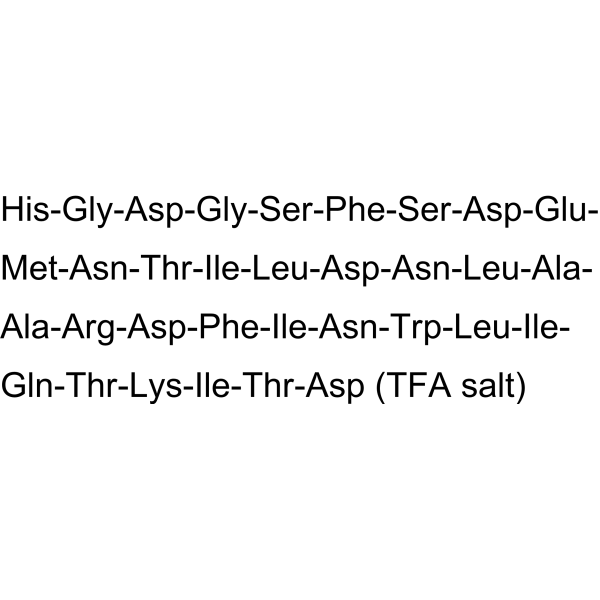
Teduglutide TFA | GLP-2 Analogue for Gastrointestinal and Hepatic Research
Original price was: $18.00.$16.00Current price is: $16.00.
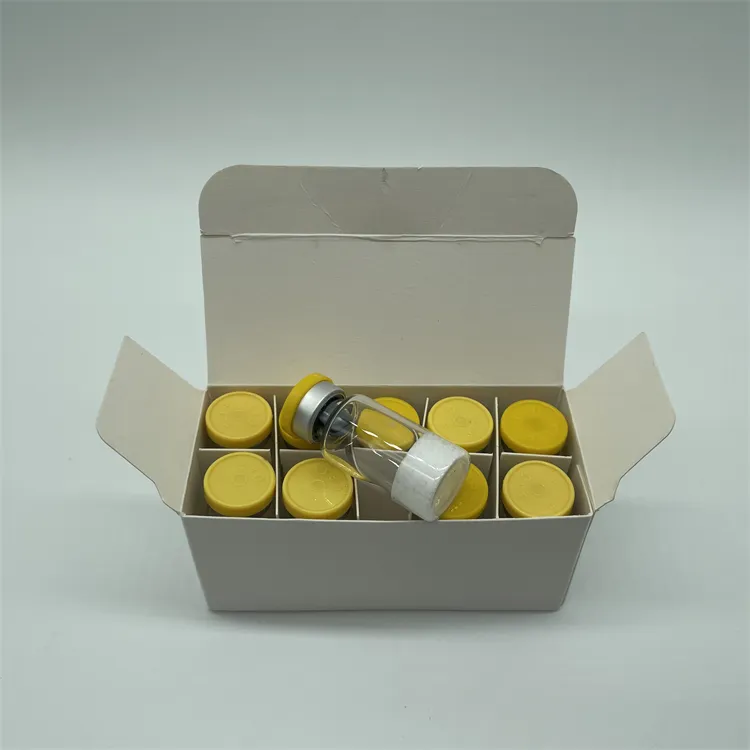
Teduglutide TFA is a stable and potent glucagon-like peptide-2 (GLP-2) analogue resistant to DPP-IV degradation. It promotes intestinal mucosal repair, modulates bile acid signaling, and reduces hepatic fibrosis and inflammation, making it an important research tool in gastrointestinal and metabolic disease studies.

Description
Product Description
Teduglutide TFA is a synthetic analogue of glucagon-like peptide-2 (GLP-2), a member of the glucagon peptide family that plays a central role in intestinal growth, nutrient absorption, and mucosal repair. The trifluoroacetate (TFA) salt form enhances its chemical stability and ease of formulation for research purposes.
Unlike native GLP-2, which is rapidly degraded by the enzyme dipeptidyl peptidase IV (DPP-IV), Teduglutide features a key modification at the Ala2 position, conferring resistance to enzymatic breakdown and resulting in a significantly extended biological half-life. This modification allows the peptide to maintain continuous receptor activation, leading to prolonged intestinal trophic and anti-inflammatory effects in preclinical models.
At the cellular level, Teduglutide acts through the GLP-2 receptor (GLP2R), a G protein–coupled receptor primarily expressed in enteric neurons, enteroendocrine cells, and intestinal subepithelial myofibroblasts. Activation of GLP2R triggers adenylate cyclase–mediated cAMP accumulation, stimulating downstream signaling pathways including PI3K/AKT, MAPK/ERK, and β-catenin. These cascades promote enterocyte proliferation, crypt cell survival, and mucosal barrier integrity, key mechanisms in intestinal homeostasis and regeneration.
Recent studies highlight Teduglutide’s broader systemic effects beyond the gut. It has been shown to activate nuclear receptor subfamily 4 group A member 1 (NR4A1/Nur77) and farnesoid X receptor (FXR) signaling in hepatic stellate cells, contributing to anti-fibrotic and anti-inflammatory actions. In murine models of sclerosing cholangitis, Teduglutide ameliorates bile acid dysregulation, reduces hepatic collagen deposition, and improves liver function markers, demonstrating potential relevance for research in cholestatic and fibrotic liver diseases.
Moreover, Teduglutide TFA alleviates intestinal dysfunction, lung injury, and obesity-associated neuroinflammation by modulating inter-organ signaling pathways. Its influence on gut-liver and gut-brain axes underscores the importance of GLP-2 analogues in metabolic and neuroinflammatory research.
Due to its enhanced stability, high receptor selectivity, and superior bioactivity, Teduglutide TFA is widely used in preclinical research investigating intestinal adaptation, fibrosis modulation, and systemic metabolic regulation. The compound supports studies of short bowel syndrome (SBS), intestinal barrier dysfunction, nonalcoholic steatohepatitis (NASH), and hepatic regeneration.
With ≥99% purity, Teduglutide TFA provides reproducible and high-quality results across in vitro cell models, ex vivo tissue assays, and pharmacological signaling studies.
Product Specifications
| Property | Description |
|---|---|
| Product Name | Teduglutide TFA |
| CAS Number | — |
| Synonyms | [Gly2]GLP-2, GLP-2 analogue, DPP-IV–resistant GLP-2 |
| Molecular Formula | C164H252F3N43O55 |
| Molecular Weight | ~3730.0 g/mol |
| Sequence | H-His-Ala-Asp-Gly-Ser-Phe-Ser-Asp-Glu-Leu-Ser-Lys-Gln-Met-Glu-Glu-Glu-Ala-Val-Arg-Leu-Phe-Ile-Glu-Trp-Leu-Lys-Asn-Gly-Gly-Pro-Ser-Ser-Gly-Ala-Pro-Pro-Pro-Ser-Asp-Trp-NH₂ (TFA salt) |
| Purity | ≥99% |
| Form | Lyophilized TFA salt |
| Solubility | Soluble in water, PBS, or buffer containing ≤0.1% BSA |
| Storage | −20°C, desiccated and protected from light |
| Stability | Stable for ≥12 months under recommended storage conditions |
| Category | GLP-2 analogue; DPP-IV–resistant peptide |
| Applications | Intestinal and hepatic fibrosis research; signaling pathway analysis |
| Intended Use | For laboratory research use only |
Mechanism of Action
Teduglutide TFA selectively binds and activates GLP-2 receptors, stimulating enteric and epithelial growth signaling. Upon receptor engagement, Gαs protein activation leads to cAMP production and subsequent activation of PKA and CREB-dependent transcription. These pathways enhance intestinal mucosal growth, barrier repair, and nutrient absorption capacity.
The peptide also modulates inflammatory responses by inhibiting NF-κB signaling and reducing cytokine release (TNF-α, IL-6, MCP-1). Teduglutide’s stimulation of NR4A1/Nur77 expression in hepatic stellate cells promotes anti-fibrotic gene expression and apoptosis of activated fibroblasts, helping to reverse liver fibrosis. Additionally, the activation of FXR signaling modulates bile acid synthesis and lipid metabolism, improving overall hepatic homeostasis.
In extrahepatic tissues, Teduglutide exerts neuroprotective and metabolic regulatory effects. It alleviates neuroinflammation, enhances mitochondrial bioenergetics, and improves gut-brain axis communication through vagal signaling. Furthermore, by stabilizing tight junction proteins (occludin, ZO-1), it strengthens epithelial integrity and reduces systemic endotoxin translocation.
Together, these mechanisms make Teduglutide TFA a multifunctional GLP-2 analogue valuable for research into fibrosis, inflammation, metabolic disorders, and intestinal repair biology.
Side Effects
In experimental settings, Teduglutide TFA demonstrates excellent tolerability. However, at supraphysiological concentrations, prolonged GLP-2R activation may lead to intestinal mucosal hypertrophy or fluid retention in animal models. Researchers should use appropriate dosing in cell and tissue experiments.
As a laboratory reagent, it is not for human or animal therapeutic use. Proper laboratory safety protocols—including use of gloves, lab coats, and eye protection—should be observed. Avoid repeated freeze–thaw cycles to preserve structural integrity and activity.
Disclaimer
All products are for laboratory research use only. Teduglutide TFA is not intended for human or veterinary applications. Ensure compliance with institutional biosafety and chemical handling guidelines.
Keywords
Teduglutide TFA, GLP-2 analogue, DPP-IV–resistant peptide, intestinal repair peptide, liver fibrosis research, gut-liver axis, FXR activator, NR4A1 signaling, anti-inflammatory peptide, gut-brain axis research, gastrointestinal peptide analogue
Shipping Guarantee
All peptide products are shipped in temperature-controlled packaging to maintain bioactivity. Each lot is accompanied by analytical data including HPLC, MS, and COA reports. Global expedited delivery and full traceability are ensured.
Trade Guarantee
Transactions are processed securely through verified international payment systems. We guarantee batch consistency, purity verification, and document transparency to support compliance with global research standards.

Additional information
| Weight | 0.8 kg |
|---|---|
| Dimensions | 62 × 53 × 62 cm |
Related products
99.9% Effective Weight Loss Shaping Peptide – Beauty Peptide Factory Direct Low Price Wholesale
Peptide Purity 99% Specification 5mg/vial, 10mg/vial, 15mg/vial Original price was: $38.00.$23.00Current price is: $23.00.USA Warehouse 99% IV Infusion Therapy Anti-Aging Injection Peptide for Weight Loss & Muscle Building
USA Warehouse 99% IV Infusion Therapy Anti-Aging Injection Peptide for Weight Loss & Muscle Building Original price was: $38.00.$23.00Current price is: $23.00.GLP-1 Retatrutide Weight Loss Slimming low price wholesale
GLP-1 peptide slimming product, 5mg 10mg 15mg vials, metabolic health- Application: Health Care Supplement
- Form: Disposable vials
- Dosages: 5mg, 10mg, 15mg
- Purity: >99%
Cosmetic Peptide Raw Material Factory – Low Price Wholesale Direct from China
Cosmetic Peptide Appearance: Lyophilized powder Dose 2mg 5mg 10mg 15mg 20mg Higher Original price was: $42.00.$22.00Current price is: $22.00.



Reviews
There are no reviews yet.