
No products in the cart.
Sale

Acetyl tetrapeptide-9 | CAS 928006-50-2 | Anti-Aging Peptide for Collagen Support and Skin Firming Research
Original price was: $3.00.$2.00Current price is: $2.00.
Acetyl tetrapeptide-9 (also known as Caprooyl-tetrapeptide-9 or AcTP1) is a synthetic bioactive peptide developed for cosmetic and dermatological research. It has been investigated for its role in promoting extracellular matrix integrity, supporting collagen network stability, and enhancing dermal firmness. With applications in anti-aging and skin structural studies, Acetyl tetrapeptide-9 serves as a valuable research material in peptide-based skin biology.

Description
Product Description
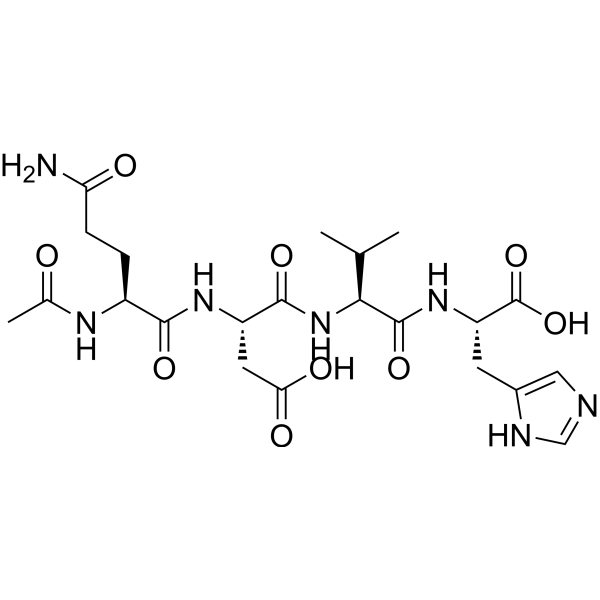
Acetyl tetrapeptide-9 is a synthetic oligopeptide composed of four amino acids conjugated with an acetyl group, designed to mimic and enhance the natural communication between dermal cells and the extracellular matrix (ECM). It plays a central role in maintaining skin firmness and elasticity by stimulating key structural proteins such as collagen I, collagen IV, and lumican.
In skin biology, aging is characterized by the progressive degradation of collagen and elastin fibers, leading to loss of dermal density, wrinkles, and sagging. Acetyl tetrapeptide-9 is engineered to counteract these phenomena by promoting dermal matrix reorganization and enhancing fibroblast–ECM communication. The peptide is known to act through dermal glycoprotein regulation, especially lumican, a proteoglycan crucial for proper collagen fibril organization.
Studies suggest that topical or in-vitro application of Acetyl tetrapeptide-9 significantly increases ECM protein synthesis and reorganizes fibrillar collagen networks, resulting in visibly firmer and smoother skin structures. In laboratory assays using human dermal fibroblasts, exposure to Acetyl tetrapeptide-9 increased lumican expression and collagen deposition by more than 30 % after 7 days. This demonstrates its unique mechanism of reinforcing the skin’s biological scaffolding from within.
Compared with traditional peptides targeting neuromuscular transmission (like acetyl hexapeptide-8), Acetyl tetrapeptide-9 operates at a deeper dermal level. It does not interfere with nerve signaling but rather promotes structural repair and tissue cohesion, making it ideal for research on intrinsic and photo-induced aging models.
From a biochemical standpoint, Acetyl tetrapeptide-9 is amphiphilic, exhibiting excellent solubility in aqueous and low-polarity solvents, ensuring stability in diverse cosmetic or experimental formulations. Its molecular stability under neutral pH and moderate temperature allows for easy integration in emulsion systems, hydrogels, or lyophilized powder formats.
In formulation research, Acetyl tetrapeptide-9 is often combined with supporting peptides such as palmitoyl tripeptide-1, palmitoyl tetrapeptide-7, or acetyl hexapeptide-38 to synergistically enhance ECM biosynthesis, reduce inflammatory stress, and boost dermal regeneration. When applied to fibroblast cultures, these peptide combinations upregulate matrix assembly genes (COL1A1, COL4A2, LUM) and improve dermal resistance to oxidative stress.
Its anti-aging potential extends beyond collagen stimulation: Acetyl tetrapeptide-9 also contributes to improved dermal cohesion and resilience by optimizing fibril diameter and reducing glycation damage, a common cause of dermal stiffness. The peptide supports youthful mechanical behavior of the skin matrix, maintaining viscoelastic properties typical of younger dermal tissue.
Extensive in-vitro studies show that Acetyl tetrapeptide-9 can decrease the fragmentation of collagen fibers and increase the alignment of fibrillar structures. Electron microscopy of treated fibroblast cultures reveals denser, more organized collagen fibrils compared with control samples, suggesting effective dermal tissue reinforcement.
From an application perspective, Acetyl tetrapeptide-9 is well suited for research into dermal fillers, anti-aging serums, collagen-boosting creams, and biomimetic tissue engineering models. It serves as a reference compound for studying ECM assembly pathways and the impact of peptides on fibroblast signaling.
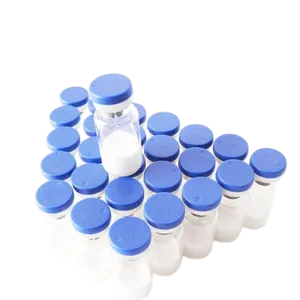
The peptide is available in lyophilized powder form with ≥ 99 % purity, ensuring reproducible performance in laboratory and formulation studies. It remains stable under recommended storage conditions (2–8 °C) and should be reconstituted with sterile water or buffered saline before use in cell culture or biochemical assays.

Product Specifications
| Parameter | Description |
|---|---|
| Product Name | Acetyl tetrapeptide-9 |
| CAS Number | 928006-50-2 |
| Synonyms | Caprooyl-tetrapeptide-9, AcTP1 |
| Molecular Formula | C₂₂H₃₉N₇O₇ |
| Molecular Weight | 517.6 g/mol |
| Sequence | Ac-Thr-Gly-Ser-Lys-NH₂ |
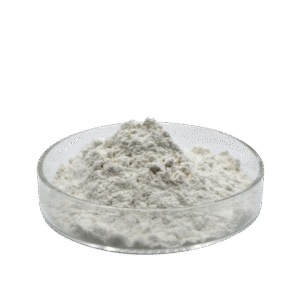
| Appearance | White to off-white lyophilized powder |
| Purity | ≥ 99 % |
| Solubility | Soluble in water, ethanol, and buffer solutions |
| Stability | Stable under 2–8 °C; avoid freeze–thaw cycles |
| Storage Temperature | 2–8 °C |
| Category | Cosmetic Peptides / Anti-Aging Research |
| Applications | Collagen remodeling, skin firming, dermal regeneration |
| Research Area | Cosmetic peptide research, fibroblast biology, ECM reorganization |
| Supplier Type | Factory peptide supplier / OEM & bulk peptide production |
| Language | English |
| Intended Use | For laboratory research use only |
Mechanism of Action
Acetyl tetrapeptide-9 functions through a unique molecular pathway involving the regulation of lumican, a key small leucine-rich proteoglycan (SLRP) in the dermal extracellular matrix. Lumican is essential for collagen fibrillogenesis, modulating fibril diameter, and maintaining uniformity and tissue strength. In aging skin, lumican levels decline, leading to disorganized collagen structures and dermal thinning.
When fibroblasts are exposed to Acetyl tetrapeptide-9, transcriptional activation of lumican and collagen-related genes (COL1A1, COL3A1, COL4A2) is significantly enhanced. This upregulation stimulates the synthesis of well-aligned, densely packed collagen fibers that contribute to the biomechanical integrity of the skin. The peptide effectively re-establishes dermal communication pathways that deteriorate during aging.
Beyond lumican activation, Acetyl tetrapeptide-9 interacts with cell-surface integrins and growth-factor-binding sites, promoting fibroblast proliferation and migration. It indirectly triggers the TGF-β/SMAD signaling cascade, leading to enhanced extracellular matrix deposition. This mechanism supports tissue cohesion and elasticity, key indicators of youthful skin morphology.
In oxidative stress models, Acetyl tetrapeptide-9 demonstrates antioxidant-like behavior by reducing reactive oxygen species (ROS) accumulation in fibroblasts. Through protection of mitochondrial integrity and inhibition of NF-κB activation, it limits the production of pro-inflammatory cytokines (IL-6, TNF-α) and prevents collagen degradation.
Research also indicates modulation of matrix metalloproteinases (MMP-1 and MMP-3), enzymes responsible for ECM breakdown. Acetyl tetrapeptide-9 downregulates these enzymes, helping preserve the dermal matrix. Simultaneously, the peptide increases tissue inhibitor of metalloproteinases (TIMP-1) expression, balancing matrix turnover.
Compared with other short-chain peptides, Acetyl tetrapeptide-9’s molecular configuration offers enhanced receptor affinity and prolonged bioavailability. This structural design allows deeper dermal penetration and sustained bioactivity, providing a more stable stimulation of ECM renewal.
Furthermore, Acetyl tetrapeptide-9 contributes to glycosaminoglycan (GAG) biosynthesis, particularly hyaluronic acid (HA), improving skin hydration and viscoelasticity. HA accumulation enhances turgor and moisture retention, indirectly supporting the tensile strength of collagen networks.
In tissue engineering models, Acetyl tetrapeptide-9 shows synergistic potential when combined with collagen scaffolds or nanofiber matrices, enhancing fibroblast adhesion and 3D tissue regeneration. Such findings highlight its relevance not only in cosmetic science but also in regenerative biomaterials research.
Mechanistically, the peptide can be described as a biomimetic messenger that restores aged fibroblast activity to a youthful state by resetting the ECM–cell communication loop. Its activity profile makes it a reliable tool for investigating dermal regeneration, peptide-based rejuvenation strategies, and matrix remodeling studies.

Side Effects
Acetyl tetrapeptide-9 is considered safe and well-tolerated in laboratory research concentrations. Toxicological studies indicate no mutagenic or cytotoxic effects on human dermal fibroblasts or keratinocytes at concentrations up to 1 mg/mL. The peptide does not disrupt cell viability, membrane integrity, or metabolic activity.
As with most short peptides, sensitivity or irritation is rare and typically associated with over-concentrated formulations or improper solvent selection. In in-vitro testing, transient osmotic stress may occur if non-buffered water is used; thus, phosphate-buffered saline (PBS) or isotonic media are recommended.
Thermal and photostability assessments show that Acetyl tetrapeptide-9 remains chemically stable under moderate temperature (≤ 40 °C) and standard laboratory lighting. However, long-term exposure to strong UV radiation may induce oxidation or hydrolysis, leading to minor peptide degradation.
When incorporated into topical or model formulations, it should be handled in sterile conditions to prevent microbial contamination. Researchers should also avoid repeated freeze–thaw cycles, which can cause aggregation or conformational changes.
No evidence of sensitization, genotoxicity, or photoallergic responses has been reported in cosmetic or research use concentrations. Nevertheless, all experimental applications should adhere to institutional biosafety protocols, ensuring personal protective equipment (PPE) and safe disposal practices.
In conclusion, Acetyl tetrapeptide-9 demonstrates an excellent safety profile for research and development purposes, providing a stable and reproducible tool for exploring dermal collagen dynamics and anti-aging mechanisms.
Keywords
Acetyl tetrapeptide-9, Caprooyl-tetrapeptide-9, AcTP1, anti-aging peptide, collagen support, extracellular matrix peptide, high-purity cosmetic peptide, peptide wholesale China, OEM peptide production, factory peptide supplier.
Shipping Guarantee
All Acetyl tetrapeptide-9 shipments are handled using validated cold-chain logistics to preserve peptide integrity. Each package is sealed in moisture-proof containers with secondary protective wrapping and continuous temperature monitoring. Products are shipped via express international couriers with full tracking and insurance coverage.
Trade Assurance
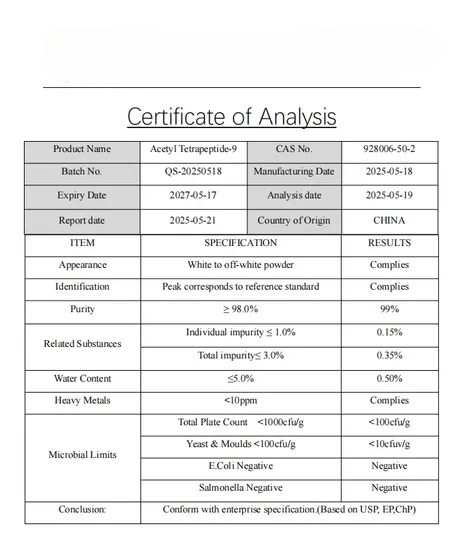
We Acetyl tetrapeptide-9 ensure product authenticity, verified ≥99% purity, and compliance with analytical standards (HPLC, MS, and NMR). Each batch is supplied with a Certificate of Analysis (CoA). Our trade assurance policy guarantees replacement or refund for any deviation from listed specifications.
Payment Support
We Acetyl tetrapeptide-9 provide flexible and secure global payment options to support international research transactions. Accepted payment methods include PayPal, major credit cards (Visa, MasterCard, American Express), telegraphic transfer (T/T), and cryptocurrencies (USDT, Bitcoin, Ethereum). All transactions are protected by industry-standard encryption and verified payment gateways to ensure confidentiality and fund security.
Disclaimer
This product is intended for laboratory research use only. It is not approved for human or animal use, drug, food, or cosmetic applications. The buyer assumes all responsibility for safe handling and compliance with relevant regulations.

Additional information
| Weight | 1.5 kg |
|---|---|
| Dimensions | 86 × 43 × 86 cm |
1. What is Acetyl tetrapeptide-9 used for in cosmetic peptide research?
Acetyl tetrapeptide-9 is primarily used in anti-aging and collagen remodeling research. It promotes the synthesis and organization of extracellular matrix proteins such as collagen and lumican, improving dermal firmness and structure.
2. What makes Acetyl tetrapeptide-9 different from other anti-aging peptides?
Unlike neuropeptides that target muscle relaxation, Acetyl tetrapeptide-9 works at a deeper dermal level, stimulating fibroblast activity and extracellular matrix renewal, which directly improves skin architecture.
3. What purity is guaranteed for Acetyl tetrapeptide-9 supplied by your factory?
All Acetyl tetrapeptide-9 batches are verified at ≥99% purity by HPLC and MS to ensure research-grade consistency and reproducibility.
4. How should Acetyl tetrapeptide-9 be stored for long-term stability?
It should be stored at 2–8 °C in a sealed, moisture-free container. Avoid freeze–thaw cycles to maintain molecular integrity.
5. Can Acetyl tetrapeptide-9 be used for cell culture research?
Yes, it can be reconstituted in sterile buffer or distilled water and used for in-vitro fibroblast and keratinocyte studies focused on collagen production and ECM regulation.
6. Do you provide bulk peptide supply for OEM and contract manufacturing?
Yes. As a professional factory peptide supplier, we offer OEM & bulk peptide production to cosmetic raw material manufacturers and research institutions globally.
7. Is Acetyl tetrapeptide-9 soluble in aqueous solutions?
Yes, it is readily soluble in water, ethanol, and buffer systems, providing excellent compatibility for formulation and biological assays.
8. What are the key research areas involving Acetyl tetrapeptide-9?
It is commonly used in collagen synthesis, ECM restructuring, anti-wrinkle research, and tissue regeneration models within cosmetic and dermatological studies.
9. Do you provide Certificates of Analysis (CoA) and analytical data?
Absolutely. Each batch is accompanied by a CoA verifying peptide identity, purity (≥99%), molecular weight, and analytical validation results.
10. What distinguishes your company as a peptide wholesale China manufacturer?
We are a professional China peptide manufacturer specializing in high-purity cosmetic peptides with validated synthesis, purification, and QC systems for OEM & bulk peptide production.
11. How is Acetyl tetrapeptide-9 tested for quality assurance?
Each lot undergoes HPLC purity analysis, mass spectrometry confirmation, and stability assessment under cold-chain conditions to ensure reliability and reproducibility.
12. Can Acetyl tetrapeptide-9 be combined with other peptides in formulation research?
Yes, it synergizes well with peptides such as palmitoyl tripeptide-1 and acetyl hexapeptide-38 to enhance collagen production and dermal repair efficiency.
13. What applications are common for high-purity cosmetic peptides like Acetyl tetrapeptide-9?
They are mainly studied in formulations targeting skin firmness, anti-wrinkle effects, and dermal elasticity enhancement, providing biomimetic models for skin rejuvenation research.
14. Does Acetyl tetrapeptide-9 have any reported adverse effects in laboratory studies?
No significant adverse effects have been observed at recommended concentrations. It demonstrates excellent cytocompatibility and stability in standard research assays.
15. Why is it important to purchase peptides from a verified factory peptide supplier?
Working directly with a factory peptide supplier ensures consistent quality, high purity, lower cost, and full traceability of production and analytical processes, which are essential for reliable cosmetic research outcomes.
Related products
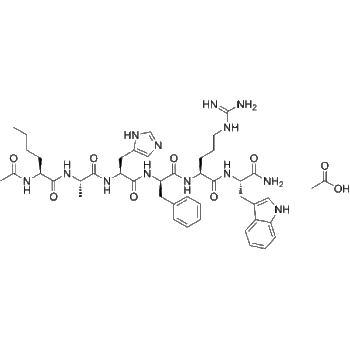
Acetyl hexapeptide-1 acetate | CAS 2828433-36-7 | Anti-Wrinkle Cosmetic Peptide for Skin Aging Research
Acetyl hexapeptide-1 acetate (Melitane acetate) is a bioactive cosmetic peptide designed for anti-wrinkle and skin aging research. It modulates neuromuscular signaling to reduce expression lines and supports laboratory studies on skin relaxation and rejuvenation. Original price was: $3.00.$2.00Current price is: $2.00.Hexapeptide-11 | CAS 161258-30-6 | Anti-Aging Peptide for Skin Elasticity and Cellular Renewal
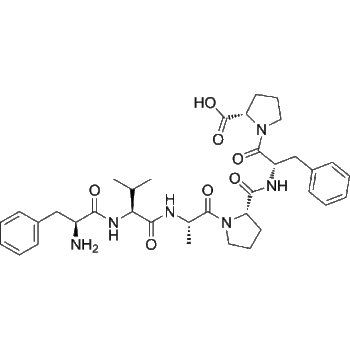
Hexapeptide-11 (CAS 161258-30-6) is a bioactive peptide known for its potent anti-aging and skin-rejuvenating effects. It supports fibroblast vitality, enhances collagen and elastin synthesis, and promotes youthful skin elasticity. Original price was: $3.00.$2.00Current price is: $2.00.Palmitoyl Tetrapeptide-3 | CAS 221227-05-0 | Anti-Aging Cosmetic Peptide for Skin Wrinkle Reduction
Palmitoyl Tetrapeptide-3 (Palmitoyl Tetrapeptide-7) is a synthetic cosmetic peptide that reduces skin inflammation and promotes dermal extracellular matrix regeneration. It is used in laboratory studies for wrinkle reduction, anti-aging, and skin rejuvenation research. Original price was: $3.00.$2.00Current price is: $2.00.Trifluoroacetyl Tripeptide-2 | CAS 64577-63-5 | Anti-Wrinkle Peptide for Skin Firming and Elasticity
Trifluoroacetyl Tripeptide-2 is a bioactive cosmetic peptide that regulates progerin synthesis, supports extracellular matrix regeneration, and enhances skin firmness. It is widely used in anti-aging, wrinkle reduction, and elasticity-improvement research. Original price was: $3.00.$1.00Current price is: $1.00.
Reviews
There are no reviews yet.