No products in the cart.
Atosiban: Oxytocin and Vasopressin Receptor Antagonism in Neuroendocrine Research
Product Description
Atosiban is a synthetic peptide antagonist originally developed as a selective modulator of oxytocin and vasopressin receptor signaling. Structurally derived from oxytocin analogs, Atosiban has been extensively characterized in experimental research as a dual antagonist of the oxytocin receptor (OXTR) and the vasopressin V1a receptor (AVPR1A). Its defined peptide sequence and receptor binding profile make it a valuable molecular tool for investigating hormone-mediated neuroendocrine and smooth muscle signaling pathways.
In research contexts, Atosiban is primarily utilized to dissect the physiological roles of oxytocin and vasopressin beyond their classical endocrine functions. These neuropeptides are now recognized as multifunctional regulators involved in social behavior, stress responses, vascular tone, and reproductive tissue signaling. By selectively inhibiting receptor activation, Atosiban enables controlled interrogation of downstream signaling mechanisms and receptor-specific effects.
As a synthetic peptide, Atosiban offers high batch-to-batch consistency and analytical traceability, supporting reproducible experimental design across in vitro and in vivo research models.
Product Specifications
Atosiban used for experimental research is typically supplied as a high-purity synthetic peptide with verified identity and structural integrity. Analytical characterization commonly includes high-performance liquid chromatography and mass spectrometry to confirm peptide purity, molecular weight, and sequence fidelity. These attributes support its use as a reference antagonist in receptor-focused signaling studies.
Mechanism of Action
The primary mechanism of action of Atosiban involves competitive antagonism at the oxytocin receptor and vasopressin V1a receptor, both of which are members of the G protein–coupled receptor (GPCR) superfamily. Under physiological conditions, activation of these receptors initiates intracellular signaling cascades mediated by phospholipase C, inositol trisphosphate (IP₃), and intracellular calcium mobilization.
By binding to the extracellular domains of OXTR and AVPR1A, Atosiban prevents endogenous ligand-induced receptor activation, thereby attenuating downstream calcium-dependent signaling events. This antagonistic activity allows researchers to isolate receptor-mediated effects and distinguish oxytocin- or vasopressin-specific signaling from overlapping hormonal pathways.
In cellular models, Atosiban has been shown to modulate second messenger dynamics, influence receptor internalization, and alter signal duration. These features make it particularly useful for studying GPCR desensitization, biased signaling, and receptor cross-talk in complex neuroendocrine systems.
Applications
Atosiban is widely applied in experimental research investigating neuroendocrine regulation, receptor pharmacology, and smooth muscle signaling.
In neuroendocrine research, Atosiban is used to study oxytocin- and vasopressin-mediated signaling in central and peripheral tissues. By selectively inhibiting receptor activation, researchers can explore the functional roles of these peptides in stress regulation, social behavior models, and hormone interaction networks.
In reproductive biology research, Atosiban supports studies focused on uterine smooth muscle signaling, myometrial contractility pathways, and peptide-mediated calcium dynamics. These investigations contribute to a deeper understanding of peptide receptor function at the cellular and tissue levels.
Atosiban is also employed in pharmacological research to validate receptor selectivity, compare antagonist efficacy, and establish reference standards in GPCR signaling assays. In this context, high-purity Atosiban Acetate research material is commonly referenced to ensure experimental reproducibility and data comparability.
Research Models
Research involving Atosiban spans multiple experimental platforms, reflecting the broad physiological roles of oxytocin and vasopressin signaling.
In vitro models include cultured cells expressing OXTR or AVPR1A, such as smooth muscle cells, neuronal cell lines, and engineered GPCR expression systems. These models enable precise control of ligand concentration and timing, facilitating detailed receptor binding and signaling analyses.
Ex vivo tissue models, including isolated uterine or vascular tissue preparations, allow functional assessment of receptor antagonism under near-physiological conditions. Such systems are valuable for studying contractile responses and calcium-dependent signaling mechanisms.
In vivo research models utilize Atosiban to investigate integrated neuroendocrine responses, hormone interaction networks, and receptor-specific physiological regulation. These studies provide system-level insights into peptide signaling dynamics within complex biological environments.
Experimental Design Considerations
When incorporating Atosiban into experimental protocols, researchers should consider peptide stability, storage conditions, and assay sensitivity. Lyophilized peptide formulations are generally preferred for long-term storage, while reconstituted solutions should be prepared using appropriate buffers to maintain structural integrity.
Dose selection and exposure duration should be optimized based on receptor expression levels and experimental endpoints. Because oxytocin and vasopressin signaling often exhibits rapid kinetics, temporal resolution is critical for accurately capturing signaling events.
Potential interactions with other GPCR-mediated pathways should also be evaluated, particularly in systems where multiple peptide hormones are co-expressed.
Laboratory Safety & Handling Guidelines
Atosiban is intended exclusively for research use. Standard laboratory safety procedures should be followed during handling, including the use of personal protective equipment and sterile techniques. Avoid repeated freeze–thaw cycles, and store peptide material under recommended conditions to preserve activity and reliability.
Integration with Multi-Omic & Computational Studies
Modern Atosiban research increasingly integrates transcriptomic, proteomic, and metabolomic approaches to characterize downstream effects of receptor antagonism. These multi-omic datasets enable comprehensive mapping of signaling networks influenced by oxytocin and vasopressin pathways.
Computational modeling of GPCR–ligand interactions further supports hypothesis-driven research by predicting binding dynamics, receptor conformational changes, and signaling bias associated with antagonist binding.
FAQs
What receptors are primarily targeted by Atosiban?
Oxytocin receptor and vasopressin V1a receptor.What type of molecule is Atosiban?
A synthetic peptide antagonist.Which signaling pathways are affected?
Primarily GPCR-mediated calcium and phospholipase C pathways.Is Atosiban suitable for in vitro studies?
Yes, it is widely used in cell-based receptor assays.Can Atosiban be applied in animal research models?
Yes, under appropriate ethical and regulatory approvals.Why is Atosiban useful in neuroendocrine research?
It enables selective inhibition of oxytocin and vasopressin signaling.Does Atosiban affect cAMP signaling directly?
Its primary effects are on calcium-dependent GPCR pathways.Can Atosiban be used as a reference antagonist?
Yes, it is commonly used as a benchmark peptide antagonist.Is Atosiban compatible with omics-based studies?
Yes, it integrates well with transcriptomic and proteomic analyses.Is Atosiban intended for therapeutic use here?
No, it is strictly for research purposes.
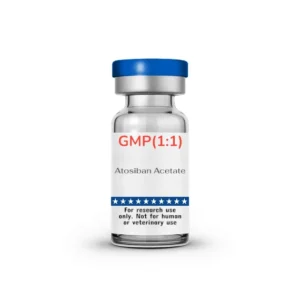
Atosiban Acetate lyophilized powder in vials