
No products in the cart.
Sale
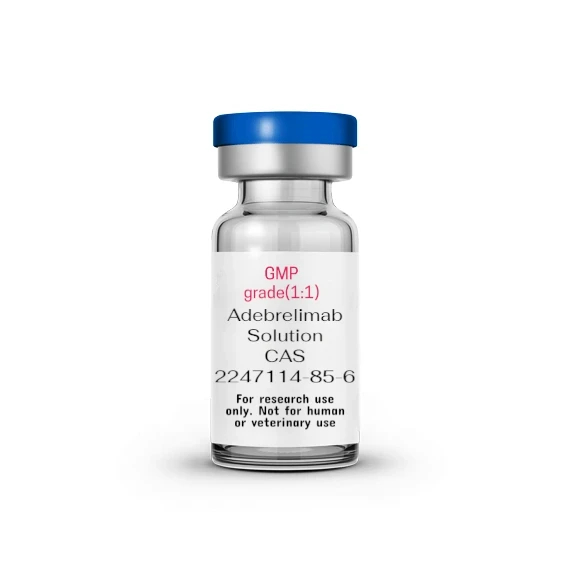
Adebrelimab Solution | CAS 2247114-85-6 | High-Purity PD-1 Monoclonal Antibody for Research
Original price was: $3.00.$2.00Current price is: $2.00.
Adebrelimab Solution (CAS 2247114-85-6) is a high-purity monoclonal antibody solution designed for preclinical immuno-oncology research. It selectively targets PD-1, enabling studies on T-cell activation, immune checkpoint modulation, and tumor immunotherapy mechanisms.
Description
Product Description
Adebrelimab Solution (CAS 2247114-85-6) is a fully humanized PD-1 monoclonal antibody formulated for laboratory and preclinical research applications. PD-1 (programmed cell death protein 1) is an inhibitory receptor expressed on activated T-cells that negatively regulates immune responses. By binding to PD-1, Adebrelimab blocks its interaction with PD-L1 and PD-L2, thereby restoring T-cell activity and promoting anti-tumor immune responses.
The solution is produced under GMP conditions and undergoes rigorous quality control to ensure high-purity (>99%), structural integrity, and functional consistency. Each batch is validated through ELISA, flow cytometry, and functional T-cell assays, confirming the ability to block PD-1/PD-L1 interactions effectively.
Applications in Preclinical Research:
Immune checkpoint blockade studies in tumor-infiltrating lymphocytes (TILs) and peripheral T-cells.
Evaluation of T-cell proliferation, cytokine secretion (IFN-γ, IL-2), and cytotoxic activity.
In vivo preclinical tumor models assessing anti-tumor efficacy, immune cell infiltration, and combination immunotherapy strategies.
Investigation of molecular mechanisms underlying PD-1-mediated immune suppression and T-cell exhaustion.
Mechanistic Research:
PD-1/PD-L1 Interaction Inhibition: Blocks PD-1 engagement, restoring T-cell signaling pathways.
T-cell Activation: Induces proliferation and cytokine production in effector T-cells.
Immune Modulation: Alters tumor microenvironment by enhancing T-cell infiltration and cytotoxic activity.
Quality and Stability:
Adebrelimab Solution is formulated for long-term storage at 2–8°C with stabilizers to maintain protein conformation and functional activity. The solution is supplied in sterile, ready-to-use format for precise dosing in in vitro and in vivo experiments.
Experimental Use:
Researchers utilize Adebrelimab Solution to explore immune checkpoint biology, study anti-tumor immune responses, test combination immunotherapies, and investigate biomarkers of T-cell activation. Its high-purity, consistent activity, and ease of use make it an ideal tool for preclinical immuno-oncology research, mechanistic studies, and translational applications.
By providing a reproducible, high-purity monoclonal antibody in solution form, Adebrelimab Solution enables laboratories to conduct detailed investigations of PD-1-mediated immune regulation, T-cell responses, and tumor immunotherapy mechanisms with confidence in experimental reproducibility and biological relevance.
Product Specifications
| Parameter | Specification |
|---|---|
| Chemical Name / Synonyms | Adebrelimab, PD-1 monoclonal antibody, SHR-1316 |
| CAS Number | 2247114-85-6 |
| Molecular Formula | Not applicable (monoclonal antibody) |
| Molecular Weight | ~150 kDa |
| Purity | ≥99% (ELISA/SEC-HPLC) |
| Appearance | Clear, colorless to light yellow sterile solution |
| Dosage Form | Solution |
| Solubility | Fully soluble in aqueous buffers; ready-to-use for cell culture and in vivo studies |
| Concentration | Typically provided at 10 mg/mL or as specified for research applications |
| Storage Temperature | 2–8°C, avoid freeze-thaw cycles |
| Stability | Stable for ≥12 months under recommended storage conditions |
| Analytical Methods | ELISA, flow cytometry, SEC-HPLC, SDS-PAGE, functional T-cell assays |
| Mechanistic Target | Programmed cell death protein 1 (PD-1) |
| Structural Category | Fully human IgG4 monoclonal antibody |
| Applications | Immune checkpoint blockade research, T-cell activation studies, tumor immunotherapy modeling, biomarker analysis |
| Batch Consistency | GMP-compliant production with consistent binding affinity and biological activity |
| Regulatory Notes | For research use only; not for human or veterinary use |
| Origin | China, GMP-certified facility |
| Additional Data | CoA provided for each batch; functional blocking assays verified; endotoxin levels <0.1 EU/mL |
Detailed Description:
Adebrelimab Solution is supplied in a sterile, ready-to-use format suitable for in vitro and in vivo applications. The solution ensures high-purity, functional integrity, and reproducible PD-1 blockade across experimental setups. Researchers can use the solution for immune checkpoint studies, T-cell functional assays, tumor microenvironment modeling, and combination immunotherapy experiments.
GMP production guarantees batch-to-batch consistency, allowing multi-center studies and preclinical projects to maintain reproducibility. Each batch is validated through ELISA, flow cytometry, and functional T-cell assays to confirm PD-1 binding and checkpoint inhibition activity, ensuring reliable mechanistic research outcomes.
The solution format reduces handling errors and allows precise dosing for T-cell proliferation assays, cytokine secretion analysis, and tumor model studies, making Adebrelimab Solution an essential tool for mechanistic immuno-oncology research and translational studies.
Mechanism of Action
Adebrelimab Solution (CAS 2247114-85-6) is a fully humanized PD-1 monoclonal antibody that functions by blocking the interaction between PD-1 and its ligands, PD-L1 and PD-L2. PD-1 is an immune checkpoint receptor expressed on activated T-cells, B-cells, and some myeloid cells. Engagement of PD-1 with its ligands suppresses T-cell receptor (TCR) signaling, leading to T-cell exhaustion, reduced proliferation, and diminished cytokine production. By binding PD-1, Adebrelimab restores T-cell effector functions, promoting immune-mediated tumor cell clearance in preclinical research settings.
1. PD-1/PD-L1 Blockade
Upon administration in vitro or in vivo, Adebrelimab Solution binds selectively to PD-1 on the surface of T-cells, effectively preventing PD-L1 and PD-L2 from engaging PD-1. This blockade lifts inhibitory signaling pathways and restores downstream TCR-mediated activation. Researchers observe:
Enhanced T-cell proliferation
Increased cytokine production (e.g., IFN-γ, IL-2, TNF-α)
Augmented cytotoxic activity against tumor cells
The high-purity and consistent formulation of Adebrelimab Capsules ensures reproducible binding kinetics and functional effects across experimental models.
2. T-cell Activation and Functional Enhancement
Adebrelimab Solution modulates multiple intracellular pathways to restore T-cell effector function:
PI3K/Akt signaling: Enhances metabolic activity and survival in activated T-cells.
MAPK/ERK pathway: Promotes proliferation and gene transcription for cytokine production.
NFAT/NF-κB transcriptional activation: Drives expression of pro-inflammatory and cytotoxic genes.
In preclinical experiments, researchers can measure functional endpoints such as cytotoxic degranulation, IFN-γ secretion, and proliferation to quantify the effects of Adebrelimab Solution on T-cell activation.
3. Modulation of the Tumor Microenvironment
By blocking PD-1, Adebrelimab indirectly remodels the tumor microenvironment (TME) in experimental models:
Increased infiltration of CD8+ cytotoxic T lymphocytes (CTLs)
Reduction of T-cell exhaustion markers (e.g., TIM-3, LAG-3)
Enhanced antigen presentation and dendritic cell activation
Suppression of immunosuppressive myeloid populations
These effects allow researchers to investigate the mechanistic basis of immune checkpoint inhibition, identify biomarkers, and study the synergy of combination immunotherapies in preclinical tumor models.
4. Molecular Signaling Pathways
Adebrelimab Solution influences multiple molecular pathways critical for T-cell activation:
JAK/STAT signaling: Facilitates transcription of effector cytokines and promotes anti-tumor responses.
Checkpoint inhibitory pathway downregulation: Reduces expression of PD-1-induced suppressive genes.
Apoptosis modulation in tumor cells: Secondary effect mediated by enhanced CTL cytotoxicity.
These pathways are measurable in laboratory assays, including flow cytometry, western blotting, ELISA, and transcriptional profiling, enabling detailed mechanistic studies of PD-1 blockade.
5. Preclinical and Experimental Applications
Adebrelimab Solution is widely applied in preclinical immuno-oncology research, including:
In vitro T-cell functional assays: Proliferation, cytokine secretion, and cytotoxicity studies.
Co-culture models: Studying interactions between tumor cells and immune cells.
In vivo tumor models: Assessment of tumor growth inhibition, immune infiltration, and combination therapy efficacy.
Biomarker discovery: Identifying predictive markers of PD-1 responsiveness and T-cell activation states.
The solution formulation ensures reproducibility, precise dosing, and minimal handling variability, making it ideal for mechanistic research and translational studies.
6. Summary
In summary, Adebrelimab Solution (CAS 2247114-85-6) acts as a high-purity PD-1 monoclonal antibody that blocks inhibitory signaling, restores T-cell activity, and promotes anti-tumor immune responses in preclinical research. Its consistent formulation, verified binding activity, and functional efficacy make it a reliable tool for mechanistic studies of immune checkpoint biology, T-cell activation, and combination immunotherapy research.
Applications
Adebrelimab Solution (CAS 2247114-85-6) is a versatile tool for preclinical immuno-oncology research, enabling comprehensive studies of PD-1 checkpoint blockade, T-cell activation, and tumor immune modulation. Its high-purity, sterile solution format allows reproducible dosing in diverse experimental settings, including in vitro assays, ex vivo studies, and in vivo preclinical models.
1. In Vitro T-Cell Functional Studies
Researchers utilize Adebrelimab Solution in cell culture systems to investigate T-cell responses:
Proliferation assays: Measures the expansion of activated T-cells in response to antigen stimulation with PD-1 blockade.
Cytokine secretion analysis: Quantifies IFN-γ, IL-2, and TNF-α production using ELISA or flow cytometry.
Cytotoxicity evaluation: Assesses the ability of T-cells to induce apoptosis in tumor target cells.
These studies allow laboratories to model immune checkpoint inhibition, validate mechanistic pathways, and identify experimental parameters for translational research.
2. Co-Culture and Tumor Microenvironment Modeling
Adebrelimab Solution is used in co-culture systems combining tumor cells, immune cells, and stromal components:
Tumor-infiltrating lymphocyte (TIL) studies: Investigate T-cell activation, exhaustion, and cytotoxic function.
Immune cell-tumor cell interactions: Analyze checkpoint-mediated suppression and reversal mechanisms.
Biomarker identification: Study expression of PD-L1, CTLA-4, TIM-3, and other inhibitory receptors in the TME.
These models provide a platform for mechanistic immunology research and testing novel combination therapies in preclinical studies.
3. In Vivo Preclinical Tumor Models
In animal studies, Adebrelimab Solution facilitates:
Tumor growth inhibition studies: Evaluation of checkpoint blockade efficacy in xenograft and syngeneic models.
Immune infiltration analysis: Quantification of CD8+, CD4+, and regulatory T-cells within tumors.
Combination immunotherapy research: Testing PD-1 blockade alongside chemotherapy, radiation, or other immunomodulators.
These experiments provide critical insight into the mechanistic basis of immune checkpoint inhibition and the therapeutic potential of Adebrelimab Solution.
4. High-Throughput Screening Applications
The solution format of Adebrelimab is compatible with high-throughput screening (HTS) assays:
Screening for small molecules, antibodies, or biologics that synergize with PD-1 blockade.
Multi-well plate-based T-cell functional assays for rapid evaluation of immunomodulatory effects.
Quantitative analysis of dose-response and checkpoint inhibition dynamics.
This enables laboratories to identify novel combinatorial strategies and accelerate translational research.
5. Molecular Immunology and Mechanistic Studies
Adebrelimab Solution allows detailed investigation of molecular pathways affected by PD-1 inhibition:
Signal transduction studies: PI3K/Akt, MAPK/ERK, JAK/STAT pathways in T-cells.
Gene expression profiling: Assessment of effector cytokines, exhaustion markers, and checkpoint-related genes.
Functional assays: Flow cytometry, ELISPOT, and intracellular cytokine staining for mechanistic validation.
Researchers can elucidate immune response modulation, study checkpoint pathways, and explore biomarker-driven experiments using this high-purity antibody solution.
6. Summary
In summary, Adebrelimab Solution (CAS 2247114-85-6) provides a comprehensive platform for preclinical and mechanistic immuno-oncology research. Its applications include:
T-cell functional assays and cytotoxicity studies
Co-culture models and tumor microenvironment analysis
In vivo tumor growth inhibition and immune infiltration studies
High-throughput screening for combination therapies
Molecular immunology and biomarker exploration
The high-purity, sterile solution formulation ensures reproducible experimental results across in vitro, ex vivo, and in vivo research applications, making Adebrelimab Solution an indispensable tool in modern immuno-oncology research.
Side Effects
Adebrelimab Solution (CAS 2247114-85-6), although designed exclusively for preclinical and laboratory research, exhibits measurable biological effects that are critical for investigators to consider when designing experiments. As a PD-1 monoclonal antibody, the solution modulates T-cell activity and immune checkpoint pathways, leading to intended mechanistic outcomes alongside observable laboratory phenomena.
1. Cellular Effects
Exposure to Adebrelimab Solution enhances T-cell proliferation and cytotoxic activity in vitro. Activated T-cells display increased cytokine secretion (IFN-γ, IL-2) and upregulated expression of activation markers such as CD69 and CD25. In co-culture with tumor cells, T-cell-mediated apoptosis of target cells is significantly elevated, reflecting the functional reversal of PD-1-mediated inhibition. These cellular effects are dose-dependent and provide reproducible endpoints for mechanistic immunology research.
2. Molecular and Signaling Effects
At the molecular level, Adebrelimab blocks PD-1/PD-L1 interaction, resulting in the activation of multiple intracellular signaling pathways:
PI3K/Akt pathway: Promotes T-cell survival and metabolic fitness.
MAPK/ERK pathway: Enhances proliferation and effector functions.
JAK/STAT signaling: Supports transcription of pro-inflammatory cytokines and cytotoxic genes.
NFAT and NF-κB activation: Drives gene expression critical for immune responses.
These pathways are measurable through flow cytometry, western blotting, and ELISA, allowing researchers to quantify the immunomodulatory effects of Adebrelimab Solution in a controlled setting.
3. Laboratory Handling Considerations
Although formulated as a sterile solution, Adebrelimab is a bioactive monoclonal antibody and should be handled using standard laboratory biosafety precautions:
Personal Protective Equipment (PPE): Gloves, lab coat, eye protection
Use of biosafety cabinets or fume hoods for preparation
Avoidance of contamination and repeated freeze-thaw cycles to preserve activity
Proper disposal of residual antibody and contaminated consumables to maintain GLP compliance
Adhering to these procedures ensures both experimental reproducibility and laboratory safety.
4. Off-Target and Experimental Considerations
High concentrations of Adebrelimab Solution may cause non-specific T-cell activation or unintended modulation of co-stimulatory pathways. Researchers should carefully titrate antibody concentrations, validate effects with appropriate controls, and confirm specificity through complementary assays such as PD-1 knockout or isotype control experiments. Understanding these parameters prevents confounding effects in mechanistic studies and ensures reliable interpretation of experimental data.
5. Summary
In preclinical research, Adebrelimab Solution induces T-cell proliferation, cytokine secretion, and enhanced cytotoxic activity, consistent with its mechanism as a PD-1 inhibitor. Awareness of cellular and molecular effects, along with proper laboratory handling, enables researchers to design robust, reproducible experiments while ensuring safety. These characteristics make Adebrelimab Solution (CAS 2247114-85-6) an essential tool for mechanistic immunology studies, immune checkpoint research, and preclinical tumor immunotherapy experiments.
Keywords
Adebrelimab Solution, CAS 2247114-85-6, PD-1 monoclonal antibody, immune checkpoint inhibitor, T-cell activation reagent, preclinical immuno-oncology research, tumor immunotherapy research, high-purity antibody, sterile research solution, mechanistic immunology tool, immune modulation study, combinatorial therapy research, bulk production research-grade antibody, factory small-molecule supplier, China antibody manufacturer, high-purity research reagent, translational immunology tool.
Shipping Guarantee
Adebrelimab Solution (CAS 2247114-85-6) is shipped under strict cold-chain conditions to maintain structural integrity and biological activity. Packaging is insulated and tamper-evident, with real-time tracking and insurance for all shipments. International delivery, express services, and temperature-sensitive handling options ensure that the solution reaches laboratories in optimal condition for preclinical and mechanistic studies.
Trade Assurance
All batches of Adebrelimab Solution are manufactured under GMP-compliant standards with purity ≥99%, confirmed via ELISA, flow cytometry, and SEC-HPLC. Certificates of Analysis (CoA) are provided for each lot. Bulk production, OEM, and customized concentrations are available to meet research requirements, with reliable replacement or return policies ensuring consistent experimental reproducibility.
Payment Support
Flexible and secure payment methods include PayPal, major credit cards, T/T bank transfer, USDT, Bitcoin, and Ethereum. Transactions are fully encrypted to protect sensitive financial information, enabling global research laboratories to efficiently procure high-purity Adebrelimab Solution for preclinical studies, mechanistic experiments, and translational research.
Disclaimer
Adebrelimab Solution (CAS 2247114-85-6) is intended strictly for laboratory and preclinical research use. It is not for human or veterinary administration. Users must follow institutional biosafety guidelines, utilize appropriate PPE, and handle the antibody according to GLP standards. Improper use may affect immune responses and experimental outcomes. All information is provided solely for scientific research and educational applications.
References
PubChem – Adebrelimab
Provides chemical structure, molecular properties, and bioactivity information for Adebrelimab Solution, supporting preclinical immuno-oncology research.ChEMBL – Adebrelimab
Contains detailed bioactivity data, molecular target interactions, and experimental assay results suitable for mechanistic studies of PD-1 blockade.DrugBank – Adebrelimab
Offers pharmacological profiles, mechanism of action insights, and preclinical research applications of Adebrelimab Solution.PubMed – Adebrelimab Research Articles
Access peer-reviewed publications detailing PD-1 inhibition, T-cell activation, immune checkpoint studies, and preclinical tumor immunotherapy research.IUPHAR/BPS – Immune Checkpoint Targets
Provides curated data on molecular targets, signaling pathways, and immune checkpoint mechanisms relevant to Adebrelimab Solution research.Additional Resources
ACS Chemical Biology Journal Articles on Monoclonal Antibodies.
Sigma-Aldrich Technical Datasheets.
ResearchGate Experimental Studies on PD-1 Blockade.
These references provide authoritative, peer-reviewed information for laboratories using Adebrelimab Solution (CAS 2247114-85-6) in mechanistic, preclinical, and translational research applications. Researchers can access molecular data, functional assay protocols, and experimental guidelines to ensure reproducible and high-impact studies.

Additional information
| Weight | 1.1 kg |
|---|---|
| Dimensions | 18 × 16 × 18 cm |
1. What is the main use of Adebrelimab Solution?
Adebrelimab Solution (CAS 2247114-85-6) is a PD-1 monoclonal antibody used for preclinical immuno-oncology research, T-cell activation studies, and immune checkpoint blockade experiments.
2. How should Adebrelimab Solution be stored?
Store at 2–8°C in the original sterile container, avoiding freeze-thaw cycles and light exposure to maintain high-purity and functional activity.
3. Is Adebrelimab Solution GMP-compliant?
Yes, all batches are GMP-compliant, with consistent purity ≥99% and validated functional activity via ELISA and flow cytometry.
4. Can it be used in combination immunotherapy studies?
Yes, it is widely used in combination with chemotherapeutic agents, checkpoint inhibitors, or cytokines to study synergistic immune effects in preclinical models.
5. Does each batch include a Certificate of Analysis (CoA)?
Every batch of Adebrelimab Solution comes with a CoA, confirming purity, identity, and functional blocking efficacy, ensuring reproducibility for research experiments.
6. Are bulk production or OEM services available?
Yes, our factory antibody supplier provides bulk production and OEM customization to meet the needs of research laboratories and preclinical study centers.
7. Is Adebrelimab Solution suitable for high-throughput screening?
Yes, it is compatible with multi-well plate-based T-cell functional assays and other high-throughput screening approaches for immune checkpoint studies.
8. What cell types can be used with Adebrelimab Solution?
Commonly used with CD8+ and CD4+ T-cells, tumor-infiltrating lymphocytes (TILs), and various immune cell lines to evaluate T-cell activation, cytotoxicity, and cytokine production.
9. What signaling pathways are affected by Adebrelimab Solution?
It modulates PI3K/Akt, MAPK/ERK, JAK/STAT, and NFAT/NF-κB pathways, restoring T-cell proliferation, cytokine secretion, and cytotoxic activity.
10. Can Adebrelimab Solution be used in vivo?
Yes, it is suitable for preclinical tumor models, including xenograft and syngeneic models, to assess tumor growth inhibition and immune cell infiltration.
11. What are the key safety precautions?
Handle using PPE, in a biosafety cabinet if necessary, avoid repeated freeze-thaw cycles, and properly dispose of residual antibody to ensure lab safety.
12. How long is the solution stable?
Adebrelimab Solution is stable for at least 12 months under recommended storage conditions while maintaining functional activity.
13. How can dosing accuracy be ensured?
The solution is pre-formulated for precise dosing, reducing variability in T-cell assays, tumor models, and functional studies.
14. Who supplies high-purity Adebrelimab Solution globally?
China antibody manufacturers and reputable factory small-molecule suppliers provide high-purity, GMP-compliant Adebrelimab Solution for research applications and bulk procurement.
15. Can Adebrelimab Solution be used for biomarker studies?
Yes, it is widely employed for immune biomarker analysis, including PD-1/PD-L1 interactions, T-cell exhaustion markers, and cytokine expression profiling in preclinical research.
Related products
Elranatamab 76mg solution — Laboratory Research Grade Reagent
Elranatamab is a high-purity bispecific monoclonal antibody designed for in vitro studies of target engagement, molecular signaling, and cellular interaction mechanisms. It is intended exclusively for laboratory research, enabling precise mechanistic investigations in controlled experimental systems.
Original price was: $6.00.$3.00Current price is: $3.00.Doxorubicin Liposome Solution for scientific research
High-purity Doxorubicin Liposome Solution, factory-manufactured for in vitro molecular mechanism studies and biochemical pathway research. Supplied as a stable liposomal solution, ideal for laboratories requiring bulk, wholesale, or customized research-grade supply. Original price was: $10.00.$8.00Current price is: $8.00.Irinotecan Hydrochloride Liposome 43mg for scientific research
High-purity Irinotecan Hydrochloride Liposome Solution, factory-manufactured for in vitro molecular mechanism studies and controlled biochemical pathway research. Supplied as a stable liposomal solution suitable for laboratories requiring bulk, wholesale, or customized research-grade supply. Original price was: $2.00.$1.00Current price is: $1.00.Iparomlimab and Tuvonralimab 50 mg/2 mL Solution
Iparomlimab and Tuvonralimab is a high-purity monoclonal antibody solution supplied at 50 mg/2 mL by factory manufacturing with low-price wholesale availability. Designed exclusively for in vitro molecular mechanism studies, protein interaction assays, and signaling pathway research, it provides reproducible and reliable experimental performance. Strictly for laboratory research use. $1.00


Reviews
There are no reviews yet.