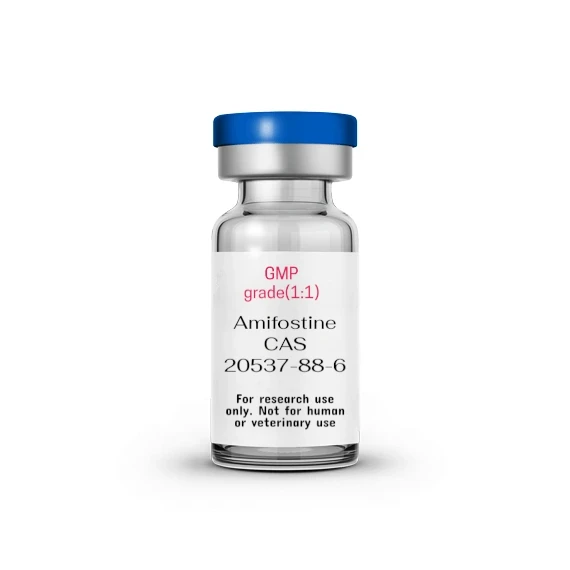
Amifostine | CAS 20537-88-6 | High-Purity Bulk Research-Grade Solution for Cytoprotective and Radioprotective Studies

Sale

Amifostine | CAS 20537-88-6 | High-Purity Bulk Research-Grade Solution for Cytoprotective and Radioprotective Studies

Original price was: $3.00.Current price is: $2.00.

Amifostine solution (CAS 20537-88-6) is a high-purity cytoprotective agent used in laboratory research to study DNA protection, oxidative stress mitigation, and radioprotection mechanisms. Ideal for mechanistic, in vitro, and preclinical investigations.

EMI starting from $0.00/month - View Plans
Compare

Description

Product Description

Amifostine is a phosphorylated aminothiol prodrug widely studied for its cytoprotective and radioprotective properties. It is enzymatically dephosphorylated by alkaline phosphatases in normal tissues to generate the active thiol metabolite WR-1065, which scavenges free radicals, protects DNA, and enhances repair pathways.

In laboratory research, Amifostine solution is used to investigate:

  • Radioprotection: Mitigation of radiation-induced DNA damage in normal cells and tissues.

  • Cytoprotection: Protection against oxidative stress and chemotherapeutic toxicity.

  • DNA repair mechanisms: Enhancement of nucleotide excision repair and homologous recombination pathways.

  • Oxidative stress modulation: Scavenging of reactive oxygen species (ROS) and reactive nitrogen species (RNS).

Mechanistically, the active metabolite WR-1065 forms disulfide adducts with DNA and protein thiols, stabilizing molecular structures and preventing oxidative injury. It also induces cell cycle arrest in G1 phase, allowing enhanced DNA repair before replication. Laboratory studies frequently employ Amifostine in:

  • In vitro cell culture models to assess DNA damage and repair kinetics via γ-H2AX foci or comet assays.

  • Preclinical radiation studies to examine tissue-specific protection in rodent models.

  • Combination studies with chemotherapeutic agents to evaluate selective cytoprotection of normal cells.

  • Molecular assays exploring antioxidant pathways, including glutathione (GSH) and thioredoxin systems.

The solution form provides uniform dosing, ease of use, and rapid bioavailability, making it suitable for detailed experimental modeling. Quality control includes HPLC purity verification, MS, and NMR structural confirmation, ensuring reproducibility and reliability in research applications.

Amifostine’s selective activation in normal cells versus tumor cells is particularly advantageous for preclinical studies of therapeutic index modulation, enabling researchers to explore differential cytoprotective effects and optimize experimental protocols for chemotherapy and radiotherapy models.
Amifostine
Amifostine

Product Specifications

ParameterDetails
Product Name / SynonymsAmifostine; WR-2721; Ethiofos; Medimmune research compound
CAS Number20537-88-6
Molecular FormulaC5H15N2O3PS
Molecular Weight214.2 Da
Purity≥99% (HPLC verified)
AppearanceClear, colorless solution
Dosage FormSolution
SolubilitySoluble in sterile water, PBS, and DMSO
ConcentrationCustomizable based on experimental design
Storage Temperature2–8°C (short-term), –20°C (long-term)
Stability≥12 months under recommended storage
Analytical MethodsHPLC, NMR, MS, UV spectroscopy
Mechanistic TargetAlkylation-protection and ROS scavenging; active metabolite WR-1065 targets DNA and protein thiols
Structural CategoryPhosphorylated aminothiol prodrug
ApplicationsRadioprotection, cytoprotection, DNA repair studies, oxidative stress mitigation, chemotherapy protective research
Batch ConsistencyGMP-controlled, high-purity verified
Regulatory NotesLaboratory research use only; not for human or veterinary administration
OriginSynthesized in GMP-compliant chemical manufacturing facility
Additional DataCertificate of Analysis (CoA) available

Mechanism of Action

Amifostine is a phosphorylated aminothiol prodrug that requires enzymatic activation by tissue alkaline phosphatases to generate the active metabolite WR-1065, a free thiol capable of scavenging reactive oxygen species (ROS) and reactive nitrogen species (RNS).

DNA Protection and Repair

  • WR-1065 forms disulfide bonds with DNA and protein thiols, protecting the DNA backbone from oxidative damage.

  • Induces cell cycle arrest in G1 phase, allowing enhanced DNA repair prior to replication.

  • Stimulates nucleotide excision repair (NER) and homologous recombination pathways, crucial for maintaining genomic integrity under genotoxic stress.

Radioprotective Signaling

  • Scavenges ionizing radiation-induced free radicals, reducing double-strand breaks and chromosomal aberrations.

  • Protects mitochondrial DNA and membranes from ROS-mediated damage, preserving cell viability.

  • Modulates antioxidant defense systems, including glutathione (GSH) and thioredoxin, enhancing cellular resilience.

Cytoprotective Effects

  • Reduces chemotherapy-induced cytotoxicity in normal tissues while allowing tumor cells to remain susceptible.

  • Decreases lipid peroxidation, protein oxidation, and mitochondrial dysfunction in preclinical models.

  • Mitigates inflammatory responses by downregulating NF-κB-mediated cytokine expression in normal cells.

Experimental Applications

  • In vitro cell culture: Measurement of DNA damage markers such as γ-H2AX and comet assay tail moments.

  • Preclinical radiation studies: Tissue-specific radioprotection in rodent organs including bone marrow, gastrointestinal tract, and salivary glands.

  • Chemotherapy combination studies: Evaluation of selective cytoprotection in normal cells exposed to cisplatin, cyclophosphamide, or doxorubicin.

  • ROS and RNS assays: Quantification of free radical scavenging and antioxidant capacity.

The solution form ensures rapid and reproducible dosing, supporting mechanistic investigations in a range of experimental models. High-purity, GMP-compliant Amifostine solution allows reliable dose-response studies, kinetic analysis, and translational research applications in radioprotection and cytoprotection studies.


Side Effects

Cellular Effects

  • Cytoprotection versus toxicity: At recommended experimental concentrations, Amifostine protects normal cells from oxidative damage and DNA strand breaks. Excessive dosing in vitro may interfere with apoptosis assays or artificially reduce ROS-mediated signaling, potentially affecting experimental interpretation.

  • Mitochondrial protection: WR-1065 stabilizes mitochondrial membranes, preventing cytochrome c release and preserving ATP production. High concentrations may alter mitochondrial dynamics in prolonged cell culture studies.

  • Cell cycle modulation: Amifostine can induce G1 phase arrest, which may affect proliferation-based assays if not carefully titrated.

Molecular Effects

  • ROS and RNS scavenging: Amifostine reduces intracellular ROS, RNS, and lipid peroxidation. Researchers should note this effect in oxidative stress experiments, as it may mask certain reactive species dynamics.

  • DNA and protein thiol interactions: Formation of disulfide adducts protects macromolecules but may influence experimental readouts involving free thiol detection or redox-sensitive assays.

  • Cytokine modulation: In some in vitro immune cell studies, Amifostine decreases NF-κB-dependent cytokine production, potentially affecting inflammatory signaling experiments.

Laboratory Handling Considerations

  • Always use PPE including gloves, lab coat, and eye protection when handling Amifostine solution.

  • Store at 2–8°C for short-term use; avoid repeated freeze-thaw cycles and exposure to light.

  • Prepare working solutions under sterile conditions to prevent contamination.

  • Dispose of unused or expired material according to institutional chemical safety guidelines.

  • Pilot studies are recommended to establish concentration ranges appropriate for the specific cell type or tissue model.

Note: While Amifostine is non-toxic in typical laboratory concentrations, care must be taken to avoid overexposure, which may confound experimental endpoints in oxidative stress, apoptosis, or proliferation studies.


Keywords

Amifostine solution; cytoprotective agent; radioprotective reagent; DNA protection compound; oxidative stress mitigation; WR-1065 active metabolite; high-purity research chemical; preclinical radioprotection tool; chemotherapy cytoprotection; ROS/RNS scavenger; nucleotide excision repair enhancer; mitochondrial stabilizer; laboratory research compound; GMP bulk chemical; cell cycle modulation agent; oxidative damage prevention; molecular pharmacology reagent; normal tissue protection studies; in vitro and in vivo research solution.


Shipping Guarantee

  • Temperature-controlled logistics: Amifostine Maintain solution integrity with cold packs or refrigerated shipping.

  • Packaging: Leak-proof vials with secondary containment for safety.

  • Tracking: Real-time shipment monitoring available.

  • Insurance: Amifostine Full coverage for product loss or damage during transit.


Trade Assurance

  • Purity: ≥99% verified via HPLC, NMR, and MS.

  • GMP-compliant production: Amifostine Ensures batch-to-batch consistency and reliability.

  • Certificate of Analysis (CoA): Provided with each order.

  • Amifostine Replacement/Refund Policy: Available for non-conforming products.


Payment Support

  • PayPal, Credit Card, T/T, USDT, Bitcoin, Ethereum.

  • Amifostine Secure, encrypted transactions suitable for international and institutional orders.


Disclaimer

Amifostine solution is intended strictly for laboratory research purposes. It is not for human or veterinary use. All handling, preparation, and disposal must comply with institutional biosafety and chemical safety protocols. Researchers should wear appropriate PPE and follow Good Laboratory Practice (GLP) standards. Misuse or inappropriate dosing may alter cellular redox states, interfere with DNA repair studies, or confound oxidative stress experimental results. Users are responsible for safe and compliant use of this research-grade chemical.


References

Additional information

Weight1.1 kg
Dimensions18 × 16 × 18 cm

Reviews

There are no reviews yet.

Be the first to review “Amifostine | CAS 20537-88-6 | High-Purity Bulk Research-Grade Solution for Cytoprotective and Radioprotective Studies”

Your email address will not be published. Required fields are marked *

What is Amifostine used for in research?

Amifostine is a cytoprotective and radioprotective agent used to study DNA damage mitigation, oxidative stress responses, and tissue protection mechanisms in vitro and in preclinical models.

What are the storage requirements?

Store the solution at 2–8°C. Avoid repeated freeze-thaw cycles, light exposure, and prolonged room temperature storage to maintain stability and bioactivity.

Is the product GMP compliant?

Yes, Amifostine solution is produced under GMP-compliant conditions, ensuring high purity, batch consistency, and reliable experimental outcomes.

Can Amifostine be used with chemotherapeutic agents?

Yes, it is frequently used to study selective protection of normal cells from chemotherapy-induced toxicity while allowing tumor cells to remain sensitive.

How is the bioactivity verified?

Bioactivity is confirmed using DNA damage assays (γ-H2AX foci, comet assay), ROS/RNS scavenging tests, and mitochondrial integrity measurements.

Can it be applied in radioprotection studies?

Yes, Amifostine is widely applied in preclinical models to study protection of bone marrow, gastrointestinal tissue, and salivary glands from ionizing radiation.

Is a Certificate of Analysis (CoA) provided?

Yes, each batch includes CoA detailing purity, molecular structure verification, and analytical results from HPLC, NMR, and MS.

What concentrations are recommended for in vitro studies?

Concentrations should be optimized in pilot studies. Typical ranges allow cytoprotection without excessive suppression of ROS signaling or apoptosis.

Is bulk supply available?

Yes, high-purity Amifostine solution is available in bulk for preclinical studies, high-throughput assays, and multicenter research collaborations.

Can it protect mitochondrial function in cell models?

Yes, WR-1065 stabilizes mitochondrial membranes, preserves ATP production, and reduces oxidative stress-induced mitochondrial damage.

Are OEM or custom packaging options available?

Yes, orders can be customized for vial size, labeling, and packaging to meet laboratory or institutional requirements.

Does it interfere with ROS-related experiments?

At high concentrations, Amifostine may scavenge ROS and alter redox-sensitive assays. Researchers should carefully titrate dosing for mechanistic studies.

Is it compatible with cell culture media?

Yes, Amifostine solution is compatible with sterile water, PBS, and common culture media, ensuring accurate experimental dosing.

Can it be used in combination with radiomimetic agents?

Yes, it is frequently used to assess differential cytoprotection in normal versus tumor cells exposed to DNA-damaging agents.

Is international shipping supported?

Yes, temperature-controlled shipping with tracking and full insurance is available worldwide.


EMI Options

Select at least 2 products
to compare