
No products in the cart.
Sale
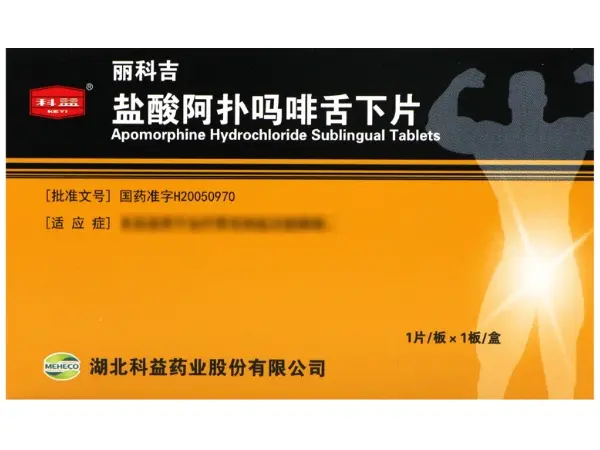
Apomorphine Hydrochloride Sublingual Tablets 3mg
Original price was: $26.00.$22.00Current price is: $22.00.
Apomorphine hydrochloride is a rapid acting dopamine agonist used in Parkinson’s disease research to treat acute “off” episodes. These 3mg sublingual tablets dissolve under the tongue for quick absorption, making them ideal for laboratory and preclinical studies. Not approved for therapeutic, diagnostic, clinical, or veterinary use.Please consult staff for other specifications and uses

Description
Product Specifications
| Attribute | Details |
|---|---|
| Product Name | Apomorphine Hydrochloride Sublingual Tablets |
| Generic Name | Apomorphine Hydrochloride (hemihydrate) |
| CAS Number | 41372-20-7 |
| Molecular Formula | C17H17NO2·HCl |
| Molecular Weight | 303.78 g/mol |
| Dosage Form | Sublingual tablet (film/tablet) |
| Strength | 3mg per tablet |
| Pack Size | 1 tablet per box |
| Approval No. | China NMPA H20050970 |
| Product Code | 86901828000640 |
| Manufacturer | Hubei Keyi Pharmaceutical Co., Ltd. |
| Barcode | 6938399500952 |
| Storage Conditions | Store at 15–25°C in a cool, dry place |
| Intended Use | Laboratory and preclinical research only |
Mechanism of Action
Apomorphine is a non-selective dopamine agonist with high affinity for D?–D? receptors and some serotonergic and adrenergic receptor activity. It mimics dopamine, alleviating motor “off” episodes in Parkinson’s disease models .
Research Applications & Pharmacology
Parkinson’s Disease (PD) Models: Used to manage acute motor “off” episodes with rapid onset (~10–20 min), mimicking dopaminergic therapy .
Pharmacokinetics & Comparison: Sublingual film/tablet provides similar efficacy to subcutaneous injection; widely preferred by patients in comparative studies pmc.ncbi.nlm.nih.gov+1en.wikipedia.org+1.
Dose Titration: Standard clinical initiation begins at 10mg, optimized to 15–30mg sublingually; research-grade 3mg tablets can be used for precise titration .
Additional Research Use: Investigated for erectile function modulation, addiction treatment, Alzheimer’s disease, and vomiting induction in veterinary models .
Safety Profile & Handling
Common Side Effects: Nausea (often requiring antiemetics), orthostatic hypotension, somnolence, dizziness, dyskinesia .
Cardiac Effects: May cause QT prolongation—monitor cardiovascular parameters in research .
Drug Interactions: Potentiates hypotension with nitrates/vasodilators; alcohol and dopamine antagonists may reduce efficacy or increase side effects .
Handling Recommendations: Store protected from light and moisture; use PPE and lab-standard precautions. Discard expired items per institutional protocol.
Additional information
| Weight | 1 kg |
|---|---|
| Dimensions | 18 × 16 × 18 cm |
What is Apomorphine Hydrochloride used for in research?
Apomorphine hydrochloride is widely studied in neuropharmacology and dopaminergic signaling research, particularly involving dopamine receptor activation.
What type of compound is Apomorphine?
Apomorphine is a dopamine receptor agonist that interacts with both D1 and D2 dopamine receptor subtypes.
What purity level is provided?
This product is manufactured with ≥99% purity, verified through analytical methods such as HPLC.
Why is a sublingual tablet formulation used?
The sublingual route allows rapid absorption through oral mucosal tissues, which can be useful in pharmacokinetic research models.
How should the tablets be stored?
They should be stored below 25°C and protected from light and moisture to maintain stability.
What analytical methods verify the compound?
Purity and identity are confirmed through HPLC and mass spectrometry analysis.
Is this product intended for clinical use?
No. The product is supplied strictly for laboratory research purposes only.
Does Apomorphine dissolve in water?
Yes. Apomorphine hydrochloride is soluble in water and alcohol, which facilitates laboratory preparation.
What research fields commonly use Apomorphine?
The compound is commonly used in neuropharmacology, neuroscience research, pharmacology, and receptor signaling studies.
What receptor systems does Apomorphine affect?
Apomorphine primarily interacts with dopamine receptors within the central nervous system, influencing dopaminergic signaling pathways.
Related products
Silodosin CAS 160970-54-7 4mg | For research use only
Silodosin is a high-purity research reagent suitable for in vitro mechanistic and molecular studies. It supports enzyme modulation, receptor signaling, and molecular pathway investigations under controlled laboratory conditions. Factory-direct manufacturing ensures consistent batch quality, analytical verification, and bulk availability for laboratory research. Original price was: $86.00.$56.00Current price is: $56.00.Sildenafil Citrate Tablets (ChiWei®) 100?mg ×?3 Tablets
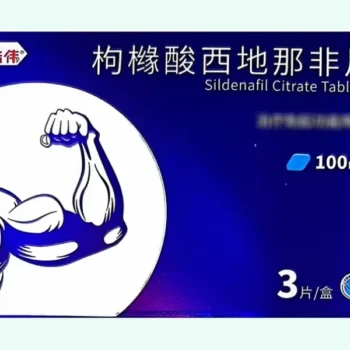
Sildenafil citrate is a selective Phosphodiesterase-5 (PDE5) inhibitor widely used in research for erectile dysfunction, pulmonary arterial hypertension, and emerging indications like cardioprotection. This product is supplied as 100?mg tablets in a pack of 3. Strictly for laboratory and preclinical research only, not approved for clinical, diagnostic, therapeutic, or veterinary use.
$2.00Tadalafil (CAS 171596-29-5) 20mg for laboratory research
High-purity Tadalafil powder for in vitro mechanistic research and molecular pathway studies. Factory-manufactured and available in bulk for laboratory use. Original price was: $96.00.$65.00Current price is: $65.00.Testosterone Undecanoate Injection 0.25g
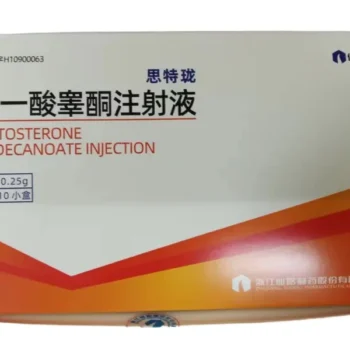
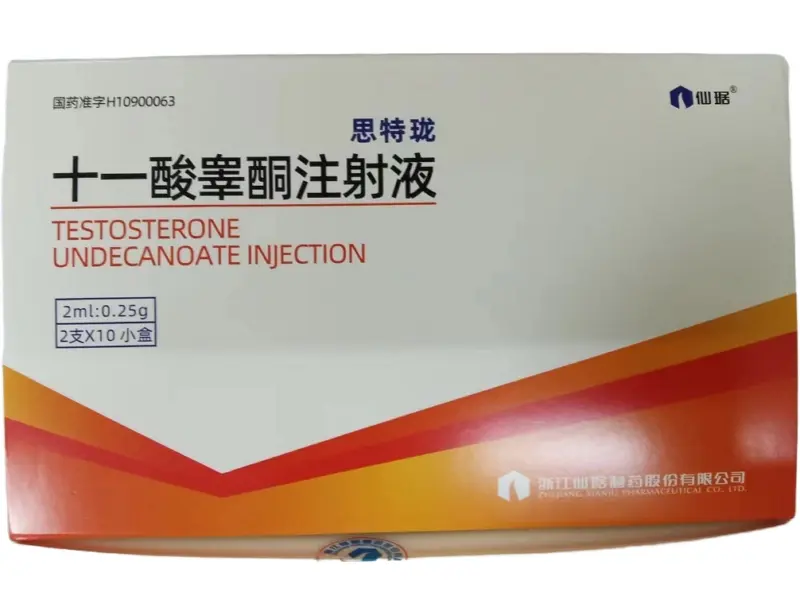
Testosterone undecanoate is a long-acting testosterone ester used in hormone research—especially in hypogonadism, contraception, bone health, and metabolic models. Supplied as 250mg in 2mL oil-based vials (2 vials per small box, 10 boxes/carton), this pharmaceutical-grade injectable is strictly for laboratory and preclinical studies. Not approved for human, veterinary, diagnostic, or therapeutic use.Please consult staff for other specifications and uses Original price was: $96.00.$88.00Current price is: $88.00.




Reviews
There are no reviews yet.