
No products in the cart.
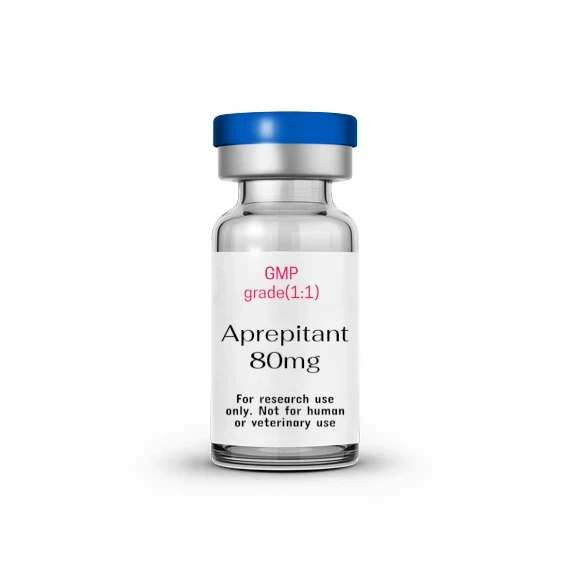

Aprepitant 80mg | 99% High Purity | Laboratory Research Use Only
$1.00
High-purity Aprepitant, factory-manufactured for in vitro mechanistic studies and molecular pathway research. Supplied as a stable powder for laboratories requiring bulk, wholesale, or customized research-grade supply.
Description
Product Description
Aprepitant is a high-purity, laboratory-grade small molecule specifically formulated for in vitro mechanistic and molecular research. Its chemical stability and verified high purity make it ideal for studying neurokinin-1 (NK1) receptor interactions, signal transduction pathways, and receptor-ligand dynamics under controlled laboratory conditions.
This research-grade compound is widely used in biochemical and mechanistic studies, including receptor binding assays, protein interaction analysis, and molecular pathway modulation. Its reproducible activity allows precise evaluation of dose-response relationships, receptor selectivity, and binding kinetics, ensuring reliable mechanistic insights.
Aprepitant is suitable for cell-free systems, purified receptor models, and synthetic protein studies, where strict experimental control is necessary. Its high solubility in DMSO and other common solvents allows preparation of accurate stock solutions for diverse in vitro assays.
In addition, Aprepitant serves as a reference standard for analytical method validation, supporting techniques such as HPLC, mass spectrometry, and spectroscopic analysis. Researchers can integrate it into high-throughput screening, structure-activity relationship studies, and mechanistic pathway elucidation, generating reproducible and precise data.
Factory-controlled production ensures bulk, wholesale, and customized supply, including flexible packaging and concentration options. Each batch is accompanied by a Certificate of Analysis (CoA) verifying purity, solubility, and stability, guaranteeing reproducibility across laboratories.
By combining high chemical purity, stability, and reproducible activity, Aprepitant provides a robust platform for molecular mechanism research, receptor-ligand interaction studies, and biochemical pathway analysis. Its application in in vitro experimental models allows laboratories to generate reliable, high-quality mechanistic data.
The factory-manufactured, low-price wholesale availability ensures laboratories can obtain sufficient quantities for extended studies without compromising on quality, reproducibility, or experimental integrity. Overall, Aprepitant is a versatile and essential reagent for laboratories conducting advanced mechanistic and molecular research.
Product Specifications
| Parameter | Specification (Aprepitant) |
|---|---|
| Product Name | Aprepitant |
| Form | Powder |
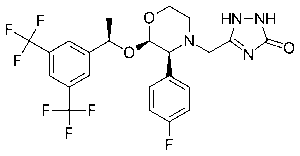
| Chemical Name | (S)-N-[(1R,3R)-3-(1-(3-fluorophenyl)propyl)-1-(2-methylpropyl)-2-oxo-2,3-dihydro-1H-imidazo[4,5-c]pyridin-1-yl]-4-(trifluoromethyl)benzamide |
| Molecular Formula | C23H21F7N4O3 |
| Molecular Weight | 534.4 g/mol |
| Purity | ≥ 99% (HPLC verified) |
| Appearance | White to off-white crystalline powder |
| Solubility | Soluble in DMSO, DMF, partially soluble in ethanol |
| Stability | Chemically stable under recommended storage; avoid heat and light |
| Storage Conditions | Store at 2–8°C, sealed, light-protected |
| Recommended Research Use | Suitable for receptor-ligand studies, NK1 receptor mechanistic assays, molecular pathway research, and in vitro signal transduction studies |
| CAS Number | 170729-80-3 |
| HS Code | Available for bulk and wholesale orders |
| Packaging Options | Laboratory vials; bulk and custom packaging available |
| Factory Production Capability | High-capacity production supporting OEM/ODM and bulk laboratory supply |
| Quality Verification | QC-tested for chemical purity, solubility, and stability |
| Regulatory Status | For laboratory research use only; not for human or veterinary applications |
Notes
Aprepitant is manufactured under strict factory-controlled conditions to maintain chemical purity, stability, and reproducibility. Bulk and wholesale orders are supported with custom concentrations, packaging options, and batch-specific Certificates of Analysis (CoA). This ensures high-quality material for mechanistic, biochemical, and molecular pathway research.
Mechanism of Action
Aprepitant is a selective neurokinin-1 (NK1) receptor antagonist designed for in vitro mechanistic and molecular pathway studies. Its high purity and stable formulation enable precise exploration of receptor-ligand interactions, signal transduction, and downstream molecular effects in controlled laboratory settings.
1. NK1 Receptor Binding
Aprepitant binds specifically to the NK1 receptor, inhibiting its interaction with substance P. In vitro studies using purified receptor proteins or cell-free systems can quantify binding kinetics, affinity, and selectivity, providing detailed mechanistic insights.
2. Modulation of Signal Transduction
In biochemical assays, Aprepitant affects downstream signaling cascades initiated by NK1 receptor activation. Researchers can examine phosphorylation events, secondary messenger pathways, and protein interaction networks under tightly controlled experimental conditions.
3. Protein-Ligand Interaction Analysis
Mechanistic studies can include surface plasmon resonance (SPR), isothermal titration calorimetry (ITC), and spectroscopic methods to measure binding dynamics, conformational changes, and structure-activity relationships.
4. Structural and Functional Studies
High-purity Aprepitant allows experiments on protein conformational dynamics, receptor-ligand complex formation, and SAR studies, supporting reproducible in vitro mechanistic investigations.
5. Analytical Validation
It can serve as a reference compound for validating analytical assays, including HPLC, mass spectrometry, and high-throughput screening platforms, ensuring accuracy and reproducibility.
Overall, Aprepitant provides a robust tool for in vitro mechanistic research, enabling laboratories to study receptor inhibition, molecular pathway modulation, and biochemical interactions with high precision and reproducibility.
Applications
Aprepitant is widely used in in vitro mechanistic and molecular research due to its high-purity and stable formulation, making it suitable for studying NK1 receptor inhibition, signal transduction, and molecular pathway modulation.
1. Receptor Binding Assays
Aprepitant is ideal for evaluating NK1 receptor-ligand interactions in purified receptor systems or cell-free assays. Researchers can assess binding affinity, receptor selectivity, and dose-response relationships.
2. Molecular Pathway Studies
The compound enables laboratories to explore downstream signaling pathways, including phosphorylation cascades, secondary messenger modulation, and protein-protein interactions. Controlled in vitro models provide reproducible mechanistic insights.
3. Structure-Activity Relationship (SAR) Studies
High-purity Aprepitant supports receptor-ligand structural studies, conformational dynamics analysis, and SAR mapping, allowing detailed evaluation of molecular interactions and binding mechanisms.
4. Analytical Method Development
It serves as a reference standard for validating analytical techniques such as HPLC, mass spectrometry, and fluorescence-based assays, ensuring reproducibility in mechanistic experiments.
5. Computational Integration
Experimental data can be combined with molecular docking, predictive modeling, and in silico simulations to refine mechanistic hypotheses and validate receptor interaction models.
6. High-Throughput Screening
Compatible with automated platforms, Aprepitant allows parallel testing of multiple conditions, including ligand variants, receptor isoforms, and environmental factors, enhancing throughput for mechanistic investigations.
Overall, Aprepitant provides a versatile platform for laboratories studying receptor inhibition, molecular signaling, and mechanistic biochemistry under fully controlled in vitro conditions.
Research Models
Aprepitant is designed for in vitro research models that enable detailed exploration of NK1 receptor inhibition, signal transduction, and molecular pathway modulation. Its high purity and stable formulation provide reproducible results across diverse mechanistic studies.
1. Receptor-Based Models
In cell-free systems, Aprepitant can be applied to purified NK1 receptor assays to study ligand binding, receptor conformational changes, and inhibition kinetics. These models allow precise measurement of receptor-ligand interactions under controlled conditions.
2. Signal Transduction Pathway Models
The compound supports biochemical signaling studies, including secondary messenger analysis, phosphorylation cascades, and downstream protein interactions. Controlled in vitro models facilitate reproducible mechanistic insights without cellular complexity.
3. Protein-Ligand Interaction Models
Aprepitant facilitates binding studies with NK1 receptors or receptor fragments, allowing evaluation of binding affinity, kinetics, and structural changes. Techniques such as SPR, ITC, and fluorescence spectroscopy are commonly employed to validate these models.
4. Analytical Validation Models
High-purity Aprepitant serves as a reference standard for validating analytical assays, including HPLC, mass spectrometry, and high-throughput screening methods, ensuring precision and reproducibility.
5. Computational Integration Models
Experimental data from these in vitro models can be combined with molecular docking, predictive simulations, and systems biology approaches to explore mechanistic pathways and refine hypotheses.
Overall, Aprepitant enables robust in vitro research models that support mechanistic, structural, and kinetic studies of NK1 receptor interactions and molecular signaling, providing reproducible, high-quality data for laboratory research.
Experimental Design Considerations
Designing experiments with Aprepitant requires careful attention to concentration, environmental conditions, and analytical methods to ensure reliable mechanistic insights.
1. Concentration Optimization
Determine optimal concentrations based on receptor binding affinity, assay sensitivity, and target protein interactions. Perform preliminary titrations to avoid oversaturation or underdetection in in vitro models.
2. Environmental Control
Maintain precise temperature, pH, and buffer conditions, as these parameters affect receptor stability, ligand binding, and chemical integrity. Controlled conditions ensure reproducible mechanistic outcomes.
3. Time-Course Studies
Design experiments with defined time points to monitor receptor-ligand interactions, downstream signaling, and kinetic responses. Time-course measurements provide detailed mechanistic data.
4. Analytical Method Integration
Select analytical techniques such as HPLC, mass spectrometry, SPR, or fluorescence spectroscopy to detect molecular interactions, conformational changes, and pathway modulation. Integration of multiple methods enhances data robustness.
5. Replication and Controls
Include appropriate controls, replicates, and blank conditions to validate results. Document lot numbers, storage conditions, and experimental procedures for reproducibility.
6. Computational Modeling
Combine experimental data with in silico modeling, docking studies, and pathway simulations to refine mechanistic hypotheses and validate experimental findings.
By following these considerations, laboratories can achieve high-precision, reproducible in vitro experiments with Aprepitant, yielding robust data on receptor inhibition, molecular pathway modulation, and biochemical mechanisms.
Laboratory Safety & Handling Guidelines
Aprepitant is a high-purity laboratory reagent intended exclusively for in vitro mechanistic and molecular research. Proper handling ensures chemical stability, experimental reproducibility, and laboratory safety.
1. Personal Protective Equipment (PPE)
Always wear gloves, lab coat, and eye protection when handling Aprepitant. Work in a controlled laboratory environment to prevent contamination and maintain chemical integrity.
2. Handling and Preparation
Use dedicated laboratory consumables to avoid cross-contamination. Dissolve or dilute the compound carefully to preserve molecular integrity and activity.
3. Storage Conditions
Store in sealed, light-protected containers at 2–8°C. Avoid exposure to heat, light, or repeated freeze-thaw cycles, which can affect stability and purity.
4. Spill and Decontamination Procedures
Contain spills immediately with approved absorbents. Clean surfaces using appropriate buffers or decontamination solutions, and dispose of contaminated materials according to institutional chemical waste protocols.
5. Documentation and Traceability
Maintain records of lot numbers, storage conditions, and experimental usage. This ensures reproducibility and supports troubleshooting in mechanistic studies.
6. Laboratory Equipment
Use chemically compatible glassware, pipettes, and plates to prevent adsorption or chemical degradation.
Following these guidelines ensures safe handling, reproducible results, and reliable mechanistic insights in laboratory-based in vitro studies.
Integration with Multi-Omic & Computational Studies
Aprepitant can be integrated into multi-omic workflows and computational modeling to explore NK1 receptor inhibition, molecular signaling, and mechanistic pathway modulation in vitro. Its stable, high-purity formulation enables reproducible data collection suitable for proteomic, structural, and computational analyses.
1. Proteomic and Structural Integration
In vitro studies with Aprepitant can generate data on receptor-ligand interactions, phosphorylation changes, and protein network modulation. Techniques such as mass spectrometry, western blotting, and structural analyses can map interactions and validate mechanistic hypotheses.
2. Computational Modeling Applications
Data from in vitro assays can be combined with molecular docking, predictive simulations, and pathway modeling. Computational integration helps predict inhibitor-target interactions, refine mechanistic pathways, and corroborate experimental findings.
3. Multi-Omic Correlation
Experimental results can be correlated with transcriptomic, proteomic, or metabolomic datasets from controlled systems to identify mechanistic relationships and pathway modulation. This integration allows robust hypothesis generation and mechanistic validation.
4. Analytical Method Validation
Aprepitant can serve as a reference standard to validate HPLC, fluorescence, or mass spectrometry assays. Integration with computational studies enhances interpretation and reproducibility of mechanistic experiments.
Overall, Aprepitant supports a comprehensive approach combining experimental in vitro data with computational and multi-omic analyses, providing deep mechanistic insights into NK1 receptor signaling and molecular pathways.
Things to Note
Laboratory Use Only
Aprepitant is intended exclusively for in vitro mechanistic, structural, and biochemical research. It is not suitable for human or veterinary use, clinical applications, or diagnostic purposes.Handling and Safety
Always use appropriate PPE, including gloves, lab coat, and eye protection. Handle in a controlled laboratory environment to maintain chemical stability and experimental integrity.Storage and Stability
Store in sealed, light-protected containers at 2–8°C. Avoid heat, light exposure, and repeated freeze-thaw cycles, which can compromise chemical purity and activity.Analytical Verification
Before experiments, confirm purity, solubility, and chemical integrity using techniques such as HPLC, mass spectrometry, or spectroscopy to ensure reproducibility.Waste Management
Dispose of residual material and contaminated consumables according to institutional chemical waste protocols. Decontaminate surfaces and equipment after use.Experimental Considerations
Design experiments considering environmental sensitivity, receptor stability, and inhibitor concentration to ensure reliable mechanistic insights.
Following these notes ensures safe handling, reproducible data, and robust mechanistic results in laboratory-based in vitro studies.
Keywords
Aprepitant, high-purity NK1 receptor inhibitor, laboratory-grade aprepitant, in vitro mechanistic studies, receptor-ligand interaction research, molecular pathway modulation, protein binding assays, signal transduction inhibitor, biochemical mechanism reagent, high-throughput in vitro screening, structural dynamics analysis, proteomic and computational integration, factory-manufactured research reagent, bulk and wholesale laboratory supply, mechanistic pathway analysis reagent, controlled laboratory workflow reagent, high-purity powder for in vitro assays, analytical method validation NK1 inhibitor, Tumor (compound) Research, multi-omic integration reagent.
Shipping Guarantee
Factory-manufactured Aprepitant is securely packaged to maintain chemical stability, purity, and experimental integrity during transport. Bulk and wholesale orders are supported with secure shipment and tracking, ensuring the product arrives in optimal condition for in vitro mechanistic and molecular studies. Shipments are handled to minimize exposure to heat, light, or contamination.
Trade Assurance
Low-price wholesale supply directly from the factory.
Bulk order customization available, including powder amount and packaging formats.
Guaranteed high-purity compound for in vitro receptor inhibition and molecular pathway research.
Factory-direct supply ensures consistent quality and reproducibility across multiple batches.
Payment Support
Multiple secure payment options are available for global laboratory procurement:
PayPal
Cryptocurrency
Bank Transfer (TT)
Credit Card
Verified online payment systems
These options provide flexible and secure payment methods for bulk and wholesale orders.
Disclaimer
Aprepitant is intended exclusively for laboratory research use. It is not approved for human or veterinary applications, diagnostic purposes, or therapeutic interventions. All experiments must be conducted in controlled in vitro, molecular, or mechanistic studies. Users must follow institutional safety protocols and chemical handling procedures. The product should never be administered to living organisms or used outside research settings.
References
Wu H. et al. “Human substance P receptor binding mode of the antagonist drug aprepitant by NMR and crystallography.” Nature Communications, 2019;10:3145. Explores the structural and dynamic interaction of Aprepitant with NK1 receptor, providing mechanistic insights for molecular research. (nature.com)
Muñoz M., Rosso M. “The NK‑1 receptor antagonist aprepitant as a broad spectrum antitumor drug.” Investigational New Drugs, 2010;28(2):187–193. Demonstrates in vitro NK1 receptor inhibition and downstream pathway modulation, useful for mechanistic studies. (pubmed.ncbi.nlm.nih.gov)
“Aprepitant (NK‑1 Antagonist) — Chemical and Biological Properties.” Research-use datasheet providing molecular structure, purity, solubility, and IC₅₀ / K_d data, suitable for lab reference. (tocris.com)
“Pharmacology of Aprepitant.” Chemical and drug database overview summarizing NK1 selectivity, receptor affinity, and in vitro mechanistic activity. (chemsrc.com)
Selleck Chemicals product entry “Aprepitant — NK‑1 Receptor Antagonist, ≥ 99% Purity.” Provides high-purity batch information and in vitro IC₅₀ data, suitable for mechanistic and receptor-binding studies. (selleckchem.com
Additional information
| Weight | 1 kg |
|---|---|
| Dimensions | 18 × 16 × 18 cm |
1 review for Aprepitant 80mg | 99% High Purity | Laboratory Research Use Only
1. What is Aprepitant used for in research?
Aprepitant is designed for in vitro mechanistic studies, NK1 receptor inhibition assays, and molecular pathway research. It enables detailed exploration of receptor-ligand interactions, signal transduction, and biochemical modulation in controlled laboratory settings.
2. Can this product be used in humans or animals?
No. This product is strictly for laboratory research use only. It is not suitable for clinical, human, or veterinary applications.
3. What form is this product supplied in?
Aprepitant is supplied as a high-purity powder, ensuring stability and reproducibility for in vitro assays.
4. How should Aprepitant be stored?
Store in sealed, light-protected containers at 2–8°C. Avoid repeated freeze-thaw cycles, heat, or light exposure to preserve chemical integrity.
5. Is bulk or factory-scale supply available?
Yes. Factory-manufactured bulk, wholesale, and custom orders are supported, with options for quantity, packaging, and batch-specific Certificates of Analysis (CoA).
6. Can it be used in high-throughput screening?
Yes. Its stable formulation is compatible with automated in vitro platforms for NK1 receptor and molecular pathway assays.
7. Is a Certificate of Analysis (CoA) provided?
Yes. Each batch includes a CoA verifying purity, solubility, and stability, ensuring reproducible in vitro research.
8. How should the compound be handled for in vitro experiments?
Use PPE and handle in a controlled lab environment. Prepare solutions carefully to maintain chemical stability and experimental consistency.
9. Can Aprepitant be used with purified receptors or synthetic membranes?
Yes. It is ideal for in vitro models involving purified NK1 receptors, receptor fragments, or synthetic lipid systems.
10. Is Aprepitant compatible with computational modeling?
Yes. Data can be integrated with molecular docking, pathway simulations, and predictive modeling to validate mechanistic hypotheses.
11. How should waste be disposed of?
All residual material and contaminated consumables must be disposed of according to institutional chemical waste protocols.
12. Can it be used to study receptor structural dynamics?
Yes. It supports experiments on protein-ligand complex formation, conformational changes, and structure-activity relationship (SAR) studies under controlled in vitro conditions.
13. How are experimental concentrations determined?
Researchers perform preliminary titrations to optimize concentrations based on assay type, receptor activity, and target interaction.
14. Is Aprepitant stable over time?
Yes. When stored under recommended conditions, it maintains high purity, chemical integrity, and experimental reproducibility.
Related products
Clodronate Disodium 10 pills | High purity | Factory manufactured
Clodronate Disodium is a high-purity laboratory research compound supplied by factory manufacturing at low-price wholesale scale. It is designed for in vitro molecular mechanism studies, biochemical assays, and signaling pathway investigations, ensuring consistent and reproducible experimental results. Strictly for laboratory research use. Original price was: $6.00.$2.00Current price is: $2.00.Cetuximab NO1 100 mg/50 mL | High purity | Factory manufactured
Cetuximab NO1 (100 mg/50 mL, Solution) is a high-purity monoclonal antibody solution manufactured under stringent factory-controlled conditions for in vitro laboratory research and molecular mechanism studies. Its solution format facilitates precise dosing, reproducible assay preparation, and integration into receptor-binding and signaling pathway research workflows.
Original price was: $3.00.$2.00Current price is: $2.00.Propranolol Hydrochloride Solution 10 mg/mL (40 mL)
Propranolol Hydrochloride Solution (10 mg/mL, 40 mL) is a high-purity small-molecule reagent manufactured under controlled factory conditions for laboratory research and in vitro molecular mechanism studies. The solution format enables precise concentration control, reproducible assay preparation, and seamless integration into biochemical and signaling pathway research workflows.
$1.00Abiraterone Acetate 250 mg – High Purity | Factory Manufactured
High-purity Abiraterone Acetate 250 mg, manufactured under strict quality control for in vitro receptor studies, enzymatic pathway research, and molecular mechanism analysis. Available for bulk, wholesale, and customized laboratory supply with consistent batch-to-batch purity. $2.00


moore –
The effect is good, I will buy from you next month