
No products in the cart.
Sale
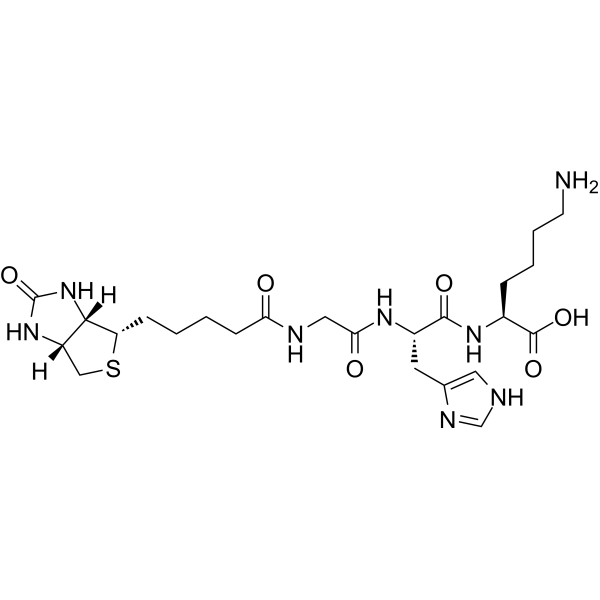

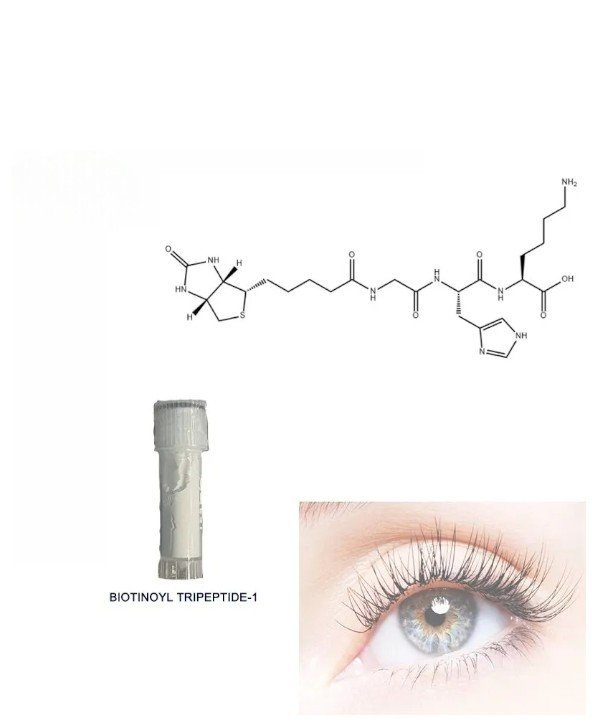
Biotinoyl Tripeptide-1 | CAS 299157-54-3 | Bioactive Peptide for Hair Strengthening
Original price was: $3.00.$1.00Current price is: $1.00.
Biotinoyl Tripeptide-1 (Biotinyl-GHK) is a cosmetic bioactive peptide combining biotin and the tripeptide GHK. It enhances hair anchoring, reduces follicle miniaturization, and promotes antioxidant defense in scalp and skin research applications.
Description
Product Description
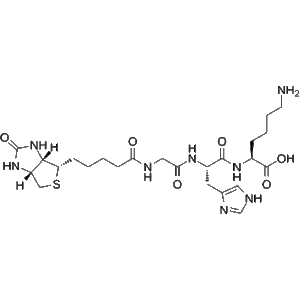
Biotinoyl Tripeptide-1, also known as Biotinyl-GHK, is a synthetic bioactive peptide conjugated with biotin and the naturally occurring tripeptide sequence glycyl-L-histidyl-L-lysine (GHK). This dual-functional molecule merges the cellular metabolism–boosting effect of biotin with the regenerative and reparative potential of GHK, creating a highly effective cosmetic research compound for studying hair growth stimulation, follicular anchoring, and scalp anti-aging mechanisms.
In cosmetic biochemistry research, Biotinoyl Tripeptide-1 is recognized for its ability to revitalize and reinforce hair follicles, acting at the dermal papilla and extracellular matrix level. By promoting the synthesis of collagen, laminin, and integrins, it enhances the structural integrity of the hair root sheath and improves the anchoring of hair fibers to the scalp. This function makes it particularly valuable for investigations into hair thinning, telogen effluvium, and age-related hair loss processes.
Biotin, a vitamin cofactor known for its role in fatty acid metabolism and keratin production, provides metabolic support to hair matrix cells, while the GHK tripeptide fragment activates repair mechanisms through upregulation of metalloproteinase inhibitors, fibroblast growth, and glycosaminoglycan synthesis. Together, these effects synergistically contribute to stronger, more resilient, and shinier hair in experimental models.
Beyond hair physiology, Biotinoyl Tripeptide-1 has demonstrated neuroprotective and antioxidant properties. It inhibits the production of reactive oxygen species (ROS), reduces carbonylation of amyloid-β (Aβ) peptides, and suppresses Aβ aggregation—factors associated with neurodegenerative research. These properties have led to its exploration as a dual-action peptide capable of supporting both dermal and neural cell vitality.
In cosmetic ingredient studies, Biotinoyl Tripeptide-1 has also been associated with improved microcirculation in the scalp, enhanced nutrient delivery, and anti-inflammatory activity via modulation of cytokines such as IL-6 and TNF-α. It is frequently incorporated into formulations for anti-hair loss serums, strengthening shampoos, and eyelash growth enhancers.
Analytical characterization is typically achieved through HPLC, MS, and NMR, confirming structural identity and ≥99% purity. In vitro assays consistently demonstrate its ability to upregulate collagen IV and laminin-5 synthesis in dermal fibroblasts, while reducing oxidative damage markers under UV or pollutant exposure conditions.
In essence, Biotinoyl Tripeptide-1 serves as a model peptide for exploring the molecular pathways of hair regeneration, skin anti-aging, and oxidative protection—making it indispensable in advanced cosmetic peptide research.
Product Specifications
| Property | Description |
|---|---|
| Product Name | Biotinoyl Tripeptide-1 |
| CAS Number | 299157-54-3 |
| Synonyms | Biotinyl-GHK; Biotin-GHK; Hair growth peptide |
| Molecular Formula | C27H48N8O7S |
| Molecular Weight | 628.79 g/mol |
| Purity | ≥99% |
| Sequence | Biotin-Gly-His-Lys-OH |
| Form | Lyophilized powder |
| Solubility | Soluble in water or PBS |
| Storage | Store at -20°C; protect from light and moisture |
| Applications | Cosmetic peptide research for hair growth, scalp vitality, and antioxidant activity |
| Research Area | Cosmetology, Dermatology, Trichology, Cellular Aging |
| Supplier Type | Cosmetic peptide manufacturer and global peptide supplier |
| Intended Use | For laboratory research use only |
Mechanism of Action
Biotinoyl Tripeptide-1 functions through a dual biological mechanism—the metabolic activation of keratinocyte and fibroblast energy pathways via biotin, combined with the cell-regenerative signaling of the GHK tripeptide sequence.
At the cellular level, the biotin moiety enhances enzymatic activity related to fatty acid metabolism and keratin synthesis. This supports hair matrix cell proliferation and strengthens hair shaft keratinization, leading to improved fiber structure. Concurrently, the GHK peptide sequence binds to copper ions in the extracellular matrix, activating genes responsible for tissue repair, collagen synthesis, and antioxidant defense.
Through these complementary actions, Biotinoyl Tripeptide-1 promotes anchorage of the hair root by stimulating laminin-5 and collagen IV production in the basement membrane zone. It also upregulates integrins and structural proteins essential for dermal–epidermal cohesion, helping to prevent premature hair shedding in experimental models.
The peptide additionally exhibits ROS-inhibiting activity, reducing oxidative stress induced by UV radiation, pollutants, or DHT-related follicular inflammation. In keratinocyte cultures, it suppresses NF-κB activation and downregulates pro-inflammatory cytokines, creating a favorable microenvironment for scalp rejuvenation and follicle regeneration.
Recent research has identified its ability to modulate mitochondrial function and improve cellular ATP levels in aging dermal cells. These effects contribute to visible improvements in elasticity, tone, and resilience of the scalp and skin in cosmetic model systems.
Collectively, these mechanisms make Biotinoyl Tripeptide-1 an important cosmetic research agent for studying hair strengthening, anti-aging skin care, and oxidative protection strategies.
Side Effects
Biotinoyl Tripeptide-1 is considered non-toxic and well-tolerated in in vitro and ex vivo skin models. No cytotoxic or irritant reactions have been observed at concentrations commonly used in cosmetic formulation studies.
At excessively high doses, some research models report temporary alterations in cell proliferation rates or metabolic overactivation due to biotin’s energetic role, but these effects are reversible upon dilution.
Because it is a research-use-only peptide, it should not be applied directly to human or animal subjects. Proper laboratory handling, protective equipment, and storage conditions should be maintained to preserve peptide stability and avoid contamination.
Keywords
Biotinoyl Tripeptide-1, CAS 299157-54-3, Biotinyl-GHK, hair growth peptide, antioxidant peptide, hair anchoring peptide, scalp vitality peptide, GHK cosmetic peptide, peptide supplier China, factory peptide supplier, cosmetic raw material manufacturer, high-purity cosmetic peptides, anti-aging research, peptide wholesale China, OEM peptide production
Shipping Guarantee
All shipments are handled using validated cold-chain logistics to preserve peptide integrity. Each package is sealed in moisture-proof containers with secondary protective wrapping and continuous temperature monitoring. Products are shipped via express international couriers with full tracking and insurance coverage.
Trade Assurance
We ensure product authenticity, verified ≥99% purity, and compliance with analytical standards (HPLC, MS, and NMR). Each batch is supplied with a Certificate of Analysis (CoA). Our trade assurance policy guarantees replacement or refund for any deviation from listed specifications.
Payment Support
We provide flexible and secure global payment options to support international research transactions. Accepted payment methods include PayPal, major credit cards (Visa, MasterCard, American Express), telegraphic transfer (T/T), and cryptocurrencies (USDT, Bitcoin, Ethereum). All transactions are protected by industry-standard encryption and verified payment gateways to ensure confidentiality and fund security.
Disclaimer
All products listed are intended for laboratory research use only and not for human or veterinary use. They are not drugs, medical devices, or diagnostics and should not be administered to humans or animals. Researchers must handle all materials in accordance with institutional biosafety and chemical safety guidelines. The information provided is for scientific reference only and does not imply therapeutic efficacy, safety, or regulatory approval.

Additional information
| Weight | 0.8 kg |
|---|---|
| Dimensions | 53 × 42 × 53 cm |
What is Biotinoyl Tripeptide-1 used for?
It is used in cosmetic research for studying hair growth stimulation, scalp strengthening, and antioxidant protection.
How does Biotinoyl Tripeptide-1 promote hair growth?
It enhances collagen IV and laminin-5 synthesis in the hair root sheath and boosts keratinocyte metabolism via biotin activation.
Is Biotinoyl Tripeptide-1 suitable for skin research?
Yes, it supports dermal regeneration, antioxidant protection, and anti-aging mechanisms in skin models.
What purity is guaranteed?
Each batch is synthesized to ≥99% purity and verified by HPLC, MS, and NMR analysis.
Does it work synergistically with other peptides?
Yes, it complements GHK-Cu, Copper Tripeptide-1, and Palmitoyl Peptides in anti-aging and hair-strengthening studies.
What solvent should be used for reconstitution?
It dissolves well in sterile distilled water or phosphate-buffered saline (PBS).
Is it stable under room temperature?
For long-term preservation, store at -20°C; short-term stability at 4°C is acceptable for experimental use.
Can it be used in eyelash or eyebrow research?
Yes, it enhances follicular anchoring and promotes keratin fiber resilience in lash and brow studies.
What are common research applications?
Hair growth, scalp rejuvenation, oxidative stress modulation, and collagen synthesis models.
Is Biotinoyl Tripeptide-1 an antioxidant?
Yes, it reduces ROS levels and carbonylation of proteins, helping to prevent follicle aging.
Who supplies Biotinoyl Tripeptide-1 in bulk?
Our facility is a factory peptide supplier and cosmetic raw material manufacturer offering global wholesale service.
Do you support OEM and bulk peptide production?
Yes, we provide OEM peptide synthesis, labeling, and formulation support for research and cosmetic industries.
Is this peptide from a China peptide manufacturer?
Yes, we are a certified China peptide manufacturer specializing in high-purity cosmetic peptides.
Do you offer low-price peptide wholesale?
Competitive pricing is available for low-price peptide supplier and distributor collaborations.
Can Biotinoyl Tripeptide-1 be combined with vitamins or botanical actives?
In formulation studies, it synergizes well with panthenol, niacinamide, and plant antioxidants for scalp and skin protection.
Related products
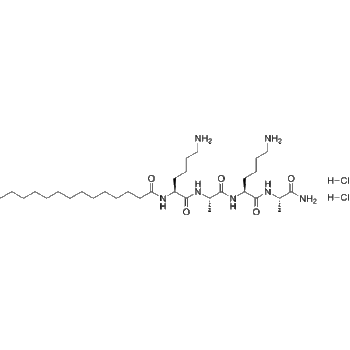
Myristoyl tetrapeptide-12 dihydrochloride | Bioactive Cosmetic Peptide for Hair Care and Strengthening Research
Myristoyl tetrapeptide-12 dihydrochloride is a lipid-modified peptide containing lysine and alanine residues, widely studied as a cosmetic ingredient for hair care formulations. It supports research on strengthening hair structure and promoting scalp vitality. Original price was: $3.00.$1.00Current price is: $1.00.Hexapeptide-11 | CAS 161258-30-6 | Anti-Aging Peptide for Skin Elasticity and Cellular Renewal
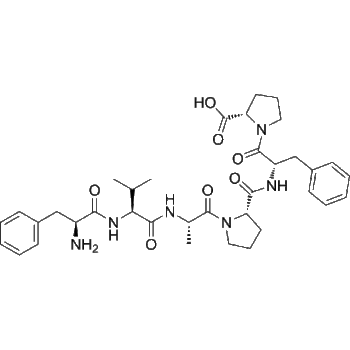
Hexapeptide-11 (CAS 161258-30-6) is a bioactive peptide known for its potent anti-aging and skin-rejuvenating effects. It supports fibroblast vitality, enhances collagen and elastin synthesis, and promotes youthful skin elasticity. Original price was: $3.00.$2.00Current price is: $2.00.Copper tripeptide-3 | CAS 767286-83-9 | Bioactive Peptide for Hair Growth and Skin Regeneration Research
Copper tripeptide-3 (AHK-Cu) is a bioactive cosmetic peptide known for promoting hair growth, enhancing skin regeneration, and stimulating collagen synthesis. It supports dermal cell proliferation, improves extracellular matrix renewal, and revitalizes aging skin and scalp tissues. Original price was: $3.00.$1.00Current price is: $1.00.Glycyl-L-histidyl-L-lysine | CAS 49557-75-7 | Regenerative Tripeptide Precursor for Skin Repair and Anti-Aging Research
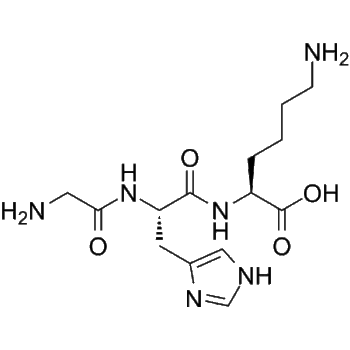
Glycyl-L-histidyl-L-lysine (GHK) is a naturally occurring tripeptide composed of glycine, histidine, and lysine. It plays a pivotal role in skin regeneration, collagen synthesis, and antioxidant protection, making it a cornerstone compound in cosmetic peptide research. Original price was: $28.00.$16.00Current price is: $16.00.
Reviews
There are no reviews yet.