
No products in the cart.
Sale
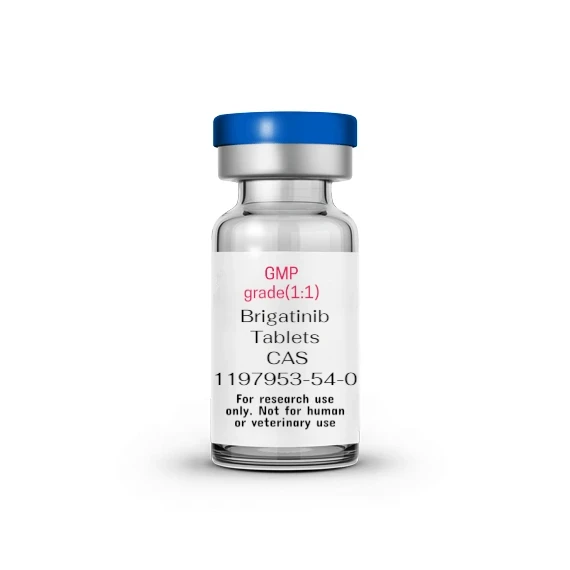
Brigatinib Tablets | CAS 1197953-54-0 | ALK/EGFR Tyrosine Kinase Inhibitor for Anticancer and Mechanistic Research
Original price was: $3.00.$2.00Current price is: $2.00.
Brigatinib is a potent small-molecule inhibitor targeting ALK (anaplastic lymphoma kinase) and select EGFR mutations, used in preclinical research to study kinase signaling, tumor cell proliferation, apoptosis induction, and mechanisms of drug resistance. It serves as a model compound for exploring tyrosine kinase-dependent pathways, combination therapy strategies, and targeted cancer mechanisms.
Description
Product Description
Brigatinib (CAS 1197953-54-0) is a next-generation small-molecule tyrosine kinase inhibitor (TKI) designed to target ALK fusion proteins and select EGFR mutations, including resistant variants. By inhibiting aberrant kinase activity, Brigatinib disrupts downstream signaling pathways such as PI3K/AKT and MAPK/ERK, leading to cell cycle arrest, apoptosis, and suppression of tumor cell proliferation.
Physical and Chemical Properties:
Molecular formula: C29H39ClN7O2
Molecular weight: 584.1 g/mol
Appearance: White to off-white crystalline powder
Solubility: Soluble in DMSO, ethanol; moderate aqueous solubility
Stability: Stable at 2–8 °C; protect from light and moisture
Research Applications:
Kinase Signaling Studies: Evaluates ALK-driven and EGFR-mutant signaling pathways in cancer cell lines.
Apoptosis and Cell Cycle Research: Induces apoptosis via mitochondrial pathway and inhibits proliferation through G1/S or G2/M phase arrest.
Drug Resistance Modeling: Explores resistance mechanisms such as secondary ALK mutations, bypass signaling, and compensatory kinase activation.
Combination Therapy Studies: Used to test synergistic or additive effects with other chemotherapeutics, kinase inhibitors, or targeted agents.
In vivo Preclinical Models: Suitable for xenograft studies, pharmacokinetics, and pharmacodynamics of ALK/EGFR inhibition.
Mechanistic Investigations: Explores molecular determinants of sensitivity and resistance, transcriptional regulation, and downstream kinase signaling modulation.
Experimental Considerations:
Handling: Powder should be handled with gloves, lab coat, and eye protection.
Dosing: Experimental concentrations depend on cell type, assay design, and target sensitivity.
Solvent Compatibility: Dissolve in DMSO or ethanol prior to dilution in culture media.
Storage: Store at 2–8 °C; avoid freeze-thaw cycles; protect from light and moisture.
Brigatinib’s high selectivity, potent ALK/EGFR inhibition, and high purity (≥99%) make it a crucial reagent for preclinical kinase research, mechanistic studies, and evaluation of targeted therapy strategies.
Product Specifications
| Parameter | Specification / Data |
|---|---|
| Chemical Name / Synonyms | Brigatinib; AP26113; ALK/EGFR TKI; C29H39ClN7O2 |
| CAS Number | 1197953-54-0 |
| Molecular Formula | C29H39ClN7O2 |
| Molecular Weight | 584.1 g/mol |
| Purity / Assay | ≥99% |
| Appearance | White to off-white crystalline powder |
| Solubility | Soluble in DMSO, ethanol; moderate aqueous solubility |
| Melting Point | 194–197 °C |
| Storage Temperature | 2–8 °C |
| Stability | Stable under refrigeration; protect from light and moisture |
| Analytical Methods | HPLC, MS, NMR verified; batch consistency confirmed |
| Mechanistic Target | ALK fusion proteins, select EGFR mutants, apoptosis induction, cell cycle arrest |
| Structural Category | Small-molecule tyrosine kinase inhibitor |
| Applications | Kinase signaling studies, apoptosis research, drug resistance evaluation, combination therapy research |
| Batch Consistency | Verified by HPLC, MS, NMR |
| Regulatory Notes | For laboratory research use only |
| Origin | Factory peptide/small-molecule supplier, China peptide manufacturer, OEM & bulk production available |
| Additional Data | SMILES: CC1=CN=C(C2=C1C=CC(=C2)Cl)N3CCC(CC3)NC4=CC(F)=C(F)C(F)=C4; CoA provided for each batch |
Mechanism of Action
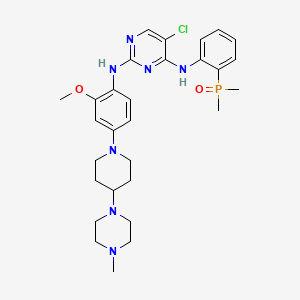
Brigatinib is a potent, next-generation tyrosine kinase inhibitor (TKI) that selectively targets ALK (anaplastic lymphoma kinase) fusion proteins and specific EGFR mutations, including variants resistant to first- and second-generation inhibitors. By binding to the ATP-binding site of ALK and mutant EGFR, Brigatinib inhibits kinase activity, thereby disrupting downstream signaling pathways critical for cell survival, proliferation, and metastasis, such as PI3K/AKT, MAPK/ERK, and JAK/STAT.
Key Molecular Mechanisms:
ALK Inhibition: Blocks aberrant ALK signaling in ALK-positive tumor cells, reducing proliferation and triggering apoptotic pathways.
EGFR Mutant Targeting: Inhibits select EGFR mutations, including T790M, which confer resistance to earlier-generation inhibitors.
Cell Cycle Arrest: Induces G1/S or G2/M phase arrest via inhibition of cyclin-dependent kinases and restoration of checkpoint control.
Apoptosis Induction: Activates mitochondrial apoptotic pathways, caspases, and Bcl-2 family protein modulation.
Signal Transduction Modulation: Downregulates survival pathways and transcriptional programs promoting tumor growth.
Drug Resistance Research: Serves as a model to study secondary ALK mutations, compensatory kinase activation, and mechanisms of TKI resistance.
Experimental Applications:
In vitro: Analysis of ALK/EGFR signaling inhibition, cell proliferation, apoptosis assays, and drug sensitivity/resistance profiling.
In vivo: Xenograft models for preclinical evaluation of tumor growth inhibition, pharmacokinetics, pharmacodynamics, and molecular biomarker studies.
Combination Therapy Research: Evaluates synergistic effects with other chemotherapeutics, TKIs, or targeted agents.
Mechanistic Investigations: Studies intracellular signaling, downstream phosphorylation targets, transcriptional changes, and apoptosis biomarkers.
Brigatinib’s selectivity, high potency, and reliable kinase inhibition make it an essential reagent for preclinical targeted therapy studies, signaling pathway elucidation, and resistance mechanism research.
Side Effects
Brigatinib is a research-grade compound; laboratory handling requires standard safety precautions:
Cytotoxicity: Induces apoptosis and inhibits proliferation in sensitive tumor cell lines; effects are concentration- and time-dependent.
Handling Safety:
Use gloves, lab coat, and eye protection.
Handle in biosafety cabinets if dust or aerosol formation is possible.
Storage: Store at 2–8 °C; protect from light and moisture; avoid repeated freeze-thaw cycles.
Environmental Safety: Dispose of residual powder and contaminated materials according to institutional safety protocols.
Experimental Observations:
In vitro: ALK/EGFR signaling inhibition, cell cycle arrest, apoptosis activation, altered downstream kinase phosphorylation.
In vivo: Tumor growth suppression, pharmacodynamic effects on ALK/EGFR targets, biomarker modulation.
Keywords
Brigatinib, CAS 1197953-54-0, ALK inhibitor, EGFR TKI, tyrosine kinase inhibitor, apoptosis induction, cell cycle arrest, targeted therapy research, kinase signaling, high purity, ≥99% purity, factory peptide/small-molecule supplier, peptide wholesale China, China peptide manufacturer, OEM & bulk peptide production.
Shipping Guarantee
All Brigatinib Brigatinib shipments are handled via validated cold-chain logistics to maintain chemical stability and potency. The powder is sealed in light- and moisture-protected containers with secondary packaging. Full tracking, insurance coverage, and international courier support ensure secure delivery.
Trade Assurance
Brigatinib authenticity is guaranteed, with ≥99% purity verified by HPLC, MS, and NMR. Each batch includes a Certificate of Analysis (CoA). Trade assurance covers replacement or refund for deviations from listed specifications, ensuring reliable, high-purity product for preclinical research.
Payment Support
Secure global payment options: PayPal, major credit cards (Visa, MasterCard, American Express), telegraphic transfer (T/T), and cryptocurrencies (USDT, Bitcoin, Ethereum). All transactions are encrypted and verified for confidentiality and fund protection.
Disclaimer
This Brigatinib product is intended for laboratory research use only. It is not for human or veterinary administration. Researchers must follow institutional safety protocols. Data generated with Brigatinib should not be interpreted as clinical or therapeutic guidance.
References

Additional information
| Weight | 1.1 kg |
|---|---|
| Dimensions | 18 × 16 × 18 cm |
Q1: What is Brigatinib used for in research?
A1: Brigatinib is used to study ALK-driven and EGFR-mutant signaling pathways, apoptosis, cell cycle regulation, and drug resistance mechanisms in preclinical cancer models.
Q2: What is the purity of Brigatinib?
A2: ≥99% purity ensures reproducible kinase inhibition and reliable experimental results.
Q3: Can Brigatinib be used in vivo?
A3: Yes, suitable for xenograft tumor models and pharmacokinetic/pharmacodynamic studies.
Q4: How should Brigatinib be stored?
A4: Store at 2–8 °C, protect from light and moisture, avoid repeated freeze-thaw cycles.
Q5: What are common synonyms for Brigatinib?
A5: AP26113, ALK/EGFR TKI, small-molecule tyrosine kinase inhibitor.
Q6: Is OEM & bulk production available?
A6: Yes, factory suppliers provide CoA-verified high-purity Brigatinib powder for research purposes.
Q7: How is Brigatinib analytically verified?
A7: Verified via HPLC, MS, and NMR to confirm identity, purity, and batch consistency.
Q8: Can Brigatinib be combined with other anticancer agents?
A8: Yes, commonly used in combination studies to evaluate synergistic or additive effects with other TKIs or chemotherapeutics.
Q9: What laboratory safety precautions are recommended?
A9: Use gloves, lab coat, eye protection, and handle in biosafety cabinets; follow institutional disposal protocols.
Q10: Can it be sourced from peptide wholesale China suppliers?
A10: Yes, with CoA verification, high purity, and secure cold-chain shipping.
Q11: What makes a factory peptide/small-molecule supplier reliable for Brigatinib?
A11: Verified ≥99% purity, CoA documentation, batch consistency, and secure logistics.
Q12: Beyond ALK/EGFR inhibition, what applications exist?
A12: Mechanistic kinase signaling studies, apoptosis research, drug resistance evaluation, combination therapy research, and targeted therapy modeling.
Q13: How does Brigatinib induce cell cycle arrest?
A13: By inhibiting ALK/EGFR kinase activity, it disrupts downstream signaling, resulting in G1/S or G2/M phase arrest and growth inhibition.
Q14: How are ALK/EGFR inhibition effects measured experimentally?
A14: Via phosphorylation assays, western blot for downstream targets, cell proliferation assays, apoptosis markers, and imaging of signaling pathways.
Q15: How does trade assurance protect Brigatinib orders?
A15: Ensures CoA verification, high-purity product, secure cold-chain shipping, insurance coverage, and replacement/refund if specifications are not met.
Related products
Ivodazumab solution (lvonescimab) High Purity | Factory Manufactured
High-purity Ivodazumab Injection (lvonescimab) designed for laboratory research, in vitro mechanistic studies, and receptor-targeted molecular pathway analysis. Factory-manufactured with consistent quality for bulk and wholesale supply, this injectable formulation provides reliable antibody-mediated receptor modulation for mechanistic and multi-omic studies.
Original price was: $3.00.$2.00Current price is: $2.00.Rilertinib Mesylate 100mg – High Purity | Factory Manufactured | For laboratory use only
High-purity Rilertinib Mesylate, manufactured under controlled factory conditions for in vitro pathway analysis, receptor-binding studies, and molecular mechanism research. Available in bulk and wholesale quantities with consistent batch quality and secure global shipping. $1.00Limertinib (ASK120067) 80mg — Laboratory Research Grade Chemical
Limertinib is a high-purity, irreversible small-molecule inhibitor that selectively targets mutant EGFR in vitro. Designed specifically for laboratory research, it is ideal for investigating signal transduction, kinase activity, and receptor molecular mechanisms in cell-free or in vitro systems. This compound is suitable for mechanistic studies, target validation, and enzymatic assays. Original price was: $3.00.$2.00Current price is: $2.00.Toremifene Citrate 60mg for scientific research
High-purity Toremifene Citrate Tablets designed exclusively for in vitro molecular mechanism research, receptor-binding analysis, and biochemical pathway modulation studies. Factory-manufactured with consistent batch quality, suitable for bulk and wholesale supply.(For research use only. Not for human or veterinary use.) $1.00


Reviews
There are no reviews yet.