
No products in the cart.
Sale


CJC-1295 with DAC Lyophilized Powder – High Purity
Original price was: $78.00.$72.00Current price is: $72.00.
High-purity CJC-1295 with DAC lyophilized powder manufactured in a controlled factory environment for reliable in vitro, molecular mechanism, and biochemical pathway research. Wholesale pricing, bulk supply, and customization available.
Description
Contents
hide
Product Description
CJC-1295 with DAC lyophilized powder is a high-purity synthetic research compound designed specifically for in vitro and molecular mechanism studies requiring exceptional stability, reproducibility, and structural consistency. Produced under controlled factory conditions, this compound is frequently selected by laboratories conducting protein interaction analysis, biochemical pathway mapping, receptor binding assays, and structure-function characterization. The integration of a Drug Affinity Complex (DAC) moiety enhances molecular stability during experimental workflows, allowing researchers to maintain consistent assay conditions across extended in vitro timelines.
As a factory-manufactured research-grade material, CJC-1295 with DAC is processed through rigorous purification procedures to ensure minimal impurities, enabling high-precision mechanistic investigations. The lyophilized powder format preserves molecular integrity during long-term storage, while offering flexible solubilization in compatible research buffers. This makes it suitable for high-throughput screening, recombinant protein studies, and analytical chemistry approaches such as HPLC, LC-MS, CD spectroscopy, and structural modelling.
In molecular-level experiments, CJC-1295 with DAC is valued for its predictable behaviour within biochemical systems. Laboratories often incorporate it into signaling-cascade investigations to assess pathway crosstalk, feedback regulation, or downstream molecular consequences. Due to its consistent purity and structure, the compound is frequently used alongside computational modeling, docking simulations, and multi-omic data integration. This allows cross-validation between empirical and in silico findings, supporting modern mechanistic research frameworks.
Factory-level production enables stable bulk availability, allowing research groups, institutes, and industrial laboratories to maintain consistent supply across multi-phase or long-term projects. Low-price wholesale options ensure cost-effective procurement without compromising quality. Each batch undergoes extensive quality verification to maintain uniformity between lots, which is essential for reproducibility in complex molecular studies.
The compound’s stability, high purity, and lyophilized form contribute to its wide applicability in diverse research settings. It is commonly utilized in enzymatic interaction mapping, receptor association screening, and domain-specific mechanistic experiments. With increasing interest in advanced biochemical systems, CJC-1295 with DAC continues to be a preferred material for researchers performing pathway reconstruction, chromatographic analysis, or advanced structural assays.
This product is intended strictly for laboratory research use only, not for any form of application involving humans, animals, therapeutic contexts, or in vivo models. Researchers benefit from dependable quality, consistent supply, and manufacturer-direct wholesale pricing, making CJC-1295 with DAC Lyophilized Powder a robust component of molecular mechanism research programs worldwide.
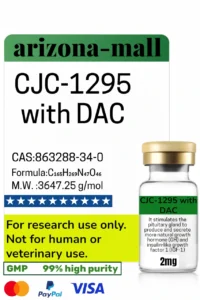
Product Specifications
| Item | Description |
|---|---|
| Product Name | CJC-1295 with DAC (Lyophilized Powder) |
| Purity Grade | ≥ 99% (HPLC), factory-manufactured high-purity standard suitable for controlled laboratory workflows |
| Form | White to off-white lyophilized powder, sealed under controlled low-moisture conditions |
| Molecular Type | Synthetic research-grade peptide analog for in vitro molecular mechanism studies |
| Sequence Information | Provided upon request for analytical verification, structural modeling, and assay documentation |
| Molecular Weight | Consistent with reference standard; suitable for mass spectrometric confirmation |
| Solubility Notes | Can be reconstituted using laboratory-grade reagents depending on assay design; researchers should determine optimal buffer conditions for their own in vitro system |
| Stability Profile | Stable under appropriate low-temperature storage; suitable for extended experimental timelines requiring high material uniformity |
| Storage Conditions | Store sealed vials at controlled low temperature in a dry, protected environment; avoid repeated exposure to ambient humidity |
| Packaging Format | Factory-sealed vials designed to maintain product integrity during transportation and bulk distribution |
| Batch Consistency | Manufactured using standardized production parameters to ensure repeatable performance across research batches |
| Analytical Verification | HPLC, MS, and identity confirmation available for laboratory documentation and assay reproducibility |
| Intended Use | Laboratory research only — including structural analysis, receptor-binding investigations, biochemical assays, and in vitro modeling |
| Bulk / OEM Availability | Factory supports wholesale, bulk orders, and customized specifications upon request |
Mechanism of Action
CJC-1295 with DAC Lyophilized Powder functions within biochemical systems by participating in molecular interaction networks, enabling researchers to evaluate pathway modulation, receptor association, and structural-domain engagement. The incorporation of DAC increases molecular stability during in vitro processing, reducing degradation and allowing extended mechanistic observation. This stability is particularly valuable for long-duration assays, signal-modulation experiments, ligand-binding analyses, and time-course pathway mapping.
In biochemical research, the compound is frequently employed to investigate structural compatibility within protein complexes. Its stable configuration supports controlled studies involving receptor-domain engagement, scaffold-protein interactions, and feedback-regulation mapping within intracellular-mimicking environments. The compound’s predictable profile allows researchers to isolate specific molecular events without interference from degradation products or structural inconsistencies.
Furthermore, CJC-1295 with DAC supports computational and multi-omic integration due to its well-defined structure. Researchers often incorporate it into docking algorithms, molecular-dynamics simulations, and conformational modelling workflows. These simulations help predict binding affinities, identify possible structural conformations, and correlate computational outcomes with in vitro findings.
The enhanced stability provided by the DAC component is especially valuable in projects that require repeated sampling, multi-phase incubation, or extended monitoring of molecular changes. Its consistent behaviour allows scientists to quantify pathway dynamics, examine dose-dependent molecular effects (within in vitro limits), and construct multi-step mechanistic models.
Overall, the mechanism of interest for CJC-1295 with DAC is primarily related to its role as a tool in molecular-level experimental systems, enabling precise characterization of biochemical interactions and supporting high-resolution mechanistic research.
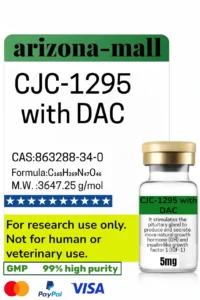
Applications
CJC-1295 with DAC (lyophilized powder) is widely applied in controlled in vitro research environments, where its molecular stability and extended interaction profile allow researchers to perform precise biochemical investigations. Because the compound maintains a consistent structural signature under properly regulated laboratory conditions, it is frequently used in receptor–ligand binding assays, signal cascade mapping, and protein–peptide interaction studies. These applications help researchers quantify binding preferences, analyze interaction durations, and examine how sequence modifications influence biochemical behavior.
In structural biology workflows, CJC-1295 with DAC is used to support computational docking, conformation prediction, and molecular surface modeling. Its predictable geometry makes it suitable for simulation-based research, allowing teams to compare the DAC-modified backbone with shorter-acting analogs. These in silico evaluations support deeper understanding of how extended-chain modifications contribute to structural rigidity, affinity shifts, and potential stabilization zones within receptor-binding regions.
Laboratories engaged in high-throughput in vitro screening incorporate CJC-1295 with DAC when evaluating peptide–receptor compatibility, motif optimization, and sequence-dependent interaction stability. Its reproducible behavior simplifies comparative testing across multiple experimental runs. The material is also compatible with biochemical kinetics systems, allowing detailed analysis of binding rates, dissociation tendencies, and controlled environmental responses.
Additionally, the compound is utilized in method development, where researchers refine purification strategies, test analytical detection parameters, and optimize chromatographic workflows. CJC-1295 with DAC serves as a reliable model compound for validating HPLC retention characteristics, MS signal responses, and peptide stability conditions. This makes it valuable not only as a research target but also as a reference standard within peptide-focused laboratory platforms.
Research Models
CJC-1295 with DAC Lyophilized Powder is widely incorporated into in vitro research models designed to analyze molecular behaviour under controlled laboratory conditions. These systems include cell-free biochemical reaction environments, recombinant protein frameworks, and isolated pathway simulations where variables can be precisely controlled. Researchers frequently utilize the compound in plate-based assays to measure molecular interactions, analyze conformational changes, and evaluate time-dependent biochemical modulation.
In recombinant protein models, CJC-1295 with DAC serves as a tool compound for assessing domain-specific binding preferences, molecular alignment tendencies, or stability profiles. These systems allow scientists to isolate single mechanistic aspects of interest and remove confounding biological variables, resulting in clearer mechanistic insights. Its stable lyophilized form enhances reproducibility across multi-phase studies where consistent input material is critical.
Another commonly used research model involves simulated biochemical pathway environments, where multiple purified components are combined to re-create aspects of intracellular regulatory networks. Here, CJC-1295 with DAC assists in mapping upstream and downstream pathway behavior, feedback responses, or kinetic modulation under standardized conditions. This makes it particularly useful in time-course or gradient-controlled studies.
Beyond experimental systems, the compound integrates seamlessly with computational research models. Molecular-dynamics simulations, structural alignment algorithms, and virtual pathway builders can incorporate CJC-1295 with DAC to compare predicted interactions with real-world in vitro data. This hybrid research model—combining empirical and computational techniques—is increasingly common in modern mechanistic research workflows.
These models collectively support accurate evaluation of protein interactions, structural stability, and molecular compatibility, making CJC-1295 with DAC a valuable tool compound across a broad spectrum of laboratory-based mechanistic studies.
Experimental Design Considerations
Careful experimental design is essential when using CJC-1295 with DAC lyophilized powder in in vitro and molecular-mechanism studies. Begin by consulting the batch Certificate of Analysis (CoA) to confirm purity and identity, and record the lot number in all experimental documentation. Plan assays so that a single unopened vial supplies all replicates for a given study when feasible — this minimizes inter-vial variability and supports reproducibility across time-course or multi-plate experiments.
Solubilization & stock preparation. Reconstitute the lyophilized powder using laboratory-grade solvents compatible with your assay system (commonly sterile water, appropriate buffer, or DMSO). Prepare concentrated stock solutions to minimize the volume of solvent added to assays; when using DMSO, keep final assay DMSO concentrations as low as technically possible and include vehicle controls to account for solvent effects. Filter or centrifuge stocks if particulate matter is present, and aliquot single-use volumes to avoid repeated freeze–thaw cycles. Clearly label aliquots with concentration, solvent, date, and lot number.
Controls, concentrations & titration. Design experiments around a well-defined concentration range determined by preliminary titration experiments in your specific assay format. Include negative (vehicle) and, where appropriate, positive in vitro reference controls to benchmark assay responsiveness. Use multiple technical and biological replicates and randomize sample placement across plates to reduce positional effects. For kinetic or time-course studies, pre-equilibrate reagents and maintain consistent timing for additions and readings.
Buffer, pH & assay compatibility. Optimize buffer composition, pH, ionic strength, and cofactors for the target proteins or enzymatic systems under study. Validate that buffers and additives (e.g., reducing agents, detergents) do not chemically modify the compound or interfere with detection methods. When transferring methods between platforms (e.g., from plate reader to SPR or ITC), re-validate solubility and binding behavior under the new conditions.
Analytical verification & QC. Periodically verify stock integrity using orthogonal analytical methods (HPLC, MS) especially for long-term or multi-batch studies. Retain small sample aliquots for retrospective confirmation if unexpected results occur. Document all QC results alongside experimental data to support traceability and reproducibility.
Data quality & statistics. Predefine endpoints, acceptance criteria, and statistical tests. Apply appropriate normalization strategies (e.g., internal standards, total signal) and perform power calculations to ensure adequate sample size. Report means, variance measures, and number of replicates to facilitate inter-lab comparison.
Contamination control & documentation. Use dedicated consumables where possible and maintain clean work areas to avoid cross-contamination. Keep detailed laboratory records (SOP references, lot numbers, solvent sources, preparation dates) and store electronic raw data with clear metadata to support reproducibility, QA audits, and computational integration.
By following these experimental-design best practices — from solvent choice and aliquoting to QC verification and rigorous documentation — researchers will maximize data quality and reproducibility when using CJC-1295 with DAC in controlled in vitro mechanistic studies.
Laboratory Safety & Handling Guidelines
CJC-1295 with DAC (lyophilized powder) should be handled exclusively within controlled laboratory environments using standard research-grade safety procedures. Personnel should wear appropriate protective equipment—including gloves, laboratory coats, and eye protection—to prevent accidental contact with the material or laboratory reagents used alongside it. All manipulations should be conducted in a clean, dry workspace to maintain product integrity and avoid cross-contamination with other compounds or analytical samples.
When preparing the material for in vitro workflow design, researchers should avoid generating dust or aerosols and should ensure the vial remains closed whenever not in active use. Instruments, pipettes, and containers that come into contact with the material should be clean and reserved for research applications only. Any spills should be handled promptly following institutional laboratory protocols, ensuring surfaces are cleaned with appropriate reagents without dispersing particulate residue.
Storage and transport require careful adherence to environmental controls. Vials should be kept in sealed, low-temperature conditions that protect the lyophilized powder from moisture exposure. Repeated warming, cooling, or unsealed storage should be avoided to maintain the consistency of analytical results. Researchers should label all working containers clearly and keep detailed documentation on batch numbers, experimental usage, and disposal logs.
Disposal of unused material or contaminated consumables must follow local laboratory waste regulations. The compound should never be released into general waste streams and should instead be disposed of through approved chemical waste pathways. By maintaining strict handling practices, laboratories ensure both the safety of personnel and the reliability of downstream analytical data, preserving the performance of CJC-1295 with DAC in controlled in vitro and molecular research applications.
Integration with Multi-Omic & Computational Studies
CJC-1295 with DAC (lyophilized powder) is well-suited for integration into multi-omic research pipelines, where combined datasets from proteomics, transcriptomics, metabolomics, and structural modeling contribute to a deeper understanding of peptide–target interaction mechanisms. In proteomic workflows, the compound may be examined using mass spectrometry–based peptide mapping, enabling researchers to characterize fragmentation patterns, post-synthesis consistency, and sequence integrity. These datasets can then be correlated with transcriptomic or biochemical readouts to build comprehensive molecular interaction profiles under controlled in vitro conditions.
Its predictable structural framework makes the compound particularly valuable within computational chemistry and structural bioinformatics. Molecular docking, energy minimization, and dynamic trajectory simulations allow staff to examine how DAC modification affects backbone flexibility, potential interaction pockets, and theoretical binding persistence on model receptor surfaces. These predicted conformational behaviors can then be cross-referenced with proteomic or analytical data to validate in silico findings.
In systems-level multi-omic studies, CJC-1295 with DAC can serve as a standardized reference point for algorithm training, pattern recognition, and signature mapping. Machine-learning pipelines commonly rely on high-quality, well-characterized molecules to calibrate prediction models used for structure–function analysis. The consistency of its analytical signals—HPLC retention times, MS ion patterns, and modeled secondary structures—supports its use across integrated datasets.
Furthermore, the compound’s stability profile makes it compatible with longitudinal multi-omic assays, where repeated sampling over time is necessary to identify trends, infer mechanistic relationships, or monitor controlled environmental responses. By synchronizing computational predictions with experimental in vitro outputs, researchers can construct more robust data frameworks, enhance interpretability, and accelerate hypothesis generation within peptide-focused laboratory research.
Keywords
CJC-1295 with DAC, CJC-1295 DAC powder, high purity CJC-1295 with DAC, factory manufactured CJC-1295, wholesale CJC-1295 with DAC, bulk CJC-1295 with DAC supply, buy CJC-1295 DAC online, research-grade CJC-1295 DAC, lyophilized CJC-1295 with DAC, in vitro CJC-1295 DAC compound
Shipping Guarantee
Factory-manufactured CJC-1295 with DAC lyophilized powder is sealed in moisture-protected, insulated packaging to maintain structural integrity during international transport. Each shipment is prepared to withstand environmental fluctuations, ensuring the compound arrives in optimal condition for laboratory use. Bulk and wholesale orders include tracking and secure packaging designed to protect against temperature shifts. Researchers receive the product ready for direct integration into in vitro and biochemical workflows.
Trade Assurance
We provide direct factory supply to ensure consistent quality, stable availability, and low-price wholesale options. Custom batch sizes are supported for laboratories requiring larger quantities or recurring procurement cycles. Every lot is produced under controlled manufacturing conditions and quality-verified through analytical testing. This ensures high purity, reproducibility, and dependable performance across multiple research phases. Long-term laboratory partnerships and OEM/ODM customization are available upon request.
Payment Support
A wide range of secure payment options is available to support global laboratory procurement. Accepted methods include PayPal, cryptocurrency, bank transfer (TT), and major credit cards, ensuring maximum convenience for research institutions and distributors. All transactions are encrypted and processed through verified systems to guarantee financial security. This streamlined payment infrastructure allows laboratories to source high-purity CJC-1295 with DAC quickly and reliably.
Disclaimer
CJC-1295 with DAC Lyophilized Powder is intended strictly for laboratory research use only. It is not approved for human or veterinary use and must not be applied in diagnostic, therapeutic, or in vivo settings. Researchers must follow institutional laboratory guidelines and chemical-handling protocols to ensure safe operation. All experimental use should remain within controlled environments aligned with molecular-mechanism and in vitro research standards.
References
Wang Y. et al. “PubChem: a public information system for analyzing bioactivities of small molecules.” Nucleic Acids Research.
https://academic.oup.com/nar/article/37/suppl_2/W623/1155303Kim S. et al. “PubChem Substance and Compound databases.” Nucleic Acids Research (2016).
https://pubmed.ncbi.nlm.nih.gov/26400175/Williams A., Durrant J. D. “Open-Source Tools for Structure-Based Computer-Aided Research.” Molecules (2022).
https://www.mdpi.com/1420-3049/27/14/4623Vaitkus A. et al. “A workflow for deriving chemical entities from crystallographic data.” Journal of Cheminformatics (2023).
https://jcheminf.biomedcentral.com/articles/10.1186/s13321-023-00780-2National Center for Biotechnology Information. PubChem Database.
https://pubchem.ncbi.nlm.nih.gov/

Additional information
| Weight | 1.2 kg |
|---|---|
| Dimensions | 36 × 56 × 36 cm |
1. What is CJC-1295 with DAC used for in research?
CJC-1295 with DAC is designed exclusively for in vitro and molecular mechanism studies. It allows researchers to investigate peptide–receptor interactions, signal cascade modulation, and structural stability in controlled laboratory environments. Its consistent purity makes it ideal for reproducible biochemical assays.
2. Can CJC-1295 with DAC be used in animals or humans?
No. This compound is strictly for laboratory research purposes. It must not be administered to humans, animals, or used for therapeutic or diagnostic applications.
3. What is the form of this product?
CJC-1295 with DAC is supplied as a lyophilized powder, which ensures long-term stability and easy reconstitution for various in vitro assays. Its powder form allows precise concentration preparation and extended experimental usability.
4. How should the compound be stored?
Store the lyophilized powder at −20°C, protected from moisture and light. Proper storage preserves molecular integrity and ensures consistent performance across repeated experimental runs.
5. Is bulk or factory-scale supply available?
Yes. Factory-manufactured bulk and wholesale orders are supported. Custom batch sizes and packaging options are also available for laboratories requiring consistent material over long-term studies.
6. Can CJC-1295 with DAC be used in high-throughput assays?
Yes. Its high purity and solubility make it compatible with high-throughput in vitro screening platforms. It supports multiple parallel assays for analyzing molecular interactions and pathway behavior.
7. Is a Certificate of Analysis (CoA) provided?
Every batch comes with a Certificate of Analysis, confirming purity, identity, and analytical validation. This ensures reproducibility and reliability in molecular mechanism experiments.
8. How is the compound solubilized for assays?
It is typically dissolved in sterile water, DMSO, or compatible buffers depending on the experimental requirements. Researchers should optimize solvent choice for each assay to maintain compound stability and assay accuracy.
9. Can it be used in recombinant protein systems?
Yes. It is commonly employed to study peptide–protein interactions, receptor binding, and domain-specific affinity in recombinant protein assays. Its stability ensures consistent in vitro results.
10. Is CJC-1295 with DAC suitable for computational modeling?
Yes. The well-characterized chemical structure allows integration into molecular docking, dynamics simulations, and structure–function modeling. Computational predictions can be validated against in vitro experimental data.
11. What precautions are necessary when handling the compound?
Handle exclusively with standard laboratory protective equipment, including gloves, lab coat, and eye protection. Work in a controlled environment to avoid contamination and maintain compound integrity.
12. Can it be used for pathway reconstruction studies?
Yes. It supports in vitro pathway mapping, signal cascade reconstruction, and time-course biochemical studies. Its stability is especially useful in multi-step or extended assays.
Related products
Cagrisema 99% High Purity Lyophilized Powder
Cagrisema is a high-purity research-grade compound supplied as lyophilized powder, suitable for in vitro and molecular mechanism studies. Factory-manufactured and available for low-price wholesale supply, it is ideal for experimental applications in biochemistry and cellular research. Original price was: $98.00.$92.00Current price is: $92.00.Pamidronate Disodium solution 15mg — Laboratory Research Grade Reagent
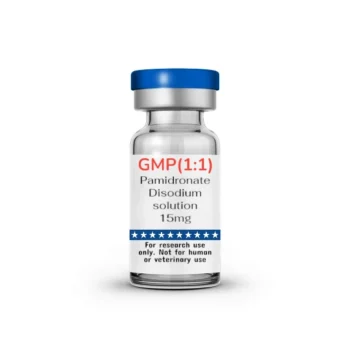
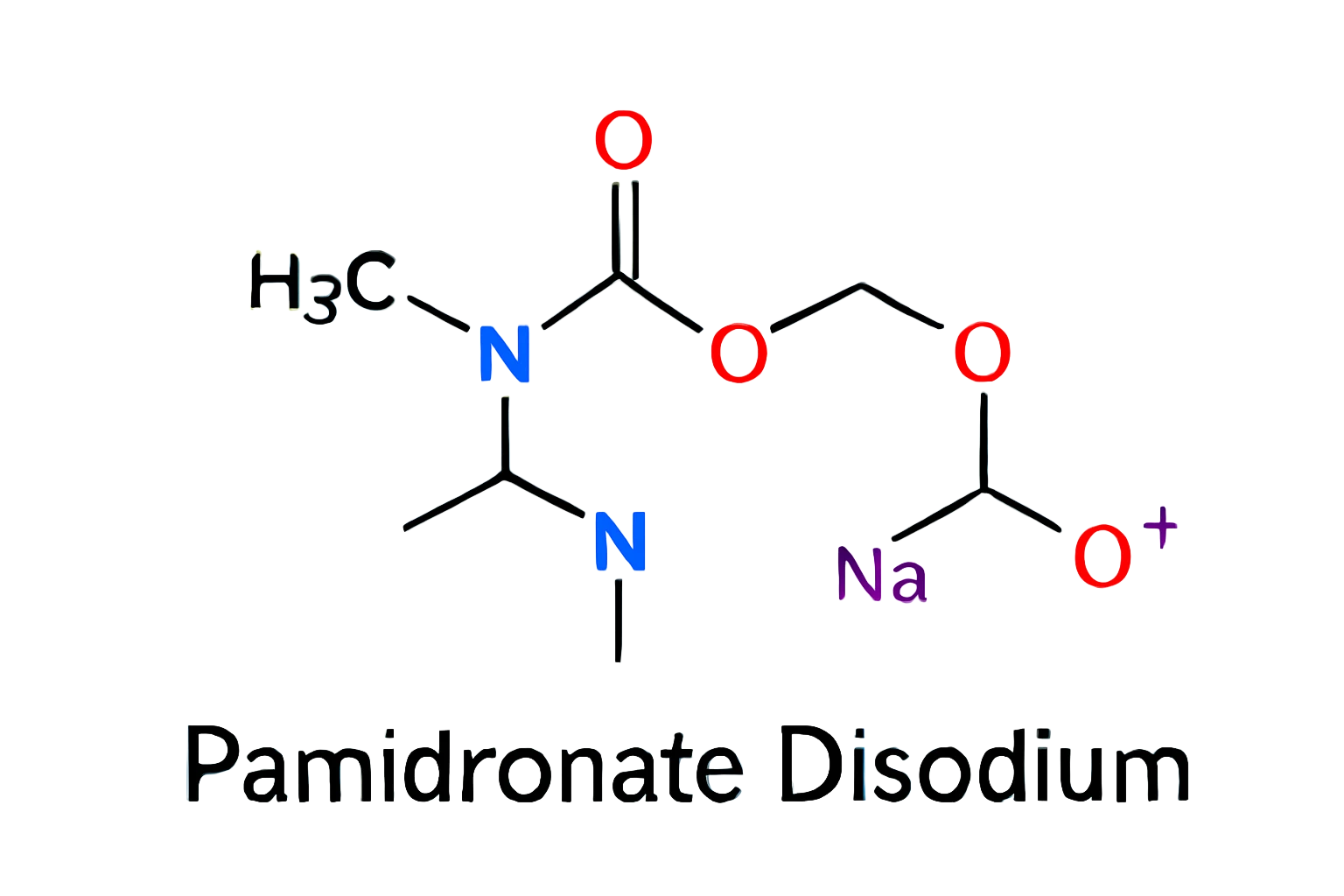
Pamidronate Disodium is a high-purity bisphosphonate reagent designed for in vitro mechanistic studies. It enables research into bone-related biochemical pathways, protein-ligand interactions, and molecular signaling mechanisms under controlled laboratory conditions. Supplied in a laboratory-ready format, it is ideal for mechanistic assays and protein interaction studies. Original price was: $6.00.$2.00Current price is: $2.00.Bronchogen (Bioregulator) 20mg | High Purity Factory Manufactured
Bronchogen is a bioregulatory research peptide supplied as a high-purity lyophilized powder tailored for advanced respiratory and aging-related investigations. Factory-manufactured with strict quality control, it supports large-scale institutional research and bulk procurement requirements. Original price was: $126.00.$106.00Current price is: $106.00.Cetuximab NO1 100 mg/50 mL | High purity | Factory manufactured
Cetuximab NO1 (100 mg/50 mL, Solution) is a high-purity monoclonal antibody solution manufactured under stringent factory-controlled conditions for in vitro laboratory research and molecular mechanism studies. Its solution format facilitates precise dosing, reproducible assay preparation, and integration into receptor-binding and signaling pathway research workflows.
Original price was: $3.00.$2.00Current price is: $2.00.



Reviews
There are no reviews yet.