
No products in the cart.
Sale
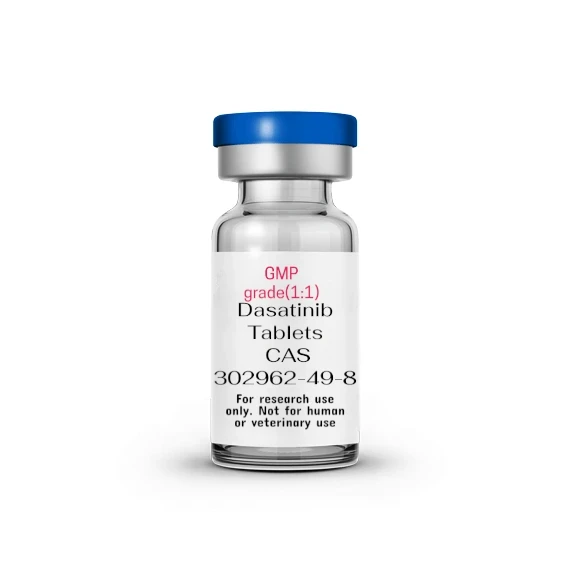

Dasatinib Tablets | CAS 302962-49-8 | Multi-Target Tyrosine Kinase Inhibitor for Cancer Research
Original price was: $3.00.$2.00Current price is: $2.00.
Dasatinib is a potent multi-target tyrosine kinase inhibitor that has been widely utilized in preclinical studies for cancer research, including leukemia and solid tumors, by inhibiting BCR-ABL and SRC family kinases.
Description
Product Description
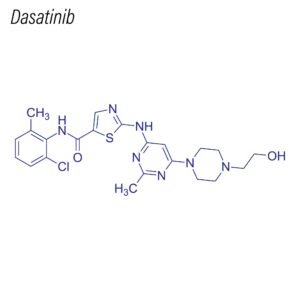
Dasatinib (CAS 302962-49-8) is a highly potent small molecule inhibitor of multiple tyrosine kinases, including BCR-ABL, SRC family kinases, c-KIT, EPHA2, and PDGFR. Its discovery has provided a versatile chemical tool for preclinical cancer research and experimental pharmacology. Dasatinib acts by binding competitively to the ATP-binding site of tyrosine kinases, thereby preventing phosphorylation and the subsequent activation of downstream signaling cascades critical for cell proliferation, survival, migration, and differentiation.
Preclinical studies using Dasatinib have demonstrated significant anti-proliferative effects, induction of apoptosis, and modulation of the tumor microenvironment. Its multi-target profile allows the investigation of complex signaling networks and potential synergistic effects in combination therapy experiments. Additionally, Dasatinib is employed to explore mechanisms of drug resistance and kinase mutation-driven adaptation in vitro and in vivo, providing a platform for translational oncology research.
Dasatinib is supplied as a yellow to orange crystalline powder, highly soluble in DMSO and suitable for various experimental applications. Laboratory handling should follow standard safety protocols, and the compound should be stored at low temperatures to maintain chemical stability and integrity over time. Its high purity (≥99%) ensures reproducibility and reliability in experimental research, facilitating consistent results across different studies and model systems.
The versatility of Dasatinib in research extends to studies on angiogenesis, stromal interactions, invasion, and metastasis mechanisms. By inhibiting SRC family kinases, it can affect cell adhesion, motility, and communication within the tumor microenvironment, which are critical parameters in cancer progression studies. This broad spectrum of action makes Dasatinib an invaluable reagent for exploring molecular pharmacology, cellular signaling dynamics, and potential combinatory approaches with other therapeutic agents in preclinical models. Its use enables comprehensive analysis of cancer cell biology, signaling crosstalk, and the evaluation of potential therapeutic strategies prior to clinical translation.
Product Specifications
| Parameter | Specification / Data |
|---|---|
| Chemical Name / Synonym | Dasatinib, BMS-354825 |
| CAS Number | 302962-49-8 |
| Purity / Assay | ≥99% |
| Molecular Formula | C22H26ClN7O2S |
| Molecular Weight | 488.01 g/mol |
| Appearance / Physical Form | Yellow to orange crystalline powder |
| Storage Temperature | 2–8 °C |
| Solubility | Soluble in DMSO; limited solubility in water |
| Batch Consistency | Verified by HPLC, MS, NMR |
| Application | Preclinical cancer research, kinase inhibition studies |
Dasatinib’s consistent quality is verified using HPLC, MS, and NMR, ensuring reproducibility. It is suitable for dose-response studies, signaling pathway analyses, combination treatments, and resistance modeling. Its crystalline form allows precise weighing and formulation, supporting high-quality preclinical research.
Mechanism of Action
Dasatinib is a broad-spectrum tyrosine kinase inhibitor that targets BCR-ABL and SRC family kinases, as well as c-KIT, EPHA2, and PDGFR. Its mechanism involves competitive inhibition at the ATP-binding site of these kinases, thereby preventing substrate phosphorylation and activation of downstream signaling pathways. The inhibition of BCR-ABL disrupts constitutive signaling in Ph+ leukemia cells, leading to apoptosis and growth arrest. SRC family kinase inhibition affects cellular adhesion, migration, invasion, and microenvironmental interactions, which are crucial for solid tumor progression.
Dasatinib modulates several critical signaling pathways including PI3K/AKT, RAS/RAF/MEK/ERK, STAT, and focal adhesion kinase (FAK) networks. By suppressing these pathways, Dasatinib impairs cell cycle progression, survival signaling, and tumor-promoting microenvironmental crosstalk. Preclinical studies have demonstrated that Dasatinib can induce apoptotic cell death, reduce proliferation rates, and sensitize tumor cells to additional experimental agents. Researchers utilize these properties to dissect complex biological processes such as kinase-dependent oncogenesis, drug resistance development, and pathway compensation in cancer cells.
Furthermore, Dasatinib’s multi-target action provides an opportunity to study combination therapies, particularly when exploring synergistic effects with other kinase inhibitors, chemotherapeutic agents, or targeted molecules. Its efficacy in modulating angiogenesis and stromal interactions has been documented, offering insights into tumor vascularization and metastatic potential. In vitro and in vivo models demonstrate that Dasatinib not only inhibits tumor growth directly but also indirectly by altering the tumor microenvironment, making it an invaluable tool for comprehensive cancer research.
Researchers can employ Dasatinib in mechanistic studies focusing on signal transduction, apoptosis induction, invasion suppression, and metastasis inhibition. Its capacity to inhibit multiple kinases simultaneously allows investigation of pathway crosstalk, feedback loops, and compensatory mechanisms, which are critical for understanding complex oncogenic signaling networks. High purity Dasatinib supports reproducible biochemical assays, molecular biology experiments, and pharmacodynamic studies in preclinical research, providing a robust foundation for experimental oncology and translational science.
Side Effects
Laboratory use of Dasatinib requires strict adherence to safety protocols due to its bioactive nature:
- Always use gloves, lab coat, and protective eyewear.
- Avoid inhalation, ingestion, and direct skin contact.
- Handle in a fume hood when possible.
- Dispose of all waste materials following institutional and governmental guidelines for cytotoxic compounds.
- Maintain temperature-controlled storage (2–8 °C) to prevent degradation and preserve experimental consistency.
Researchers should note that side effects pertain to laboratory handling and do not reflect clinical use, as this product is for research purposes only. Proper storage, handling, and disposal are critical to minimize exposure risks and ensure the integrity of experimental studies.
Shipping Guarantee
All shipments are handled using validated cold-chain logistics to preserve compound integrity. Each package is sealed in moisture-proof containers with secondary protective wrapping and continuous temperature monitoring. Products are shipped via express international couriers with full tracking and insurance coverage.
Trade Assurance
We ensure product authenticity, verified ≥99% purity, and compliance with analytical standards (HPLC, MS, and NMR). Each batch is supplied with a Certificate of Analysis (CoA). Our trade assurance policy guarantees replacement or refund for any deviation from listed specifications.
Payment Support
We provide flexible and secure global payment options to support international research transactions. Accepted payment methods include PayPal, major credit cards (Visa, MasterCard, American Express), telegraphic transfer (T/T), and cryptocurrencies (USDT, Bitcoin, Ethereum). All transactions are protected by industry-standard encryption and verified payment gateways to ensure confidentiality and fund security.
Keywords
Dasatinib, CAS 302962-49-8, multi-target tyrosine kinase inhibitor, BCR-ABL inhibitor, SRC family kinase inhibitor, cancer research reagent, preclinical oncology compound, laboratory research, high purity, experimental tyrosine kinase inhibitor
Disclaimer
For laboratory research use only. Not for diagnostic or therapeutic use. Handle with appropriate safety measures and dispose of waste according to institutional guidelines.

Additional information
| Weight | 1.1 kg |
|---|---|
| Dimensions | 18 × 16 × 18 cm |
Q1: What is Dasatinib used for in research?
A1: Dasatinib is used in preclinical cancer research to study inhibition of BCR-ABL and SRC family kinases, tumor signaling, and resistance mechanisms.
Q2: What is the purity of Dasatinib supplied?
A2: Our Dasatinib is supplied with ≥99% purity, suitable for high-precision research applications.
Q3: Can Dasatinib be used for in vitro studies?
A3: Yes, Dasatinib is commonly used for cancer cell line studies, signaling pathway analysis, and combination therapy research.
Q4: How should Dasatinib be stored?
A4: Store at 2–8 °C, protected from light and moisture.
Q5: Is Dasatinib soluble in water?
A5: Dasatinib is poorly soluble in water but highly soluble in DMSO.
Q6: Can your company supply Dasatinib in bulk?
A6: Yes, we offer OEM and bulk peptide production with high purity standards.
Q7: Is this product suitable for in vivo studies?
A7: Dasatinib is used in preclinical in vivo models for mechanistic and efficacy studies; handle following lab safety guidelines.
Q8: Do you provide a Certificate of Analysis (CoA)?
A8: Yes, each batch comes with a CoA verifying ≥99% purity.
Q9: Is Dasatinib available from a China peptide manufacturer?
A9: Yes, we are a reputable China-based manufacturer providing high-purity research compounds.
Q10: Can Dasatinib be purchased online?
A10: Yes, we provide secure online ordering for research-grade Dasatinib.
Q11: What safety precautions are necessary?
A11: Use gloves, lab coat, and eye protection; avoid inhalation, ingestion, or skin contact.
Q12: Do you supply Dasatinib for peptide wholesale China?
A12: Yes, we supply research-grade Dasatinib and other peptide compounds for wholesale in China and internationally.
Related products
Temozolomide 100mg — Laboratory Research Grade Chemical
Temozolomide is a high-purity alkylating research compound widely used in in vitro molecular mechanism studies focusing on DNA methylation, damage response pathways, and cell cycle regulation. It is suitable for laboratory-based biochemical and mechanistic research applications only.
Original price was: $6.00.$3.00Current price is: $3.00.Aprepitant 80mg | 99% High Purity | Laboratory Research Use Only
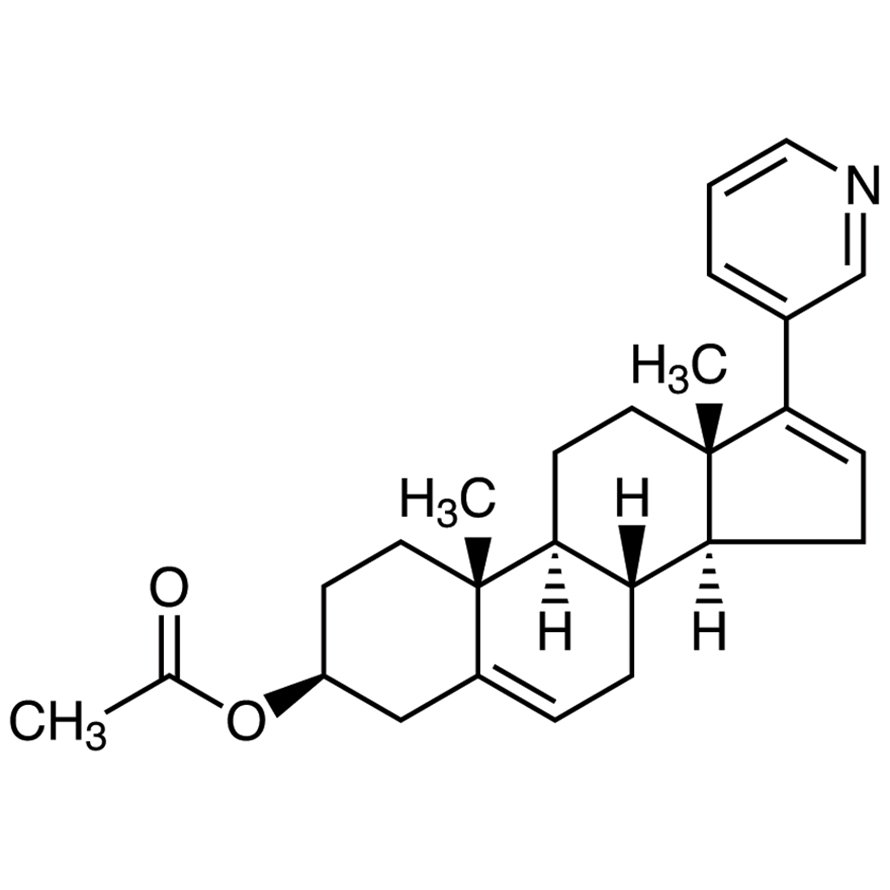
High-purity Aprepitant, factory-manufactured for in vitro mechanistic studies and molecular pathway research. Supplied as a stable powder for laboratories requiring bulk, wholesale, or customized research-grade supply. $1.00Abiraterone Acetate 250 mg – High Purity | Factory Manufactured
High-purity Abiraterone Acetate 250 mg, manufactured under strict quality control for in vitro receptor studies, enzymatic pathway research, and molecular mechanism analysis. Available for bulk, wholesale, and customized laboratory supply with consistent batch-to-batch purity. $2.00Iparomlimab and Tuvonralimab 50 mg/2 mL Solution
Iparomlimab and Tuvonralimab is a high-purity monoclonal antibody solution supplied at 50 mg/2 mL by factory manufacturing with low-price wholesale availability. Designed exclusively for in vitro molecular mechanism studies, protein interaction assays, and signaling pathway research, it provides reproducible and reliable experimental performance. Strictly for laboratory research use. $1.00




Reviews
There are no reviews yet.