
No products in the cart.
Sale
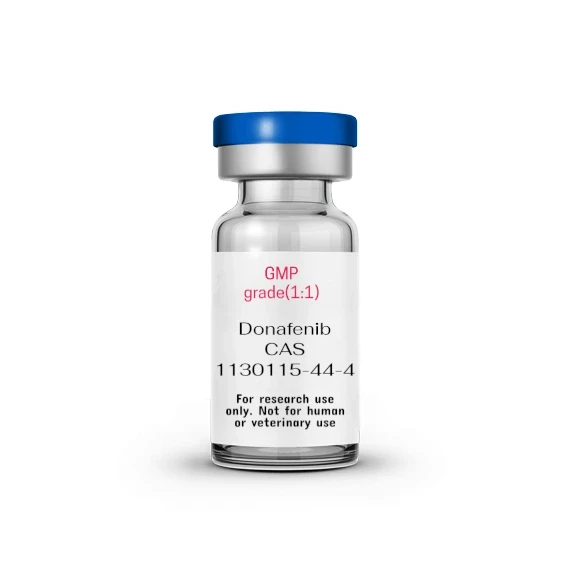
Donafenib | CAS 1130115-44-4 | Multi-Kinase Inhibitor for Cancer Research
Original price was: $3.00.$2.00Current price is: $2.00.
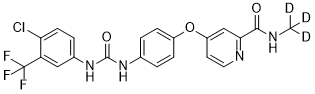
Donafenib (CAS 1130115-44-4) is a small-molecule multikinase inhibitor structurally derived from sorafenib, developed for oncology research. It selectively targets RAF kinases and VEGFR signaling pathways, offering a potent tool for studying tumor angiogenesis and cellular proliferation in cancer models.
Description
Product Description
Donafenib is a chemically synthesized small-molecule multikinase inhibitor designed as a next-generation derivative of sorafenib. Its chemical architecture incorporates fluorine substitutions and optimized linker regions, improving metabolic stability, bioavailability, and kinase selectivity. These properties make Donafenib an ideal research compound for in vitro, in vivo, and mechanistic oncology studies.
In cellular assays, Donafenib effectively inhibits RAF kinases (CRAF, BRAF) and receptor tyrosine kinases (VEGFR2, PDGFRβ), modulating MAPK/ERK pathways involved in tumor proliferation and angiogenesis. By binding to the ATP-binding pocket of these kinases, Donafenib prevents phosphorylation events required for downstream signal transduction, leading to reduced tumor cell proliferation, apoptosis induction, and impaired endothelial cell-mediated angiogenesis.
Preclinical studies employ Donafenib to investigate combination therapy potential, drug resistance mechanisms, and structure-activity relationships (SAR). Its dual inhibition of tumor and vascular signaling allows detailed studies of crosstalk between oncogenic pathways and microenvironmental responses. Researchers also use Donafenib in xenograft tumor models to evaluate tumor growth suppression, angiogenesis inhibition, and pharmacodynamic effects under controlled experimental conditions.
Donafenib is highly soluble in DMSO and ethanol and is supplied at ≥99% purity, ensuring reproducibility in experimental assays. Its chemical stability allows for high-fidelity research applications, including high-throughput kinase profiling, signaling pathway mapping, and in vitro mechanistic studies of cellular proliferation, apoptosis, and angiogenesis.
This compound is strictly for laboratory research and is not intended for clinical or veterinary use. Its reliable inhibitory profile and well-characterized pharmacology make Donafenib a cornerstone molecule for oncology, medicinal chemistry, and signal transduction research.
Product Specifications
| Item | Details |
|---|---|
| Product Name | Donafenib |
| CAS Number | 1130115-44-4 |
| Synonyms | Donafenib Tosylate; DNF; CM4307 |
| Molecular Formula | C24H20ClFN4O4 |
| Molecular Weight | 482.9 g/mol |
| Purity | ≥99% |
| Appearance | White to off-white crystalline powder |
| Solubility | Soluble in DMSO, ethanol; slightly soluble in water |
| Storage Temperature | 2–8 °C, protected from light and moisture |
| Category | Small-molecule kinase inhibitor |
| Applications | Cancer signaling research, RAF/VEGFR pathway studies, angiogenesis inhibition, preclinical oncology modeling |
| Formulation | Suitable for in vitro assays, biochemical kinase assays, and in vivo preclinical models |
| Stability | Stable under recommended storage conditions for up to 24 months |
| Shelf Life | 24 months |
| Supplier Type | Research chemical and small-molecule compound manufacturer |
| Intended Use | For laboratory research use only |
| Packaging Options | 10 mg – 1 kg sealed powder in moisture-proof containers |
| Delivery Mode | Cold-chain logistics with tracking and insurance |
Mechanism of Action
Donafenib inhibits both serine/threonine kinases (CRAF, BRAF) and receptor tyrosine kinases (VEGFR2, PDGFRβ), interfering with intracellular signaling that governs tumor cell proliferation and angiogenesis. By blocking ATP binding at the kinase active sites, Donafenib prevents phosphorylation and activation of downstream effectors such as MEK and ERK, leading to reduced cell cycle progression, increased apoptosis, and suppressed tumor growth.
The inhibition of VEGFR2 in endothelial cells impedes angiogenesis, reducing endothelial proliferation, migration, and tube formation in vitro and microvessel density in xenograft models. This dual targeting allows researchers to study interactions between tumor cells and the vascular microenvironment.
Donafenib is frequently used in combination studies to explore synergistic effects with chemotherapeutic agents, apoptosis modulators, or pathway-specific inhibitors. It also serves as a model compound for investigating compensatory signaling mechanisms, including PI3K/AKT/mTOR activation, in response to kinase inhibition.
Side Effects
In experimental systems, Donafenib exhibits dose-dependent cytotoxicity, cell cycle arrest, apoptosis induction, and oxidative stress modulation. These effects are mechanistic observations used to evaluate efficacy and pathway inhibition in research studies.
Cell cycle arrest: Typically at G1 phase in sensitive tumor lines.
Apoptosis: Activation of caspase-dependent and mitochondrial pathways.
Oxidative stress: Elevated ROS contributes to apoptosis in preclinical models.
Gene expression modulation: Changes in transcription factors like c-Myc, cyclin D1, VEGF-A.
Endothelial effects: Reduced proliferation, migration, and tube formation.
These side effects are laboratory findings and not clinical adverse events. Proper lab safety practices must be observed, including PPE, fume hood usage, and controlled handling.
Keywords
Donafenib, CAS 1130115-44-4, multi-kinase inhibitor, RAF kinase inhibitor, VEGFR blocker, small molecule inhibitor, cancer research compound, oncology tool compound, angiogenesis pathway inhibitor, MAPK signaling modulator, high-purity kinase inhibitor, research chemical supplier, China peptide & chemical manufacturer, bulk small molecule inhibitor, lab-grade compound ≥99%.
Shipping Guarantee
All Donafenib shipments are handled using validated cold-chain logistics to preserve compound integrity. Each package is sealed in moisture-proof containers with secondary protective wrapping and continuous temperature monitoring. Products are shipped via express international couriers with full tracking and insurance coverage.
Trade Assurance
We Donafenib ensure product authenticity, verified ≥99% purity, and compliance with analytical standards (HPLC, MS, and NMR). Each batch is supplied with a Certificate of Analysis (CoA). Our trade assurance policy guarantees replacement or refund for any deviation from listed specifications.
Payment Support
We Donafenib provide flexible and secure global payment options to support international research transactions. Accepted payment methods include PayPal, major credit cards (Visa, MasterCard, American Express), telegraphic transfer (T/T), and cryptocurrencies (USDT, Bitcoin, Ethereum). All transactions are protected by industry-standard encryption and verified payment gateways to ensure confidentiality and fund security.
Disclaimer
All Donafenib products listed are intended for laboratory research use only and not for human or veterinary use. They are not drugs, medical devices, or diagnostics and should not be administered to humans or animals. Researchers must handle all materials in accordance with institutional biosafety and chemical safety guidelines. The information provided is for scientific reference only and does not imply therapeutic efficacy, safety, or regulatory approval.

Additional information
| Weight | 1.1 kg |
|---|---|
| Dimensions | 18 × 16 × 18 cm |
What is Donafenib used for?
Donafenib is used in cancer research to study RAF and VEGFR signaling pathways, angiogenesis inhibition, and tumor growth modulation in preclinical models.
Is Donafenib a peptide?
No, Donafenib is a small-molecule kinase inhibitor, not a peptide. It is chemically synthesized for experimental oncology research.
What is the purity of Donafenib?
Each batch is verified to be ≥99% pure, confirmed through HPLC and MS.
How should Donafenib be stored?
Store at 2–8 °C in a tightly sealed, moisture-free container protected from light.
What solvents are recommended for Donafenib?
Donafenib is soluble in DMSO and ethanol, and slightly soluble in water.
Can Donafenib be used in in vivo studies?
Yes, it is suitable for preclinical in vivo models under approved laboratory conditions.
Does Donafenib come with documentation?
Each batch includes a Certificate of Analysis (CoA) and analytical verification.
Can Donafenib be purchased in bulk?
Yes, OEM & bulk production is available through our China chemical and peptide manufacturing network.
Is Donafenib stable during storage?
Yes, it remains stable for up to 24 months under recommended conditions.
What research areas use Donafenib?
It is used in oncology, kinase signaling studies, angiogenesis modeling, and medicinal chemistry research.
Is Donafenib available from peptide wholesale China suppliers?
Yes, it can be ordered through international laboratory suppliers and China-based chemical manufacturers.
Can Donafenib be used for combination studies?
Yes, it is commonly used with other inhibitors or chemotherapeutics for mechanistic studies.
Are there safety precautions for handling Donafenib?
Yes, use gloves, lab coat, and fume hood; avoid inhalation and skin contact.
Can analogues of Donafenib be synthesized?
Yes, OEM services are available for analogues, derivatives, or structural modifications for research purposes.
Why is Donafenib important for preclinical research?
Its dual inhibition of tumor proliferation and angiogenesis, combined with high chemical stability and ≥99% purity, provides reliable mechanistic insights in oncology studies.
Related products
Granisetron Hydrochloride Dispersible 1mg
High-purity Granisetron Hydrochloride Dispersible is a factory-manufactured research reagent optimized for in vitro receptor binding studies, 5-HT3 receptor mechanistic analysis, and molecular signaling research. Available for bulk and wholesale laboratory use with batch-verified purity and reproducible performance. $1.00Clodronate Disodium 10 pills | High purity | Factory manufactured
Clodronate Disodium is a high-purity laboratory research compound supplied by factory manufacturing at low-price wholesale scale. It is designed for in vitro molecular mechanism studies, biochemical assays, and signaling pathway investigations, ensuring consistent and reproducible experimental results. Strictly for laboratory research use. Original price was: $6.00.$2.00Current price is: $2.00.Temozolomide 100mg — Laboratory Research Grade Chemical
Temozolomide is a high-purity alkylating research compound widely used in in vitro molecular mechanism studies focusing on DNA methylation, damage response pathways, and cell cycle regulation. It is suitable for laboratory-based biochemical and mechanistic research applications only.
Original price was: $6.00.$3.00Current price is: $3.00.Aprepitant 80mg | 99% High Purity | Laboratory Research Use Only
High-purity Aprepitant, factory-manufactured for in vitro mechanistic studies and molecular pathway research. Supplied as a stable powder for laboratories requiring bulk, wholesale, or customized research-grade supply. $1.00


Reviews
There are no reviews yet.