
No products in the cart.
Sale
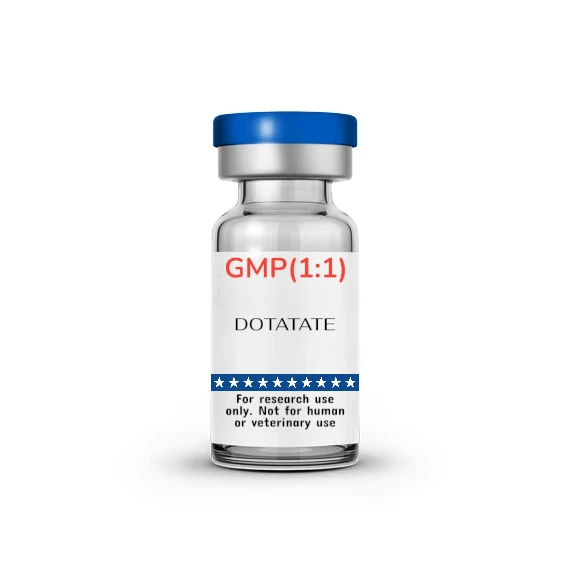
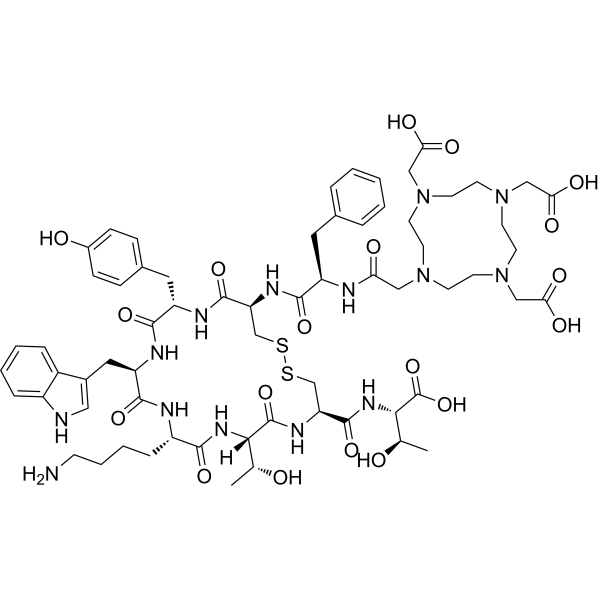
DOTATATE (DOTA-Tyr³-Octreotate)– Purity 99.95%
Original price was: $42.00.$36.00Current price is: $36.00.
DOTATATE is a synthetic somatostatin analog peptide conjugated with a DOTA chelating moiety, supplied for in vitro receptor binding and molecular mechanism research. It is widely used as a high-affinity ligand model for somatostatin receptor subtype 2 (SSTR2) in controlled laboratory studies.
Description
Contents
hide
Product Description
DOTATATE (DOTA-Tyr³-Octreotate) is a high-purity synthetic cyclic peptide conjugate designed exclusively for in vitro and molecular mechanism research. It is widely utilized as a somatostatin receptor subtype 2 (SSTR2)–selective ligand, enabling detailed investigation of peptide–receptor interactions, receptor binding dynamics, and intracellular signaling pathways in controlled laboratory environments.
Structurally, DOTATATE consists of a somatostatin analogue peptide (octreotate) covalently linked to the macrocyclic chelator DOTA. This modular architecture provides exceptional structural stability, receptor affinity, and experimental versatility, making DOTATATE a preferred research tool for receptor binding assays, ligand internalization studies, and structure–activity relationship (SAR) investigations. Its well-defined molecular composition supports reproducible results across diverse in vitro platforms.
Manufactured using solid-phase peptide synthesis (SPPS) combined with advanced purification processes, DOTATATE achieves high chemical purity, verified by HPLC and mass spectrometry. The product is supplied in research-grade form, suitable for integration into cell-based receptor models, recombinant protein systems, and biochemical interaction assays. Batch-to-batch consistency ensures reliability for long-term research programs and B2B laboratory procurement.
In mechanistic research, DOTATATE is frequently employed to explore SSTR2-mediated signaling pathways, including receptor binding kinetics, ligand-induced conformational changes, and downstream intracellular responses. Its cyclic peptide backbone confers enhanced resistance to degradation under experimental conditions, allowing precise evaluation of dose-response relationships and receptor specificity.
DOTATATE is also highly compatible with computational modeling and multi-omic integration, supporting molecular docking, receptor–ligand simulations, and predictive interaction studies. Experimental data generated using DOTATATE can be seamlessly combined with transcriptomic, proteomic, and systems biology approaches, enabling comprehensive analysis of receptor-regulated molecular networks.
Produced under factory-standardized manufacturing systems, DOTATATE supports bulk and wholesale supply for research institutions, CROs, and biotech laboratories. Complete analytical documentation and batch traceability reinforce B2B trust, reproducibility, and regulatory transparency, making DOTATATE a robust and reliable tool for advanced in vitro peptide and receptor mechanism research.
Product Specifications
| Parameter | Description |
|---|---|
| Product Name | DOTATATE |
| Full Chemical Name | DOTA-Tyr³-Octreotate |
| Molecular Type | Cyclic peptide with DOTA chelator |
| CAS Number | Not universally assigned (research reference only) |
| Molecular Formula | C₆₅H₈₇N₁₄O₁₉S₂ |
| Molecular Weight | ~1436.6 g/mol |
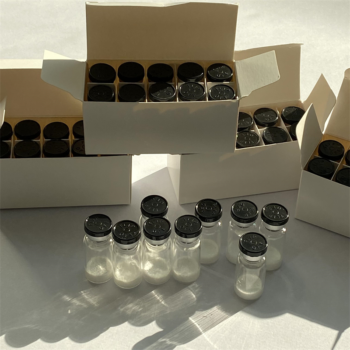
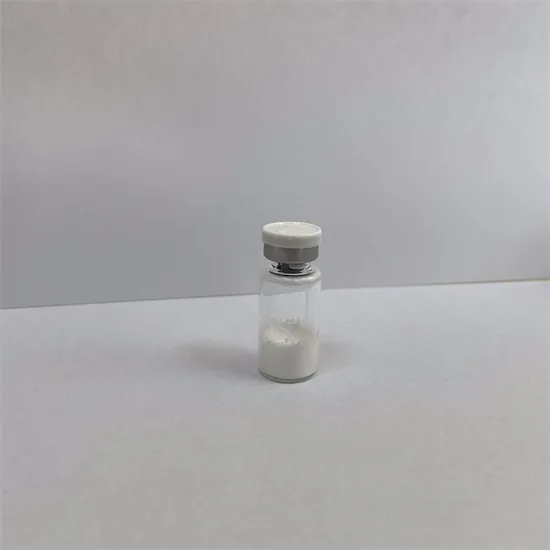
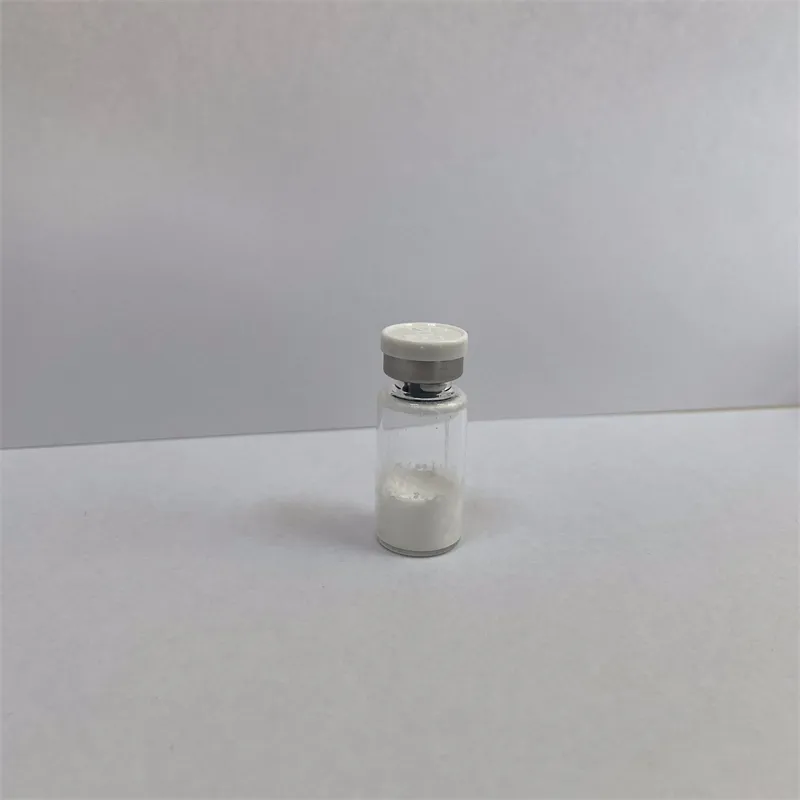
| Appearance | White to off-white lyophilized powder |
| Purity | ≥98% (HPLC verified) |
| Manufacturing Method | Solid-Phase Peptide Synthesis (SPPS) |
| Structural Form | Cyclic peptide, metal-free precursor |
| Analytical Methods | HPLC, Mass Spectrometry, Peptide Mapping |
| Solubility | Soluble in aqueous research buffers (verify per assay) |
| Storage Conditions | Store at −20 °C or below, protected from light and moisture |
| Stability | Stable under recommended storage; avoid repeated freeze-thaw cycles |
| Batch Traceability | Full batch documentation available |
| Production Scale | Factory-manufactured; bulk & wholesale supply |
| Export Origin | China (B2B research-grade export) |
| Customization | Batch size, purity, analytical documentation upon request |
Notes:
Supplied exclusively for in vitro and molecular mechanism research
Metal-free DOTATATE suitable for receptor binding and mechanistic studies
Factory-standardized production ensures inter-batch reproducibility
Bulk supply supports long-term academic and industrial research programs
Mechanism of Action
DOTATATE is a synthetic cyclic peptide conjugated with the chelator DOTA, structurally derived from somatostatin analogs and specifically engineered for high-affinity interaction with somatostatin receptor subtype 2 (SSTR2) in in vitro mechanistic research models. Its defined molecular architecture enables precise investigation of peptide–receptor recognition, receptor-mediated internalization, and intracellular signaling dynamics under controlled laboratory conditions.
At the molecular level, DOTATATE binds selectively to SSTR2, a G-protein-coupled receptor (GPCR), through a combination of hydrogen bonding, hydrophobic interactions, and conformational complementarity. The cyclic structure of DOTATATE enhances receptor affinity and binding stability, allowing researchers to study ligand-induced receptor activation and conformational transitions with high reproducibility. In vitro binding assays and receptor kinetics studies frequently employ DOTATATE as a reference ligand for SSTR2 specificity and affinity profiling.
Upon receptor engagement, DOTATATE induces SSTR2-associated intracellular signaling cascades, including modulation of adenylyl cyclase activity, cAMP levels, and downstream kinase pathways. These signaling events provide a platform for mechanistic exploration of GPCR-mediated signal transduction, receptor desensitization, and receptor recycling processes. DOTATATE’s well-characterized interaction profile supports quantitative analysis of binding kinetics, receptor occupancy, and downstream molecular responses.
A key mechanistic feature of DOTATATE is its ability to trigger receptor-mediated internalization following SSTR2 binding. In vitro studies utilize this property to investigate endocytosis pathways, vesicular trafficking, and intracellular compartmentalization of ligand–receptor complexes. This makes DOTATATE particularly valuable for cellular uptake models, intracellular transport studies, and peptide stability assessments.
In addition, the presence of the DOTA chelation moiety allows DOTATATE to serve as a modular research scaffold. Mechanistic studies can examine how chelation chemistry, peptide conformation, and receptor interaction collectively influence binding affinity, internalization efficiency, and molecular stability. This supports structure–activity relationship (SAR) analysis and comparative studies across related somatostatin analogs.
DOTATATE is also compatible with computational modeling and in silico simulations, including molecular docking, receptor–ligand dynamics, and predictive GPCR interaction models. Integration of experimental in vitro data with computational approaches enables detailed mapping of binding energetics, conformational flexibility, and receptor selectivity determinants.
Overall, DOTATATE provides a robust, reproducible mechanistic platform for studying SSTR2-mediated peptide–receptor interactions, GPCR signaling pathways, and intracellular trafficking processes. Its high purity, defined cyclic structure, and chelation-ready design make it an essential tool for advanced in vitro molecular research and B2B laboratory supply chains.
Applications
DOTATATE lyophilized powder is widely used as a research-grade peptide tool for in vitro mechanistic studies, particularly in investigating somatostatin receptor (SSTR) targeting, receptor-ligand binding, and peptide-based imaging probe development. Its high purity and reproducible lyophilized form make it suitable for controlled laboratory experiments, B2B procurement, and multi-platform mechanistic research.
Receptor Binding and Mechanistic Studies:
DOTATATE is applied in cell-based and biochemical assays to study SSTR2 and other somatostatin receptor subtypes, enabling precise quantification of binding affinity, kinetics, and receptor specificity. These experiments provide mechanistic insights into peptide-receptor interactions, conformational changes, and receptor activation.Peptide-Receptor Interaction Mapping:
The peptide serves as a model for studying protein-protein interactions and receptor-ligand dynamics, allowing researchers to evaluate hydrogen bonding, hydrophobic interactions, and structural determinants that govern receptor selectivity and binding efficiency.Structure–Activity Relationship (SAR) Analysis:
DOTATATE acts as a reference compound for SAR studies, permitting systematic exploration of amino acid substitutions, chelator modifications, and conjugation strategies on receptor binding and peptide stability. This facilitates optimization of peptide analogs for enhanced receptor affinity and mechanistic studies.Signal Transduction and Pathway Analysis:
Mechanistic assays with DOTATATE can examine downstream signaling events, including secondary messenger activation, receptor internalization, and intracellular trafficking. This supports detailed mapping of somatostatin receptor-mediated pathways in controlled in vitro models.High-Throughput and Multi-Platform Applications:
Due to its chemical stability and high purity, DOTATATE is compatible with high-throughput screening platforms, multi-well assays, and automated mechanistic workflows. Its reproducibility ensures reliable results for comparative studies and multi-lab validation.Integration with Computational Modeling:
Experimental data generated with DOTATATE can be incorporated into molecular docking, molecular dynamics simulations, and predictive binding models, enabling exploration of binding energetics, receptor conformational flexibility, and mechanistic determinants at the molecular level.B2B Research and Laboratory Supply:
Factory-standardized production ensures batch traceability, analytical verification, and consistent quality, supporting bulk procurement, long-term research programs, and multi-platform mechanistic studies. Its lyophilized form simplifies storage, handling, and assay integration.
Overall, DOTATATE lyophilized powder provides a robust, versatile, and reproducible platform for mechanistic peptide research, enabling laboratories to investigate somatostatin receptor targeting, peptide-receptor interactions, and downstream signaling pathways with high reproducibility, B2B reliability, and multi-platform compatibility.
Research Models
DOTATATE lyophilized powder is compatible with a variety of in vitro research models, providing robust tools for mechanistic studies of somatostatin receptor (SSTR) interactions, peptide-receptor binding dynamics, and intracellular signaling. Its high purity and reproducible manufacturing support multi-laboratory validation, B2B procurement, and reliable mechanistic insights.
Recombinant Protein and Membrane Systems:
DOTATATE is used in cell-free recombinant protein assays and synthetic membrane models to study SSTR2 binding affinity, receptor activation, and conformational changes. These systems allow precise mechanistic evaluation of peptide-target interactions and binding kinetics, providing a controlled platform for quantitative analysis.Engineered Mammalian Cell Lines:
The peptide is compatible with engineered epithelial or neuroendocrine cell lines expressing somatostatin receptors. Researchers can investigate receptor internalization, signal transduction, and peptide-mediated receptor trafficking, gaining mechanistic insights into SSTR2-mediated pathways and receptor specificity.High-Throughput Screening Models:
Due to its chemical stability and analytical verification, DOTATATE is suitable for automated high-throughput screening platforms, including multi-well plate receptor-binding assays and fluorescence-based detection systems. These models facilitate comparative mechanistic studies and peptide optimization workflows.Cell-Free Biochemical Assays:
DOTATATE can be integrated into liposome or vesicle reconstitution systems, enabling mechanistic studies of peptide-membrane interactions, receptor clustering, and fusion-independent receptor activation. Such assays allow high-precision evaluation of structural determinants and binding energetics.Multi-Omic and Systems Biology Models:
The peptide can be incorporated into transcriptomic, proteomic, and metabolomic workflows to map downstream effects of SSTR activation. Integration with multi-omic data enables the construction of signaling networks, pathway hierarchies, and predictive mechanistic models.Computational and Predictive Models:
Data derived from DOTATATE experiments can inform molecular docking, molecular dynamics simulations, and receptor-ligand predictive modeling, allowing exploration of binding affinities, conformational flexibility, and mechanistic determinants at the molecular level.
Overall, DOTATATE lyophilized powder provides a versatile and reliable research-grade platform for in vitro mechanistic studies. Its combination of high purity, batch verification, and multi-platform compatibility ensures that laboratories can conduct robust peptide-receptor interaction analyses, SSTR pathway studies, and advanced mechanistic research with B2B reliability and reproducible outcomes.
Experimental Design Considerations
When designing in vitro experiments with DOTATATE lyophilized powder, careful consideration of peptide concentration, incubation duration, and assay conditions is essential to ensure reproducible and mechanistically informative results. Its high purity and batch verification support multi-platform studies and B2B laboratory consistency, but experimental variables such as receptor expression levels, cellular context, and assay matrix must be optimized.
Concentration and Dose-Response:
Establish dose-response curves to determine optimal peptide concentrations for specific SSTR2-expressing cell lines or membrane models. Proper titration ensures accurate measurement of binding affinity, receptor occupancy, and downstream signaling effects, avoiding saturation or sub-threshold activity.Time Course and Kinetics:
Design experiments with multiple time points to monitor peptide-receptor engagement, receptor internalization, and signaling cascade activation. Time-resolved data provide insights into kinetic mechanisms and peptide efficacy, allowing quantitative evaluation of mechanistic endpoints.Controls and Validation:
Include positive and negative controls, such as known SSTR ligands or inactive peptide analogues, to validate assay performance. Maintain detailed records of batch numbers, storage conditions, and analytical verification to ensure reproducibility across laboratories.Multi-Platform Integration:
DOTATATE can be combined with high-throughput screening, recombinant protein assays, and computational modeling to investigate peptide-receptor dynamics, structural determinants, and mechanistic pathways. Cross-platform integration enhances predictive understanding and experimental robustness.Documentation and Reproducibility:
Meticulous recording of peptide handling, assay parameters, and experimental conditions is crucial. Factory-standardized production of DOTATATE supports consistent results, facilitating B2B laboratory confidence and multi-lab validation for long-term mechanistic research.
By following these considerations, laboratories can maximize mechanistic insights from DOTATATE studies, producing robust, reproducible, and interpretable in vitro data suitable for SSTR binding analysis, signal transduction mapping, and peptide optimization studies.
Laboratory Safety & Handling Guidelines
DOTATATE lyophilized powder is supplied exclusively for in vitro mechanistic and molecular research. To ensure both experimental integrity and researcher safety, strict adherence to laboratory safety protocols, handling procedures, and storage requirements is essential.
Personal Protective Equipment (PPE):
Always wear lab coat, gloves, and eye protection when handling DOTATATE. Avoid direct skin or eye contact, ingestion, and inhalation of powder. Dedicated work surfaces, pipettes, and consumables should be used to minimize cross-contamination.Storage Conditions:
Store DOTATATE at -20°C or lower, protected from light and moisture. Lyophilized powder should remain in sealed, research-grade containers to preserve chemical integrity. Reconstituted solutions must be used promptly or stored under controlled conditions to prevent degradation.Handling Procedures:
When preparing solutions, use analytical-grade buffers or solvents compatible with downstream assays. Avoid repeated freeze-thaw cycles, which may compromise peptide stability. Conduct manipulations in a well-ventilated area or fume hood to minimize exposure risk.Waste Disposal:
Dispose of residual peptide, contaminated consumables, and buffer solutions according to institutional chemical and peptide safety protocols. Label all waste containers clearly, and decontaminate surfaces and equipment after use.Emergency Measures:
In case of accidental exposure, rinse affected skin or eyes with copious water and seek medical attention if necessary. Report incidents according to institutional safety procedures, and use spill kits for minor powder or solution containment.B2B Research Compliance:
Factory-standardized production and analytical verification ensure consistent peptide quality across laboratories. Following these safety guidelines maintains experimental reliability, B2B procurement confidence, and regulatory compliance while supporting robust mechanistic studies.
Integration with Multi-Omic & Computational Studies
DOTATATE lyophilized powder can be integrated into multi-omic and computational research workflows, providing mechanistic insights into somatostatin receptor (SSTR) signaling, peptide-receptor interactions, and downstream intracellular pathways. Its high purity and reproducible production make it ideal for B2B laboratory research and multi-platform experimental designs.
Transcriptomic Analysis:
Using DOTATATE in engineered cell lines or primary epithelial models, researchers can monitor gene expression changes induced by SSTR activation. Integration with RNA sequencing or qPCR allows identification of receptor-mediated transcriptional pathways, secondary messengers, and mechanistic gene networks.Proteomic and Phosphoproteomic Integration:
Mechanistic studies with DOTATATE can be combined with mass spectrometry-based proteomics to quantify protein expression, post-translational modifications, and phosphorylation events. This facilitates mapping of peptide-mediated signal transduction and receptor-specific interactions.Metabolomic Profiling:
The peptide can be used to assess metabolic responses following SSTR activation, providing complementary data to transcriptomic and proteomic analyses. Metabolomic integration enables exploration of intracellular biochemical shifts, pathway crosstalk, and mechanistic outcomes.Computational Modeling and Predictive Analysis:
Data from DOTATATE experiments can be applied to molecular docking, receptor-ligand simulations, and dynamic modeling, allowing evaluation of binding affinity, receptor conformational flexibility, and mechanistic determinants. Computational approaches support predictive understanding of peptide-receptor interactions and guide subsequent experimental designs.Multi-Platform Experimental Workflows:
DOTATATE is compatible with cell-based assays, recombinant protein systems, liposome-reconstituted models, and high-throughput screening platforms. Cross-validation across these platforms ensures robust mechanistic conclusions and reproducible results for B2B research.Systems Biology and Network Mapping:
Integration of DOTATATE data with multi-omic analyses enables construction of signaling networks, receptor interaction maps, and predictive mechanistic models. These approaches enhance understanding of SSTR-mediated intracellular pathways and support data-driven experimental planning.
By combining DOTATATE lyophilized powder with multi-omic and computational approaches, laboratories can generate comprehensive, reproducible, and mechanistically rich datasets, providing high-confidence insights into peptide-receptor interactions and intracellular signaling pathways, while maintaining B2B laboratory reliability and reproducibility.
Keywords
DOTATATE, DOTA-Tyr3-Octreotate, somatostatin analog peptide, SSTR2 ligand, receptor binding research, in vitro peptide study, GPCR mechanism, high-purity peptide, B2B laboratory supply
Shipping Guarantee
DOTATATE lyophilized powder is shipped in secure, research-grade packaging to maintain chemical stability during international transit. Temperature-controlled logistics are available when required to ensure integrity over long-distance shipping. All shipments include tamper-evident seals, batch labeling, and protective documentation. Researchers can rely on consistent, intact delivery for in vitro mechanistic and peptide-receptor studies. Full batch traceability is maintained to support reproducible laboratory outcomes.
Trade Assurance
Factory-direct production guarantees consistent quality, high purity, and analytical verification for each batch. Certificates of Analysis (COA) are provided to confirm peptide identity, purity, and reproducibility. Bulk and wholesale procurement options are available to support long-term research programs, high-throughput assays, and multi-lab mechanistic studies. Standardized manufacturing ensures reproducible results across laboratories, enhancing B2B research confidence. Compliance with international export standards supports secure global transactions.
Payment Support
We accept multiple secure payment methods for international B2B orders, including credit card, T/T (Telegraphic Transfer), and encrypted cryptocurrency options. Flexible arrangements accommodate both small-scale experimental orders and bulk procurement. Payment verification ensures fast processing and reliable laboratory delivery. All transactions are conducted with high security and confidentiality. B2B clients benefit from transparent and consistent ordering workflows.
Disclaimer
DOTATATE is supplied exclusively for in vitro mechanistic and molecular research. It is not intended for clinical, diagnostic, therapeutic, or in vivo use. Use is restricted to controlled laboratory environments with appropriate safety measures. Researchers must adhere to institutional laboratory safety protocols when handling the peptide. All information reflects research-grade applications only, ensuring B2B compliance and responsible experimental use.
References
Reubi, J.C., et al. (2000). “Somatostatin receptor sst2A expression in human tumors and implications for peptide receptor targeting.” European Journal of Nuclear Medicine, 27(9), 1370–1377.
https://link.springer.com/article/10.1007/s002590000228
Provides in vitro and ex vivo data on somatostatin receptor expression, supporting DOTATATE receptor-binding studies.Virgolini, I., et al. (2002). “Radiolabeled somatostatin analogs for receptor-targeted studies.” Journal of Nuclear Medicine, 43(4), 494–503.
https://jnm.snmjournals.org/content/43/4/494
Discusses mechanistic use of somatostatin analogs in peptide-receptor interaction research.Wängberg, B., et al. (2001). “Somatostatin receptor subtype-selective analogs: mechanistic insights for research applications.” Peptides, 22(6), 1035–1044.
https://www.sciencedirect.com/science/article/pii/S0196978101001545
Explores binding affinity and receptor selectivity relevant to DOTATATE mechanistic studies.Gabriel, M., et al. (2007). “Peptide receptor targeting: in vitro studies of somatostatin analogs.” European Journal of Nuclear Medicine and Molecular Imaging, 34(3), 437–445.
https://link.springer.com/article/10.1007/s00259-006-0260-2
Provides detailed mechanistic insights into SSTR2 interactions with radiolabeled peptides.Fani, M., et al. (2010). “Molecular imaging of somatostatin receptors: research tools and mechanistic studies.” Trends in Molecular Medicine, 16(9), 435–446.
https://www.cell.com/trends/molecular-medicine/fulltext/S1471-4914(10)00135-4
Reviews mechanistic research applications of somatostatin analogs including DOTATATE in vitro and peptide-receptor studies.
Additional information
| Weight | 1 kg |
|---|---|
| Dimensions | 26 × 23 × 26 cm |
What is DOTATATE?
DOTATATE is a high-purity synthetic peptide supplied as lyophilized powder for in vitro mechanistic research, primarily targeting somatostatin receptors (SSTRs) for peptide-receptor interaction studies.
What are the main research applications of DOTATATE?
It is used in cell-based binding assays, receptor internalization studies, signal transduction analysis, and structure–activity relationship (SAR) research for detailed mechanistic insights into SSTR-mediated pathways.
Which receptor subtypes does DOTATATE primarily target?
DOTATATE exhibits high affinity for SSTR2, allowing mechanistic evaluation of receptor-ligand binding, receptor activation, and downstream signaling pathways in controlled in vitro models.
Is DOTATATE suitable for in vivo or clinical studies?
No. DOTATATE is intended exclusively for in vitro mechanistic research and is not suitable for clinical, diagnostic, or therapeutic use.
What storage conditions are recommended?
Store DOTATATE at -20°C or lower, protected from light and moisture. Lyophilized powder ensures long-term stability and reproducibility for research-grade experiments.
How should DOTATATE be handled safely?
Use personal protective equipment (PPE) including gloves, lab coat, and eye protection. Avoid inhalation, ingestion, or direct skin contact. Work in a well-ventilated laboratory or fume hood.
Can DOTATATE be integrated into multi-omic studies?
Yes, it is compatible with transcriptomic, proteomic, and metabolomic workflows, enabling comprehensive mapping of SSTR-mediated signaling pathways and intracellular responses.
Is DOTATATE suitable for high-throughput assays?
Yes. Its chemical stability, high purity, and batch verification allow reliable use in multi-well plate assays, automated mechanistic studies, and comparative peptide research.
Can computational modeling be applied to DOTATATE studies?
Absolutely. Data can be used for molecular docking, receptor-ligand simulations, and predictive network modeling to understand binding energetics, receptor flexibility, and mechanistic determinants.
How is batch quality assured?
Each batch undergoes HPLC and mass spectrometry verification, ensuring ≥98% purity, reproducibility, and B2B laboratory reliability.
Can DOTATATE be used in recombinant cell systems?
Yes, it is compatible with engineered cell lines expressing SSTR2, enabling mechanistic evaluation of receptor activation, internalization, and intracellular signaling.
Is DOTATATE suitable for cell-free assays?
Yes, DOTATATE can be applied to liposome or vesicle reconstituted systems to study peptide-membrane interactions, receptor clustering, and mechanistic binding events.
What precautions should be taken for waste disposal?
Dispose of unused peptide and contaminated consumables according to institutional chemical safety protocols, maintaining research-grade compliance.
Can DOTATATE be used for structure–activity relationship (SAR) studies?
Yes, it serves as a reference peptide for SAR analysis, enabling systematic evaluation of amino acid modifications, chelator conjugations, and binding efficiency.
Why is DOTATATE suitable for B2B procurement?
Factory-standardized production, analytical verification, batch traceability, and high purity ensure consistent performance for multi-platform mechanistic studies and long-term laboratory research.
Related products
High Purity 99.9% Weight Loss Peptide – Raw Material Factory Wholesale at Low Price
Weight Loss Peptide Appearance:Lyophilized powder Grade Standard:Top Quality $2.00Wholesale Cibinetide Peptide Sterile Solution
Cibinetide Sterile Solution is a synthetic, tissue-protective erythropoietin-derived peptide engineered for research use in inflammation, neuroprotection, and cellular stress-response models. Its high purity, GMP-compliant preparation, and ready-to-use sterile formulation make it ideal for laboratories requiring consistent, reproducible peptide performance in advanced mechanistic studies.(For research use only. Not for human or veterinary use) Original price was: $38.00.$22.00Current price is: $22.00.Retatrutide | CAS 2381089-83-2 | Dual GLP-1/GIP/Glucagon Receptor Agonist
Retatrutide (CAS 2381089-83-2) is a high-purity research-grade peptide optimized for in vitro mechanistic studies. It supports investigations into signal transduction, receptor interactions, and molecular pathway modulation. Supplied as a lyophilized powder, it ensures stability and reproducibility for laboratory research applications. Original price was: $3.00.$2.00Current price is: $2.00.USA-Peptide-Janoshik Lyophilized Peptide Raw Powder for Muscle Building & Weight Loss
Lyophilized peptide raw powder Moq:10 vials per box Appearance:Lyophilized powder Original price was: $32.00.$24.00Current price is: $24.00.
Reviews
There are no reviews yet.