
No products in the cart.
Sale
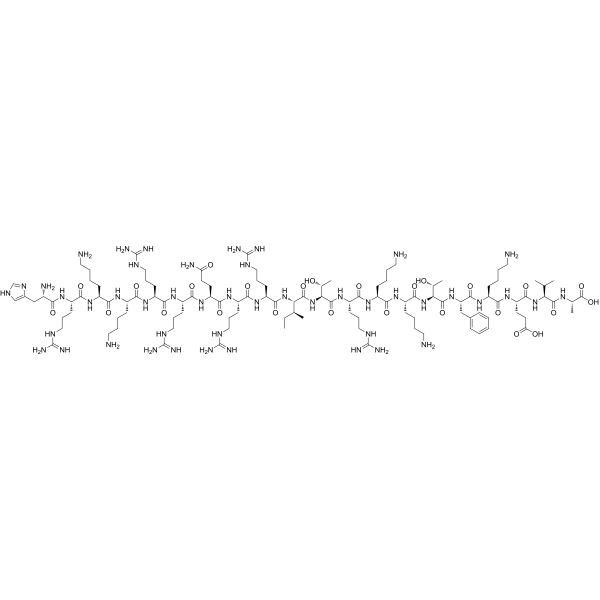
eNOS pT495 Decoy Peptide | CAS 2769088-82-4 | Prevents eNOS Uncoupling in Lung Injury Research
Original price was: $26.00.$18.00Current price is: $18.00.
eNOS pT495 decoy peptide (CAS 2769088-82-4) is a specific inhibitor of T495 phosphorylation that reduces eNOS uncoupling and mitochondrial redistribution. It is valuable for studies on endothelial nitric oxide synthase regulation and ventilator-induced lung injury.
Description
Product Description
eNOS pT495 decoy peptide (CAS 2769088-82-4) is a highly specific biologically active peptide designed to mimic the threonine 495 (T495) phosphorylation site of endothelial nitric oxide synthase (eNOS). eNOS is a key enzyme in endothelial cells responsible for the generation of nitric oxide (NO), a critical signaling molecule involved in vascular tone, endothelial homeostasis, and cytoprotection. Phosphorylation at T495 is a pivotal regulatory mechanism that negatively affects eNOS activity. Under pathological conditions such as oxidative stress, mechanical ventilation, or inflammatory stimuli, T495 phosphorylation increases, leading to eNOS uncoupling. This uncoupling switches the enzymatic activity from producing NO to generating reactive oxygen species (ROS), contributing to oxidative damage, mitochondrial dysfunction, endothelial permeability changes, and overall vascular pathology.
The eNOS pT495 decoy peptide functions as a competitive substrate for kinases, such as protein kinase C (PKC), which normally phosphorylate eNOS at T495. By occupying this phosphorylation site, the peptide prevents kinase-mediated modification, thereby preserving eNOS in a “coupled” functional state. Coupled eNOS produces nitric oxide efficiently, maintaining vascular tone, inhibiting platelet aggregation, reducing oxidative stress, and supporting endothelial integrity. Moreover, by stabilizing mitochondrial distribution and preventing pathological ROS accumulation, the peptide protects cellular bioenergetics and preserves endothelial metabolism.
Extensive preclinical research demonstrates that eNOS pT495 decoy peptide effectively reduces ventilator-induced lung injury (VILI) in rodent models. Mechanical ventilation, while life-saving, can cause excessive alveolar stretch, leading to inflammatory cascades, oxidative stress, and endothelial injury. Application of this peptide restores eNOS function, enhances NO bioavailability, and reduces ROS-mediated damage in pulmonary microvascular endothelial cells. These properties make it a vital tool for understanding the molecular mechanisms of endothelial dysfunction, mitochondrial dynamics, and oxidative injury in the lung.
Beyond VILI research, eNOS pT495 decoy peptide has been applied in studies involving cardiovascular disease, ischemia-reperfusion injury, diabetes-associated endothelial dysfunction, and other oxidative stress-related vascular pathologies. By providing precise control over T495 phosphorylation, researchers can dissect the roles of eNOS uncoupling in diverse disease models.
Additionally, the peptide has utility in high-resolution studies of mitochondrial biology. eNOS uncoupling has been linked to abnormal mitochondrial redistribution, fragmentation, and impaired oxidative phosphorylation. Using this peptide, investigators can prevent these deleterious changes, enabling detailed analysis of mitochondrial morphology, bioenergetics, and redox signaling.
The peptide is lyophilized as a stable white to off-white powder, soluble in water or physiological buffers such as PBS, making it suitable for in vitro and in vivo experimental setups. Researchers have used it in cultured endothelial cells, isolated vessel preparations, and animal models of lung and cardiovascular injury to study NO signaling, redox balance, and endothelial protective mechanisms.
Overall, eNOS pT495 decoy peptide (CAS 2769088-82-4) is a precise molecular probe for vascular biology, redox signaling, mitochondrial studies, and pulmonary injury research, providing a robust tool for mechanistic studies and therapeutic target validation.
Product Specifications
| Parameter | Details |
|---|---|
| Product Name | eNOS pT495 Decoy Peptide |
| CAS Number | 2769088-82-4 |
| Synonyms | Endothelial Nitric Oxide Synthase T495 Decoy Peptide; eNOS Uncoupling Inhibitor Peptide |
| Purity | ≥99% |
| Molecular Formula | N/A |
| Molecular Weight | N/A |
| Appearance | White to off-white lyophilized powder |
| Solubility | Soluble in water or PBS |
| Storage Conditions | Store at -20°C, protected from light and moisture |
| Applications | Endothelial biology research; lung injury studies; mitochondrial signaling; nitric oxide pathway modulation |
| Category | Research peptide; phosphorylation decoy peptide |
Extended Specifications and Research Applications:
Endothelial Dysfunction Research: Study NO-mediated signaling, vascular permeability, and oxidative stress.
Pulmonary Disease Models: Useful in ventilator-induced lung injury, pulmonary hypertension, and ischemia-reperfusion models.
Mitochondrial Dynamics: Enables investigation of ROS-mediated mitochondrial fragmentation and redistribution.
Signal Transduction Studies: Supports examination of PKC-eNOS pathway, T495 phosphorylation, and downstream redox signaling.
Pharmacological Tool: Ideal for mechanistic studies, inhibitor validation, and therapeutic hypothesis testing in preclinical settings.
Quality Control: HPLC and mass spectrometry ensure ≥99% purity; stability confirmed under recommended storage conditions.
Formulation: Lyophilized powder ensures long-term stability and ease of reconstitution for experimental use.
Mechanism of Action
eNOS pT495 decoy peptide operates through a highly specific molecular mechanism targeting eNOS regulation at the threonine 495 residue:
Competitive Inhibition of Phosphorylation: The peptide mimics the T495 site, competing with endogenous eNOS for phosphorylation by PKC and other relevant kinases.
Maintenance of eNOS Coupling: By inhibiting T495 phosphorylation, eNOS remains coupled, producing nitric oxide instead of superoxide, which is crucial for endothelial homeostasis and vasoprotection.
Mitochondrial Protection: eNOS uncoupling triggers mitochondrial mislocalization and oxidative damage. The peptide preserves mitochondrial distribution, maintains oxidative phosphorylation efficiency, and reduces ROS generation.
Redox Homeostasis: By restoring NO production and limiting ROS, the peptide helps maintain intracellular redox balance, mitigating oxidative stress-related cellular damage.
Endothelial Function Modulation: Stabilization of eNOS activity improves vascular tone, decreases inflammatory signaling, and enhances barrier function in endothelial cells.
Experimental Versatility: Applicable in vitro for cultured endothelial cells, ex vivo in isolated vessel studies, and in vivo for animal models of vascular injury and pulmonary stress.
Downstream Effects: Preservation of NO signaling impacts multiple downstream pathways including cGMP-mediated vasodilation, anti-inflammatory signaling, and inhibition of platelet aggregation.

Side Effects
Experimental and preclinical data suggest the following considerations:
Cytotoxicity: At standard research concentrations, eNOS pT495 decoy peptide exhibits negligible cytotoxicity in endothelial or other primary cells.
Redox Modulation: Excessive NO production or inhibition could theoretically affect redox-sensitive pathways. Dosing should be optimized for each experimental model.
Systemic Effects in Vivo: While primarily used in controlled preclinical models, systemic modulation of NO may influence blood pressure and vascular tone; careful monitoring is recommended.
Laboratory Safety: Handle with standard laboratory PPE; avoid inhalation or direct skin contact. Use in BSL-2 or higher facilities if required by local regulations.
Not for Clinical Use: Strictly for research purposes; not intended for human or veterinary application.
Keywords
eNOS pT495 decoy peptide, CAS 2769088-82-4, eNOS uncoupling inhibitor, nitric oxide research peptide, endothelial dysfunction model, ventilator-induced lung injury peptide, phosphorylation decoy, mitochondrial signaling peptide
Shipping Guarantee
All peptides are shipped with temperature-controlled packaging to preserve stability and bioactivity, with full global delivery support.
Transaction Guarantee
Secure international trade supported via T/T, PayPal, cryptocurrency, and other methods. Each order includes CoA and safety documentation.

Additional information
| Weight | 0.8 kg |
|---|---|
| Dimensions | 62 × 53 × 62 cm |
What is eNOS pT495 decoy peptide used for?
It is used to study eNOS regulation, nitric oxide signaling, and endothelial dysfunction in lung injury and cardiovascular research.
How does the peptide prevent eNOS uncoupling?
By acting as a decoy at the T495 site, it blocks phosphorylation, preserving eNOS coupling and nitric oxide production.
Can this peptide be used in vivo?
Yes, it has been used in preclinical models, strictly for research purposes.
What storage conditions are recommended?
Store at −20°C, away from light and moisture.
Is it soluble in aqueous buffers?
Yes, it dissolves in water, PBS, or mild buffer solutions.
Does it have cytotoxic effects?
At research concentrations, no cytotoxicity has been reported.
What are its main research applications?
Endothelial signaling, vascular biology, pulmonary inflammation, and oxidative stress.
Is custom modification available?
Yes, including labeling, purity, and conjugation on request.
How is product quality verified?
Purity ≥99% confirmed by HPLC and MS, with full CoA provided.
Is bulk supply available?
Yes, bulk synthesis and OEM services are available for institutional research.
Related products
Wholesale 99% Purity Epitalon Peptide Raw Powder for Skin Repair
Epitalon Peptide Raw Powder for Skin Repair Original price was: $33.00.$22.00Current price is: $22.00.USA-Peptide-Janoshik Lyophilized Peptide Raw Powder for Muscle Building & Weight Loss
Lyophilized peptide raw powder Moq:10 vials per box Appearance:Lyophilized powder Original price was: $32.00.$24.00Current price is: $24.00.99% Pure Peptide Reta Trutide Epitalon in Stock Factory wholesale
Peptide Reta Purity 99%Over Original price was: $39.00.$26.00Current price is: $26.00.GLP-1/GIP/glucagon combination therapy The Future of Metabolic Treatment (Wholesale Supplier Guide)
GLP-1/GIP/glucagon combination therapy Original price was: $38.00.$23.00Current price is: $23.00.


Reviews
There are no reviews yet.