
No products in the cart.
Sale
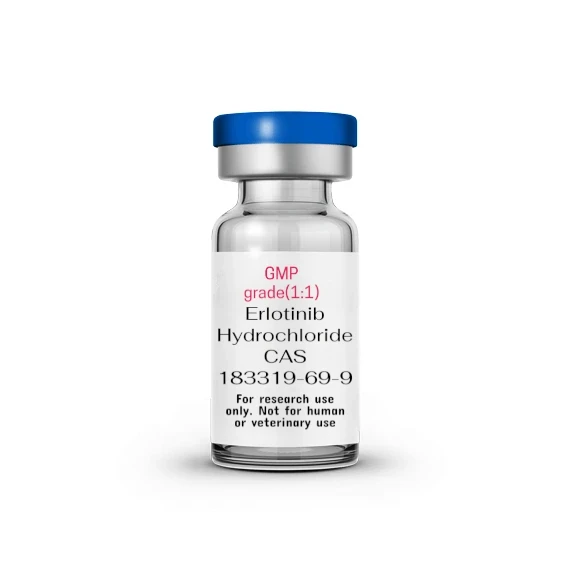

Erlotinib Hydrochloride | CAS 183319-69-9 | High-Purity factory price supply
Original price was: $23.00.$18.00Current price is: $18.00.
Erlotinib Hydrochloride (CAS 183319-69-9) is a potent, high-purity EGFR tyrosine kinase inhibitor supplied as a stable research-grade powder. It is widely used in preclinical studies on EGFR-driven oncology, apoptosis, signal-transduction inhibition, protein-kinase regulation, and targeted pathway suppression.
Description
Product Description
Erlotinib Hydrochloride (CAS 183319-69-9) is a potent and selective epidermal growth factor receptor (EGFR) tyrosine kinase inhibitor, widely used in preclinical molecular oncology, pharmacology, and cell biology research. As an anilinoquinazoline derivative, it binds competitively to the ATP-binding domain of EGFR, preventing receptor autophosphorylation and downstream signaling. Its research-grade powder form ensures precise dosing for in vitro and in vivo preclinical models, enabling reproducible investigation of EGFR-dependent cellular processes, apoptosis, proliferation inhibition, epithelial–mesenchymal transition (EMT), and drug resistance.
Mechanistic Overview
Erlotinib Hydrochloride inhibits EGFR-mediated signaling pathways:
RAS/RAF/MEK/ERK Pathway – blocks cell proliferation
PI3K/AKT/mTOR Pathway – reduces cell survival and sensitizes to apoptosis
JAK/STAT Pathway – decreases transcription of pro-survival genes
EMT Regulatory Networks – inhibits migration and invasion potential
These effects contribute to apoptosis induction, G1-phase cell-cycle arrest, suppression of metastatic phenotypes, and enhanced sensitivity to combination therapies.
Preclinical Applications
Erlotinib Hydrochloride powder is widely employed in:
EGFR-Dependent Tumor Growth Inhibition – lung, pancreatic, head and neck cancer models
Combination Therapy Evaluation – with chemotherapeutics, kinase inhibitors, PARP inhibitors, or immunomodulatory agents
Drug Resistance Modeling – T790M mutations, MET amplification, HER2 or AXL overexpression, EMT-mediated adaptive resistance
Apoptosis and Cell-Cycle Mechanistic Studies – caspase activation, mitochondrial depolarization, ROS generation, cyclin/CDK regulation
Pathway Crosstalk and Biomarker Validation – EGFR, PI3K/AKT/mTOR, MAPK, JAK/STAT interactions
In Vivo Xenograft Models – pharmacokinetic/pharmacodynamic evaluation and tumor growth inhibition
Its Erlotinib Hydrochloride powder form offers chemical stability, precise concentration preparation, and compatibility with multiple solvents (DMSO, ethanol, methanol), facilitating reproducible experimental outcomes.
Product Specifications
| Parameter | Specification / Data |
|---|---|
| Chemical Name / Synonyms | Erlotinib Hydrochloride; CP-358774 HCl; NSC 718781 |
| CAS Number | 183319-69-9 |
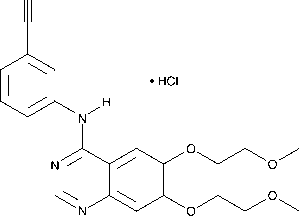
| Molecular Formula | C22H23N3O4·HCl |
| Molecular Weight | 429.90 g/mol |
| Purity / Assay | ≥99% |
| Appearance | White to off-white crystalline powder |
| Dosage Form | Powder (research grade) |
| Solubility | Soluble in DMSO, ethanol, methanol; sparingly soluble in water |
| Stock Solution Recommendation | 10–50 mM in DMSO |
| Storage Conditions | –20 to 4 °C; protect from light and moisture |
| Stability | Stable under recommended storage; avoid repeated freeze–thaw cycles |
| Mechanistic Target | EGFR (ErbB1/HER1) tyrosine kinase |
| Structural Category | Anilinoquinazoline derivative |
| Applications | EGFR signaling research, apoptosis induction, proliferation inhibition, drug resistance modeling, EMT studies, combination therapy evaluation |
| Batch Consistency | Verified by HPLC, MS, NMR |
| Regulatory Notes | For laboratory research use only |
| Origin | Certified research chemical manufacturer; OEM/bulk supply available |
| Additional Data | SMILES: CCOC1=C(NC=C2C=CC(OC)=CC2=C1)N3C=NC(=O)C=C3.Cl |
Mechanism of Action
EGFR Tyrosine Kinase Inhibition
Competitive binding to ATP-binding pocket of EGFR
Prevents receptor autophosphorylation
Suppresses downstream signaling: RAS/RAF/MEK/ERK, PI3K/AKT/mTOR, JAK/STAT
Apoptosis Induction
Mitochondrial depolarization and cytochrome c release
Caspase-3 and -9 activation
ROS generation contributing to oxidative stress
Downregulation of anti-apoptotic proteins (BCL-2, survivin)
p53-dependent and independent apoptosis pathways
Cell-Cycle Arrest
G1-phase arrest through cyclin D1/CDK4/6 suppression
Rb hypophosphorylation leading to E2F inactivation
Inhibition of DNA replication initiation
EMT and Migration Inhibition
Upregulation of E-cadherin
Downregulation of N-cadherin and vimentin
Inhibition of FAK/AKT signaling
Suppression of integrin-mediated adhesion and motility
Resistance Mechanisms
EGFR T790M mutation
MET amplification
HER2 or AXL overexpression
EMT-mediated adaptive resistance
KRAS/NRAS feedback loops
Combination Therapy Applications
Chemotherapeutics: cisplatin, gemcitabine, paclitaxel
Targeted inhibitors: MET, ALK, PI3K/AKT inhibitors
DNA damage response modulators: PARP inhibitors, CHK1/2 inhibitors
Immunomodulatory agents

Erlotinib Hydrochloride Side Effects (Preclinical Observations)
Cellular Effects
Inhibition of EGFR phosphorylation
G1-phase cell-cycle arrest
DNA damage and replication stress
ROS-mediated oxidative stress
Apoptotic Effects
Caspase-dependent mitochondrial apoptosis
p53-dependent and independent cell death
Membrane blebbing and nuclear condensation
Laboratory Handling
Handle with PPE in a fume hood
Avoid inhalation, ingestion, or skin contact
Dispose of waste according to institutional safety protocols
Keywords
Erlotinib Hydrochloride, EGFR inhibitor, Erlotinib powder, EGFR signaling inhibitor, apoptosis research, tyrosine kinase inhibitor, cancer signaling research, Erlotinib bulk powder, proliferation inhibition, oncogenic EGFR models, targeted therapy research compound, laboratory research reagent.
Shipping Guarantee
All Erlotinib Hydrochloride shipments of Erlotinib Hydrochloride powder are packaged with moisture-resistant material and temperature-stable logistics. International express shipping with tracking and insurance ensures compound integrity.
Trade Assurance
≥99% purity verified by HPLC, MS, NMR
Certificate of Analysis (CoA) included for each batch
Replacement or refund provided for deviations from listed specifications
Payment Support
Global options:
PayPal
Visa / MasterCard / American Express
T/T bank transfer
USDT / Bitcoin / Ethereum
All transactions are encrypted and secure.
Disclaimer
Erlotinib Hydrochloride (CAS 183319-69-9) is provided strictly for laboratory research purposes only. It is not intended for human or veterinary use, clinical applications, or diagnostic purposes. Handle only in qualified laboratories following institutional safety guidelines. The supplier assumes no responsibility for misuse.
References
Additional information
| Weight | 1.1 kg |
|---|---|
| Dimensions | 18 × 16 × 18 cm |
What is Erlotinib Hydrochloride used for in preclinical research?
Used to inhibit EGFR signaling, induce apoptosis, suppress proliferation, and study drug resistance mechanisms in cancer cells.
What is the purity of Erlotinib Hydrochloride?
≥99%, verified by HPLC, MS, NMR.
How should it be stored?
–20 to 4 °C, protected from light and moisture.
Can it be used in combination therapy studies?
Yes, with chemotherapeutics, kinase inhibitors, PARP inhibitors, and immunomodulators.
Which cell lines are suitable?
EGFR-mutant lung, pancreatic, head and neck cancer cells; xenograft models.
What solvents are recommended?
DMSO preferred; ethanol or methanol compatible.
Is bulk supply available?
Yes, OEM and bulk powder supply with batch consistency verified.
How does it induce apoptosis?
G1-phase arrest, mitochondrial depolarization, ROS generation, caspase-3/-9 activation.
Does it affect EMT?
Yes, upregulates E-cadherin, downregulates vimentin/N-cadherin, reduces migration.
Can it be used for resistance studies?
Yes, T790M mutation, MET amplification, EMT-mediated resistance.
Is it suitable for in vivo studies?
Yes, with appropriate dosing in preclinical models.
Are analytical certificates included?
Yes, HPLC, MS, NMR, and CoA provided.
Does it require special handling?
Yes, handle in a fume hood with PPE.
Can it study pathway crosstalk?
Yes, EGFR/PI3K/AKT/mTOR/STAT3 signaling.
Is it suitable for combination PK/PD studies?
Yes, commonly used for pharmacokinetic and pharmacodynamic analysis.
Related products
Irinotecan Hydrochloride Liposome 43mg for scientific research
High-purity Irinotecan Hydrochloride Liposome Solution, factory-manufactured for in vitro molecular mechanism studies and controlled biochemical pathway research. Supplied as a stable liposomal solution suitable for laboratories requiring bulk, wholesale, or customized research-grade supply. Original price was: $2.00.$1.00Current price is: $1.00.Doxorubicin Liposome Solution for scientific research
High-purity Doxorubicin Liposome Solution, factory-manufactured for in vitro molecular mechanism studies and biochemical pathway research. Supplied as a stable liposomal solution, ideal for laboratories requiring bulk, wholesale, or customized research-grade supply. Original price was: $10.00.$8.00Current price is: $8.00.Temozolomide 100mg — Laboratory Research Grade Chemical
Temozolomide is a high-purity alkylating research compound widely used in in vitro molecular mechanism studies focusing on DNA methylation, damage response pathways, and cell cycle regulation. It is suitable for laboratory-based biochemical and mechanistic research applications only.
Original price was: $6.00.$3.00Current price is: $3.00.Toremifene Citrate 60mg for scientific research
High-purity Toremifene Citrate Tablets designed exclusively for in vitro molecular mechanism research, receptor-binding analysis, and biochemical pathway modulation studies. Factory-manufactured with consistent batch quality, suitable for bulk and wholesale supply.(For research use only. Not for human or veterinary use.) $1.00


Reviews
There are no reviews yet.