
No products in the cart.
Sale
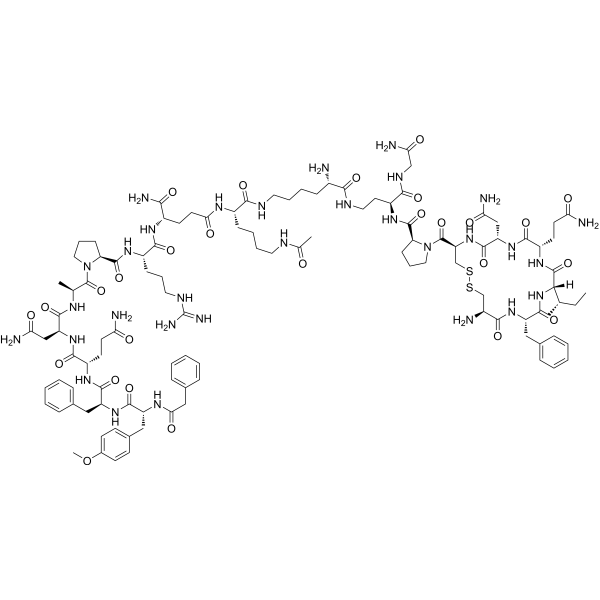
Invopressin (CAS 1488411-60-4) | Vasopressin V1A Receptor Partial Agonist for Hepatic Research | GMP Supplier
Original price was: $26.00.$22.00Current price is: $22.00.
Invopressin (Compound 42) is a selective vasopressin V1A receptor partial agonist (EC50: 1.0 nM), developed for research into cirrhosis complications, bacterial peritonitis, HRS2, and refractory ascites. Provided in GMP-grade quality, Invopressin ensures reproducible results for pharmacological, hepatic, and renal preclinical studies. Available in both wholesale and retail formats. For laboratory research use only.
Description
Contents
hide
Product Description
Invopressin (CAS 1488411-60-4), also known as Compound 42, is a synthetic small molecule that functions as a selective vasopressin V1A receptor partial agonist. With an EC50 of approximately 1.0 nM, Invopressin demonstrates potent receptor engagement while maintaining a partial activation profile, making it highly suitable for research into hepatic and renal complications associated with cirrhosis.
Background
Vasopressin, also known as antidiuretic hormone (ADH), is a key regulator of vascular tone, renal function, and fluid homeostasis. It exerts its biological effects through V1A, V1B, and V2 receptor subtypes. Among these, V1A receptors are primarily expressed in vascular smooth muscle and hepatosplanchnic circulation, mediating vasoconstriction and contributing to hemodynamic regulation.
Cirrhosis is often accompanied by portal hypertension, ascites, bacterial peritonitis, and hepatorenal syndrome type 2 (HRS2). These complications are partly driven by profound splanchnic vasodilation, systemic hypotension, and impaired renal perfusion. By selectively modulating V1A receptors, Invopressin provides a unique pharmacological tool to investigate therapeutic approaches for these pathophysiological states.
Research Value
Unlike full V1A agonists, Invopressin’s partial agonist profile allows researchers to dissect the nuanced role of receptor modulation without inducing excessive vasoconstriction or off-target effects. This makes it particularly valuable for:
Cirrhosis research: Understanding splanchnic hemodynamics and compensatory mechanisms.
Bacterial peritonitis studies: Modeling immune, vascular, and renal interactions during infection-related decompensation.
HRS2 models: Exploring reno-hepatic cross-talk in chronic liver failure.
Refractory ascites research: Investigating how controlled vasoconstriction influences fluid accumulation and diuresis.
Advantages Over Conventional Vasopressin Analogs
Partial agonism: Avoids excessive vasoconstriction seen with full agonists.
Selectivity: Strong preference for V1A receptors, reducing off-target V2 receptor effects.
Reproducibility: GMP-grade synthesis ensures batch consistency.
Versatility: Applicable in rodent, large-animal, and in vitro models.
By offering a reliable and well-characterized compound, Invopressin enables mechanistic and translational studies into cirrhosis management strategies and hemodynamic regulation.
Product Specifications
| Parameter | Details |
|---|---|
| Product Name | Invopressin (Compound 42) |
| Synonyms | Compound 42, V1A receptor partial agonist |
| CAS Number | 1488411-60-4 |
| Molecular Type | Small molecule vasopressin analog |
| Receptor Activity | V1A partial agonist, EC50 ? 1.0 nM |
| Purity | 98% (HPLC) |
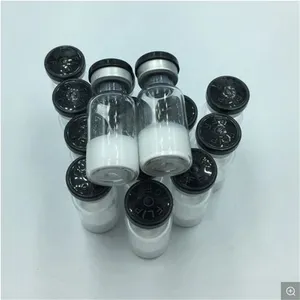
| Appearance | White to off-white crystalline/lyophilized powder |
| Solubility | Soluble in DMSO, ethanol, and aqueous buffers |
| Stability | Stable 24 months in lyophilized form |
| Storage Conditions | Store at -20°C; protect from light; avoid repeated freeze-thaw cycles |
| Mechanism | Partial agonism at vasopressin V1A receptor, modulating vascular tone |
| GMP Compliance | Manufactured in GMP-certified facility |
| Applications | Cirrhosis, bacterial peritonitis, HRS2, refractory ascites research |
| Experimental Models | Rodent models of cirrhosis, ascites, and renal failure |
| Availability | Wholesale & retail supply |
| Safety Considerations | Research-use only; handle under laboratory precautions |
Mechanism of Action & Research Applications
Mechanism of Action
Invopressin binds selectively to V1A receptors located on vascular smooth muscle, initiating partial agonist activity. This engagement results in:
Controlled Vasoconstriction
Induces moderate splanchnic vasoconstriction.
Restores effective arterial blood volume.
Improved Renal Perfusion
Counteracts vasodilation-induced hypoperfusion in cirrhotic models.
Supports renal hemodynamics in HRS2 studies.
Reduced Portal Hypertension
Lowers splanchnic blood flow, thereby modulating portal venous pressure.
Partial Agonism Benefits
Limits excessive systemic vasoconstriction.
Balances efficacy and safety in preclinical experiments.

Research Applications
Cirrhosis & Portal Hypertension
Study vascular tone, portal flow, and systemic hemodynamics in animal models of cirrhosis.Bacterial Peritonitis
Investigate host responses, cytokine release, and hemodynamic regulation in infectious complications.Hepatorenal Syndrome Type 2 (HRS2)
Evaluate how partial agonism influences renal function, glomerular filtration, and sodium handling.Refractory Ascites
Test fluid balance and diuretic responsiveness under controlled V1A activation.Comparative Pharmacology
Benchmark Invopressin against full agonists like terlipressin and vasopressin analogs.Translational Research
Provide insights into novel therapeutic strategies for cirrhosis-related decompensation.
Side Effects (For Research Reference)
Experimental observations with Invopressin in preclinical studies include:
Hemodynamic Effects: Moderate increases in blood pressure and systemic vascular resistance.
Renal Responses: Altered urine output and sodium excretion depending on dose.
Gastrointestinal Effects: Possible reduced blood flow to intestines during high-dose exposure.
Species-Specific Variability: Different vascular responses observed in rodent vs. primate models.
Tachyphylaxis Risk: Repeated dosing may reduce responsiveness over time.
Injection Site Reactions: Local irritation in subcutaneous models.
These findings are strictly experimental. Invopressin is not for human or veterinary use.
Disclaimer
For laboratory research use only. Not for human or veterinary use.
Keywords
Invopressin
Compound 42 vasopressin analog
V1A receptor partial agonist peptide
Cirrhosis research compound
Ascites pharmacology research
GMP supplier Invopressin
Hepatorenal syndrome research peptide
Bacterial peritonitis research tool
Laboratory hemodynamics research peptide
Additional information
| Weight | 0.7 kg |
|---|---|
| Dimensions | 53 × 48 × 53 cm |
What is Invopressin?
A selective vasopressin V1A receptor partial agonist for research.
What is its CAS number?
CAS No. 1488411-60-4.
Does Invopressin have other names?
Yes, also known as Compound 42.
What is its receptor activity?
V1A receptor partial agonist, EC50 ~1.0 nM.
What is it used for in research?
Studies of cirrhosis, bacterial peritonitis, HRS2, and refractory ascites.
Related products
Retatrutide | CAS 2381089-83-2 | Dual GLP-1/GIP/Glucagon Receptor Agonist
Retatrutide (CAS 2381089-83-2) is a high-purity research-grade peptide optimized for in vitro mechanistic studies. It supports investigations into signal transduction, receptor interactions, and molecular pathway modulation. Supplied as a lyophilized powder, it ensures stability and reproducibility for laboratory research applications. Original price was: $14.00.$12.00Current price is: $12.00.Factory Supply Peptide Healthcare 99% with Safe Delivery
Peptide Healthcare Usage Delta-Sleep Inducing Peptides Purity 99%Over Dose 2mg 5mg 10mg 15mg 20mg Highe Original price was: $28.00.$23.00Current price is: $23.00.Best-Selling Weight Loss Peptide: Slimming Peptide Reta with Safe Delivery
Weight Loss Peptide Lab-Tested Purity (99%+) – Ensures maximum effectiveness Original price was: $56.00.$23.00Current price is: $23.00.USA Warehouse 99% IV Infusion Therapy Anti-Aging Injection Peptide for Weight Loss & Muscle Building
USA Warehouse 99% IV Infusion Therapy Anti-Aging Injection Peptide for Weight Loss & Muscle Building Original price was: $38.00.$23.00Current price is: $23.00.

Reviews
There are no reviews yet.