
No products in the cart.

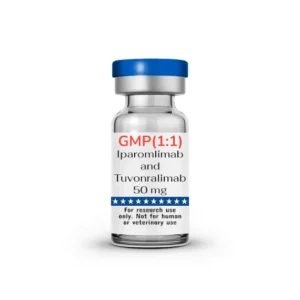
Iparomlimab and Tuvonralimab 50 mg/2 mL Solution
$1.00
Iparomlimab and Tuvonralimab is a high-purity monoclonal antibody solution supplied at 50 mg/2 mL by factory manufacturing with low-price wholesale availability. Designed exclusively for in vitro molecular mechanism studies, protein interaction assays, and signaling pathway research, it provides reproducible and reliable experimental performance. Strictly for laboratory research use.

Description
Contents
hide
Product Description
Iparomlimab and Tuvonralimab is a high-purity monoclonal antibody solution specifically formulated for laboratory research and in vitro mechanistic studies. Supplied at 50 mg/2 mL, this solution provides researchers with a reliable and reproducible tool to investigate protein–protein interactions, signaling pathway modulation, and molecular mechanism exploration in a controlled laboratory environment. Its well-characterized chemical and physical properties make it an ideal reagent for biochemical assays, binding studies, and mechanistic modeling.
Manufactured in a GMP-compliant facility under strict quality control procedures, Tuvonralimab ensures batch-to-batch consistency, which is critical for longitudinal studies, comparative assays, and high-throughput screening (HTS) applications. The solution’s chemical stability and optimized formulation allow seamless integration into cell-free enzymatic systems, recombinant protein platforms, and in vitro signaling models, providing high-resolution insights into molecular interactions and pathway dynamics.
Tuvonralimab supports detailed mechanistic investigations, including enzyme modulation studies, ligand-receptor interaction analysis, and feedback loop evaluation. Researchers can employ this compound in structure–function relationship (SFR) studies to assess binding specificity, conformational flexibility, and interaction stability, both experimentally and in combination with computational models. Its compatibility with in silico docking, predictive modeling, and multi-omic integration enhances the mechanistic understanding of complex molecular networks.
Each batch of Tuvonralimab is supplied with a Certificate of Analysis (COA), analytical verification, and documentation, ensuring confidence in research reproducibility and experimental integrity. The high purity and consistency of this monoclonal antibody solution allow researchers to minimize variability in protein interaction assays, signaling pathway analyses, and mechanistic exploration experiments.
Tuvonralimab is also designed to facilitate high-throughput and comparative studies, providing a reliable reference reagent for screening panels and pathway reconstruction experiments. Its aqueous formulation ensures optimal solubility, stability, and performance across a range of in vitro applications.
In summary, Tuvonralimab 50 mg/2 mL is a versatile, high-purity research reagent intended exclusively for laboratory research and in vitro applications. It empowers researchers to conduct precise, reproducible, and mechanistically informative experiments, bridging experimental assays with computational modeling and multi-omic integration for comprehensive molecular-level insights.
Product Specifications
| Parameter | Specification |
|---|---|
| Product Name | Iparomlimab and Tuvonralimab Solution |
| Form | Monoclonal antibody solution |
| Concentration | 50 mg/2 mL |
| Purity | ≥99% (analytical verification) |
| Analytical Methods | HPLC, SDS-PAGE, Mass Spectrometry, ELISA |
| Appearance | Clear to slightly opalescent colorless solution |
| Storage Conditions | 2–8°C, protect from light, avoid repeated freeze-thaw cycles |
| Stability | Chemically and physically stable under recommended storage |
| Manufacturing | Factory-manufactured under strict quality control procedures |
| Batch Consistency | High reproducibility verified by analytical testing |
| Packaging | Sterile 2 mL vials, suitable for laboratory research use |
| Supply Scale | Single vial to multi-batch wholesale supply |
| Intended Use | Laboratory research only; in vitro applications |
| Custom Services | Bulk supply, documentation support, COA provision, purity verification |
Notes
Tuvonralimab solution is manufactured using controlled purification processes to ensure high chemical and physical integrity. Each batch undergoes rigorous analytical testing, including HPLC for purity, SDS-PAGE for protein integrity, mass spectrometry for molecular verification, and ELISA for activity assessment.
The aqueous formulation ensures optimal solubility and stability, allowing integration into cell-free systems, recombinant protein platforms, and in vitro signaling models. Its high reproducibility minimizes experimental variability and ensures consistent performance across mechanistic studies, protein-binding assays, and pathway reconstruction experiments.
This product is ideal for high-throughput screening (HTS), comparative research, and mechanistic exploration, providing a reliable reference reagent for in vitro laboratory applications. The supplied COA and analytical documentation support experimental reproducibility, batch traceability, and quality assurance.
Researchers can use Tuvonralimab as a versatile tool for structure–function relationship studies, mechanistic pathway dissection, and integration with computational models, enabling comprehensive molecular-level insights while maintaining high experimental reliability.
Lparomlimab Mechanism of Action
Iparomlimab and Tuvonralimab is a high-purity monoclonal antibody solution designed for in vitro mechanistic studies and molecular interaction research. In controlled laboratory systems, it selectively binds to its target protein or receptor, allowing researchers to investigate specific molecular interactions, binding kinetics, and downstream signaling modulation. This controlled binding facilitates precise mechanistic dissection of protein-mediated pathways.
In cell-free enzymatic assays and recombinant protein platforms, Tuvonralimab can be applied to explore protein–protein interactions, receptor engagement, and modulation of molecular complexes. By examining how the antibody binds and stabilizes or inhibits its target, researchers can evaluate structure-dependent effects and functional outcomes, providing critical insights into pathway regulation and signal transduction mechanisms.
The antibody also supports structure–function relationship (SFR) studies, where variations in binding affinity or conformational stability are assessed in vitro. This enables detailed evaluation of interaction specificity, epitope accessibility, and molecular flexibility. Researchers can combine these experimental observations with spectroscopic analysis, high-resolution imaging, and computational modeling to enhance mechanistic understanding.
Furthermore, Tuvonralimab facilitates predictive mechanistic studies when integrated with in silico docking, molecular simulations, and SAR (structure-activity relationship) analysis. Such computational-experimental integration allows correlation of binding kinetics with theoretical predictions, providing robust, reproducible insights into molecular behavior and target engagement.
Overall, Tuvonralimab acts as a reliable research reagent for dissecting protein interactions, signaling pathway modulation, and mechanistic molecular processes. Its application in controlled in vitro experiments ensures reproducible, high-resolution data for biochemical assays, pathway reconstruction, and mechanistic modeling, making it a versatile tool for laboratory research.
Applications
Protein–Protein Interaction Studies
Iparomlimab and Tuvonralimab is extensively applied in in vitro protein–protein interaction research, enabling researchers to analyze binding specificity, kinetics, and affinity under controlled laboratory conditions. Its high-purity formulation ensures reproducible results in cell-free systems, recombinant protein assays, and mechanistic binding studies, making it ideal for structure–function relationship (SFR) investigations.
Signaling Pathway Modulation
In laboratory-constructed signaling models, Tuvonralimab allows detailed assessment of molecular pathway modulation, feedback regulation, and downstream signaling events. By selectively binding its target, the antibody can facilitate dissection of complex biochemical cascades, providing critical insights into protein-mediated regulation and pathway dynamics. These studies are especially valuable for in vitro mechanistic analyses and pathway reconstruction experiments.
High-Throughput Screening and Comparative Studies
Tuvonralimab serves as a reference antibody in high-throughput screening (HTS) and comparative research frameworks. Its predictable binding behavior and verified purity make it suitable for evaluating assay sensitivity, reproducibility, and performance consistency. Researchers can employ it to benchmark novel assays or validate experimental platforms.
Structure–Function and Mechanistic Studies
The antibody supports detailed structure–function relationship analysis, enabling correlation of binding kinetics, epitope accessibility, and molecular conformation. When combined with spectroscopic techniques, imaging methods, and computational docking, Tuvonralimab provides comprehensive mechanistic insight into protein interaction dynamics and target engagement.
Multi-Omic and Computational Integration
Tuvonralimab is compatible with multi-omic studies, including proteomics, transcriptomics, and metabolomics, facilitating correlation of molecular interactions with broader pathway-level effects. When integrated with in silico modeling and predictive simulations, it enables data-driven mechanistic interpretation and hypothesis generation, bridging experimental and computational research approaches.
Overall, Tuvonralimab provides a versatile and reliable tool for laboratories conducting protein interaction studies, signaling pathway analyses, mechanistic exploration, and computational integration under strictly controlled in vitro conditions.
Research Models
Cell-Free Protein Systems
Iparomlimab and Tuvonralimab is widely utilized in cell-free protein interaction models, where purified proteins and target molecules are assembled in vitro. These models allow precise investigation of binding specificity, kinetic parameters, and interaction stability under controlled conditions. The antibody’s high purity and consistent formulation ensure reliable and reproducible results across multiple experimental replicates.
Recombinant Protein Platforms
In recombinant protein-based research models, Tuvonralimab is used to examine direct engagement with target domains, enabling researchers to study conformational dynamics, epitope accessibility, and binding affinity. This approach supports detailed structure–function relationship (SFR) analysis, providing mechanistic insight into protein–protein interactions and target modulation.
In Vitro Signaling Pathway Models
Tuvonralimab can be applied in reconstructed signaling pathway models, where individual components are assembled to simulate defined molecular events. Researchers can measure feedback regulation, pathway responsiveness, and downstream signaling dynamics, enabling dissection of complex biochemical networks into experimentally tractable units. These models facilitate precise mechanistic studies of protein-mediated regulation.
Screening and Comparative Frameworks
As a reference reagent, Tuvonralimab is incorporated into high-throughput screening (HTS) and comparative assay platforms. Its predictable behavior allows evaluation of assay sensitivity, reproducibility, and performance consistency. These models are valuable for benchmarking new experimental systems, validating assay protocols, and supporting comparative studies across multiple conditions.
Computationally Integrated Models
Tuvonralimab is also compatible with hybrid experimental-computational models, where in vitro binding and mechanistic data are combined with molecular docking, predictive simulations, and multi-omic datasets. This integrated approach enables data-driven mechanistic interpretation, cross-validation of findings, and identification of key molecular nodes, enhancing the overall understanding of protein interactions and pathway modulation.
Overall, Tuvonralimab provides a versatile, reproducible, and high-purity tool for mechanistic research, including protein interaction studies, pathway reconstruction, high-throughput screening, and computationally guided analysis in strictly controlled laboratory environments.
Experimental Design Considerations
When designing experiments using Tuvonralimab, careful planning is essential to ensure reliable, reproducible, and interpretable data in laboratory research settings. The antibody’s behavior in vitro can be influenced by multiple factors, and optimizing experimental parameters is critical for high-quality mechanistic insights.
Concentration and solvent optimization is a primary consideration. Tuvonralimab is supplied at 50 mg/2 mL in a high-purity aqueous solution, but preliminary titration experiments should be conducted to determine the optimal working concentration for specific assays. This ensures maximal target engagement without non-specific interactions and maintains assay reproducibility.
Time-dependent studies are recommended to evaluate binding kinetics, target engagement, and pathway modulation dynamics. Incorporating multiple incubation intervals allows researchers to capture dynamic molecular behavior and assess both rapid and sustained mechanistic effects in vitro.
Control and reference setups are crucial for validating experimental outcomes. Negative controls, baseline references, and internal standards help distinguish antibody-specific effects from system variability. Including technical and biological replicates further strengthens the statistical reliability of the results.
Environmental conditions such as temperature, pH, and buffer composition should be standardized and monitored. Minor fluctuations in these parameters can influence binding affinity, molecular stability, and assay sensitivity. Documentation of all conditions ensures reproducibility and accurate interpretation of results.
Finally, integrating orthogonal validation approaches, such as spectroscopic analysis, structural assays, and computational modeling, can provide complementary evidence supporting mechanistic hypotheses. Combining Tuvonralimab with multi-omic datasets or in silico simulations further enhances the robustness of mechanistic interpretation and supports data-driven experimental design.
By systematically addressing these considerations, researchers can optimize the use of Tuvonralimab as a reliable tool for protein interaction studies, signaling pathway analysis, and mechanistic modeling, ensuring reproducible and meaningful outcomes in strictly controlled in vitro experiments.
Laboratory Safety & Handling Guidelines
Iparomlimab and Tuvonralimab is a high-purity monoclonal antibody solution intended exclusively for in vitro and laboratory research. Proper handling and adherence to safety protocols are essential to ensure researcher safety, experimental reproducibility, and compound integrity.
Personal protective equipment (PPE) is mandatory during all stages of handling. Researchers should wear laboratory gloves, protective eyewear, and lab coats to minimize exposure to skin, eyes, and clothing. Direct contact with the solution should be avoided, and all manipulations should use appropriate laboratory tools, such as pipettes, sterile tips, and vials, rather than direct hand contact.
All experiments should be conducted in well-ventilated laboratory areas or fume-controlled workstations to reduce the risk of accidental aerosolization. When transferring or diluting the antibody, care should be taken to minimize splashes and spills, and localized containment devices can enhance environmental control and laboratory safety.
Storage conditions are critical for maintaining the stability and activity of Tuvonralimab. The solution should be stored at 2–8°C in tightly sealed, clearly labeled containers, protected from light and away from incompatible substances. Repeated freeze-thaw cycles should be avoided to prevent degradation and ensure consistent experimental outcomes.
In the event of spills, the area should be secured and cleaned following standard laboratory spill protocols. Use appropriate absorbent materials, disinfectants, and disposal methods as recommended by your institutional guidelines. All cleanup materials should be treated as laboratory chemical waste.
Proper waste management is mandatory. Unused antibody and all solutions prepared from it must be disposed of according to institutional chemical waste policies, maintaining compliance with environmental and safety regulations. Documentation, including COA and batch identifiers, should accompany storage and disposal for traceability and quality assurance.
By following these guidelines, laboratories can maintain a safe, controlled, and reproducible research environment, ensuring that Tuvonralimab functions as a reliable tool for mechanistic and molecular studies in vitro.
Integration with Multi-Omic & Computational Studies
Iparomlimab and Tuvonralimab is a versatile monoclonal antibody solution that can be integrated into multi-omic research workflows to provide comprehensive mechanistic insights in strictly controlled in vitro settings. By incorporating this antibody into proteomic, transcriptomic, and metabolomic assays, researchers can correlate molecular interactions and pathway modulation with broader network-level responses, enhancing understanding of complex biochemical systems.
In proteomic studies, Tuvonralimab facilitates the mapping of protein interaction networks, epitope engagement, and conformational changes under laboratory conditions. Researchers can quantify changes in protein activity or binding dynamics, linking these observations to specific molecular mechanisms.
Within transcriptomic frameworks, it can be employed to assess gene expression correlations influenced by target modulation. This integration allows for a multi-layered understanding of molecular regulation and supports mechanistic hypothesis generation.
Tuvonralimab also contributes to metabolomic analyses, enabling the study of metabolite flux, energy balance, and system responsiveness in in vitro assays. By combining these multi-omic datasets, researchers obtain a holistic view of molecular interactions, facilitating high-resolution mechanistic interpretation.
In addition to experimental integration, Tuvonralimab is compatible with computational modeling, molecular docking, and structure–activity relationship (SAR) simulations. Researchers can use in silico tools to visualize binding modes, predict interaction stability, and explore theoretical mechanistic scenarios, enhancing experimental design and interpretability.
Integration with multi-omic and computational studies allows for cross-validation of experimental findings, robust mechanistic interpretation, and identification of key molecular nodes and pathways. Tuvonralimab’s high purity and reproducible formulation make it particularly suitable for data-driven research, enabling laboratories to perform high-resolution, integrative molecular investigations.
Overall, Tuvonralimab functions as a reliable and versatile research reagent, bridging experimental assays with computational simulations and multi-omic analyses, providing comprehensive mechanistic insights in strictly controlled in vitro research environments.
Things to Note
Strictly for laboratory research and in vitro use only.
Handle with PPE in controlled environments.
Store in sealed vials at 2–8°C and protect from light.
Validate solvent compatibility and assay parameters before use.
Follow institutional protocols for waste disposal and documentation.
Use COA and batch verification for reproducibility.
Keywords
Tuvonralimab, high-purity monoclonal antibody, 50 mg/2 mL solution, in vitro research reagent, laboratory research antibody, protein–protein interaction studies, signaling pathway modulation, mechanistic study, cell-free system research, recombinant protein platform, high-throughput screening reference, multi-omic integration, Tumor (compound) Research, structure–function relationship analysis, laboratory research only.
Shipping Guarantee
All shipments of Tuvonralimab are delivered in secure, research-grade packaging designed to prevent contamination or damage during transit. Temperature-sensitive reagents are handled using temperature-controlled logistics, ensuring that the antibody maintains its chemical stability and functional integrity upon arrival. Global shipping is available for research laboratories and institutions, with tracking options to provide full visibility of delivery status.
Trade Assurance
Our supply of Tuvonralimab is factory-direct, guaranteeing batch traceability and consistent quality verification for all products. Each batch includes a Certificate of Analysis (COA) and analytical documentation, supporting experimental reproducibility and compliance with laboratory standards. Bulk and wholesale procurement options are available, allowing research institutions to secure sufficient quantities for long-term or high-throughput projects with confidence.
Payment Support
We offer multiple payment options to facilitate secure and convenient transactions for laboratory and institutional orders. Customers may pay using credit card, T/T (Telegraphic Transfer), or encrypted cryptocurrency payments, all processed under strict security protocols. Flexible payment methods allow laboratories to streamline procurement while maintaining confidentiality and financial safety.
Disclaimer
Iparomlimab and Tuvonralimab 50 mg/2 mL is intended exclusively for laboratory research and in vitro studies. It is not for human or animal use, and must not be used for clinical, therapeutic, or diagnostic purposes. Researchers must follow institutional safety protocols and handle the product in controlled laboratory environments only.
References
PubChem – Lparomlimab
https://pubchem.ncbi.nlm.nih.gov/DrugBank – Monoclonal Antibodies
https://go.drugbank.com/NCBI – Protein and Chemical Resources
https://www.ncbi.nlm.nih.govRCSB Protein Data Bank – Structural Studies
https://www.rcsb.orgWikipedia – Monoclonal Antibodies
https://en.wikipedia.org/wiki/Monoclonal_antibody
Additional information
| Weight | 1.1 kg |
|---|---|
| Dimensions | 18 × 18 × 16 cm |
Q1: Is Tuvonralimab suitable for in vitro research?
A1: Yes, Tuvonralimab is specifically designed for in vitro mechanistic studies, enabling reliable and reproducible protein interaction and signaling pathway research. It provides consistent performance for controlled laboratory experiments.
Q2: Can Tuvonralimab be used in animal or human studies?
A2: No, this product is strictly for laboratory research. It should never be used in vivo, clinical trials, or any human/animal applications.
Q3: What is the concentration and volume of the solution?
A3: Tuvonralimab is supplied at 50 mg/2 mL in a high-purity aqueous formulation, optimized for protein-binding assays and mechanistic studies.
Q4: How should it be stored?
A4: Store at 2–8°C, protected from light, and avoid repeated freeze-thaw cycles. Proper storage ensures chemical stability and reproducibility.
Q5: Is bulk or wholesale supply available?
A5: Yes, factory-manufactured bulk and low-price wholesale options are available, supporting long-term research projects and high-throughput studies.
Q6: Are Certificates of Analysis (COA) provided?
A6: Yes, each batch includes a COA and analytical documentation, verifying purity, integrity, and suitability for in vitro research.
Q7: Can Tuvonralimab be used in computational studies?
A7: Yes, it is compatible with molecular docking, SAR analysis, and predictive modeling, enabling integration of experimental and in silico data.
Q8: How should waste be disposed of?
A8: Dispose according to institutional chemical waste guidelines. Proper disposal ensures laboratory safety and regulatory compliance.
Q9: Can it be integrated with multi-omic studies?
A9: Yes, Tuvonralimab supports proteomics, transcriptomics, and metabolomics workflows, facilitating comprehensive mechanistic analysis.
Q10: Is it suitable for high-throughput screening (HTS)?
A10: Yes, it can be used as a reference antibody in HTS panels, providing reproducible results and assay benchmarking.
Q11: What are the main applications of Tuvonralimab?
A11: It is primarily used for protein–protein interaction studies, signaling pathway analysis, and mechanistic exploration, supporting detailed in vitro experimental design.
Q12: Is the solution chemically stable?
A12: Yes, under recommended storage conditions, Tuvonralimab maintains high purity, functional integrity, and experimental reliability.
Related products
Doxorubicin Liposome Solution for scientific research
High-purity Doxorubicin Liposome Solution, factory-manufactured for in vitro molecular mechanism studies and biochemical pathway research. Supplied as a stable liposomal solution, ideal for laboratories requiring bulk, wholesale, or customized research-grade supply. Original price was: $10.00.$8.00Current price is: $8.00.Regorafenib 40mg | High Purity | Factory Manufactured | Laboratory Research Use Only
High-purity Regorafenib, factory-manufactured for in vitro mechanistic studies and molecular pathway research. Supplied as a stable solution or powder for laboratories requiring bulk, wholesale, or customized research-grade supply. Original price was: $3.00.$2.00Current price is: $2.00.Toremifene Citrate 60mg for scientific research
High-purity Toremifene Citrate Tablets designed exclusively for in vitro molecular mechanism research, receptor-binding analysis, and biochemical pathway modulation studies. Factory-manufactured with consistent batch quality, suitable for bulk and wholesale supply.(For research use only. Not for human or veterinary use.) $1.00Propranolol Hydrochloride Solution 10 mg/mL (40 mL)
Propranolol Hydrochloride Solution (10 mg/mL, 40 mL) is a high-purity small-molecule reagent manufactured under controlled factory conditions for laboratory research and in vitro molecular mechanism studies. The solution format enables precise concentration control, reproducible assay preparation, and seamless integration into biochemical and signaling pathway research workflows.
$1.00


Reviews
There are no reviews yet.