
No products in the cart.
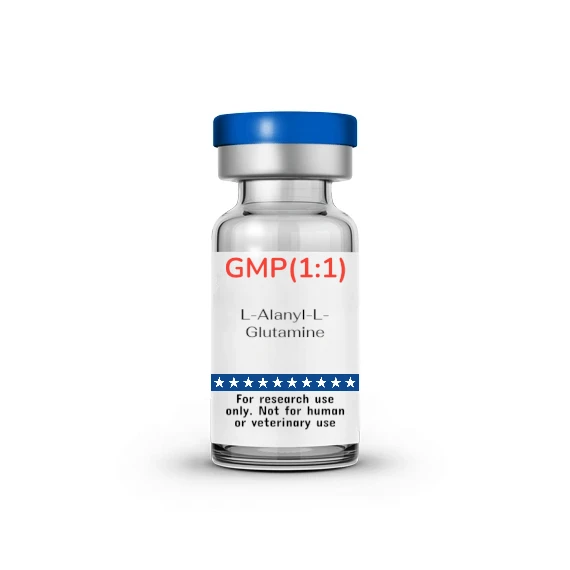
L-Alanyl-L-Glutamine 5-10mg – Wholesale of high-purity raw materials
$2.00
L-Alanyl-L-Glutamine is a synthetic dipeptide composed of L-alanine and L-glutamine, widely used in laboratory research related to amino acid metabolism, cellular nutrition, and biochemical stability studies. L-Alanyl-L-Glutamine is supplied as a high-purity raw material suitable for research applications.
Description
Product Description
L-Alanyl-L-Glutamine is a stable dipeptide formed by covalent linkage of L-alanine and L-glutamine. Compared with free L-glutamine, this dipeptide exhibits improved chemical stability and resistance to spontaneous degradation, making it a commonly used research material in biochemical and cellular studies.
In laboratory research, is frequently applied as a glutamine source in cell culture systems and experimental models investigating amino acid metabolism, nitrogen balance, and cellular energy utilization. Due to its stability in aqueous solutions, L-Alanyl-L-Glutamine is often preferred in controlled experimental environments where reproducibility and consistency are required.
This product is provided as a lyophilized raw material, allowing flexible handling and accurate dosing in small-scale research applications.
Product Specifications
| Item | Description |
|---|---|
| Product Name | L-Alanyl-L-Glutamine |
| Synonyms | Ala-Gln; L-Ala-L-Gln |
| CAS Number | 39537-23-0 |
| Molecular Formula | C₈H₁₅N₃O₄ |
| Molecular Weight | ~217.22 g/mol |
| Peptide Type | Synthetic dipeptide |
| Form | Lyophilized powder |
| Purity | ≥98% |
| Strength Options | 5 mg / 10 mg |
| Appearance | White to off-white powder |
| Identity Verification | HPLC, Mass Spectrometry |
| Solubility | Freely soluble in water |
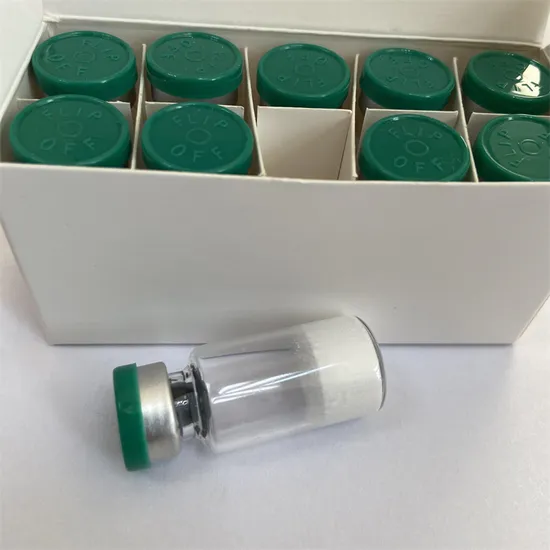
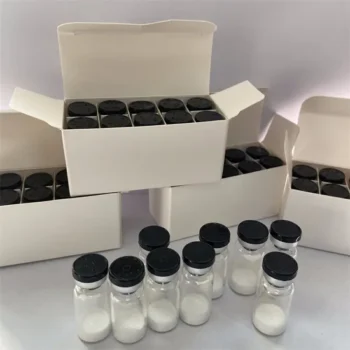
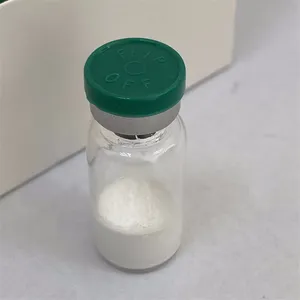
| Packaging | Sealed glass vial |
| Storage Condition | −20 °C, protected from moisture |
| Intended Use | For laboratory research use only |
Applications
L-Alanyl-L-Glutamine is commonly used in laboratory research for:
Cell culture media supplementation studies
Amino acid metabolism and transport research
Nitrogen balance and nutrient utilization investigations
Biochemical stability and formulation studies
In vitro cellular nutrition models

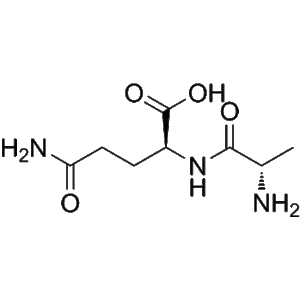
l-alanyl-l-glutamine Chemical structure
Storage & Stability
Lyophilized L-Alanyl-L-Glutamine should be stored at −20 °C in a dry environment. Solutions should be prepared fresh or aliquoted and stored frozen to prevent degradation and ensure experimental consistency.
Contact & Research Inquiry
For technical details, specification requests, or research-related inquiries regarding L-Alanyl-L-Glutamine raw materials, please contact our support team. We provide documentation support and batch-level information upon request for qualified research and laboratory institutions.
Disclaimer
This product is intended for laboratory research use only. It is not intended for human or veterinary use and must not be used for diagnostic, therapeutic, or clinical purposes. The information provided is for scientific reference only and does not constitute medical or nutritional advice.

Additional information
| Weight | 0.5 kg |
|---|---|
| Dimensions | 26 × 23 × 26 cm |
1. What is L-Alanyl-L-Glutamine primarily used for in research?
L-Alanyl-L-Glutamine is mainly used as a stabilized glutamine source in laboratory research, particularly in cell culture, metabolic studies, and biochemical experiments.
2. Why is L-Alanyl-L-Glutamine more stable than free L-glutamine?
The dipeptide structure reduces spontaneous cyclization and degradation, improving chemical stability in aqueous and experimental environments.
3. Can L-Alanyl-L-Glutamine be used in cell culture media preparation?
Yes. It is frequently used in cell culture research as an alternative glutamine source due to its stability and reproducibility.
4. How does L-Alanyl-L-Glutamine behave after entering experimental systems?
Under enzymatic or physiological-like conditions, the dipeptide can be hydrolyzed into L-alanine and L-glutamine for metabolic studies.
5. Is L-Alanyl-L-Glutamine suitable for long-term experiments?
Its enhanced stability makes it suitable for longer experimental durations compared with free L-glutamine, provided proper storage and handling.
6. What solvents are commonly used to dissolve L-Alanyl-L-Glutamine?
L-Alanyl-L-Glutamine is freely soluble in water and compatible with most aqueous laboratory buffers.
7. Does L-Alanyl-L-Glutamine interfere with common analytical techniques?
When used at appropriate research concentrations, it is compatible with standard analytical methods such as HPLC and mass spectrometry.
8. Can this compound be used in metabolic or nutrient transport studies?
Yes. It is widely used in research models focused on amino acid transport, nitrogen balance, and cellular nutrient utilization.
9. Is L-Alanyl-L-Glutamine suitable for in vivo research models?
It may be used in approved in vivo research settings, provided all institutional, ethical, and regulatory guidelines are followed.
10. Is L-Alanyl-L-Glutamine intended for clinical, dietary, or therapeutic use?
No. This product is strictly intended for laboratory research use only and is not approved for clinical, nutritional, or therapeutic applications.
Related products
Retatrutide Raw Material Factory: Low-Price Wholesale for High-Purity Peptides
Retatrutide MOQ 1 Box Source Dry Powder Original price was: $38.00.$22.00Current price is: $22.00.USA Warehouse 99% IV Infusion Therapy Anti-Aging Injection Peptide for Weight Loss & Muscle Building
USA Warehouse 99% IV Infusion Therapy Anti-Aging Injection Peptide for Weight Loss & Muscle Building Original price was: $38.00.$23.00Current price is: $23.00.Semaglutide Raw Material Factory: Low-Price Wholesale for High-Purity Peptides
Semaglutide Compound CID: 56843331 MF: C187H291N45O59Purity: 99%
Form: Lyophilized powder
Dosage Options: 5mg, 10mg, 15mg per vial
Packaging: Secure box packaging
Shelf Life: 2 years (store in a cool, dry place)
MOQ: 1 box
Anti-Aging Peptide Raw Powder CAS 307297-39-8 Epitalon – Low Price Wholesale
Anti-Aging Moq:10 vials per box Appearance:Lyophilized powder Purity:99% Original price was: $29.00.$23.00Current price is: $23.00.

Reviews
There are no reviews yet.