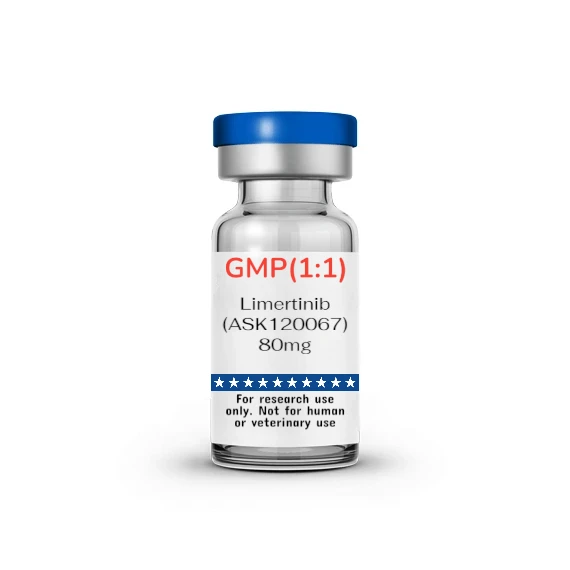
Limertinib (ASK120067) 80mg — Laboratory Research Grade Chemical
$3.00Original price was: $3.00.$2.00Current price is: $2.00.
Limertinib is a high-purity, irreversible small-molecule inhibitor that selectively targets mutant EGFR in vitro. Designed specifically for laboratory research, it is ideal for investigating signal transduction, kinase activity, and receptor molecular mechanisms in cell-free or in vitro systems. This compound is suitable for mechanistic studies, target validation, and enzymatic assays.
Limertinib (ASK120067) is a third-generation, high-purity, irreversible small-molecule inhibitor specifically designed for in vitro laboratory research and mechanistic studies. As a selective inhibitor of EGFR T790M mutant kinases, Limertinib demonstrates potent inhibition of mutant EGFR while maintaining a lower affinity for wild-type EGFR, making it an ideal research tool to dissect mutant-specific receptor signaling pathways. Its highly selective binding profile allows researchers to evaluate downstream signaling cascades, kinase activation, and receptor-ligand interactions without interference from off-target kinase activity.
This compound is widely used in cell-free assays and biochemical studies to explore the effects of EGFR inhibition on phosphorylation patterns, signal transduction, and enzymatic kinetics. Limertinib’s irreversible covalent binding mechanism targets the ATP-binding pocket of the mutant EGFR kinase, effectively stabilizing the receptor in an inactive conformation. This feature allows for precise investigation of mechanistic aspects of kinase inhibition, enabling scientists to study conformational changes, allosteric modulation, and downstream molecular effects in controlled in vitro environments.
In laboratory settings, Limertinib facilitates studies on signal transduction pathways, including the PI3K/AKT and RAS/MAPK pathways, by preventing EGFR-mediated phosphorylation events. Researchers can leverage this inhibitor to examine dose-dependent effects on pathway modulation, investigate mutant EGFR activity under varying experimental conditions, and explore structure-activity relationships (SAR) for related kinase inhibitors. The compound is also valuable in mechanistic studies that integrate proteomics or phosphoproteomics approaches, allowing detailed mapping of signaling networks and molecular interactions affected by selective EGFR inhibition.
Limertinib is supplied as a white to off-white solid powder with ≥98% purity, ensuring consistency and reproducibility in experimental outcomes. It is highly soluble in DMSO and suitable for preparation of concentrated stock solutions for in vitro assays, including enzymatic studies, phosphorylation analysis, and protein-protein interaction experiments. Careful handling and proper storage conditions (–20°C, dry, protected from light) preserve compound integrity, making it suitable for long-term laboratory research projects.
Beyond kinase activity studies, Limertinib is commonly employed in target validation experiments, mechanistic signaling analysis, and exploratory molecular biology research, enabling scientists to elucidate mutant EGFR-specific effects on cellular pathways and biochemical networks. Its application extends to computational studies, including molecular docking and in silico simulations, where Limertinib can serve as a model compound for analyzing binding specificity, conformational dynamics, and interaction energy landscapes.
By combining chemical precision, high purity, and robust selectivity, Limertinib provides researchers with a reliable and versatile tool for the study of EGFR-dependent signaling mechanisms. Its utility in in vitro mechanistic research makes it indispensable for laboratories focusing on kinase regulation, receptor biology, and molecular pharmacology. The compound’s availability through factory-direct supply and low-price wholesale options ensures consistent access for high-throughput and large-scale experimental applications.
Limertinib is intended solely for laboratory research use and should not be applied to humans, animals, or clinical studies. It is optimized for in vitro molecular mechanism investigations, biochemical assays, and detailed signaling pathway analyses.
Limertinib (ASK120067) 80mg
Product Specifications
Item
Specification
Notes
Purity (HPLC)
≥98%
Ensures high consistency and reliability for in vitro kinase assays, receptor-ligand interaction studies, and signaling pathway analysis.
Appearance
White to off-white powder
Facilitates accurate weighing, handling, and preparation of stock solutions for experimental use.
Solubility
Soluble in DMSO; low solubility in water
Ideal for preparing concentrated solutions in DMSO for in vitro mechanistic studies; aqueous solubility considerations may be required.
Molecular Formula
C₂₉H₃₂ClN₇O₂
Supports precise calculation of molar concentrations for biochemical assays and computational modeling.
Molecular Weight
~546.06 g/mol
Useful for enzymatic studies, stoichiometric calculations, and structure-activity relationship experiments.
Packaging Options
10 mg / 50 mg / 100 mg / 500 mg
Flexible packaging supports small-scale exploratory experiments and high-throughput laboratory research.
Storage Conditions
–20°C, dry, protected from light
Maintains compound stability and prevents degradation over long-term storage.
Quality Control
Certificate of Analysis (COA) provided
Confirms purity, identity, and analytical data, ensuring traceability and laboratory compliance.
Intended Use
In vitro molecular mechanism research
Optimized for kinase inhibition studies, EGFR mutant pathway analysis, and detailed signaling investigations in laboratory settings.
Supply Info
High purity, factory manufactured – low-price wholesale supply
Ensures reliable availability for research labs, supports bulk procurement and consistent experimental outcomes.
Mechanism of Action
Limertinib (ASK120067) functions as a third-generation, irreversible EGFR inhibitor with high selectivity for T790M mutant kinases. Its primary mechanism involves covalent binding to the ATP-binding pocket of the mutant EGFR kinase domain, which effectively blocks ATP access and prevents receptor phosphorylation. This irreversible interaction stabilizes the kinase in an inactive conformation, providing a reliable tool for in vitro mechanistic studies of EGFR-dependent signal transduction.
By selectively inhibiting the T790M mutant form of EGFR while sparing wild-type receptors, Limertinib allows researchers to explore mutant-specific kinase activity, receptor-ligand interactions, and downstream signaling dynamics with minimal off-target effects. This property is especially valuable for biochemical and cell-free assays investigating phosphorylation kinetics, enzymatic inhibition, and conformational changes in receptor structure.
In laboratory studies, Limertinib’s action modulates key downstream pathways such as PI3K/AKT and RAS/MAPK, enabling detailed analysis of signal propagation and network regulation. Researchers can employ the compound in dose-response and kinetic assays to determine IC₅₀ values, characterize inhibitory mechanisms, and model pathway-specific effects. Its activity can also be integrated into proteomic, phosphoproteomic, and computational analyses, supporting exploration of molecular interactions, allosteric effects, and structure-activity relationships.
Limertinib is particularly suitable for mechanistic studies focusing on:
Kinase inhibition assays to evaluate EGFR mutant activity.
Phosphorylation pathway analysis in cell-free or recombinant protein systems.
Target validation studies in molecular signaling research.
Integration with in silico modeling to predict receptor-ligand interactions and binding energy landscapes.
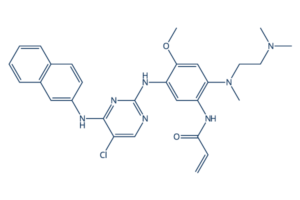
Structure illustration :
limertinib chemical structure
Overall, Limertinib provides a precise and versatile tool for laboratory researchers investigating EGFR-dependent molecular mechanisms. Its high selectivity, irreversible binding, and reproducible activity make it an ideal reagent for in vitro exploration of receptor signaling, kinase regulation, and molecular pharmacology.
Applications
Limertinib (ASK120067) is designed for in vitro laboratory research and serves as a versatile tool for mechanistic exploration of EGFR-dependent signaling pathways. Its selective inhibition of T790M mutant EGFR allows researchers to study receptor-ligand interactions, kinase activity, and downstream molecular effects in a highly controlled experimental environment.
One of the primary applications of Limertinib is in enzyme and kinase inhibition assays, where it provides a reliable means to examine mutant-specific EGFR activity. Researchers can assess phosphorylation kinetics, IC₅₀ values, and inhibitory potency, which are critical for understanding molecular mechanisms of receptor regulation. Its high selectivity enables differentiation between wild-type and mutant EGFR signaling, facilitating precise mechanistic studies without confounding off-target effects.
Limertinib is also widely used in signal transduction and pathway analysis. By inhibiting EGFR-mediated phosphorylation, researchers can investigate downstream pathways such as PI3K/AKT and RAS/MAPK in cell-free systems, recombinant proteins, or in vitro biochemical models. This application is particularly valuable for exploring crosstalk between pathways, feedback mechanisms, and phosphorylation-dependent regulatory networks.
In addition, Limertinib supports target validation and molecular mechanism studies. Laboratories can employ the compound to confirm EGFR mutant dependency in specific pathways, study protein-protein interactions, and evaluate allosteric effects resulting from receptor inhibition. Its integration with proteomics, phosphoproteomics, and computational modeling enhances the understanding of molecular dynamics, conformational changes, and structure-activity relationships.
Other applications include:
High-throughput screening for EGFR mutant-specific inhibitors in vitro.
Biochemical assay development for kinase activity and inhibition studies.
Mechanistic studies to elucidate receptor-mediated signaling networks.
Integration with computational studies for in silico predictions of binding affinity and receptor-ligand dynamics.
Its high purity, reproducibility, and factory-direct supply make Limertinib suitable for both routine laboratory experiments and large-scale mechanistic studies, supporting robust and consistent results across a variety of research platforms.
Research Models
Limertinib (ASK120067) is optimized for in vitro laboratory research models, providing a precise tool for studying mutant EGFR-dependent mechanisms in controlled experimental systems. Its high selectivity and irreversible binding to the T790M mutant EGFR make it particularly useful for cell-free assays, recombinant protein studies, and biochemical pathway investigations.
Cell-free and Biochemical Assays
Limertinib is widely applied in enzyme inhibition and kinase activity assays using purified EGFR mutant proteins. These cell-free models allow researchers to measure phosphorylation kinetics, IC₅₀ values, and mutant-specific activity, providing detailed mechanistic insights into receptor inhibition. The compound’s irreversible binding mechanism ensures reproducible inhibition profiles suitable for mechanistic studies and dose-response evaluations.
Recombinant Protein Systems
Recombinant EGFR mutants can be treated with Limertinib to study structural effects, conformational changes, and downstream signal modulation. This approach enables researchers to dissect molecular interactions between EGFR and its substrates, providing a foundation for mechanistic exploration and target validation.
Pathway Reconstruction Models
Limertinib is compatible with in vitro signaling pathway reconstruction, allowing precise control over EGFR-dependent cascades such as PI3K/AKT and RAS/MAPK. Researchers can investigate feedback loops, phosphorylation-dependent network regulation, and cross-talk between pathways, gaining insights into complex molecular signaling mechanisms without confounding in vivo variables.
Integration with Advanced Research Approaches
Limertinib can be integrated with proteomic and phosphoproteomic analyses to map global effects of EGFR inhibition on downstream networks. In addition, its use in computational modeling and in silico docking studies supports prediction of binding affinities, conformational dynamics, and structure-activity relationships, complementing experimental results.
Overall, Limertinib enables robust, reproducible, and mechanistically detailed research across multiple in vitro models, supporting advanced investigations of EGFR mutant biology, signaling pathways, and molecular pharmacology.
Experimental Design Considerations
When using Limertinib (ASK120067) for in vitro research, careful experimental design is essential to ensure reproducible and meaningful results. This compound’s high selectivity and irreversible binding to T790M mutant EGFR provide researchers with a reliable tool to investigate kinase inhibition, receptor signaling, and downstream molecular mechanisms.
Stock Preparation and Solubility
Limertinib should be dissolved in DMSO to prepare concentrated stock solutions, which can then be diluted into assay buffers or reaction systems. Its low solubility in water requires careful handling during dilution to avoid precipitation, ensuring consistent dosing across experiments.
Dose-Response and Kinetics
Researchers should design dose-response experiments to determine IC₅₀ values or inhibition curves in enzymatic or receptor assays. Gradual titration allows identification of saturation points, partial inhibition, or non-linear effects, which are important for mechanistic interpretation. Time-course studies may also be conducted to evaluate kinetic properties and irreversible inhibition dynamics.
Controls and Reproducibility
Include vehicle controls (DMSO alone) and, when possible, inactive analogs or wild-type EGFR controls to confirm selectivity and specificity. Replicates and batch-to-batch consistency are critical for robust mechanistic conclusions.
Integration with Downstream Assays
Limertinib-treated systems can be coupled with phosphorylation analysis, proteomic studies, or computational modeling to elucidate effects on EGFR-dependent signaling networks. Researchers should plan assays to capture both direct kinase inhibition and downstream pathway modulation, providing comprehensive mechanistic insight.
Safety and Handling Considerations
Experiments should be performed in ventilated fume hoods, and appropriate personal protective equipment (gloves, lab coats, eye protection) should be used. Careful labeling, storage at –20°C, and protection from light ensure compound stability and experimental reproducibility.
By following these design considerations, researchers can maximize the precision, reproducibility, and mechanistic relevance of Limertinib-based in vitro studies, making it a versatile tool for EGFR mutant pathway analysis and molecular pharmacology research.
Laboratory Safety & Handling Guidelines
Limertinib (ASK120067) is a high-purity chemical reagent intended exclusively for in vitro laboratory research. Safe handling is essential to protect personnel and maintain compound integrity during experimental use.
Personal Protective Equipment (PPE)
Always wear appropriate PPE, including lab coat, gloves, and eye protection, when handling Limertinib. Avoid direct contact with skin and eyes. In case of accidental exposure, immediately wash affected areas with water and seek guidance according to laboratory safety protocols.
Handling and Workspace
Limertinib should be handled within a ventilated chemical fume hood to minimize inhalation of fine powders or aerosols. Avoid creating dust or splashes during weighing or transfer. Use dedicated lab tools to prevent cross-contamination and ensure experimental reproducibility.
Storage Conditions
Store Limertinib at –20°C in a dry environment, protected from light and moisture. Proper storage prevents degradation and preserves compound activity for long-term research applications. Use tightly sealed containers and avoid repeated freeze-thaw cycles.
Waste Management
Dispose of Limertinib waste according to institutional chemical safety regulations. Do not release into drains or general laboratory waste. Collect contaminated materials in labeled hazardous waste containers for appropriate treatment.
Emergency Measures
For spills, contain and clean using inert absorbent material while wearing PPE. Ensure that ventilation is adequate and that cleanup personnel are trained in chemical hazard protocols. In case of inhalation, move the affected person to fresh air and seek medical attention if necessary.
Additional Recommendations
Keep COA and safety documentation accessible for reference.
Use dedicated tools for in vitro assays to avoid contamination.
Maintain detailed experimental logs to track batch, storage, and handling conditions for reproducibility.
By following these safety and handling guidelines, researchers can ensure safe, reproducible, and high-quality experimental outcomes, while protecting laboratory personnel and maintaining the integrity of Limertinib for mechanistic studies.
Integration with Multi-Omic & Computational Studies
Limertinib (ASK120067) is ideally suited for integration into multi-omic and computational research workflows, providing comprehensive insights into EGFR-dependent molecular mechanisms in vitro. Its high selectivity for T790M mutant EGFR allows researchers to link direct kinase inhibition with broader cellular signaling networks, making it a versatile tool for both experimental and in silico studies.
Proteomics and Phosphoproteomics Integration
In proteomic analyses, Limertinib-treated systems can reveal global changes in protein abundance, post-translational modifications, and interaction networks. Phosphoproteomics studies can specifically track EGFR phosphorylation sites and downstream pathway modulation, providing detailed mapping of signaling cascades such as PI3K/AKT and RAS/MAPK. These approaches enable mechanistic characterization of mutant EGFR-specific effects in a controlled, cell-free environment.
Genomic and Transcriptomic Correlation
Although Limertinib is used in vitro, its effects on recombinant proteins or purified signaling components can be correlated with transcriptional and genomic datasets. This allows researchers to model gene expression regulation and pathway feedback in response to selective kinase inhibition, providing a mechanistic bridge between protein activity and downstream cellular processes.
Computational Modeling and Docking
Limertinib can be employed in molecular docking and in silico simulations to study ligand-receptor interactions, binding affinity, and conformational dynamics. By combining experimental inhibition data with computational modeling, researchers can predict structure-activity relationships (SAR), allosteric effects, and potential off-target interactions, enhancing mechanistic understanding and experimental design.
Network Analysis and Systems Biology
Integration with network biology and systems-level analyses allows visualization of interconnected signaling pathways impacted by EGFR inhibition. Limertinib provides a robust chemical probe for mapping molecular networks, identifying key regulatory nodes, and modeling pathway cross-talk, facilitating a multi-dimensional understanding of receptor-dependent processes.
Practical Considerations
Use controlled in vitro conditions to ensure reproducibility.
Combine mass spectrometry, enzymatic assays, and computational predictions for comprehensive mechanistic insight.
Apply data to refine experimental models, identify novel interactions, and guide future assay development.
Note: Limertinib is exclusively for laboratory research use and is not intended for human, animal, or clinical applications.
By integrating Limertinib into multi-omic and computational studies, researchers can achieve a holistic view of EGFR-mediated signaling, bridging biochemical assays, structural modeling, and systems biology to advance mechanistic understanding in vitro.
Things to Note
Limertinib (ASK120067) is intended exclusively for in vitro laboratory research and mechanistic studies. It is not for human, animal, or clinical use.
Prior to experiments, the compound should be fully dissolved in DMSO to prepare concentrated stock solutions. Avoid precipitation to ensure accurate dosing and reproducible results.
Store Limertinib at –20°C in a dry, light-protected environment. Avoid repeated freeze-thaw cycles to maintain chemical stability and activity.
When handling powders or solutions, use personal protective equipment including gloves, lab coat, and eye protection. Perform all procedures in a ventilated fume hood to minimize inhalation or accidental exposure.
Dispose of any residual compound or contaminated materials according to institutional chemical waste regulations. Do not release into drains or general laboratory waste.
Avoid cross-contamination with other reagents. Use dedicated, clean lab tools and containers for preparation and experimentation.
Record batch numbers, storage conditions, and working concentrations in laboratory logs to ensure traceability and reproducibility across experiments.
Follow proper laboratory protocols for safe handling, accurate measurement, and precise experimental setup to achieve reliable mechanistic research outcomes.
limertinib chemical structure imgsrv
Note: Limertinib should be used solely in controlled in vitro experimental systems and is optimized for kinase inhibition, signal transduction, and molecular mechanism studies.
Keywords
Limertinib, ASK120067, EGFR inhibitor, laboratory chemical, high-purity, in vitro research, molecular mechanism, factory direct supply, Tumor (compound) Research, wholesale, kinase assay, signal transduction.
Shipping Guarantee
Secure Laboratory-Grade Packaging: Limertinib is packaged to maintain chemical integrity during transit.
Temperature-Controlled Logistics: Ensures compound stability and prevents degradation.
Global Delivery Support: Laboratory-ready shipments are delivered worldwide with tracking options.
Quality Assurance in Transit: Each batch is verified to arrive intact and ready for in vitro research use.
Bulk and Wholesale Options: Supports high-throughput research and large-scale experimental workflows.
Reliable Sourcing: Ensures access to high-purity Limertinib for continuous laboratory studies.
Payment Support
Credit Card: Visa, MasterCard, AMEX
Telegraphic Transfer (T/T): Secure bank transfer for international orders
Cryptocurrency Payments: BTC, ETH, and other supported digital currencies
Other International Payment Options: Flexible methods to facilitate global research procurement
Disclaimer
Limertinib is for laboratory research use only. It is not intended for human, veterinary, or clinical applications. The compound should be used exclusively in in vitro systems, biochemical assays, and mechanistic research. Users are responsible for safe handling, storage, and disposal in accordance with institutional guidelines.
Be the first to review “Limertinib (ASK120067) 80mg — Laboratory Research Grade Chemical” Cancel reply
What is Limertinib used for?
Limertinib is used exclusively for in vitro laboratory research to study EGFR mutant kinase activity and molecular mechanisms. It is not intended for human, animal, or clinical applications.
What form does Limertinib come in?
Limertinib is supplied as a white to off-white powder with ≥98% purity, suitable for preparation of stock solutions in DMSO for mechanistic and biochemical assays.
How should Limertinib be stored?
Store Limertinib at –20°C in a dry, light-protected environment and avoid repeated freeze-thaw cycles to maintain stability and experimental consistency.
How should Limertinib be handled safely?
Use personal protective equipment (gloves, lab coat, eye protection) and handle the compound in a ventilated fume hood. Dispose of waste according to institutional chemical safety guidelines.
Can Limertinib be used in in vivo studies?
No. Limertinib is strictly for in vitro mechanistic studies and laboratory research. It is not for use in humans, animals, or clinical applications.
How is Limertinib prepared for in vitro assays?
Dissolve Limertinib in DMSO to make concentrated stock solutions. Dilute as needed in experimental buffers while avoiding precipitation to ensure accurate dosing.
What pathways can be studied with Limertinib?
Limertinib is used to investigate EGFR-dependent pathways, including PI3K/AKT and RAS/MAPK signaling in cell-free and recombinant protein systems.
Is Limertinib suitable for high-throughput screening?
Yes. Its high purity and selectivity allow reproducible in vitro kinase assays and mechanistic studies suitable for screening mutant EGFR targets.
What documentation is provided with Limertinib?
Each batch includes a Certificate of Analysis (COA) verifying purity, identity, and analytical data for traceability and experimental reliability.
Can Limertinib be integrated with computational studies?
Yes. It can be used in molecular docking, in silico simulations, and structure-activity relationship studies to complement in vitro mechanistic research.
What precautions should be taken during handling?
Avoid direct contact, inhalation, and cross-contamination. Use dedicated lab tools, fume hood operation, and proper labeling to maintain safety and reproducibility.
Does Limertinib affect wild-type EGFR?
Limertinib is selective for T790M mutant EGFR. Its activity against wild-type EGFR is minimal, allowing focused mechanistic studies on mutant receptor signaling.
Can Limertinib be used in combination studies?
Yes, it can be combined with other in vitro reagents for mechanistic pathway exploration, but always in cell-free or recombinant protein systems, not in vivo.
How long is Limertinib stable after opening?
When stored properly at –20°C, dry, and protected from light, Limertinib remains stable for extended laboratory use. Avoid moisture and repeated thawing.
Temozolomide is a high-purity alkylating research compound widely used in in vitro molecular mechanism studies focusing on DNA methylation, damage response pathways, and cell cycle regulation. It is suitable for laboratory-based biochemical and mechanistic research applications only.
Rated 5.00 out of 5
$6.00Original price was: $6.00.$3.00Current price is: $3.00.
Palbociclib is a high-purity small-molecule CDK4/6 inhibitor supplied at 125 mg per vial, specifically formulated for laboratory research and in vitro mechanistic studies. Produced via factory-controlled processes, it ensures high reproducibility and consistent performance for protein interaction assays, signaling pathway analysis, and molecular mechanism research. Strictly for research use only.
Cetuximab NO1 (100 mg/50 mL, Solution) is a high-purity monoclonal antibody solution manufactured under stringent factory-controlled conditions for in vitro laboratory research and molecular mechanism studies. Its solution format facilitates precise dosing, reproducible assay preparation, and integration into receptor-binding and signaling pathway research workflows.
Rated 5.00 out of 5
$3.00Original price was: $3.00.$2.00Current price is: $2.00.
High-purity Doxorubicin Liposome Solution, factory-manufactured for in vitro molecular mechanism studies and biochemical pathway research. Supplied as a stable liposomal solution, ideal for laboratories requiring bulk, wholesale, or customized research-grade supply.
Rated 5.00 out of 5
$10.00Original price was: $10.00.$8.00Current price is: $8.00.









Reviews
There are no reviews yet.