
No products in the cart.
Sale
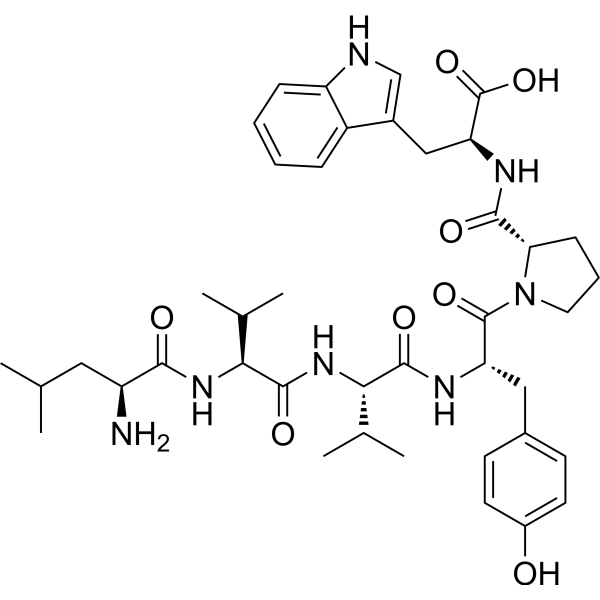
Myelopeptide-2 | CAS 137833-31-9 | Immunomodulatory Peptide Restoring IL-2 Signaling and T-cell Reactivity
Original price was: $42.00.$35.00Current price is: $35.00.
Myelopeptide-2 is an immunoregulatory peptide that reactivates T-cell proliferation and cytokine signaling under immunosuppressive conditions. It plays a vital role in immune homeostasis restoration, making it a valuable tool for tumor immunology, viral infection, and autoimmune modulation research.
Description
Contents
hide
Product Description
Myelopeptide-2 (MP-2) is a bioactive peptide isolated from the supernatant of porcine bone marrow cell cultures. It belongs to the myelopeptide family—a group of small peptides known for their immunoregulatory, hematopoietic, and homeostatic functions.
Myelopeptide-2 has demonstrated the ability to restore the mitogenic reactivity of human T lymphocytes that have been suppressed by HL-60 leukemia cells or measles virus infection. This property positions Myelopeptide-2 as an important molecule in immune restoration research.
At the molecular level, Myelopeptide-2 enhances interleukin-2 (IL-2) synthesis and IL-2 receptor (IL-2R) expression, both of which are critical for T-cell activation and proliferation. Through this mechanism, it reverses immune suppression, helping the body regain normal immune responsiveness in states of cancer or viral infection.
Biological Background
The immune system’s efficiency often diminishes under pathological conditions such as cancer, chronic viral infection, or immunodeficiency syndromes. In such cases, T-cell dysfunction and cytokine dysregulation contribute to immune escape and disease progression.
Myelopeptide-2 acts as a natural immunocorrective peptide, capable of restoring cytokine balance and promoting lymphocyte function. It contributes to:
Reactivation of T-cell mitogenic response
Recovery of IL-2 signaling pathways
Enhancement of cell-mediated immunity
Regulation of immune homeostasis
Myelopeptide-2’s dual action—restoring suppressed immunity while preventing excessive immune activation—makes it a promising candidate for therapeutic exploration in oncology, virology, and autoimmune disease modulation.
Experimental Applications
Myelopeptide-2 has broad applications across multiple areas of biomedical research:
Tumor Immunology
Reactivates T-cell proliferation in tumor-suppressed environments
Restores IL-2-driven cytotoxic T-cell activity
Potential adjuvant in immunotherapy models
Viral Infection Studies
Counteracts viral-induced immune suppression (e.g., measles virus)
Enhances immune cell responsiveness against viral antigens
Autoimmune and Immunodeficiency Models
Restores immune equilibrium in dysregulated conditions
Useful in studying cytokine feedback mechanisms
Hematopoietic Research
Supports recovery of bone marrow–derived lymphocytes
May play a role in myelopoiesis modulation
Product Specifications
| Parameter | Details |
|---|---|
| Product Name | Myelopeptide-2 |
| CAS Number | 137833-31-9 |
| Molecular Formula | C₃₃H₅₂N₁₀O₁₀ |
| Molecular Weight | 780.84 g/mol |
| Sequence | Specific sequence proprietary (porcine bone marrow–derived peptide) |
| Peptide Type | Naturally derived immunomodulatory peptide |
| Source | Porcine bone marrow cell culture supernatant |
| Purity | ≥98% (HPLC) |
| Form | Lyophilized powder |
| Solubility | Soluble in water, PBS, or 0.1% acetic acid |
| Storage | -20°C, desiccated, light-protected |
| Stability | Stable for 24 months under recommended storage |
| Applications | Immune restoration, cytokine modulation, antiviral and antitumor research |
Synonyms
MP-2
Bone marrow immunopeptide-2
Immunoregulatory peptide from porcine bone marrow
Mechanism of Action
Myelopeptide-2 exerts its biological activity primarily through reconstitution of the IL-2/IL-2R signaling axis, which is central to T-cell activation and immune function.
1. Restoration of T-Lymphocyte Mitogenic Activity
In immunosuppressive conditions caused by leukemia cells or viral infection, T-cell mitogenic responses to antigens or mitogens (e.g., phytohemagglutinin) are significantly reduced. Myelopeptide-2 reestablishes this proliferative capacity, allowing T-cells to regain normal responsiveness.
2. Enhancement of IL-2 and IL-2R Expression
Myelopeptide-2 upregulates interleukin-2 synthesis and IL-2 receptor expression, promoting T-cell activation, differentiation, and proliferation. This restoration of IL-2 signaling is crucial for effective immune recovery.
3. Normalization of Immune Homeostasis
The peptide balances cytokine production and suppresses abnormal immune responses. It modulates both helper T-cell (Th1/Th2) cytokine balance and regulatory T-cell activity, preventing excessive inflammation while sustaining immune vigilance.
By reversing immune suppression and reactivating cytotoxic T-cells, Myelopeptide-2 enhances antitumor and antiviral defense mechanisms. It contributes to the host’s ability to detect and destroy aberrant or infected cells.
Side Effects
In preclinical research, Myelopeptide-2 demonstrates low toxicity and high biocompatibility. No cytotoxic or mutagenic effects have been reported. However, it should be used under controlled experimental conditions:
Avoid excessive concentrations (>100 µM), which may alter cytokine balance.
Not for therapeutic or clinical use.
Recommended for in vitro and preclinical studies only.
Disclaimer
Myelopeptide-2 is supplied for research use only. It is not approved for human or veterinary applications. All data are provided for scientific and educational purposes to support immunological, antiviral, and oncology research.
Keywords
Myelopeptide-2, CAS 137833-31-9, immunoregulatory peptide, T-cell activation peptide, IL-2 signaling peptide, IL-2 receptor restoration, immune homeostasis peptide, antiviral peptide, antitumor peptide, bone marrow peptide, immune recovery peptide.
Shipping Guarantee
All peptides are packaged in low-temperature, light-protected, vacuum-sealed containers. Analytical reports (HPLC, MS) are included for each batch. Shipments are protected to maintain structural integrity and biological activity.
Transaction Guarantee
Each order is accompanied by a Certificate of Analysis (COA) verifying peptide identity and purity. We offer full replacement or refund in case of quality discrepancies or shipping damage.
Additional information
| Weight | 0.6 kg |
|---|---|
| Dimensions | 56 × 28 × 56 cm |
What is Myelopeptide-2?
Myelopeptide-2 is a natural immunomodulatory peptide derived from porcine bone marrow cultures, involved in immune system regulation.
What is its main biological function?
It restores IL-2 and IL-2 receptor expression in T lymphocytes suppressed by leukemia or viral infections.
How does it support immune recovery?
It enhances T-cell proliferation and cytokine signaling, reestablishing immune balance.
Can it be used in cancer immunology?
Yes, it is valuable for studying tumor-induced immune suppression and immunotherapy enhancement.
Is it effective against viral infections?
It reverses viral-induced immune inhibition, as observed in measles virus–infected cells.
Does Myelopeptide-2 act directly on cancer cells?
Its primary mechanism is indirect—by restoring immune system functionality rather than direct cytotoxicity.
Is the peptide sequence known?
It is proprietary, originally isolated from porcine bone marrow cell culture supernatants.
What purity level is provided?
≥98%, confirmed by HPLC analysis.
Is it suitable for in vivo studies?
It can be used in preclinical models under controlled laboratory conditions.
Is it safe for human therapeutic use?
No, Myelopeptide-2 is for research use only and not approved for medical applications.
Related products
USA-Peptide-Janoshik Lyophilized Peptide Raw Powder for Muscle Building & Weight Loss
Lyophilized peptide raw powder Moq:10 vials per box Appearance:Lyophilized powder Original price was: $32.00.$24.00Current price is: $24.00.Best-Selling Weight Loss Peptide: Slimming Peptide Reta with Safe Delivery
Weight Loss Peptide Lab-Tested Purity (99%+) – Ensures maximum effectiveness Original price was: $56.00.$23.00Current price is: $23.00.Semaglutide finished product (lyophilized powder) wholesale Supplier
Semaglutide finished product (lyophilized powder) wholesale $1.00GLP-1 Retatrutide Weight Loss Slimming low price wholesale
GLP-1 peptide slimming product, 5mg 10mg 15mg vials, metabolic health- Application: Health Care Supplement
- Form: Disposable vials
- Dosages: 5mg, 10mg, 15mg
- Purity: >99%


Reviews
There are no reviews yet.