
No products in the cart.
Sale
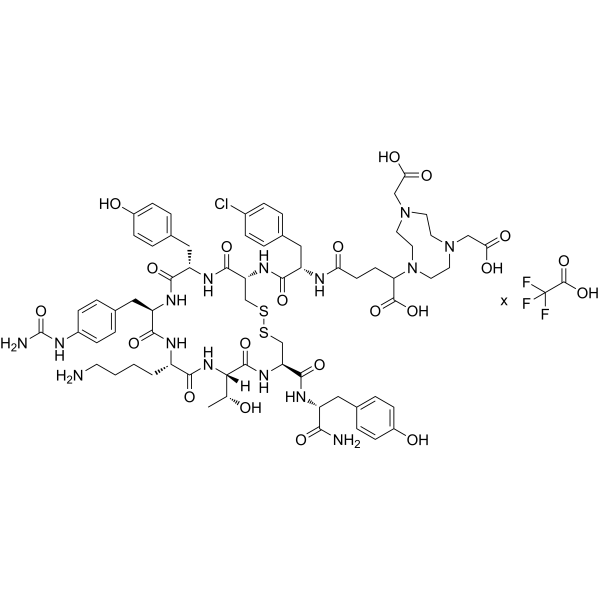
NODAGA-LM3 TFA | GMP Supplier | For Research Use Only
Original price was: $28.00.$18.00Current price is: $18.00.
NODAGA-LM3 TFA is a GMP-manufactured compound that enables [68Ga] labeling for PET imaging and radionuclide-drug conjugate research. With reliable purity and high stability, it supports advanced studies in molecular imaging and oncology research. For laboratory research use only.?If you need to place an order or inquire about wholesale product prices, specifications and uses, please contact our staff?
Description
NODAGA-LM3 TFA is a specialized chelator-based peptide designed to facilitate molecular imaging and targeted research applications. It can be labeled with the radioisotope [68Ga], producing 68Ga-NODAGA-LM3 TFA, a potent SSTR2 antagonist. This makes it highly valuable for PET imaging studies, especially for visualizing SSTR-positive paragangliomas and related tumor models.
Researchers are increasingly utilizing NODAGA-LM3 TFA in the design and synthesis of Radionuclide-Drug Conjugates (RDCs), advancing the development of targeted therapeutic and diagnostic tools. Its ability to stably bind gallium-68 enhances both imaging clarity and tracer reliability.
Manufactured under GMP standards, NODAGA-LM3 TFA ensures reproducibility, purity, and consistency across research batches, supporting both academic laboratories and pharmaceutical R&D teams. This compound is intended solely for scientific and laboratory use, not for human or veterinary administration.
Product Specifications
| Parameter | Details |
|---|---|
| Product Name | NODAGA-LM3 TFA |
| CAS No. | Not assigned |
| Synonyms | [68Ga]-NODAGA-LM3 TFA precursor, NODAGA chelator peptide TFA |
| Purity | GMP-grade, ? 99% |
| Form | TFA salt |
| Applications | PET imaging, radionuclide-drug conjugate (RDC) research, oncology studies |
| Target | SSTR2 antagonist |
| Storage | Store at –20°C, protected from light and moisture |
| Supplier Status | GMP Supplier (Manufacturer) |
| Research Use | For laboratory research use only |
Mechanism of Action & Research Applications
NODAGA-LM3 TFA functions as a chelating agent that binds effectively to gallium-68 (68Ga). When labeled, the compound produces 68Ga-NODAGA-LM3 TFA, which selectively acts as a somatostatin receptor type 2 (SSTR2) antagonist.
This receptor-specific interaction enables detailed PET imaging of SSTR2-positive tumors, including paragangliomas and other neuroendocrine malignancies. Compared to agonists, antagonists such as NODAGA-LM3 TFA often provide higher tumor uptake and clearer imaging, making it a powerful research tool in molecular oncology.
Additionally, its role in Radionuclide-Drug Conjugate (RDC) development positions it as an essential compound in translational research. RDCs represent a novel therapeutic avenue, combining targeted imaging with radionuclide-based therapies to potentially improve diagnostic accuracy and therapeutic efficacy in cancer research models.
Side Effects (For Reference in Models)
As a laboratory research compound, NODAGA-LM3 TFA has no direct clinical safety profile. However, potential observed side effects in research models may include:
Alterations in receptor activity due to SSTR2 binding
Possible biodistribution-related effects when conjugated with radionuclides
Radiation exposure considerations when labeled with [68Ga]
All handling must follow laboratory safety standards, and appropriate protective measures should be used.
Disclaimer
is supplied strictly for laboratory research use only. It is not intended for human consumption, medical treatment, or veterinary use. Wholesale and retail supply available.
Keywords
SSTR2 antagonist imaging
PET imaging research compound
Radionuclide-drug conjugates RDC
GMP peptide supplier
NODAGA chelator peptide
Neuroendocrine tumor imaging research
Paraganglioma PET tracer
Additional information
| Weight | 0.5 kg |
|---|---|
| Dimensions | 62 × 46 × 62 cm |
Related products
99% Pure Peptide Reta Trutide Epitalon in Stock Factory wholesale
Peptide Reta Purity 99%Over Original price was: $39.00.$26.00Current price is: $26.00.Semaglutide Raw Material Factory: Low-Price Wholesale for High-Purity Peptides
Semaglutide Compound CID: 56843331 MF: C187H291N45O59Purity: 99%
Form: Lyophilized powder
Dosage Options: 5mg, 10mg, 15mg per vial
Packaging: Secure box packaging
Shelf Life: 2 years (store in a cool, dry place)
MOQ: 1 box
GLP-1 Retatrutide Weight Loss Slimming low price wholesale
GLP-1 peptide slimming product, 5mg 10mg 15mg vials, metabolic health- Application: Health Care Supplement
- Form: Disposable vials
- Dosages: 5mg, 10mg, 15mg
- Purity: >99%
Factory Supply Peptide Healthcare 99% with Safe Delivery
Peptide Healthcare Usage Delta-Sleep Inducing Peptides Purity 99%Over Dose 2mg 5mg 10mg 15mg 20mg Highe Original price was: $28.00.$23.00Current price is: $23.00.



Reviews
There are no reviews yet.