Description
Product Description
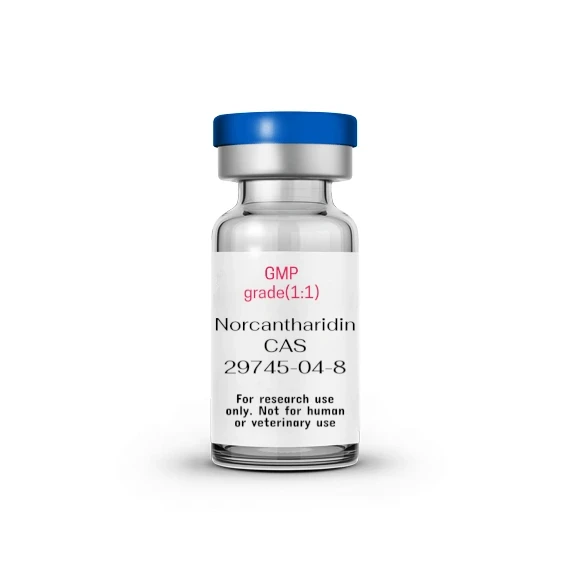
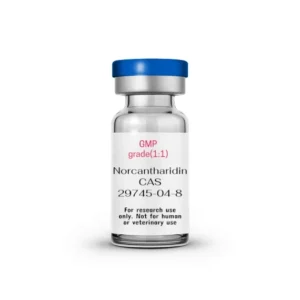
1、Norcantharidin (CAS 29745-04-8) is a versatile, research-grade, high-purity small molecule derived from cantharidin. Its chemical structure enables potent inhibition of protein phosphatases, particularly PP1 and PP2A, which are critical regulators of cell cycle progression, apoptosis, and intracellular signaling cascades. By modulating these phosphatases, Norcantharidin induces accumulation of phosphorylated proteins, leading to alterations in cellular homeostasis, tumor growth suppression, and apoptosis induction in in vitro experimental models.
This compound has been extensively utilized in oncology research to investigate tumor cell proliferation, metastasis, and molecular signaling networks. Norcantharidin’s ability to induce G2/M phase arrest makes it a valuable tool for studying mitotic checkpoint regulation and DNA damage response mechanisms in a controlled laboratory setting. Researchers employ Norcantharidin to examine how inhibition of phosphatase activity influences downstream pathways such as MAPK/ERK, AKT, NF-κB, and p53, which are critical for tumor cell survival, stress response, and chemoresistance modeling.
The high-purity bulk format ensures consistent experimental results, allowing laboratories to perform dose-response studies, high-throughput screenings, and mechanistic pathway investigations. Its physicochemical properties, including crystalline powder stability and solubility in DMSO and other organic solvents, facilitate precise dosing and reproducibility across diverse experimental setups.
Norcantharidin’s applications extend to studying molecular mechanisms underlying tumor progression and chemotherapeutic resistance. By using this compound, researchers can simulate intracellular signaling disruptions that mimic the effects of therapeutic phosphatase inhibition, enabling investigation into compensatory pathway activation and adaptive cellular responses. Additionally, Norcantharidin serves as a reference inhibitor in protein phosphatase research, providing a benchmark for screening novel small-molecule modulators of PP1 and PP2A.
From a mechanistic perspective, Norcantharidin interacts with key residues in the catalytic sites of PP1 and PP2A, forming stable enzyme-inhibitor complexes. These interactions block the dephosphorylation of downstream targets, resulting in enhanced phosphorylation levels of cell cycle regulators, apoptotic mediators, and stress-responsive proteins. The ability to modulate phosphorylation dynamics makes Norcantharidin an indispensable reagent for research on cellular signal transduction, DNA damage responses, and programmed cell death pathways.
In addition to classical cancer cell line studies, Norcantharidin is employed in organoid cultures, three-dimensional tumor spheroids, and ex vivo tissue models. This versatility allows researchers to explore complex microenvironment interactions, tumor-stroma signaling, and heterogeneity in kinase and phosphatase activity. Its reproducibility and high-purity quality make it ideal for comparative studies across multiple laboratory settings, ensuring consistency in experimental outputs.
The compound is produced under GMP-compliant conditions with stringent quality control procedures to ensure batch-to-batch consistency. Analytical methods including HPLC, LC-MS/MS, and NMR spectroscopy confirm purity ≥99% and absence of significant impurities. Such quality assurance is critical for laboratories conducting sensitive mechanistic studies, kinase profiling, or apoptosis assays where trace contaminants could confound results.
2、Norcantharidin also serves as a model compound for exploring mechanisms of chemoresistance in cancer cells. By inhibiting PP1 and PP2A, it reveals how cells compensate for loss of phosphatase activity through upregulation of alternative signaling pathways such as PI3K/AKT, MAPK/ERK, and NF-κB. Researchers can leverage these responses to investigate potential combination therapies, validate molecular targets, and map adaptive survival pathways in tumor models.
The compound’s crystalline powder is highly amenable to controlled solubilization, ensuring reproducible dosing in DMSO, ethanol, methanol, or buffered aqueous media. This feature allows laboratories to perform time-course experiments, dose-response analyses, and mechanistic pathway inhibition studies with minimal variability. Its stability under refrigerated conditions (2–8°C) further ensures long-term storage without significant degradation, preserving experimental fidelity.
Norcantharidin has been incorporated in numerous laboratory protocols including:
Apoptosis induction and caspase activation studies
G2/M cell cycle checkpoint investigations
Tumor spheroid and 3D culture proliferation assays
Phosphoproteomics and signaling pathway profiling
DNA damage and repair mechanistic analysis
Drug-resistance modeling in ALK, EGFR, and MAPK-driven cells
In these studies, the compound demonstrates high selectivity, allowing researchers to focus on PP1/PP2A-mediated pathways without substantial off-target interference. Its high-purity specification ensures that observed cellular responses are attributable to the compound itself rather than contaminants, providing confidence in experimental reproducibility.
The bulk and GMP-compliant format of Norcantharidin makes it ideal for multi-lab collaborative research projects, high-throughput screenings, and long-term mechanistic studies. Its consistent physicochemical properties enable seamless integration into automated laboratory systems, robotic pipetting workflows, and microfluidic assay platforms.
By providing a reliable, high-purity research chemical, Norcantharidin allows scientists to investigate the fundamental roles of phosphatase inhibition in cancer biology, uncover novel molecular targets, and generate high-fidelity preclinical data.
Product Specifications
The following specifications provide a comprehensive overview of Norcantharidin’s analytical properties, structural characteristics, stability, and laboratory suitability.
Product Specification Table
| Parameter | Details |
|---|---|
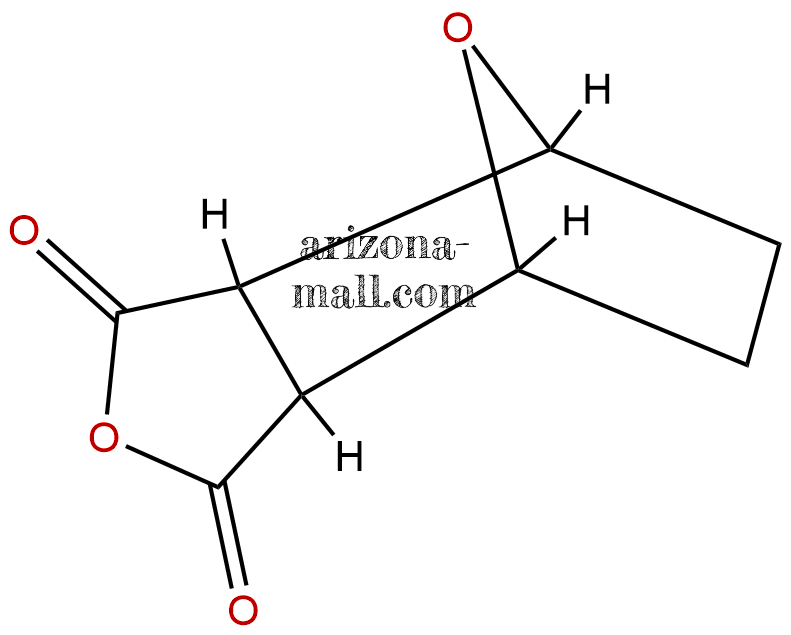
| Chemical Name / Synonyms | Norcantharidin; 7-oxabicyclo[2.2.1]heptane-2,3-dicarboxylic anhydride |
| CAS Number | 29745-04-8 |
| Molecular Formula | C8H7O4 |
| Molecular Weight | 175.14 g/mol |
| Purity | ≥99% (HPLC validated) |
| Appearance | White crystalline powder |
| Dosage Form | Bulk powder |
| Solubility | Soluble in DMSO, ethanol, methanol; slightly soluble in water |
| Concentration | Adjustable based on experimental needs |
| Storage Temperature | 2–8°C, protect from light |
| Stability | Stable under refrigerated conditions; validated for long-term storage |
| Analytical Methods | HPLC, NMR, LC-MS/MS |
| Mechanistic Target | Protein phosphatases PP1 and PP2A |
| Structural Category | Small-molecule anhydride derivative |
| Applications | Apoptosis studies, cell cycle research, tumor proliferation assays, signaling pathway analysis |
| Batch Consistency | GMP-controlled; minimal inter-batch variation |
| Regulatory Notes | Research-use only; not for human or veterinary use |
| Origin | Bulk production in GMP-certified facility |
| Additional Data | Endotoxin-tested; CoA included |
Expanded Explanation of Specifications
Norcantharidin’s chemical integrity is confirmed through rigorous analytical testing including HPLC, LC-MS/MS, and NMR spectroscopy. These analyses verify the compound’s purity (≥99%), confirm its molecular structure, and ensure minimal impurities that could interfere with mechanistic studies.
The bulk crystalline powder form offers excellent stability and ease of handling in laboratory conditions. Solubility in DMSO, methanol, and ethanol ensures rapid preparation of working solutions, facilitating integration into cellular assays, enzyme inhibition studies, and multi-well plate experiments. Its slightly limited water solubility can be addressed by solvent dilution or pH-buffered solutions depending on experimental needs.
Batch consistency is maintained under GMP-aligned production, providing minimal variation between lots. This ensures reproducible results in longitudinal studies, cross-laboratory collaborations, and high-throughput screening. Endotoxin testing further ensures compatibility with sensitive cell culture systems, reducing confounding immune responses during in vitro experiments.
Norcantharidin’s robust physicochemical and analytical profile makes it an indispensable tool for studies of phosphatase-mediated cellular regulation, apoptosis induction, cell cycle modulation, and tumor biology research.
Mechanism of Action
Norcantharidin (CAS 29745-04-8) functions primarily as a potent protein phosphatase inhibitor, selectively targeting PP1 and PP2A. These phosphatases regulate phosphorylation homeostasis of numerous signaling proteins, including those involved in cell cycle progression, apoptosis, DNA repair, and stress response pathways. Inhibition of PP1/PP2A by Norcantharidin leads to accumulation of phosphorylated substrates, resulting in multiple downstream effects in cancer and normal cell models used in laboratory research.
Phosphatase Inhibition Dynamics
PP1 and PP2A are serine/threonine phosphatases that control critical cellular processes. By binding to their catalytic domains, Norcantharidin prevents dephosphorylation of substrates such as cyclin-dependent kinases, checkpoint regulators, and transcription factors. This enzymatic blockade induces:
Hyperphosphorylation of cell cycle proteins (e.g., cyclin B1, CDK1) leading to G2/M arrest
Activation of apoptosis mediators (e.g., Bax, cleaved caspases)
Modulation of survival pathways (AKT, ERK, NF-κB) to study adaptive signaling mechanisms
The inhibitory kinetics are concentration- and time-dependent, allowing laboratories to map dose-response relationships, enzymatic inhibition curves, and temporal changes in phosphorylation states.
Apoptosis Induction Mechanism
Norcantharidin induces apoptosis through both intrinsic and extrinsic pathways:
Mitochondrial pathway: Increases Bax/Bcl-2 ratio, triggers mitochondrial membrane depolarization, releases cytochrome c, and activates caspase-9 and caspase-3
Death receptor pathway: Modulates Fas/FasL expression in sensitive tumor models
ROS-mediated stress: Elevates reactive oxygen species, promoting apoptosis in selected cell lines
These effects are widely utilized in laboratory assays to study programmed cell death, chemoresistance, and combination therapy strategies.
Cell Cycle Arrest
By hyperphosphorylating checkpoint regulators, Norcantharidin induces G2/M arrest, a critical tool in research on mitotic checkpoints. Researchers use this feature to:
Investigate DNA damage responses
Model mitotic catastrophe
Explore synergy with other chemotherapeutic agents
Examine phosphatase-dependent regulation of cyclins and CDKs
Signal Transduction Modulation
Norcantharidin’s inhibition of PP1/PP2A affects multiple intracellular pathways:
MAPK/ERK pathway: Downregulation leads to decreased proliferation
PI3K/AKT pathway: Inhibition reduces survival signals and sensitizes cells to apoptosis
NF-κB pathway: Suppressed transcriptional activity reduces anti-apoptotic gene expression
This multifaceted modulation allows laboratories to explore network-level signaling and compensatory mechanisms under phosphatase inhibition.
DNA Damage and Repair Studies
Hyperphosphorylation of H2AX (γ-H2AX) occurs after Norcantharidin treatment, marking DNA double-strand breaks. Researchers employ this property to study:
DNA damage sensing and repair kinetics
Genotoxic stress responses
Tumor resistance mechanisms in cancer models
These applications are critical for understanding therapeutic vulnerabilities and designing experimental strategies for drug development.
Applications in Resistance Modeling
Chronic exposure studies using Norcantharidin allow exploration of:
Adaptive cellular resistance pathways
Crosstalk between kinase and phosphatase networks
Biomarker discovery for chemotherapeutic sensitivity
These experiments enable laboratories to map survival signaling, identify novel targets, and simulate clinically relevant resistance scenarios.
Experimental Advantages of Bulk High-Purity Compound
Norcantharidin’s GMP-compliant bulk production ensures:
Batch consistency for longitudinal studies
High reproducibility across labs
Solvent compatibility with DMSO, ethanol, methanol, and buffered media
Integration into automated assays for high-throughput screening
Its reliable physicochemical profile allows precise control over concentration, exposure duration, and experimental reproducibility, which is essential for mechanistic studies.

Side Effects
Although Norcantharidin is intended for research use only, its effects on cells and molecular systems have been extensively characterized in vitro. These effects provide insight into its pharmacological mechanisms and are important for laboratory safety.
Cellular Effects
Cytotoxicity: Dose-dependent reduction in proliferation of tumor cell lines
Apoptotic features: Nuclear condensation, DNA fragmentation, membrane blebbing
Morphological changes: Cell shrinkage, vacuolation, and detachment from culture surfaces
Stress responses: Mitochondrial depolarization and ROS generation
Molecular Effects
Hyperphosphorylation of substrates due to PP1/PP2A inhibition
Activation of pro-apoptotic mediators and suppression of anti-apoptotic proteins
Signal pathway modulation: Decreased AKT, ERK, and NF-κB activity, leading to apoptosis and cell cycle arrest
DNA damage signaling: Increased γ-H2AX expression reflecting double-strand break accumulation
Laboratory Handling Considerations
Personal Protective Equipment: Gloves, lab coats, eye protection recommended
Aerosol Prevention: Handle powders in fume hoods or biosafety cabinets
Avoid Ingestion/Inhalation: Highly concentrated powders may cause cellular toxicity
Storage: 2–8°C in sealed containers, protected from light
Waste Disposal: Follow institutional chemical waste protocols
Norcantharidin’s sterile bulk format reduces particulate contamination, ensures accurate dosing, and improves reproducibility compared to non-standardized preparations.
Keywords
Norcantharidin; protein phosphatase inhibitor; PP1 inhibitor; PP2A inhibitor; apoptosis research chemical; cell cycle regulation research; tumor proliferation inhibitor; high-purity bulk OEM; laboratory research compound; molecular signaling tool; cancer pathway study; GMP research chemical; small-molecule phosphatase modulator; bulk production laboratory reagent; in vitro pharmacology tool.
Shipping Guarantee
Norcantharidin is shipped using temperature-controlled, insulated packaging to ensure stability and integrity. Key features include:
Cold-chain logistics for sensitive compounds
Protective secondary and tertiary packaging to prevent breakage
Real-time tracking for full shipment visibility
Insurance coverage against loss or damage during transit
These measures ensure that the compound arrives safely and ready for immediate experimental use.
Trade Assurance
Purity ≥99% validated via HPLC, LC-MS/MS, and NMR
Certificates of Analysis (CoA) included with each batch
GMP-compliant production ensures consistent quality and batch-to-batch reproducibility
Refund or replacement offered for non-conforming products
Trade assurance guarantees confidence for laboratories conducting high-precision mechanistic and pharmacological studies.
Payment Support
We accept multiple secure payment methods:
PayPal
Credit Card
T/T (Wire Transfer)
USDT
Bitcoin
Ethereum
All Norcantharidin payments are encrypted and verified, ensuring safety and confidentiality for research institutions globally.
Disclaimer
Norcantharidin (CAS 29745-04-8) is for laboratory research purposes only. It is not intended for human or veterinary use. Proper laboratory handling, safety protocols, and disposal procedures must be strictly followed.
References


Reviews
There are no reviews yet.