
No products in the cart.
Sale
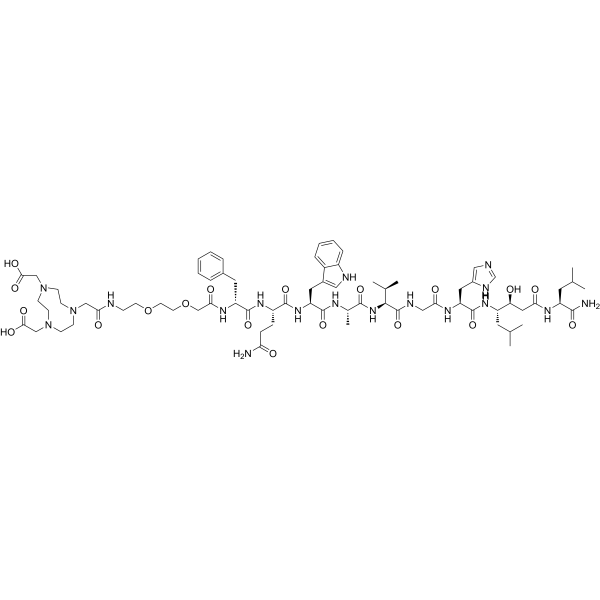
NOTA-P2-RM26 – Bombesin Analog for Prostate Cancer Imaging
Original price was: $23.00.$18.00Current price is: $18.00.
NOTA-P2-RM26 is a Bombesin analog that acts as a potent antagonist of GRPR (BB2), a receptor overexpressed in prostate cancer. It can be radiolabeled with 111In or 68Ga for advanced PET and SPECT/CT imaging studies. Laboratory research use only.?If you need to place an order or inquire about wholesale product prices, specifications and uses, please contact our staff?
Description
NOTA-P2-RM26 is a synthetic peptide designed for high-affinity antagonism of the gastrin-releasing peptide receptor (GRPR/BB2), a molecular target prominently expressed in prostate cancer cells. With a purity of 98.19% and produced in a GMP-certified facility, NOTA-P2-RM26 is optimized for laboratory research applications in oncological imaging, peptide-based diagnostics, and receptor-targeted molecular studies.
The peptide is derived from Bombesin analogs and retains structural modifications that enhance receptor specificity while minimizing off-target interactions. In vitro studies demonstrate that NOTA-P2-RM26 binds selectively to GRPR-expressing cells, providing a reliable tool for preclinical imaging experiments. When radiolabeled with 111In or 68Ga, it enables non-invasive visualization of prostate tumors through PET or SPECT/CT imaging, facilitating quantification of tumor receptor density, pharmacokinetics, and biodistribution.
NOTA-P2-RM26’s structure incorporates the NOTA chelator, which allows stable and efficient coordination with metallic radionuclides. This radiolabeling versatility supports dual-modality imaging studies and the development of theranostic strategies. The peptide’s antagonist activity ensures minimal receptor internalization, preserving extracellular availability for imaging and enhancing signal detection in vivo.
Beyond imaging, NOTA-P2-RM26 serves as a molecular tool for understanding GRPR signaling pathways in prostate cancer cells. GRPR overexpression is implicated in tumor growth, progression, and metastasis, and this peptide provides a platform for investigating receptor pharmacology, ligand-receptor interactions, and the impact of GRPR antagonism on tumor cell behavior. Its compatibility with both 111In and 68Ga facilitates detailed pharmacokinetic studies and allows researchers to explore novel imaging protocols for translational oncology research.
The peptide exhibits excellent solubility and stability under laboratory storage conditions, ensuring reproducible results across multiple experimental setups. NOTA-P2-RM26’s combination of high receptor specificity, radiolabeling flexibility, and GMP-level manufacturing makes it an indispensable reagent for advanced prostate cancer imaging studies and preclinical receptor-targeted research.
Product Specifications
| Parameter | Details |
|---|---|
| Product Name | NOTA-P2-RM26 |
| Synonyms | Bombesin analog, GRPR antagonist peptide |
| CAS Number | 1446005-10-2 |
| Molecular Type | Synthetic peptide |
| Purity | 98.19% (HPLC) |
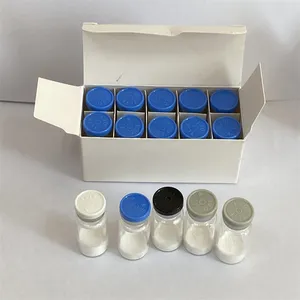
| Appearance | Lyophilized peptide powder |
| Stability | Stable at -20°C; avoid repeated freeze-thaw cycles |
| Storage | Store at -20°C under inert atmosphere |
| GMP Compliance | Manufactured in GMP-certified facility |
| Application | Laboratory research in prostate cancer imaging, PET/SPECT studies, receptor pharmacology |
| Radiolabeling | Compatible with 111In and 68Ga |
| Availability | Wholesale & retail supply |
Mechanism of Action & Research Applications
NOTA-P2-RM26 acts as a high-affinity antagonist of the gastrin-releasing peptide receptor (GRPR/BB2). GRPR is overexpressed in many prostate cancers and mediates growth-promoting signaling pathways when activated by endogenous ligands such as bombesin. As an antagonist, NOTA-P2-RM26 binds to GRPR without activating the receptor, effectively blocking endogenous ligand binding and preventing downstream signaling.
The inclusion of the NOTA chelator in its structure allows stable radiolabeling with metallic isotopes like 111In for SPECT imaging or 68Ga for PET imaging. Upon administration in experimental models, radiolabeled NOTA-P2-RM26 selectively accumulates in GRPR-expressing tumor tissues, providing a highly sensitive and specific signal for imaging studies. The antagonist activity ensures that receptor internalization is minimal, maintaining extracellular availability and enhancing imaging contrast.
Research applications for NOTA-P2-RM26 are broad:
Prostate Cancer Imaging: Enables preclinical PET and SPECT/CT studies to quantify tumor receptor expression and monitor tumor progression.
Receptor Pharmacology Studies: Serves as a molecular probe to explore GRPR signaling, receptor-ligand interactions, and antagonism effects in vitro.
Theranostic Development: Facilitates studies integrating diagnostic imaging with potential therapeutic radionuclides for receptor-targeted therapy.
Pharmacokinetic and Biodistribution Research: Supports experiments evaluating peptide stability, circulation half-life, and tumor-specific accumulation.
Translational Oncology Research: Provides a preclinical platform for developing GRPR-targeted imaging and therapeutic agents.
The peptide can be used in vitro with GRPR-positive cell lines to examine receptor binding kinetics, competition assays, and ligand displacement studies. In vivo, it provides a reliable tool for imaging tumor localization, monitoring tumor progression, and evaluating new GRPR-targeted therapeutics. Its dual compatibility with 111In and 68Ga allows comparison of PET versus SPECT modalities in experimental imaging studies.
Side Effects (For Reference in Models)
In experimental laboratory use, NOTA-P2-RM26 is generally well-tolerated in cell culture and animal models. Potential effects may include mild receptor-related alterations in cellular signaling at high concentrations or transient nonspecific binding in tissues. Standard laboratory safety protocols should be observed, and the peptide should not be used for human or veterinary purposes.
Disclaimer
NOTA-P2-RM26 is intended for laboratory research purposes only. It is not for human or veterinary use, diagnostic procedures, or clinical applications. Researchers must follow institutional safety guidelines when handling this peptide.
Keywords
NOTA-P2-RM26, GRPR antagonist, Bombesin analog, prostate cancer imaging, PET imaging peptide, SPECT imaging peptide, 68Ga radiolabeled peptide, 111In peptide, prostate cancer research peptide, receptor-targeted imaging, laboratory GRPR antagonist, peptide radiopharmaceutical research, GMP peptide supplier, synthetic GRPR ligand, preclinical imaging peptide,CAS : 1446005-10-2
Additional information
| Weight | 0.6 kg |
|---|---|
| Dimensions | 82 × 53 × 82 cm |
What is NOTA-P2-RM26 used for?
It is used for laboratory research to visualize GRPR-expressing prostate cancer cells via PET or SPECT/CT imaging.
How does NOTA-P2-RM26 target prostate cancer?
It binds selectively to the GRPR receptor, which is overexpressed in prostate cancer cells.
Can NOTA-P2-RM26 be radiolabeled?
Yes, it can be labeled with 111In or 68Ga for imaging studies.
Is NOTA-P2-RM26 a receptor agonist?
No, it acts as a GRPR antagonist, blocking receptor activation.
What purity is the peptide?
98.19% HPLC purity.
Is it GMP-compliant?
Yes, it is produced in a GMP-certified facility.
How should NOTA-P2-RM26 be stored?
Store lyophilized powder at -20°C under inert atmosphere.
Can it be used in animal models?
Yes, for preclinical imaging and GRPR-targeted research.
Does NOTA-P2-RM26 internalize the receptor?
Minimal receptor internalization occurs due to its antagonist nature.
What experimental imaging modalities can it be used with?
PET imaging (68Ga) and SPECT/CT imaging (111In).
Can NOTA-P2-RM26 be used in combination with other imaging agents?
Yes, it can be combined with other PET/SPECT tracers for multi-target studies.
What cell types can be used for in vitro studies?
GRPR-positive prostate cancer cell lines.
Is the peptide soluble in water?
Yes, it is soluble under standard laboratory buffer conditions.
Can it be used for theranostic research?
Yes, it is suitable for studies combining diagnostic imaging and targeted therapy development.
Does NOTA-P2-RM26 have off-target effects?
It is highly specific for GRPR with minimal off-target binding.
Can it be used for high-throughput imaging studies?
Yes, it is compatible with in vitro and in vivo high-throughput assays.
Is NOTA-P2-RM26 effective for other cancers?
It is primarily validated for GRPR-expressing prostate cancers; other cancers require experimental validation.
Can it help study receptor signaling pathways?
Yes, it serves as a tool to study GRPR antagonism and downstream signaling.
Is it safe for human use?
No, it is strictly for laboratory research only.
Can NOTA-P2-RM26 be purchased wholesale?
Yes, it supports both wholesale and retail supply.
Related products
Best-Selling Weight Loss Peptide: Slimming Peptide Reta with Safe Delivery
Weight Loss Peptide Lab-Tested Purity (99%+) – Ensures maximum effectiveness Original price was: $56.00.$23.00Current price is: $23.00.Best Price with Peptides 10mg Vials – High-Purity Weight Loss Peptide in Stock with Safe Delivery
Weight Loss Peptide Moq: 10 vials per box Package: plastic or paper box Purity:99% Original price was: $36.00.$24.00Current price is: $24.00.USA-Peptide-Janoshik Lyophilized Peptide Raw Powder for Muscle Building & Weight Loss
Lyophilized peptide raw powder Moq:10 vials per box Appearance:Lyophilized powder Original price was: $32.00.$24.00Current price is: $24.00.Semaglutide finished product (lyophilized powder) wholesale Supplier
Semaglutide finished product (lyophilized powder) wholesale $1.00
Reviews
There are no reviews yet.