
No products in the cart.
Sale
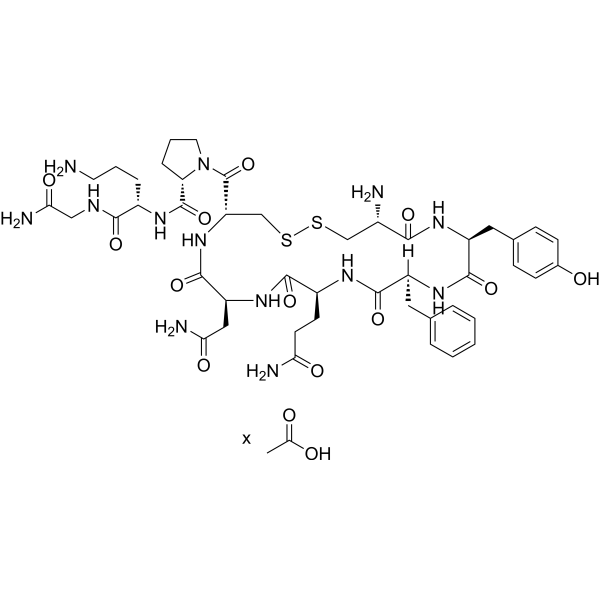
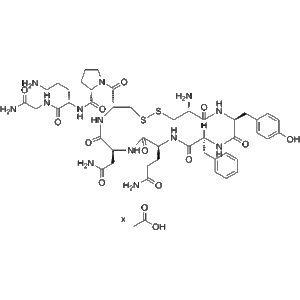
Ornipressin Acetate – Potent Vasopressin V1 Agonist for Experimental Research
Original price was: $18.00.$16.00Current price is: $16.00.
Ornipressin Acetate is a potent hemostatic, vasoconstrictor, and renal agent, acting as a selective vasopressin V1 receptor agonist. Used for experimental research in cardiovascular, renal, and anesthetic studies. Laboratory use only.?If you need to place an order or inquire about wholesale product prices, specifications and uses, please contact our staff?
Description
Ornipressin Acetate (POR-8) is a synthetic peptide derivative of vasopressin with high specificity toward the V1 receptor, providing potent vasoconstrictive, hemostatic, and renal-modulating effects. This highly pure compound (98.86%) is manufactured in a GMP-compliant facility, ensuring consistent quality for laboratory research applications. Ornipressin acetate exhibits significant pharmacological activity as a local vasoconstrictor, making it a valuable agent in experimental studies investigating hypotensive conditions, blood pressure modulation, renal perfusion, and hemostasis mechanisms.
Functionally, Ornipressin Acetate acts as a selective vasopressin receptor agonist, binding primarily to the V1 receptor subtype on vascular smooth muscle. This interaction triggers vasoconstriction, thereby increasing systemic vascular resistance and arterial blood pressure. Experimental studies have demonstrated that Ornipressin Acetate can effectively reverse hypotension associated with combined general and epidural anesthesia, providing a controlled model for cardiovascular research. Moreover, its antidiuretic activity and renal perfusion effects make it highly suitable for studies exploring renal hemodynamics and protective interventions in renal failure models.
This peptide exhibits dose-dependent effects in in vivo models, enhancing renal blood flow while decreasing renal vascular resistance, which provides critical insights for experimental nephrology. Additionally, Ornipressin Acetate has been utilized in hemostasis studies, where it promotes vascular contraction and platelet aggregation, demonstrating its utility in modeling surgical and trauma-induced bleeding. Its stability and solubility in acetate form further enhance its reproducibility in laboratory assays, enabling precise experimental design across multiple research disciplines, including pharmacology, physiology, and anesthesiology.
Product Specifications
| Parameter | Details |
|---|---|
| Product Name | Ornipressin Acetate (POR-8) |
| Synonyms | POR-8, V1 receptor agonist peptide |
| CAS Number | 914453-98-8 |
| Molecular Type | Peptide vasopressin analogue |
| Purity | 98.86% (HPLC) |
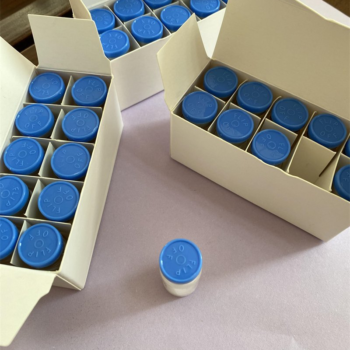
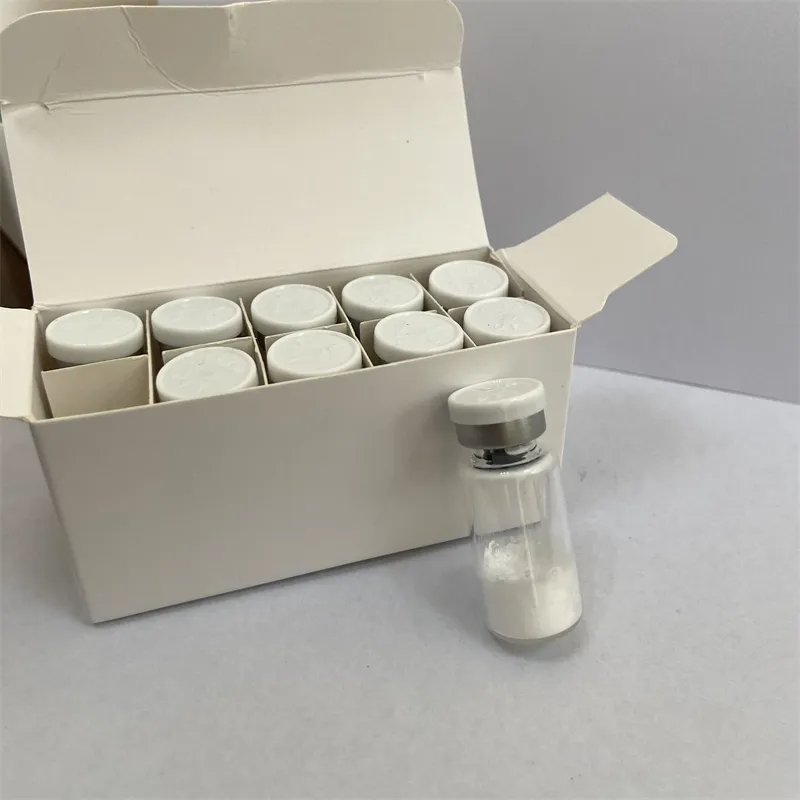
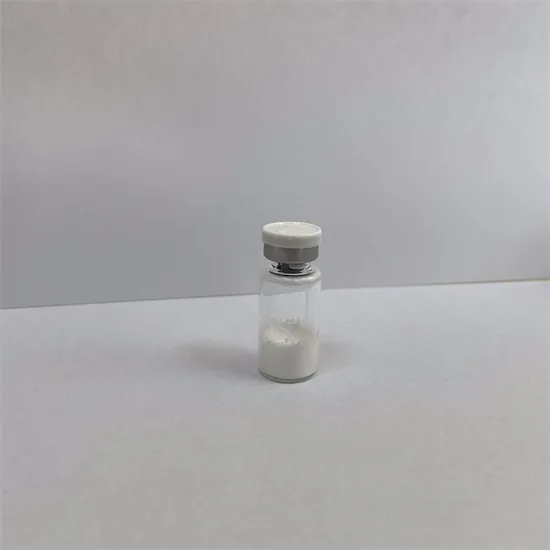
| Appearance | Lyophilized peptide powder |
| Stability | Stable at -20°C; avoid repeated freeze-thaw cycles |
| Storage | Store at -20°C under inert atmosphere |
| GMP Compliance | Manufactured in GMP-certified facility |
| Application | Laboratory research in cardiovascular, renal, and anesthetic models |
| Availability | Wholesale & retail supply |
Mechanism of Action & Research Applications
Ornipressin Acetate exerts its pharmacological effects through selective activation of the vasopressin V1 receptor on vascular smooth muscle cells. Upon binding, it activates phospholipase C (PLC), triggering the hydrolysis of phosphatidylinositol 4,5-bisphosphate to inositol 1,4,5-triphosphate (IP3) and diacylglycerol (DAG). The resultant increase in intracellular calcium induces smooth muscle contraction, leading to vasoconstriction and elevated arterial pressure. This mechanism mimics physiological vasopressin activity but with enhanced V1 receptor selectivity, which minimizes off-target effects associated with V2 receptor-mediated antidiuretic action.
In experimental cardiovascular models, Ornipressin Acetate is used to investigate mechanisms of blood pressure regulation, vascular tone, and hypotensive states induced by anesthesia or blood loss. It is also employed to simulate clinical interventions in hypotension and hemorrhagic conditions, enabling the development of novel therapeutic strategies and drug candidates.
Renal research applications include studies on renal vascular resistance, renal blood flow, and kidney-protective interventions. Ornipressin acetate’s antidiuretic and vasoconstrictive actions provide a valuable model for exploring hemodynamic regulation in renal insufficiency and acute kidney injury scenarios. Additionally, its hemostatic properties are exploited in experimental surgery and trauma studies to evaluate vascular contraction, platelet aggregation, and bleeding control mechanisms.
Further research applications extend to pharmacodynamics studies, dose-response investigations, and preclinical models of cardiovascular and renal disorders. Ornipressin Acetate’s stability and reproducibility make it ideal for long-term experiments, pharmacokinetic analyses, and comparative studies of vasopressin analogs. Its precise V1 receptor targeting allows for selective modeling of receptor-specific effects, critical in designing experiments that delineate receptor subtype contributions in complex physiological pathways.
Side Effects (For Reference in Models)
In experimental models, Ornipressin Acetate may induce transient hypertension due to potent V1 receptor-mediated vasoconstriction. Excessive doses can lead to reflex bradycardia or reduced cardiac output. Renal studies may observe decreased renal perfusion at supraphysiological concentrations, though typical experimental doses are well-tolerated. Local injection sites may show mild tissue irritation or transient vasospasm. As a research peptide, its systemic effects are limited to model organisms or in vitro systems. All studies should adhere to institutional safety protocols and standard laboratory practices.
Disclaimer
Ornipressin Acetate is intended for laboratory research purposes only. It is not for human or veterinary use, diagnostic procedures, or clinical applications. Users must follow institutional guidelines, safety protocols, and local regulations when handling this peptide.
Keywords
Ornipressin Acetate, POR-8 peptide, V1 receptor agonist, vasopressin analog, vasoconstrictor peptide, hemostatic peptide, renal perfusion peptide, laboratory research peptide, cardiovascular research peptide, experimental vasopressin analog, GMP peptide for research, antidiuretic research peptide, wholesale peptide supplier, peptide for anesthesia research, high purity Ornipressin acetate,CAS : 914453-98-8
Additional information
| Weight | 0.8 kg |
|---|---|
| Dimensions | 82 × 53 × 82 cm |
What is Ornipressin Acetate used for in research?
Ornipressin Acetate is used as a selective V1 receptor agonist to study cardiovascular, renal, and hemostatic mechanisms in experimental models. Laboratory use only.
How does Ornipressin Acetate act on the V1 receptor?
It binds V1 receptors on vascular smooth muscle cells, activating calcium-mediated contraction and vasoconstriction.
Can Ornipressin Acetate be used to study hypotension?
Yes, it is used in models of anesthesia-induced or hemorrhagic hypotension to test vasoconstrictive interventions.
What is the purity of Ornipressin Acetate?
The peptide is 98.86% pure by HPLC.
Is Ornipressin Acetate suitable for renal research?
Yes, it can reduce renal vascular resistance, improve renal blood flow, and model renal hemodynamic effects.
How should Ornipressin Acetate be stored?
Store at -20°C under an inert atmosphere; avoid repeated freeze-thaw cycles.
Can Ornipressin Acetate be used in vivo?
Yes, it is suitable for animal studies under controlled laboratory conditions.
Is Ornipressin Acetate GMP compliant?
Yes, it is manufactured in a GMP-certified facility.
Does Ornipressin Acetate have antidiuretic effects?
Yes, it demonstrates V2-independent antidiuretic activity in experimental models.
Can it be used as a hemostatic agent in research?
Yes, it induces vasoconstriction and enhances platelet aggregation in laboratory models.
What is the recommended form for experimental use?
The acetate salt form is stable and soluble for reproducible laboratory experiments.
Is Ornipressin Acetate orally active?
No, it is administered via injection in experimental settings.
Can it reverse anesthesia-induced hypotension?
Yes, it is commonly used to simulate reversal of hypotension in research models.
Are there any observed side effects in animals?
Transient hypertension, reflex bradycardia, or mild tissue irritation may occur.
Can Ornipressin Acetate be used in combination studies?
Yes, it can be combined with other peptides or drugs for synergistic cardiovascular research.
Is it stable under long-term storage?
Yes, it is stable at -20°C for extended laboratory use.
Does Ornipressin Acetate affect blood pressure in vitro?
Yes, it can be applied in vascular tissue assays to study contraction responses.
Can Ornipressin Acetate be used in high-throughput screening?
Yes, its reproducible activity makes it suitable for pharmacological screening studies.
What research fields commonly use Ornipressin Acetate?
Cardiovascular, renal, hemostasis, anesthesiology, pharmacology, and peptide biology research.
Is Ornipressin Acetate intended for human use?
No, it is strictly for experimental laboratory research.
Related products
Retatrutide cost with insurance
Retatrutide cost with insurance Original price was: $38.00.$26.00Current price is: $26.00.Semaglutide Raw Material Factory: Low-Price Wholesale for High-Purity Peptides
Semaglutide Compound CID: 56843331 MF: C187H291N45O59Purity: 99%
Form: Lyophilized powder
Dosage Options: 5mg, 10mg, 15mg per vial
Packaging: Secure box packaging
Shelf Life: 2 years (store in a cool, dry place)
MOQ: 1 box
Best Price with Peptides 10mg Vials – High-Purity Weight Loss Peptide in Stock with Safe Delivery
Weight Loss Peptide Moq: 10 vials per box Package: plastic or paper box Purity:99% Original price was: $36.00.$24.00Current price is: $24.00.High Purity 99.9% Weight Loss Peptide – Raw Material Factory Wholesale at Low Price
Weight Loss Peptide Appearance:Lyophilized powder Grade Standard:Top Quality Original price was: $12.00.$9.80Current price is: $9.80.

Reviews
There are no reviews yet.