
No products in the cart.
Sale
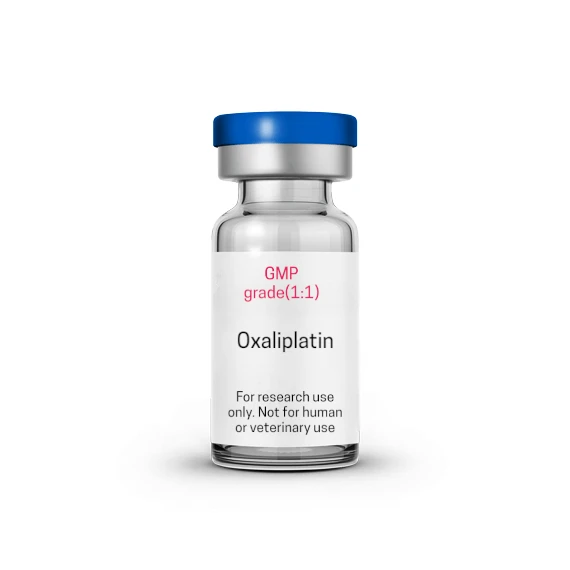
Oxaliplatin | CAS 61825-94-3 | Platinum-Based Antineoplastic Agent for Research and Chemotherapy Studies
Original price was: $3.00.$2.00Current price is: $2.00.
Oxaliplatin is a third-generation platinum-based chemotherapeutic agent widely used for colorectal and other solid tumor research. It exerts cytotoxic effects by forming DNA crosslinks, leading to apoptosis and inhibition of tumor cell proliferation.
Description
Contents
hide
Product Description
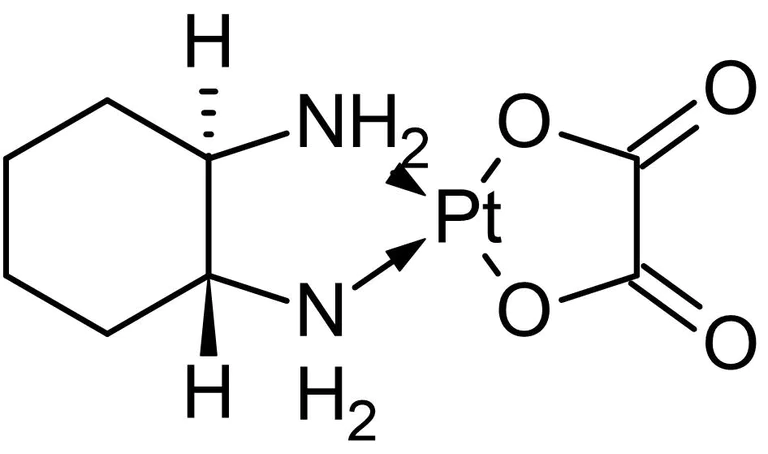
Oxaliplatin is a chemically stable, third-generation platinum complex featuring a 1,2-diaminocyclohexane (DACH) carrier ligand and oxalate leaving group. Its structure confers distinct pharmacological and cytotoxic profiles compared to cisplatin and carboplatin. As a laboratory research compound, Oxaliplatin is instrumental in investigating DNA damage response, cell cycle regulation, and apoptosis in cancerous cells.
Oxaliplatin exerts its antitumor activity primarily by forming covalent platinum-DNA adducts. These adducts lead to intra- and interstrand DNA crosslinks, interfering with DNA replication and transcription. As a result, cells activate DNA repair pathways, including nucleotide excision repair (NER) and mismatch repair (MMR). If damage persists, signaling cascades trigger programmed cell death via intrinsic and extrinsic apoptotic pathways.
In vitro studies reveal that Oxaliplatin induces cytotoxicity across a range of human cancer cell lines, including colorectal, gastric, pancreatic, and ovarian models. Its DACH ligand is believed to confer reduced susceptibility to cellular detoxification mechanisms such as glutathione conjugation, enhancing activity against cisplatin-resistant cells. Researchers also report that Oxaliplatin synergizes with other cytotoxic agents, targeted therapies, and immunomodulators, expanding its utility in combination experiments.
Oxaliplatin demonstrates dose-dependent effects in experimental systems. Low concentrations may induce DNA damage signaling without immediate apoptosis, providing opportunities to study repair mechanisms, stress responses, and senescence. Higher concentrations typically result in robust apoptotic induction, characterized by caspase activation, mitochondrial depolarization, and PARP cleavage. These effects can be measured using assays such as flow cytometry, western blotting, immunofluorescence, and cell viability studies.
From a biochemical perspective, Oxaliplatin’s oxalate leaving group is highly water-soluble, facilitating in vitro formulation. The DACH carrier ligand contributes to the formation of bulky DNA adducts, which are less efficiently repaired by the nucleotide excision repair system, potentially explaining its efficacy in certain resistant cancer models. In laboratory research, Oxaliplatin is usually dissolved in aqueous solvents or DMSO, with careful handling to prevent hydrolysis and preserve activity.
Researchers frequently employ Oxaliplatin to study mechanisms of chemoresistance. Resistance pathways include enhanced DNA repair, increased drug efflux via transporters (e.g., MRP2), alterations in apoptotic signaling, and elevated intracellular detoxification. Experimental manipulation of these pathways with Oxaliplatin allows investigation into novel therapeutic strategies, predictive biomarkers, and combination approaches designed to overcome resistance in tumor models.
Experimental research also explores Oxaliplatin-induced immunogenic cell death. Certain cancer cell populations treated with Oxaliplatin release damage-associated molecular patterns (DAMPs) such as calreticulin, HMGB1, and ATP, which can stimulate dendritic cells and T-cell responses. This property is particularly useful for studies combining chemotherapeutics with immunotherapy and for understanding tumor microenvironment interactions.
Oxaliplatin has a well-characterized safety and handling profile in laboratory settings. It is cytotoxic to both cancerous and non-cancerous cells at research concentrations, necessitating the use of appropriate protective equipment, biosafety cabinets, and disposal protocols. Standard precautions include gloves, lab coats, and eye protection. Solutions should be prepared fresh or stored under conditions that prevent decomposition, typically at 2–8°C and shielded from light.
Oxaliplatin’s versatility in laboratory research extends beyond oncology. Investigations into DNA repair pathways, epigenetic modifications, and oxidative stress responses often employ Oxaliplatin as a chemical tool to induce controlled DNA damage. It can be used in combination with gene editing technologies, RNA interference, and high-content imaging to study cellular responses in precise experimental contexts.
Overall, Oxaliplatin is a critical platinum-based reagent for experimental oncology, pharmacology, and molecular biology. Its distinct DACH platinum complex structure, potent cytotoxicity, and capacity to induce DNA damage and immunogenic cell death make it an indispensable agent for cancer research laboratories worldwide.
Product Specifications
| Item | Details |
|---|---|
| Product Name | Oxaliplatin |
| CAS Number | 61825-94-3 |
| Synonyms | Eloxatin, L-Oxaliplatin |
| Molecular Formula | C8H14N2O4Pt |
| Molecular Weight | 397.3 g/mol |
| Purity | ≥99% |
| Appearance | White to pale yellow crystalline powder |
| Solubility | Soluble in water and DMSO |
| Storage Temperature | 2–8 °C, protected from light |
| Category | Platinum-based antineoplastic agent |
| Applications | Cancer research, DNA damage studies, apoptosis and chemoresistance research |
| Formulation | Suitable for in vitro and cell culture experiments |
| Stability | Stable under recommended storage conditions |
| Shelf Life | 24 months |
| Supplier Type | Laboratory reagent supplier |
| Intended Use | For laboratory research use only |
Mechanism of Action
Oxaliplatin’s antineoplastic activity primarily involves DNA crosslinking and adduct formation, which disrupts replication and transcription. The platinum center reacts with the N7 position of guanine and adenine bases, creating intra- and interstrand crosslinks. These structural distortions prevent proper DNA replication, activating DNA damage response pathways.
DNA Damage Response
The formation of platinum-DNA adducts triggers a cascade of repair mechanisms, including nucleotide excision repair (NER) and mismatch repair (MMR). Persistent lesions activate p53 signaling, cell cycle checkpoints, and apoptosis. Laboratory research can measure γ-H2AX foci formation, a hallmark of double-strand break signaling, to quantify DNA damage.
Cell Cycle Arrest
Oxaliplatin treatment induces G2/M phase arrest in cultured cancer cells. This checkpoint activation allows cells to attempt DNA repair. If repair fails, cells proceed to apoptosis. This property is used to study checkpoint regulation and mechanisms of chemoresistance.
Apoptosis Induction
Oxaliplatin activates both intrinsic (mitochondrial) and extrinsic apoptotic pathways. Key events include mitochondrial membrane depolarization, cytochrome c release, caspase-3 and -9 activation, and PARP cleavage. These molecular events are commonly quantified using western blot, flow cytometry, and fluorescence microscopy in experimental settings.
Immunogenic Cell Death
Oxaliplatin can trigger immunogenic cell death (ICD) in vitro. Treated cells release DAMPs, such as calreticulin exposure on the cell surface, ATP secretion, and HMGB1 release, enhancing dendritic cell maturation and T-cell activation. Researchers use these effects to study tumor immunology and combination therapies with checkpoint inhibitors.
Resistance and Synergy
Cellular resistance to Oxaliplatin involves enhanced DNA repair, drug efflux transporters, and anti-apoptotic signaling. Experimental studies often combine Oxaliplatin with inhibitors of DNA repair enzymes, modulators of oxidative stress, or targeted therapies to evaluate synergistic effects and overcome chemoresistance.
Experimental Applications
In vitro, Oxaliplatin is used to study:
DNA crosslink formation and repair kinetics
Apoptosis signaling pathways
Chemoresistance mechanisms
Drug combination effects
Tumor microenvironment interactions and immunogenic responses
These applications make it a valuable reagent in oncology, molecular biology, and pharmacology research.
Side Effects
In laboratory research, Oxaliplatin exhibits cytotoxicity toward both tumor and normal cells. Side effects observed in in vitro studies include:
DNA damage–induced cytotoxicity: Leads to apoptosis and reduced cell viability.
Oxidative stress: Increased reactive oxygen species (ROS) may damage cellular components.
Cell cycle perturbation: Arrest in G2/M phase can impact proliferation assays.
Neurotoxicity markers in neuronal cultures: Oxaliplatin may induce axonal degeneration and mitochondrial dysfunction in experimental neuronal models.
Hypersensitivity responses in immune cell assays: Activation of immune pathways due to ICD can affect co-culture experiments.
Proper handling, including the use of gloves, lab coats, biosafety cabinets, and proper waste disposal, is critical to ensure safety in experimental settings. Solutions should be freshly prepared or stored under recommended conditions (2–8°C, light-protected) to preserve bioactivity.
Keywords
Oxaliplatin, platinum-based chemotherapeutic, DNA crosslinking, apoptosis, chemoresistance research, immunogenic cell death, anticancer research, colorectal cancer research, ovarian cancer models, high-purity laboratory reagent
Shipping Guarantee
All shipments are handled using validated cold-chain logistics to preserve compound integrity. Each package is sealed in moisture-proof containers with secondary protective wrapping and continuous temperature monitoring. Products are shipped via express international couriers with full tracking and insurance coverage.
Trade Assurance
We ensure product authenticity, verified ≥99% purity, and compliance with analytical standards (HPLC, MS, and NMR). Each batch is supplied with a Certificate of Analysis (CoA). Our trade assurance policy guarantees replacement or refund for any deviation from listed specifications.
Payment Support
We provide flexible and secure global payment options to support international research transactions. Accepted payment methods include PayPal, major credit cards (Visa, MasterCard, American Express), telegraphic transfer (T/T), and cryptocurrencies (USDT, Bitcoin, Ethereum). All transactions are protected by industry-standard encryption and verified payment gateways to ensure confidentiality and fund security.
Disclaimer
All products listed are intended for laboratory research use only and not for human or veterinary use. They are not drugs, medical devices, or diagnostics and should not be administered to humans or animals. Researchers must handle all materials in accordance with institutional biosafety and chemical safety guidelines. The information provided is for scientific reference only and does not imply therapeutic efficacy, safety, or regulatory approval.
Additional information
| Weight | 1.1 kg |
|---|---|
| Dimensions | 18 × 16 × 18 cm |
What is Oxaliplatin used for in research?
Oxaliplatin is primarily used to study DNA crosslinking, apoptosis, chemoresistance, and immunogenic cell death in cancer models.
How should Oxaliplatin be stored?
Store at 2–8°C, protected from light, in tightly sealed containers.
Is Oxaliplatin a high-purity compound?
Yes, our Oxaliplatin is verified to be ≥99% pure via HPLC, MS, and NMR.
What solvents are compatible for Oxaliplatin in vitro studies?
Oxaliplatin is soluble in water and DMSO; aqueous solutions should be freshly prepared.
Can Oxaliplatin be used for combination therapy studies?
Yes, it is often combined with other chemotherapeutic agents or targeted inhibitors to study synergy and resistance.
What precautions are necessary during handling?
Use gloves, lab coats, eye protection, and a biosafety cabinet. Dispose of waste according to chemical safety protocols.
What cell lines are commonly used with Oxaliplatin?
Colorectal, ovarian, gastric, pancreatic, and other solid tumor cell lines are commonly used.
Can Oxaliplatin induce immunogenic cell death in vitro?
Yes, Oxaliplatin can trigger release of DAMPs and enhance dendritic cell activation in co-culture models.
Is Oxaliplatin suitable for in vivo studies?
Our product is for laboratory research use; in vivo studies require additional ethical approvals and appropriate handling.
How long is Oxaliplatin stable under storage conditions?
Stable for 24 months under recommended conditions (2–8°C, light-protected).
Can Oxaliplatin be shipped internationally?
Yes, it is shipped with full tracking and insurance via validated cold-chain logistics.
Are OEM or bulk orders available for Oxaliplatin?
Yes, we support bulk supply and OEM services for research laboratories.
Does Oxaliplatin degrade over time in solution?
Yes, aqueous solutions can hydrolyze; prepare fresh solutions or store under controlled conditions.
What analytical data is provided with Oxaliplatin?
Each batch comes with a Certificate of Analysis including HPLC, MS, and NMR verification of ≥99% purity.
Is Oxaliplatin safe for handling in a laboratory environment?
Yes, following proper biosafety and chemical handling procedures ensures safe use.
Related products
Irinotecan Hydrochloride Liposome 43mg for scientific research
High-purity Irinotecan Hydrochloride Liposome Solution, factory-manufactured for in vitro molecular mechanism studies and controlled biochemical pathway research. Supplied as a stable liposomal solution suitable for laboratories requiring bulk, wholesale, or customized research-grade supply. Original price was: $2.00.$1.00Current price is: $1.00.Pirtobrutinib 100mg | High purity | Factory manufactured
Pirtobrutinib is a high-purity small-molecule research compound, factory manufactured and supplied at low-price wholesale scale, specifically developed for in vitro biochemical assays, molecular interaction analysis, and signaling pathway investigations. This product is intended exclusively for laboratory research use. $2.00Cetuximab NO1 100 mg/50 mL | High purity | Factory manufactured
Cetuximab NO1 (100 mg/50 mL, Solution) is a high-purity monoclonal antibody solution manufactured under stringent factory-controlled conditions for in vitro laboratory research and molecular mechanism studies. Its solution format facilitates precise dosing, reproducible assay preparation, and integration into receptor-binding and signaling pathway research workflows.
Original price was: $3.00.$2.00Current price is: $2.00.Elranatamab 76mg solution — Laboratory Research Grade Reagent
Elranatamab is a high-purity bispecific monoclonal antibody designed for in vitro studies of target engagement, molecular signaling, and cellular interaction mechanisms. It is intended exclusively for laboratory research, enabling precise mechanistic investigations in controlled experimental systems.
Original price was: $6.00.$3.00Current price is: $3.00.


Reviews
There are no reviews yet.