
No products in the cart.
Sale

Regorafenib 40mg | High Purity | Factory Manufactured | Laboratory Research Use Only
Original price was: $3.00.$2.00Current price is: $2.00.
High-purity Regorafenib, factory-manufactured for in vitro mechanistic studies and molecular pathway research. Supplied as a stable solution or powder for laboratories requiring bulk, wholesale, or customized research-grade supply.
Description
Product Description
Regorafenib is a high-purity, laboratory-grade small molecule kinase inhibitor developed for in vitro mechanistic and molecular pathway research. Its stable chemical structure and verified high purity make it a reliable tool for investigating signal transduction, kinase inhibition, and protein-ligand interactions in controlled laboratory environments.
This compound is widely used in biochemical and mechanistic studies, including enzyme assays, phosphorylation analysis, and molecular pathway modulation experiments. Its reproducible activity allows researchers to explore dose-response relationships, inhibitor selectivity, and molecular binding kinetics without interference from impurities or degradation products.
Regorafenib’s versatility makes it suitable for cell-free systems, purified enzyme assays, and synthetic protein models, where precise control over experimental conditions is required. Its high solubility in common organic solvents such as DMSO and DMF allows easy preparation of stock solutions for various in vitro assays.
The compound also supports analytical method development, serving as a reference for validating HPLC, mass spectrometry, and spectroscopic assays. Researchers can confidently integrate Regorafenib into high-throughput screening, kinase profiling, and structure-activity relationship studies, generating reproducible data to elucidate mechanistic pathways.
Factory-controlled production ensures bulk, wholesale, and customized supply options, including variable concentrations and packaging formats. Each batch is accompanied by a Certificate of Analysis (CoA) verifying chemical purity, solubility, and stability, ensuring consistency across laboratories.
By combining high purity, chemical stability, and reproducible activity, Regorafenib provides a robust platform for molecular mechanism research, kinase inhibition studies, and biochemical pathway analysis. Its application in in vitro experimental models enables laboratories to generate reliable, high-quality data supporting mechanistic insights, drug-target interaction studies, and pathway elucidation.
Regorafenib’s factory-manufactured, low-price wholesale availability ensures researchers can obtain sufficient quantities for extended studies without compromising on quality, reproducibility, or experimental integrity. Overall, it is a versatile and indispensable reagent for laboratories conducting in-depth mechanistic and molecular research.

Product Specifications
| Parameter | Specification (Regorafenib) |
|---|---|
| Product Name | Regorafenib |
| Form | Powder / Solution (ready-to-use for research) |
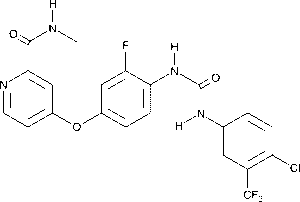
| Chemical Name | 4-(4-((4-Chloro-3-(trifluoromethyl)phenyl)carbamoyl)phenoxy)-N-methylpyridine-2-carboxamide |
| Molecular Formula | C21H15ClF3N4O3 |
| Molecular Weight | 482.9 g/mol |
| Purity | ≥ 99% (HPLC verified) |
| Appearance | Off-white to light yellow crystalline powder or clear solution |
| Solubility | Soluble in DMSO, DMF; partially soluble in ethanol |
| Stability | Chemically stable under recommended storage; avoid heat and light |
| Storage Conditions | Store at 2–8°C, sealed, light-protected |
| Recommended Research Use | Suitable for kinase inhibition assays, molecular pathway studies, biochemical mechanism research, and in vitro drug-target interactions |
| CAS Number | 755037-03-7 |
| HS Code | Available for bulk and wholesale orders |
| Packaging Options | Laboratory vials; bulk and custom packaging available |
| Factory Production Capability | High-capacity production supporting OEM/ODM and bulk laboratory supply |
| Quality Verification | QC-tested for chemical purity, solubility, and stability |
| Regulatory Status | For laboratory research use only; not for human or veterinary applications |
Notes
Regorafenib is manufactured under strict factory-controlled conditions to maintain chemical purity, stability, and reproducibility. Bulk and wholesale orders are supported with custom concentrations, packaging options, and batch-specific Certificates of Analysis (CoA). This ensures high-quality material for mechanistic, biochemical, and molecular pathway research.
Mechanism of Action
Regorafenib is a multi-kinase inhibitor designed for in vitro mechanistic studies. It targets a range of receptor tyrosine kinases (RTKs) and intracellular kinases, providing a valuable tool to investigate signal transduction, enzyme inhibition, and molecular pathway regulation in controlled laboratory settings.
1. Kinase Inhibition Mechanism
Regorafenib binds to the ATP-binding sites of kinases, inhibiting their catalytic activity. In vitro studies using purified kinases or cell-free systems can reveal dose-dependent inhibition, kinase selectivity, and interaction dynamics, allowing detailed mechanistic mapping.
2. Molecular Pathway Modulation
In biochemical assays, Regorafenib affects pathways involved in proliferation, angiogenesis, and stress response by modulating kinase activity. Researchers can examine downstream phosphorylation events, signal cascade alterations, and protein interaction networks under controlled conditions.
3. Drug-Target Binding Analysis
Mechanistic studies can include binding affinity measurements, enzyme kinetics, and conformational changes in target proteins. Techniques such as surface plasmon resonance (SPR), isothermal titration calorimetry (ITC), and spectroscopic analysis can be used to characterize molecular interactions.
4. Structural and Functional Studies
Regorafenib’s high purity and stability allow experiments on protein-ligand complex formation, structure-activity relationships, and kinase conformational dynamics. This supports reproducible, detailed in vitro studies of molecular mechanisms.
5. Analytical Validation
The compound can also serve as a reference standard for validating analytical assays, screening platforms, and high-throughput mechanistic studies, ensuring experimental accuracy and reproducibility.
Overall, Regorafenib provides a robust tool for in vitro mechanistic research, enabling laboratories to study kinase inhibition, molecular pathway modulation, and biochemical interactions under highly controlled conditions.
Applications
Regorafenib is widely used in in vitro mechanistic and molecular research due to its high-purity and stable formulation, making it suitable for studying kinase inhibition, signal transduction, and molecular pathway modulation.
1. Kinase Activity Assays
Regorafenib is ideal for investigating ATP-competitive kinase inhibition in purified enzyme systems or cell-free assays. Researchers can assess dose-response relationships, inhibitor selectivity, and catalytic activity modulation.
2. Molecular Pathway Studies
The compound allows laboratories to explore biochemical signaling cascades, including pathways regulating proliferation, stress response, and angiogenesis. Mechanistic studies can include phosphorylation monitoring, protein interaction analysis, and downstream signaling modulation.
3. Structure-Activity Relationship (SAR) Studies
High-purity Regorafenib supports protein-ligand binding studies, structural dynamics analysis, and SAR mapping. This enables detailed evaluation of kinase-inhibitor interactions and molecular conformational changes.
4. Analytical Method Development
It serves as a reference standard for validating HPLC, spectroscopy, mass spectrometry, and high-throughput screening assays, ensuring reproducible mechanistic data.
5. Computational Integration
Experimental results can be combined with molecular docking, predictive modeling, and in silico simulations to validate mechanistic hypotheses and refine pathway models.
6. High-Throughput Screening
Compatible with automated platforms, Regorafenib allows parallel testing of multiple conditions, including kinase variants, co-factors, and environmental parameters, enhancing throughput for mechanistic investigations.
Overall, Regorafenib provides a versatile platform for laboratories studying kinase inhibition, molecular signaling, and mechanistic biochemistry under fully controlled in vitro conditions.
Research Models
Regorafenib is designed for in vitro research models that allow detailed exploration of kinase inhibition, signal transduction, and molecular pathway modulation. Its high purity and stable formulation provide reproducible results across diverse mechanistic studies.
1. Enzyme-Based Models
In cell-free systems, Regorafenib can be applied to purified kinase assays to study ATP-competitive inhibition, catalytic kinetics, and dose-dependent activity modulation. These models allow precise measurement of enzyme-inhibitor interactions under controlled conditions.
2. Signal Transduction Pathway Models
The compound supports biochemical pathway studies, including analysis of phosphorylation cascades, downstream signaling effects, and protein-protein interactions. Controlled in vitro models provide reproducible mechanistic insights without cellular complexity.
3. Protein-Ligand Interaction Models
Regorafenib facilitates binding studies with target kinases, including evaluation of binding affinity, conformational changes, and structure-activity relationships. Analytical techniques such as SPR, ITC, and spectroscopy are commonly used to validate these models.
4. Analytical Validation Models
High-purity Regorafenib serves as a reference standard for validating analytical assays, including HPLC, mass spectrometry, fluorescence-based kinase assays, and high-throughput screening. These models ensure reproducibility and precision across laboratories.
5. Computational Integration Models
Experimental data from these in vitro models can be combined with molecular docking, predictive modeling, and systems biology simulations to explore mechanistic pathways and refine hypotheses.
Overall, Regorafenib enables robust in vitro research models that support mechanistic, structural, and kinetic studies of kinase inhibition and molecular signaling, providing reproducible, high-quality data for laboratory research.
Experimental Design Considerations
Designing experiments with Regorafenib requires careful attention to concentration, environmental conditions, and analytical methods to ensure reliable mechanistic insights.
1. Concentration Optimization
Determine optimal concentrations based on enzyme kinetics, assay sensitivity, and target protein interactions. Perform preliminary titrations to avoid oversaturation or underdetection in in vitro models.
2. Environmental Control
Maintain precise temperature, pH, and buffer conditions, as these parameters affect kinase activity, inhibitor binding, and chemical stability. Controlled conditions ensure reproducible mechanistic outcomes.
3. Time-Course Studies
Design experiments with defined time points to monitor kinase inhibition dynamics, downstream pathway modulation, and signal cascade kinetics. Time-course measurements provide detailed mechanistic data.
4. Analytical Method Integration
Select analytical techniques such as HPLC, mass spectrometry, SPR, or fluorescence spectroscopy to detect molecular interactions, structural changes, and pathway modulation. Integration of multiple methods enhances data robustness.
5. Replication and Controls
Include appropriate controls, replicates, and blank conditions to validate results. Document lot numbers, storage conditions, and experimental procedures for reproducibility.
6. Computational Modeling
Combine experimental data with in silico modeling, docking studies, and pathway simulations to refine hypotheses and validate mechanistic interpretations.
By following these considerations, laboratories can achieve high-precision, reproducible in vitro experiments with Regorafenib, yielding robust data on kinase inhibition, molecular pathway modulation, and biochemical mechanisms.
Laboratory Safety & Handling Guidelines
Regorafenib is a high-purity laboratory reagent intended exclusively for in vitro mechanistic and molecular research. Proper handling ensures chemical stability, experimental reproducibility, and laboratory safety.
1. Personal Protective Equipment (PPE)
Always wear gloves, lab coat, and eye protection when handling Regorafenib. Work in a controlled laboratory environment to prevent contamination and maintain chemical integrity.
2. Handling and Preparation
Use dedicated laboratory consumables to avoid cross-contamination. Dissolve or dilute the compound carefully to preserve molecular integrity and activity.
3. Storage Conditions
Store in sealed, light-protected containers at 2–8°C. Avoid exposure to heat, light, or repeated freeze-thaw cycles, which can affect stability and purity.
4. Spill and Decontamination Procedures
Contain spills immediately with approved absorbents. Clean surfaces using appropriate buffers or decontamination solutions, and dispose of contaminated materials according to institutional chemical waste protocols.
5. Documentation and Traceability
Maintain records of lot numbers, storage conditions, and experimental usage. This ensures reproducibility and supports troubleshooting in mechanistic studies.
6. Laboratory Equipment
Use chemically compatible glassware, pipettes, and plates to prevent adsorption or chemical degradation.
Following these guidelines ensures safe handling, reproducible results, and reliable mechanistic insights in laboratory-based in vitro studies.
Integration with Multi-Omic & Computational Studies
Regorafenib can be integrated into multi-omic workflows and computational modeling to explore kinase inhibition, molecular pathway modulation, and signal transduction mechanisms in vitro. Its stable, high-purity formulation enables reproducible data collection suitable for proteomic, structural, and computational analyses.
1. Proteomic and Structural Integration
In vitro studies with Regorafenib can generate data on kinase-ligand interactions, phosphorylation changes, and protein network modulation. Techniques such as mass spectrometry, western blotting, and structural analyses can map interactions and validate mechanistic hypotheses.
2. Computational Modeling Applications
Data from in vitro assays can be combined with molecular docking, predictive simulations, and pathway modeling. Computational integration helps predict inhibitor-target interactions, refine mechanistic pathways, and corroborate experimental findings.
3. Multi-Omic Correlation
Experimental results can be correlated with transcriptomic, proteomic, or metabolomic datasets from controlled systems to identify mechanistic relationships and pathway modulation. This integration allows robust hypothesis generation and mechanistic validation.
4. Analytical Method Validation
Regorafenib can serve as a reference standard to validate HPLC, fluorescence, or mass spectrometry assays. Integration with computational studies enhances interpretation and reproducibility of mechanistic experiments.
Overall, Regorafenib supports a comprehensive approach combining experimental in vitro data with computational and multi-omic analyses, providing deep mechanistic insights into kinase inhibition and molecular signaling pathways.
Things to Note
Laboratory Use Only
Regorafenib is intended exclusively for in vitro mechanistic, structural, and biochemical research. It is not suitable for human or veterinary use, clinical applications, or diagnostic purposes.Handling and Safety
Always use appropriate PPE, including gloves, lab coat, and eye protection. Handle in a controlled laboratory environment to maintain chemical stability and experimental integrity.Storage and Stability
Store in sealed, light-protected containers at 2–8°C. Avoid heat, light exposure, and repeated freeze-thaw cycles, which can compromise chemical purity and activity.Analytical Verification
Before experiments, confirm purity, solubility, and chemical integrity using techniques such as HPLC, mass spectrometry, or spectroscopy to ensure reproducibility.Waste Management
Dispose of residual material and contaminated consumables according to institutional chemical waste protocols. Decontaminate surfaces and equipment after use.Experimental Considerations
Design experiments considering environmental sensitivity, target protein stability, and inhibitor concentration to ensure reliable mechanistic insights.
Following these notes ensures safe handling, reproducible data, and robust mechanistic results in laboratory-based in vitro studies.
Keywords
Regorafenib, high-purity kinase inhibitor, laboratory-grade regorafenib, in vitro mechanistic studies, kinase signaling pathway research, molecular pathway modulation, protein-ligand interaction reagent, enzymatic inhibition assay, biochemical mechanism research, high-throughput in vitro screening, structural dynamics reagent, proteomic and computational integration, factory-manufactured research reagent, bulk and wholesale laboratory supply, mechanistic pathway analysis reagent, controlled laboratory workflow reagent, high-purity solution for in vitro assays, analytical method validation kinase inhibitor, Tumor (compound) Research, multi-omic integration reagent.
Shipping Guarantee
Factory-manufactured Regorafenib is securely packaged to maintain chemical stability, purity, and experimental integrity during transport. Bulk and wholesale orders are supported with secure shipment and tracking, ensuring the product arrives in optimal condition for in vitro mechanistic and molecular studies. Shipments are handled to minimize exposure to heat, light, or contamination.
Trade Assurance
Low-price wholesale supply directly from the factory.
Bulk order customization available, including solution concentration and packaging formats.
Guaranteed high-purity compound for in vitro kinase inhibition and molecular pathway research.
Factory-direct supply ensures consistent quality and reproducibility across multiple batches.
Payment Support
Multiple secure payment options are available for global laboratory procurement:
PayPal
Cryptocurrency
Bank Transfer (TT)
Credit Card
Verified online payment systems
These options provide flexible and secure payment methods for bulk and wholesale orders.
Disclaimer
Regorafenib is intended exclusively for laboratory research use. It is not approved for human or veterinary applications, diagnostic purposes, or therapeutic interventions. All experiments must be conducted in controlled in vitro, molecular, or mechanistic studies. Users must follow institutional safety protocols and chemical handling procedures. The product should never be administered to living organisms or used outside research settings.
References
Subramonian D., Phanhthilath N., Rinehardt H., et al. “Regorafenib is effective against neuroblastoma in vitro and in vivo and inhibits the RAS/MAPK, PI3K/Akt/mTOR and Fos/Jun pathways.” British Journal of Cancer, 2020; 123: 568–579. Nature
Mesa‑Torrejón A., Verzini E., Romeo C., et al. “Regorafenib reduces cell proliferation and viability in vitro in neuroendocrine tumor models and alters signaling pathways.” British Journal of Cancer, 2023. Nature
“Regorafenib (BAY 73‑4506) – multi‑target kinase inhibitor.” Supplier/Research‑use catalog listing (e.g. manufacturer datasheet), notes inhibition of VEGFRs, PDGFRβ, KIT, RET, RAF, etc.; used widely in vitro kinase and signal‑transduction assays. medkoo.com+1
“Regorafenib, CAS 755037-03-7 — chemical properties and kinase target profile.” Chemical database entry summarizing molecular formula, CAS, purity, solubility, and main kinase targets (VEGFRs, PDGFR, KIT, RET, RAF). ChemicalBook+1
“Pharmacologic activity and pharmacokinetics of metabolites of Regorafenib in preclinical models.” Preclinical study detailing kinase inhibition by parent compound and metabolites, useful for in vitro biochemical and mechanistic research design. PubMed

Additional information
| Weight | 1.1 kg |
|---|---|
| Dimensions | 26 × 28 × 26 cm |
1 review for Regorafenib 40mg | High Purity | Factory Manufactured | Laboratory Research Use Only
1. What is Regorafenib used for in research?
Regorafenib is designed for in vitro mechanistic studies, kinase inhibition assays, and molecular pathway research. It enables detailed exploration of signal transduction, protein-ligand interactions, and biochemical modulation in controlled laboratory settings.
2. Can this product be used in humans or animals?
No. This product is strictly for laboratory research use only. It is not suitable for clinical, human, or veterinary applications.
3. What form is this product supplied in?
Regorafenib is supplied as a powder or ready-to-use solution, depending on laboratory preference, ensuring consistent solubility and stability for in vitro assays.
4. How should Regorafenib be stored?
Store in sealed, light-protected containers at 2–8°C. Avoid repeated freeze-thaw cycles, heat, or light exposure to preserve chemical integrity.
5. Is bulk or factory-scale supply available?
Yes. Factory-manufactured bulk, wholesale, and custom orders are supported, with options for concentration, packaging, and batch-specific documentation.
6. Can it be used in high-throughput screening?
Yes. Its stable formulation is compatible with automated in vitro platforms for high-throughput kinase and molecular pathway assays.
7. Is a Certificate of Analysis (CoA) provided?
Yes. Each batch includes a CoA verifying purity, solubility, and stability, ensuring reproducible in vitro research.
8. How should the compound be handled for in vitro experiments?
Use PPE and handle in a controlled lab environment. Prepare solutions carefully to maintain chemical stability and experimental consistency.
9. Can Regorafenib be used with purified proteins or synthetic membranes?
Yes. It is ideal for in vitro models involving purified enzymes, protein complexes, or synthetic lipid systems.
10. Is Regorafenib compatible with computational modeling?
Yes. Data can be integrated with molecular docking, pathway simulations, and predictive models to validate mechanistic hypotheses.
11. How should waste be disposed of?
All residual material and contaminated consumables must be disposed of according to institutional chemical waste protocols.
12. Can it be used to study kinase structural dynamics?
Yes. It supports experiments on protein-ligand complex formation, conformational changes, and SAR studies under controlled in vitro conditions.
Related products
Rilertinib Mesylate 100mg – High Purity | Factory Manufactured | For laboratory use only
High-purity Rilertinib Mesylate, manufactured under controlled factory conditions for in vitro pathway analysis, receptor-binding studies, and molecular mechanism research. Available in bulk and wholesale quantities with consistent batch quality and secure global shipping. $1.00Doxorubicin Liposome Solution for scientific research
High-purity Doxorubicin Liposome Solution, factory-manufactured for in vitro molecular mechanism studies and biochemical pathway research. Supplied as a stable liposomal solution, ideal for laboratories requiring bulk, wholesale, or customized research-grade supply. Original price was: $10.00.$8.00Current price is: $8.00.Ivodazumab solution (lvonescimab) High Purity | Factory Manufactured
High-purity Ivodazumab Injection (lvonescimab) designed for laboratory research, in vitro mechanistic studies, and receptor-targeted molecular pathway analysis. Factory-manufactured with consistent quality for bulk and wholesale supply, this injectable formulation provides reliable antibody-mediated receptor modulation for mechanistic and multi-omic studies.
Original price was: $3.00.$2.00Current price is: $2.00.Limertinib (ASK120067) 80mg — Laboratory Research Grade Chemical
Limertinib is a high-purity, irreversible small-molecule inhibitor that selectively targets mutant EGFR in vitro. Designed specifically for laboratory research, it is ideal for investigating signal transduction, kinase activity, and receptor molecular mechanisms in cell-free or in vitro systems. This compound is suitable for mechanistic studies, target validation, and enzymatic assays. Original price was: $3.00.$2.00Current price is: $2.00.


yaser –
Das Paket ist angekommen, danke