
No products in the cart.
Sale
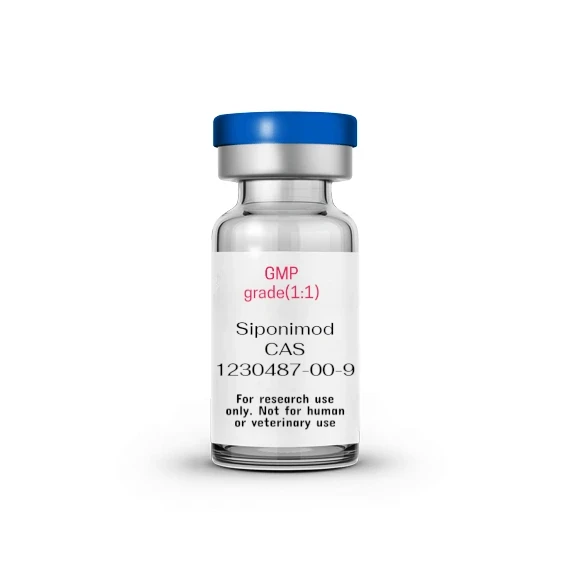
Siponimod | CAS 1230487-00-9 | Selective S1P₁/₅ Receptor Modulator for Neuroimmunology Research
Original price was: $3.00.$2.00Current price is: $2.00.
Siponimod (CAS 1230487-00-9) is a selective modulator of sphingosine-1-phosphate (S1P₁ and S1P₅) receptors. It is widely used in neuroimmunology research to investigate mechanisms of lymphocyte trafficking, neuroprotection, and remyelination in central nervous system (CNS) disorders.
Description
Contents
hide
Product Description
Siponimod (CAS 1230487-00-9) is a second-generation sphingosine-1-phosphate (S1P) receptor modulator, specifically designed to selectively target the S1P₁ and S1P₅ receptor subtypes. It plays a crucial role in neuroimmunological research by modulating lymphocyte egress from lymphoid tissues, thereby influencing immune cell trafficking and central nervous system (CNS) immune surveillance.
As a small-molecule compound derived from structural optimization of fingolimod, Siponimod offers enhanced receptor selectivity and a more predictable pharmacokinetic profile. It binds selectively to S1P₁ and S1P₅ receptors, sparing other S1P receptor subtypes such as S1P₂, S1P₃, and S1P₄, which are often associated with adverse cardiovascular effects. This makes Siponimod particularly valuable in mechanistic studies focused on immune modulation, neuronal signaling, and demyelination models.
In neurobiology, Siponimod serves as a potent chemical probe for evaluating the functional role of S1P signaling in neural repair, oligodendrocyte survival, and remyelination processes. By targeting S1P₁ receptors on lymphocytes, the compound reduces their migration into the CNS, effectively suppressing inflammatory cascades involved in neurodegeneration. Furthermore, S1P₅ receptor activation promotes oligodendrocyte maturation and myelin sheath stability, which are critical aspects of regenerative neuroscience.
From a molecular pharmacology perspective, Siponimod’s selective action on S1P₁/₅ receptors enables researchers to dissect downstream pathways such as ERK1/2, Akt, and Rac signaling, which are implicated in both immune and neuronal cell dynamics. These insights contribute to a deeper understanding of sphingolipid receptor biology and its relevance to autoimmune and degenerative diseases.
Its well-characterized pharmacodynamic properties, oral bioavailability, and defined metabolic pathways (CYP2C9 and CYP3A4 mediated) make Siponimod an ideal candidate for preclinical studies, receptor binding assays, and CNS distribution analyses. The compound’s stability and solubility also facilitate formulation studies and receptor-binding kinetics research, allowing precise evaluation of dose-dependent receptor modulation.
In summary, Siponimod serves as a powerful research tool in the fields of neuroimmunology, sphingolipid metabolism, and receptor pharmacology. It provides a selective, stable, and high-purity model compound for elucidating the role of S1P signaling in immune regulation and neural repair mechanisms.
Product Specifications
| Item | Specification |
|---|---|
| Product Name | Siponimod |
| CAS Number | 1230487-00-9 |
| Chemical Formula | C29H35F3N2O3 |
| Molecular Weight | 516.6 g/mol |
| Purity | ≥99% |
| Form | Solid powder |
| Appearance | White to off-white crystalline powder |
| Solubility | Soluble in DMSO, ethanol, and methanol |
| Storage Temperature | 2–8 °C |
| Synonyms | BAF-312; Sphingosine 1-Phosphate Receptor Modulator; S1P₁/₅ Agonist |
| Category | S1P Receptor Modulator / Neuroimmunology Research Compound |
| Applications | Used in studies of lymphocyte trafficking, CNS inflammation, oligodendrocyte signaling, and receptor selectivity research |
| Research Area | Neuroimmunology, Sphingolipid Biology, Receptor Pharmacology |
| Supplier Type | Research-grade chemical supplier |
| Intended Use | For laboratory research use only |
Mechanism of Action
Siponimod functions as a selective modulator of the sphingosine-1-phosphate receptors S1P₁ and S1P₅, which are G-protein-coupled receptors that mediate cell migration, proliferation, and survival. S1P receptors are distributed across various immune and neural tissues, and their activation plays an integral role in regulating immune cell trafficking and CNS homeostasis.
1. S1P₁ Receptor Modulation and Lymphocyte Trafficking
The S1P₁ receptor is highly expressed on lymphocytes and endothelial cells, controlling the egress of immune cells from secondary lymphoid organs into circulation. Siponimod binds to S1P₁, inducing receptor internalization and functional antagonism. This prevents lymphocytes from leaving the lymph nodes, reducing their infiltration into the CNS and other inflamed tissues.
In research settings, this mechanism allows scientists to observe how modulation of immune cell migration can alter neuroinflammatory conditions, autoimmune progression, and peripheral immune responses.
2. S1P₅ Receptor Activation in the Central Nervous System
S1P₅ receptors are predominantly expressed on oligodendrocytes and certain neural cell types. Siponimod’s agonistic effect on these receptors promotes cell survival, differentiation, and myelin maintenance. Experimental data indicate that S1P₅ activation supports remyelination and axonal protection in demyelinating disease models, such as those used in multiple sclerosis research.
3. Downstream Signaling Pathways
Through its receptor interactions, Siponimod influences multiple intracellular pathways:
ERK1/2 and Akt pathways: Enhance cell survival and proliferation.
Rac and Rho GTPases: Regulate cytoskeletal dynamics and cell motility.
NF-κB and STAT signaling: Modulate immune and inflammatory responses.
Ca²⁺ mobilization: Affects both neural excitability and immune cell activation.
Collectively, these pathways make Siponimod an excellent molecular probe for dissecting signal transduction events associated with S1P receptor modulation in both the immune and nervous systems.

Side Effects
In research and experimental contexts, Siponimod exhibits pharmacological effects related to its modulation of S1P receptors. While laboratory studies are not conducted in humans, documented data from preclinical and reference studies provide insight into potential off-target or receptor-mediated phenomena. Understanding these effects is essential for interpreting biological outcomes in experimental systems.
Cardiovascular Effects:
At supraphysiological concentrations, Siponimod may transiently affect heart rate due to partial activation of S1P₁ receptors on cardiac myocytes. These effects are generally reversible and dose-dependent, illustrating receptor specificity within cardiovascular tissues.Lymphocyte Reduction:
By preventing lymphocyte egress from lymphoid tissues, the compound can lead to temporary lymphopenia in animal models. This immunomodulatory property is central to its mechanism but must be considered when designing immunological assays.Liver Enzyme Fluctuations:
In hepatocyte cultures and in vivo models, minor and reversible elevations in transaminase activity have been observed. These changes are typically associated with S1P signaling modulation and not with direct hepatotoxicity.Ocular and Neurological Considerations:
Studies using animal retinal models indicate that excessive S1P receptor activation may influence retinal vascular tone and barrier function. This makes Siponimod a useful research tool for exploring neurovascular coupling mechanisms.Metabolic and CNS Effects:
At higher concentrations, Siponimod may alter glucose metabolism, lipid signaling, and CNS neurotransmission. These findings help elucidate the systemic roles of S1P pathways in metabolic and neuronal homeostasis.General Laboratory Precautions:
Researchers should handle the compound with care, using appropriate protective measures and controlled dosing strategies. Proper documentation of dosage, exposure time, and cell line or animal strain is critical for reproducibility and data integrity.
Keywords
Siponimod, CAS 1230487-00-9, sphingosine-1-phosphate receptor modulator, S1P₁ agonist, S1P₅ agonist, lymphocyte trafficking inhibitor, neuroimmunology compound, receptor pharmacology, multiple sclerosis research, sphingolipid signaling, high-purity compound, neuroinflammation studies, CNS receptor modulator, research chemical supplier, bulk peptide and compound manufacturer China.
Shipping Guarantee
All Siponimod shipments are handled using validated cold-chain logistics to preserve compound integrity. Each package is sealed in moisture-proof containers with secondary protective wrapping and continuous temperature monitoring. Products are shipped via express international couriers with full tracking and insurance coverage.
Trade Assurance
We Siponimod ensure product authenticity, verified ≥99% purity, and compliance with analytical standards (HPLC, MS, and NMR). Each batch is supplied with a Certificate of Analysis (CoA). Our trade assurance policy guarantees replacement or refund for any deviation from listed specifications.
Payment Support
We Siponimod provide flexible and secure global payment options to support international research transactions. Accepted payment methods include PayPal, major credit cards (Visa, MasterCard, American Express), telegraphic transfer (T/T), and cryptocurrencies (USDT, Bitcoin, Ethereum). All transactions are protected by industry-standard encryption and verified payment gateways to ensure confidentiality and fund security.
Disclaimer
All Siponimod products listed are intended for laboratory research use only and not for human or veterinary use. They are not drugs, medical devices, or diagnostics and should not be administered to humans or animals. Researchers must handle all materials in accordance with institutional biosafety and chemical safety guidelines. The information provided is for scientific reference only and does not imply therapeutic efficacy, safety, or regulatory approval.

Additional information
| Weight | 1.1 kg |
|---|---|
| Dimensions | 18 × 16 × 18 cm |
1. What is Siponimod used for in research?
Siponimod is primarily utilized to study S1P₁ and S1P₅ receptor signaling in neuroimmunology and multiple sclerosis research, particularly for understanding lymphocyte trafficking and CNS immune modulation.
2. How is Siponimod different from Fingolimod?
Siponimod has higher receptor selectivity (S1P₁ and S1P₅ only), reducing off-target cardiovascular effects associated with non-selective S1P receptor modulation, making it more precise for mechanistic studies.
3. What is the typical purity of Siponimod provided by your lab?
All batches are verified at ≥99% purity, confirmed by HPLC and MS analysis, ensuring reproducible experimental results and high data accuracy.
4. Can Siponimod be used in receptor binding assays?
Yes. Its defined binding profile allows detailed kinetic and affinity studies of S1P₁/₅ receptors, aiding pharmacological modeling and receptor activation pathway analysis.
5. What solvents are recommended for Siponimod dissolution?
DMSO, ethanol, or methanol are suitable solvents. Researchers should prepare stock solutions under anhydrous conditions and store them at 2–8 °C.
6. What are the stability characteristics of Siponimod?
The compound is stable under standard refrigerated conditions (2–8 °C) and in sealed, moisture-proof packaging. Avoid prolonged exposure to light or heat.
7. Is Siponimod available for bulk purchase?
Yes, we offer bulk quantities for research institutions, pharmaceutical developers, and contract labs under OEM & bulk peptide and compound production agreements.
8. Do you offer custom synthesis services related to Siponimod analogs?
Yes. As a China-based factory peptide and compound supplier, we provide custom synthesis, analog modification, and molecular optimization upon request.
9. Can I order from outside China?
Absolutely. We support international shipping through validated logistics networks, ensuring temperature-controlled and tracked delivery.
10. Does your factory provide CoA and analytical data?
Yes. Each shipment includes a Certificate of Analysis (CoA) detailing HPLC, MS, and NMR verification, confirming compound identity and purity.
11. Is your company a research peptide manufacturer or compound supplier?
We are both — a research peptide and chemical compound manufacturer in China, offering high-purity materials for academic and industrial research.
12. Can you provide OEM packaging for Siponimod?
Yes, our OEM service supports custom labeling, documentation, and confidential batch manufacturing for institutional clients and distributors.
13. Do you supply to academic laboratories?
Yes. We regularly supply universities, biotech startups, and research centers seeking reliable high-purity reagents for neuroimmunology and receptor biology research.
14. What makes your Siponimod product suitable for neuroimmunology studies?
Our Siponimod’s verified receptor selectivity, analytical validation, and ≥99% purity make it ideal for CNS-related receptor modulation and sphingolipid signaling research.
15. Why choose your factory for sourcing high-purity S1P modulators?
We are a leading factory peptide supplier and China compound manufacturer, specializing in high-purity receptor ligands and research chemicals with strict analytical validation.
Related products
Lenalidomide 25mg High Purity | Factory Manufactured
High-purity Lenalidomide Tablets designed for laboratory research, in vitro mechanistic studies, and multi-omic pathway analysis. Factory-manufactured with consistent quality for bulk and wholesale supply, these tablets provide reliable receptor-modulation and molecular mechanism research capabilities. Original price was: $3.00.$2.00Current price is: $2.00.Propranolol Hydrochloride Solution 10 mg/mL (40 mL)
Propranolol Hydrochloride Solution (10 mg/mL, 40 mL) is a high-purity small-molecule reagent manufactured under controlled factory conditions for laboratory research and in vitro molecular mechanism studies. The solution format enables precise concentration control, reproducible assay preparation, and seamless integration into biochemical and signaling pathway research workflows.
$1.00Aprepitant 80mg | 99% High Purity | Laboratory Research Use Only
High-purity Aprepitant, factory-manufactured for in vitro mechanistic studies and molecular pathway research. Supplied as a stable powder for laboratories requiring bulk, wholesale, or customized research-grade supply. $1.00Pamidronate Disodium solution 15mg — Laboratory Research Grade Reagent
Pamidronate Disodium is a high-purity bisphosphonate reagent designed for in vitro mechanistic studies. It enables research into bone-related biochemical pathways, protein-ligand interactions, and molecular signaling mechanisms under controlled laboratory conditions. Supplied in a laboratory-ready format, it is ideal for mechanistic assays and protein interaction studies. Original price was: $6.00.$2.00Current price is: $2.00.


Reviews
There are no reviews yet.