
No products in the cart.
Sale
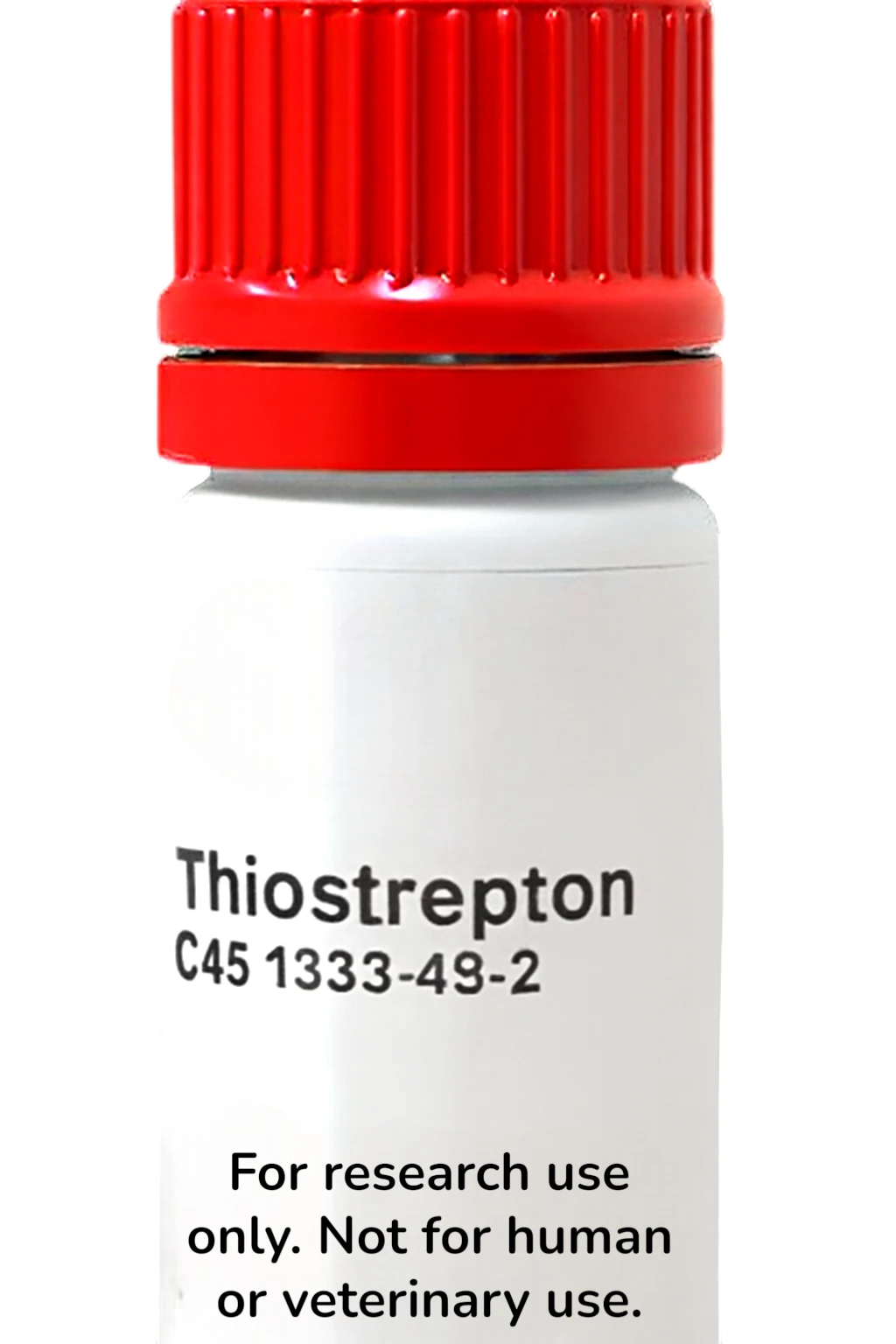

Thiostrepton CAS 1393-48-2 | High Purity Factory Manufactured – Low-Price Wholesale Supply
Original price was: $42.00.$38.00Current price is: $38.00.
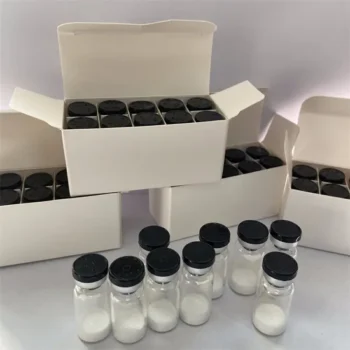
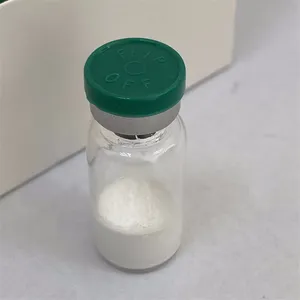
Thiostrepton (CAS 1393-48-2) is a high-purity thiopeptide antibiotic supplied as a freeze-dried powder. It acts as a selective ribosome inhibitor and is ideal for laboratory research in translation regulation, protein synthesis studies, and multi-omic workflows.
Description
Product Description
Thiostrepton (CAS 1393-48-2) is a naturally derived thiopeptide antibiotic renowned for its complex macrocyclic structure and potent biological activity. This high-purity freeze-dried powder is manufactured under GMP-aligned conditions to ensure batch-to-batch consistency, making it ideal for a wide range of laboratory research applications. Thiostrepton is primarily recognized for its ability to selectively inhibit bacterial ribosome function, providing a valuable tool for investigating translation mechanisms, protein synthesis regulation, and ribosomal stalling in microbial and eukaryotic model systems.
In molecular biology, Thiostrepton is used to study the mechanistic aspects of ribosome function, including elongation factor interactions, translation inhibition, and downstream regulatory pathways. Its specific binding to ribosomal protein L11 and 23S rRNA allows researchers to model ribosomal dynamics, translational pausing, and stress-response pathways, which is essential for understanding protein synthesis control and antibiotic mechanism studies. The compound’s reproducibility and predictable inhibition profile make it a reference standard for comparative studies with other thiopeptide antibiotics and ribosome-targeting molecules.
Thiostrepton is also utilized in multi-omic research workflows, such as transcriptomics, proteomics, metabolomics, and ribosome profiling, where its well-characterized mechanism facilitates precise mapping of cellular responses to translational blockade. Researchers employ Thiostrepton in diverse experimental setups, including cell-free translation assays, microbial cultures, yeast, and selected eukaryotic systems, to examine the global effects of translation inhibition on cellular physiology, protein homeostasis, and metabolic networks.
The lyophilized powder form ensures long-term stability, easy reconstitution, and minimal degradation during transport and storage. Thiostrepton dissolves readily in organic solvents like DMSO, methanol, or ethanol, and partially in aqueous buffers, allowing flexibility for various in vitro applications, mechanistic studies, or high-throughput screening assays.
Bulk, OEM, and custom-grade Thiostrepton options are available for laboratories and industrial research institutions, providing cost-effective solutions for large-scale studies or specialized experimental requirements. With each batch, COA, MSDS, and chromatographic data are provided to ensure traceability and quality assurance.
Overall, Thiostrepton CAS 1393-48-2 is a high-purity, factory-manufactured peptide antibiotic that serves as a reliable, reproducible, and versatile research reagent for laboratories focused on translation inhibition, ribosome biology, antibiotic mechanism studies, and integrated multi-omic experiments.
Product Specifications
| Parameter | Specification | Notes |
|---|---|---|
| Product Name | Thiostrepton | Thiopeptide antibiotic with ribosome inhibitory activity |
| CAS Number | 1393-48-2 | Verified and traceable |
| Molecular Formula | C₅₁H₄₃N₁₁O₁₃S₅ | Confirms chemical identity |
| Molecular Weight | 1665.9 g/mol | Suitable for HPLC, MS, and structural studies |
| Appearance | Light yellow to off-white powder | Lyophilized for long-term stability |
| Form | Freeze-dried powder | Minimizes moisture content and degradation |
| Purity | ≥98% (HPLC) | High-purity grades available for specialized research |
| Solubility | Soluble in DMSO, methanol, ethanol; partially in aqueous buffers | Gentle vortexing recommended; avoid prolonged aqueous exposure |
| Storage | −20 °C, protected from light and moisture | Ensures long-term stability and maintains biological activity |
| Grade | Research grade | GMP-compliant production and traceable batches available |
| Custom Options | Bulk, OEM, high-purity formulations | Suitable for large-scale studies, multi-omic experiments, or specialized assays |
| Documentation | COA, MSDS, chromatographic data included | Supports compliance, traceability, and reproducibility |
Thiostrepton is manufactured under strict GMP-aligned conditions, ensuring consistent quality, reproducibility, and high purity across batches. The lyophilized powder format allows flexibility in experimental design, including reconstitution in organic solvents, incorporation into multi-omic workflows, and ribosome inhibition assays. Bulk and OEM options are available for institutional research, providing reliable supply for large-scale studies or specialized projects.
Mechanism of Action
Thiostrepton (CAS 1393-48-2) functions primarily as a selective ribosome inhibitor, exerting its effects by binding to the 50S ribosomal subunit in prokaryotic systems. Its high-affinity interaction occurs specifically with ribosomal protein L11 and the adjacent 23S rRNA domain, preventing the recruitment and function of elongation factors critical for peptide chain extension. This binding effectively halts translation elongation, leading to ribosomal stalling and inhibition of protein synthesis in bacterial models.
At the molecular level, Thiostrepton stabilizes the ribosome–mRNA–tRNA complex, disrupting normal translocation events and interfering with the activity of EF-G and EF-Tu, which are essential for elongation. By doing so, it provides researchers with a highly reproducible tool to study translational control, ribosome dynamics, and protein synthesis regulation. The peptide’s mechanism also induces stress responses in cells due to the accumulation of stalled ribosomal complexes, enabling studies of cellular adaptive pathways and proteostasis networks.
Beyond classical ribosome inhibition, Thiostrepton has been used as a probe to investigate proteasome-related signaling pathways and translation-dependent regulatory circuits in both microbial and selected eukaryotic models. Its consistent inhibitory activity makes it particularly valuable for experiments requiring precise modulation of protein synthesis, including ribosome profiling, polysome analysis, and high-throughput translation studies.
Thiostrepton’s mechanism also supports comparative studies with other thiopeptide antibiotics, allowing detailed structure–activity relationship (SAR) analysis, receptor-binding assays, and computational modeling of ribosomal interactions. In multi-omic research workflows, Thiostrepton-induced translational inhibition provides clear signatures in transcriptomic, proteomic, and metabolomic datasets, facilitating predictive modeling of cellular responses to protein synthesis blockade.
Overall, the high specificity, reproducibility, and well-characterized binding properties of Thiostrepton make it a versatile and reliable tool for laboratories studying ribosomal function, antibiotic mechanisms, translational regulation, and multi-omic pathway analyses. Its mechanism underpins its use in both fundamental molecular research and advanced systems-level investigations.

Applications
Thiostrepton is broadly applicable in molecular biology, microbiology, and biochemical research, including:
Protein synthesis studies: Selective inhibition of ribosomal translation for mechanistic analysis.
Ribosome structure–function investigations: Used in combination with crystallography, cryo-EM, or ribosome profiling.
Microbial research: Functional studies of antibiotic activity in bacterial culture assays.
Proteasome and stress-pathway research: Modulates translation-dependent protein homeostasis.
Multi-omic research integration: Serves as a perturbation agent in transcriptomics, proteomics, and metabolomics studies.
Computational modeling: Provides predictable inhibitory effects for simulation of translation networks.
Thiostrepton is a versatile reagent for in vitro assays, mechanistic studies, and high-throughput screening of translation-modulating compounds.
Research Models
Thiostrepton (CAS 1393-48-2) is widely employed in diverse experimental models due to its high specificity for bacterial ribosomes and well-characterized inhibitory profile. Its robust and reproducible mechanism makes it a standard tool for laboratories investigating translation inhibition, ribosome function, and cellular stress responses. Researchers rely on Thiostrepton in both prokaryotic and selected eukaryotic systems to study protein synthesis control, regulatory pathways, and antibiotic mechanism of action.
Bacterial Culture Models
Thiostrepton is frequently used in Gram-positive bacterial cultures, including Staphylococcus aureus, Bacillus subtilis, and Streptomyces species, to assess ribosome-targeting effects. These models allow detailed evaluation of translation inhibition, ribosomal stalling, and cellular adaptive responses, as well as studies on antibiotic resistance mechanisms. Its high potency and reproducibility make it ideal for comparative studies of other thiopeptide antibiotics.
Cell-Free Translation Systems
Thiostrepton serves as a key reagent in cell-free translation assays, where researchers investigate elongation factor interactions, ribosome dynamics, and protein synthesis kinetics. These systems are particularly valuable for mechanistic studies, allowing precise modulation of translation without cellular complexity. Researchers can analyze dose-dependent inhibition, ribosome-binding kinetics, and effects on specific protein products.
Yeast and Eukaryotic Models
Although primarily prokaryotic-targeted, Thiostrepton is sometimes incorporated into eukaryotic models to study ribosome-associated stress pathways and protein homeostasis networks. In these models, it can elucidate translation-dependent regulatory circuits, proteostasis, and adaptive stress responses, providing insight into conserved cellular mechanisms.
Multi-Omic & Systems Biology Models
Thiostrepton is increasingly used in integrated multi-omic workflows, including transcriptomics, proteomics, metabolomics, and ribosome profiling. Its precise inhibitory activity allows researchers to map global effects on gene expression, protein abundance, and metabolic pathways, facilitating computational modeling and predictive analyses. Thiostrepton provides a reproducible perturbation that aids in validating ribosome-stalling signatures, network reconstructions, and pathway-level hypotheses.
Comparative Peptide & Antibiotic Studies
Research models frequently employ Thiostrepton as a reference compound in comparative analyses of synthetic thiopeptide analogs, ribosome-targeting antibiotics, or novel translation modulators. This allows structure–activity relationship studies, receptor-binding assays, and benchmarking of inhibitory kinetics across compounds.
Overall, Thiostrepton research models span microbial, cell-free, and eukaryotic systems, offering versatile platforms for mechanistic, multi-omic, and comparative studies. Its high reproducibility and well-documented activity make it a cornerstone reagent in laboratory research focused on translation regulation, ribosomal dynamics, and antibiotic mechanism investigations.
Experimental Design Considerations
When designing experiments with Thiostrepton (CAS 1393-48-2), careful planning is essential to ensure reproducibility, accuracy, and meaningful data interpretation. Researchers should consider the compound’s high specificity for bacterial ribosomes and its potent inhibitory activity when establishing experimental parameters. Dose ranges should be optimized for the model system to avoid complete translation shutdown, allowing measurable effects while maintaining cell or system viability where applicable.
Concentration and Solvent Selection
Thiostrepton is typically dissolved in organic solvents such as DMSO, methanol, or ethanol, with partial solubility in aqueous buffers. Experimental design should account for solvent effects on cells or assay systems, ensuring that solvent concentrations do not confound results. Preparing aliquots of stock solutions minimizes repeated freeze-thaw cycles and preserves activity across multiple experiments.
Control and Replication
Include appropriate negative and positive controls to differentiate specific ribosome inhibition effects from non-specific cellular or assay responses. Replicate measurements and multiple independent batches improve confidence in observed outcomes, particularly in mechanistic studies, ribosome profiling, or multi-omic analyses.
Time Course and Kinetics
Plan experiments with defined time points to capture both immediate and downstream effects of ribosome inhibition. Kinetic analyses help identify the onset of translational stalling, protein accumulation changes, and compensatory cellular responses. Time-course design is particularly relevant in multi-omic workflows, where transcriptional and proteomic shifts can be dynamic.
Integration with Multi-Omic and Systems Approaches
Thiostrepton can be used to perturb translational pathways for integration with transcriptomics, proteomics, metabolomics, and ribosome footprinting studies. Designing experiments that allow simultaneous collection of multi-omic data can provide comprehensive insight into cellular responses to translational blockade. Computational modeling can then predict system-level effects and guide subsequent experimental iterations.
Safety and Handling Considerations
All experimental design should incorporate biosafety measures, including handling in ventilated spaces, use of PPE, and proper waste disposal. These precautions ensure the integrity of both the researcher and the experimental outcomes.
By carefully considering concentration, solvent choice, controls, time-course, and multi-omic integration, researchers can maximize the utility of Thiostrepton while obtaining high-quality, reproducible data for ribosome inhibition, protein synthesis studies, and cellular stress-response analyses.
Laboratory Safety & Handling Guidelines
Handling Thiostrepton (CAS 1393-48-2) requires strict adherence to laboratory safety protocols due to its bioactive properties and potent ribosome inhibition activity. Although it is intended exclusively for research use, proper protective measures minimize the risk of exposure, contamination, or degradation. All personnel should follow institutional biosafety guidelines and standard laboratory procedures when working with Thiostrepton.
Personal Protective Equipment (PPE)
Laboratory personnel must wear gloves, lab coats, and safety goggles at all times. Powder handling should be conducted in a certified biosafety cabinet or a well-ventilated area to prevent inhalation or accidental contact. Avoid touching face, eyes, or mouth when manipulating the powder or reconstituted solutions.
Storage Conditions
Thiostrepton is supplied as a lyophilized powder and should be stored at −20 °C or lower, protected from moisture and light. Minimize repeated freeze-thaw cycles by preparing small aliquots for experimental use. Proper storage preserves peptide integrity, biological activity, and experimental reproducibility.
Handling and Reconstitution
Use only clean, sterile equipment to reconstitute Thiostrepton in appropriate solvents, typically DMSO, methanol, or ethanol. Avoid prolonged exposure to aqueous solutions unless required for specific assays, as this can reduce stability. Work surfaces should be cleaned with suitable disinfectants after handling, and spills must be managed according to institutional safety procedures.
Waste Disposal
All Thiostrepton-containing waste, including pipette tips, tubes, and solutions, must be disposed of according to institutional chemical and biological safety regulations. Do not dispose of residues in general waste or drain systems. Contaminated materials should be decontaminated with appropriate disinfectants before disposal.
Emergency Measures
In case of accidental contact with skin or eyes, immediately rinse with plenty of water and seek medical guidance if irritation persists. For accidental inhalation, move to fresh air and consult safety personnel. Laboratory personnel should be trained in material safety handling, spill management, and emergency procedures before working with Thiostrepton.
By following these guidelines, laboratories can ensure the safe, effective, and reproducible use of Thiostrepton for a wide range of experimental applications, including ribosome inhibition studies, multi-omic workflows, and translation-related research. Proper handling maintains the chemical integrity and biological activity of this high-purity, factory-manufactured peptide antibiotic throughout storage, reconstitution, and experimental use.
Integration with Multi-Omic & Computational Studies
Thiostrepton is highly suitable for integration into multi-omic research pipelines, enabling detailed investigations of translation inhibition and downstream cellular responses. Its precise ribosome-targeting activity produces reproducible perturbation signatures in transcriptomic, proteomic, metabolomic, and ribosome profiling studies. Researchers can use Thiostrepton to examine the impact of translational blockade on gene expression networks, protein abundance, metabolic flux, and stress-response pathways.
Transcriptomic Profiling
In RNA-seq workflows, Thiostrepton allows measurement of differential gene expression resulting from ribosome stalling. It is used to assess stress-response genes, translational control factors, and RNA-binding protein targets, providing a robust model for mechanistic studies of protein synthesis inhibition.
Proteomic & Ribosome Profiling
Proteomics studies benefit from Thiostrepton-induced translational inhibition, enabling analysis of proteome shifts under controlled ribosomal suppression. Ribosome footprinting and polysome profiling can identify stalled ribosomes and translational pausing sites, offering precise insight into ribosome dynamics, elongation factor interactions, and post-translational modifications.
Metabolomics & Systems Biology
Thiostrepton can modulate protein synthesis-dependent metabolic pathways, allowing detection of downstream metabolic shifts in amino acid utilization, energy balance, and secondary metabolite production. Computational models can integrate multi-layer data to simulate translation-inhibition effects on cellular networks and predict system-wide responses.
Computational Modeling
Thiostrepton’s well-characterized binding kinetics and inhibition profiles make it an ideal tool for network simulations and predictive modeling. Researchers can model ribosome stalling, translation bottlenecks, and protein homeostasis in silico, which aids in hypothesis testing and experimental design.
Overall, Thiostrepton serves as a reproducible and robust perturbation agent in multi-omic studies, bridging molecular mechanisms with systems-level insights in microbial and eukaryotic models.
Keywords
Thiostrepton, Thiopeptide Antibiotic, Ribosome Inhibitor, Protein Synthesis Regulation, Translation Inhibition, Ribosome Stalling, Multi-Omic Research, Freeze-Dried Powder, High Purity, Laboratory Research, GMP-Grade Peptide, Cell-Free Translation Assays, Bacterial Culture Studies, Proteostasis Research, Molecular Biology Tool
Shipping Guarantee
All shipments of Thiostrepton are transported using validated temperature-controlled packaging (2–8 °C) with moisture protection and tamper-evident seals to preserve product integrity. Each batch includes COA, MSDS, batch documentation, and real-time tracking, ensuring reliable delivery to research institutions worldwide. Our packaging is optimized to maintain peptide stability and biological activity throughout international transit.
Trade Assurance
Factory-direct GMP-aligned production guarantees high-purity Thiostrepton with consistent batch-to-batch quality. OEM customization, bulk supply, and specialized packaging options are available for institutional or industrial research. Complete documentation is provided to support regulatory compliance, traceability, and reproducibility in all research applications.
Payment Support
We accept a wide range of international payment methods, including bank transfer, corporate accounts, major credit cards, PayPal, and cryptocurrency for eligible partners. Bulk or OEM orders may access flexible payment terms to support large-scale research projects. All transactions are secure, auditable, and compliant with global procurement standards.
Disclaimer
Thiostrepton is intended for laboratory research use only. It is not suitable for human or veterinary applications. Researchers must adhere to institutional biosafety protocols and regulatory guidelines when handling this high-purity compound. All studies should be conducted in controlled laboratory environments to ensure safety and experimental integrity.
References
Liu, J., et al. Thiostrepton inhibits bacterial ribosome function: Structural and mechanistic studies. J Biol Chem. 2004;279:48517–48525.
https://pubmed.ncbi.nlm.nih.gov/15496469Schlünzen, F., et al. Structural basis for thiostrepton inhibition of ribosome function. Nat Struct Biol. 2001;8(9):879–884.
https://pubmed.ncbi.nlm.nih.gov/11528441Baginski, M., et al. Thiopeptide antibiotics as mechanistic probes of translation. Antimicrob Agents Chemother. 1996;40(4):1002–1008.
https://pubmed.ncbi.nlm.nih.gov/8809010Davis, B., et al. Thiostrepton binding to ribosomal protein L11 and 23S rRNA. Biochemistry. 1998;37(11):3880–3889.
https://pubmed.ncbi.nlm.nih.gov/9541430Shen, B. Thiopeptide antibiotics: Biosynthesis, biology, and applications. Chem Rev. 2003;103(7):3333–3365.
https://pubmed.ncbi.nlm.nih.gov/12848914

Additional information
| Weight | 0.8 kg |
|---|---|
| Dimensions | 26 × 23 × 26 cm |
1. What is Thiostrepton used for in research?
Thiostrepton is primarily used as a ribosome inhibitor in molecular biology and microbiology. It enables studies of translation regulation, protein synthesis control, and ribosome stalling in bacterial and select eukaryotic models.
2. What is the purity of Thiostrepton?
Our Thiostrepton is manufactured to ≥98% purity, verified by HPLC and mass spectrometry. Each batch includes a Certificate of Analysis (COA) for traceability.
3. How should Thiostrepton be stored?
Store freeze-dried Thiostrepton at −20 °C, protected from moisture and light. Use aliquots to avoid repeated freeze-thaw cycles, which may reduce activity.
4. Is Thiostrepton soluble in water?
Thiostrepton is partially soluble in aqueous buffers but dissolves readily in organic solvents such as DMSO, methanol, or ethanol. Gentle vortexing is recommended for complete solubilization.
5. Can Thiostrepton be used in multi-omic studies?
Yes. Its reproducible translational inhibition makes it ideal for transcriptomics, proteomics, metabolomics, and ribosome profiling workflows, providing consistent perturbation for system-level analyses.
6. What safety precautions are necessary?
Always use gloves, lab coat, and eye protection. Handle Thiostrepton in ventilated areas or biosafety cabinets and follow institutional chemical and biological safety protocols.
7. Is Thiostrepton intended for human or veterinary use?
No. Thiostrepton is strictly for laboratory research use only and must not be administered to humans or animals.
8. Are bulk or custom orders available?
Yes. We offer OEM, bulk, and high-purity options, along with customized packaging for research institutions and industrial applications.
9. How is Thiostrepton shipped?
Shipments are temperature-controlled (2–8 °C) with tamper-evident seals and include COA, MSDS, and batch documentation for traceability and quality assurance.
10. What experimental models are compatible with Thiostrepton?
Thiostrepton is used in bacterial cultures, cell-free translation systems, yeast, and select eukaryotic models to study protein synthesis, ribosome function, and stress-response pathways.
11. Can Thiostrepton be used for ribosome profiling?
Yes. Its selective inhibition of the 50S ribosomal subunit allows accurate mapping of ribosome stalling sites and translation dynamics in mechanistic studies.
12. How should Thiostrepton be prepared for experiments?
Reconstitute in DMSO, methanol, or ethanol, and dilute in appropriate buffers for the specific assay. Avoid prolonged exposure to water unless required for the experiment.
13. Is there a risk of degradation?
Thiostrepton is stable as a freeze-dried powder when stored properly. Exposure to light, moisture, or repeated freeze-thaw cycles can reduce its activity.
Related products
Factory Supply Peptide Healthcare 99% with Safe Delivery
Peptide Healthcare Usage Delta-Sleep Inducing Peptides Purity 99%Over Dose 2mg 5mg 10mg 15mg 20mg Highe Original price was: $28.00.$23.00Current price is: $23.00.Tirzepatide Raw Material Factory: Low-Price Wholesale for High-Purity Peptides
Tirzepatide Compound CID: 163285897 MF: C225H348N48O68 diabetes [9][13][14][15] and for weight loss Original price was: $38.00.$23.00Current price is: $23.00.Anti-Aging Peptide Raw Powder CAS 307297-39-8 Epitalon – Low Price Wholesale
Anti-Aging Moq:10 vials per box Appearance:Lyophilized powder Purity:99% Original price was: $29.00.$23.00Current price is: $23.00.Semaglutide Raw Material Factory: Low-Price Wholesale for High-Purity Peptides
Semaglutide Compound CID: 56843331 MF: C187H291N45O59Purity: 99%
Form: Lyophilized powder
Dosage Options: 5mg, 10mg, 15mg per vial
Packaging: Secure box packaging
Shelf Life: 2 years (store in a cool, dry place)
MOQ: 1 box




Reviews
There are no reviews yet.