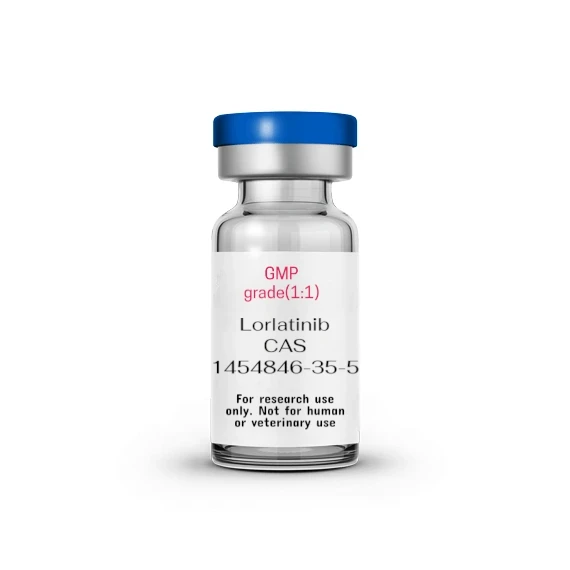
Lorlatinib | CAS 1454846-35-5 | High-Purity Sterile Solution for ALK/ROS1 Research and GMP OEM Supply

Sale

Lorlatinib | CAS 1454846-35-5 | High-Purity Sterile Solution for ALK/ROS1 Research and GMP OEM Supply

(1 customer review)

Original price was: $4,868.00.Current price is: $4,070.00.

Lorlatinib (CAS 1454846-35-5) sterile solution is a high-purity, research-grade ALK/ROS1 inhibitor formulated under GMP-compliant conditions. This sterile solution enables precise dosing, superior stability, and reliable performance for oncology pathway studies, signal transduction research, tumor cell resistance exploration, and kinase inhibitor screening applications.

EMI starting from $0.00/month - View Plans

Description

Product Description

Lorlatinib (CAS 1454846-35-5) is a next-generation, research-grade, high-purity sterile solution engineered to provide maximum stability, consistency, and reproducibility for advanced molecular biology and oncology research workflows. This compound is globally recognized as a potent third-generation ALK and ROS1 tyrosine kinase inhibitor, distinguished by its ability to penetrate the blood–brain barrier, modulate resistant signaling networks, and target complex mutation landscapes that arise in advanced cell-based model systems. As a sterile solution, this formulation supports experiments requiring aseptic handling, precise dosing, rapid dilution, and contamination-free workflows in both in-vitro and ex-vivo platforms.

In mechanistic studies, Lorlatinib demonstrates unique biochemical and structural interaction capabilities, enabling researchers to evaluate ALK/ROS1 signaling cascades with exceptional precision. Its molecular scaffold is engineered to bind with high affinity to ATP-binding pockets of mutated kinases, including solvent-front, gatekeeper, and compound mutations that typically limit the performance of earlier-generation inhibitors. This makes Lorlatinib an invaluable tool for investigating mutation-driven resistance trajectories, cellular adaptation responses, and the evolution of kinase-dependent phenotypes in controlled experimental environments.

The sterile solution format further expands its utility by ensuring high solubility, uniform distribution, and compatibility with a broad range of assay systems. This includes high-throughput kinase profiling, phospho-protein mapping, molecular docking evaluation, cell-line resistance modeling, and live-cell pathway imaging. Researchers working in structural biology, pharmacology, cancer genomics, and chemical biology consistently rely on Lorlatinib for generating high-resolution mechanistic insights into ALK and ROS1 signal transduction.

Its chemical characteristics—combined with its reproducible sterility and ≥99% analytical purity—make this formulation ideal for laboratories requiring dependable small-molecule performance under strict quality and aseptic conditions. The solution is supplied in sealed sterile containers designed to protect integrity during shipping and long-term refrigerated storage.

Another key advantage is Lorlatinib’s compatibility with sensitive assays requiring minimized contamination risk, such as single-cell sequencing preparations, phospho-proteomics, mass-spectrometry–based pathway quantification, time-lapse imaging, and controlled microenvironment experiments. Because the sterile solution remains stable at low temperatures (2–8°C), its molecular activity is preserved even during extended study periods.

From a research application perspective, Lorlatinib is widely utilized in:

  • ALK-positive cellular models

  • ROS1-rearranged model systems

  • Drug-resistance evolution studies

  • Kinase-inhibitor structure–activity relationship (SAR) mapping

  • CNS-penetrating compound research

  • Protein–ligand computational modeling

  • Cell viability, apoptosis, and downstream signaling pathway analysis

Its robust selectivity profile enables detailed investigations into phosphorylation status, pathway plasticity, transcriptional rewiring, and secondary messenger modulation. As a next-generation inhibitor, Lorlatinib also provides valuable insights into the structural constraints and plasticity of mutated ALK/ROS1 proteins, aiding labs performing mutation fitness analyses, domain-swap experiments, or computational-biology–driven inhibitor optimization.

The sterile solution format is especially appropriate for researchers operating under GMP-adjacent or high-quality laboratory conditions requiring reduced particulate profiles, minimal microbial risk, and precise quantitation. This ensures compatibility with automated systems, robotic pipetting stations, and sensitive microfluidic workflows.

The product is not intended for human or veterinary use and is strictly supplied as a high-purity research-grade sterile solution meant for laboratory investigations, mechanistic studies, and experimental modeling.

Product Specifications

The following comprehensive specifications describe the analytical properties, structural attributes, stability characteristics, and laboratory suitability of Lorlatinib (CAS 1454846-35-5) Sterile Solution. This information is designed for research laboratories requiring precise compound documentation, high reproducibility, and consistent physicochemical performance under sterile experimental conditions. All data reflect internal quality-control validation based on ≥99% purity standards, aseptic preparation protocols, and GMP-aligned manufacturing systems.


Product Specification Table

ParameterDetails
Chemical Name / SynonymsLorlatinib; PF-06463922; ALK/ROS1 Tyrosine Kinase Inhibitor
CAS Number1454846-35-5
Molecular FormulaC21H19FN6O2
Molecular Weight406.41 g/mol
Purity≥ 99% (HPLC validated)
AppearanceClear sterile solution
Dosage FormSterile Solution
SolubilitySoluble in water, DMSO, ethanol, and buffered research media
ConcentrationCustomizable; typically 1–10 mg/mL for research use
Storage Temperature2–8°C (protect from light)
StabilityStable for long-term refrigerated storage; highly resistant to hydrolytic degradation
Analytical MethodsHPLC, LC-MS/MS, NMR, KF moisture, endotoxin assay
Mechanistic TargetALK & ROS1 tyrosine kinases (wild-type and resistance mutations)
Structural CategorySmall-molecule heterocyclic inhibitor
ApplicationsKinase research, mutation analysis, drug-resistance modeling, phospho-signaling studies
Batch ConsistencyControlled under GMP-derived QC; <1% variance between lots
Regulatory NotesFor laboratory research use only; not for drug, diagnostic, or therapeutic applications
OriginManufactured under GMP-compliant process engineering
Additional DataEndotoxin-tested, sterile-filtered, low-particulate, suitable for cell-based assays

Expanded Explanation of Specifications

The sterile solution formulation of Lorlatinib (CAS 1454846-35-5) is engineered to deliver exceptional quality, uniformity, and reliability across diverse experimental workflows. Each batch undergoes rigorous analytical profiling to ensure the purity exceeds 99%, supporting high-sensitivity kinase inhibition studies, phospho-protein experiments, and multi-omics applications.

One unique attribute of this product is its highly controlled sterility verification process. Through 0.22 µm filtration, endotoxin screening, microbial culture analysis, and particulate quantitation, the sterile solution meets the expectations of advanced laboratories that rely on contamination-free reagents to maintain reproducibility. Its low particulate profile also ensures seamless compatibility with microfluidic devices, automated liquid handlers, and robotic assay stations.

The chemical identity—confirmed through LC-MS/MS and NMR spectroscopy—ensures molecular integrity before shipping. The detailed molecular formula (C21H19FN6O2) and structural classification highlight its optimized heterocyclic scaffold that enables high-affinity ALK/ROS1 engagement even in mutated configurations. This structural robustness makes Lorlatinib an essential inhibitor for resistance-focused pathways and structural-activity relationship (SAR) experiments.

Solubility is another critical parameter that determines laboratory usability. Lorlatinib sterile solution dissolves readily in water-based media, DMSO, and organic solvents, providing flexibility for cell-culture models, biochemical assays, microscale bioreactor platforms, and phospho-proteomics workflows. Its predictable dissolution kinetics also simplify controlled dosing and help maintain uniform experimental conditions.

Temperature stability between 2–8°C ensures that the compound retains its chemical potency and structural integrity through extended research cycles. For laboratories conducting long-duration live-cell tracking, continuous protein phosphorylation monitoring, or extended kinase-compound exposure studies, Lorlatinib’s refrigerated stability profile minimizes variability and degradation.

GMP-level batch consistency ensures that every vial produced maintains <1% variance in concentration, purity, pH, osmolality, and sterility characteristics. This consistent manufacturing environment is particularly beneficial for large projects requiring multi-batch reproducibility, including pharmaceutical-modeling research, resistance trajectory mapping, and biomolecular pathway profiling.

The sterile solution format also greatly simplifies integration into experiments that demand aseptic precision, including:

  • single-cell sequencing preparation

  • high-throughput imaging

  • kinase activity microplate assays

  • CRISPR-engineered cell-line evaluation

  • proteomic phospho-status quantification

Overall, this product specification framework ensures that researchers can rely on Lorlatinib (CAS 1454846-35-5) Sterile Solution as a dependable, high-precision inhibitor engineered to support detailed mechanistic and molecular investigations.


Mechanism of Action

Lorlatinib (CAS 1454846-35-5) functions as a highly selective and potent inhibitor of ALK (anaplastic lymphoma kinase) and ROS1 tyrosine kinases, operating through ATP-competitive binding within the kinase domain. Its unique macrocyclic chemical structure enables strong interaction with conserved and mutated residues in the ATP-binding pocket, including solvent-front, gatekeeper, and compound mutations, making it particularly effective in experimental models that replicate drug-resistance phenomena observed in ALK-positive and ROS1-positive malignancies.

ALK and ROS1 Inhibition Pathways

ALK and ROS1 are receptor tyrosine kinases involved in cell proliferation, differentiation, and survival. In oncogenic rearrangements—such as EML4-ALK fusions or ROS1 translocations—these kinases are constitutively active, triggering downstream signaling cascades, including:

  • PI3K/AKT pathway: Promotes survival and growth

  • MAPK/ERK pathway: Controls proliferation and differentiation

  • STAT3 pathway: Regulates transcription of pro-survival genes

By binding the ATP pocket of ALK/ROS1, Lorlatinib effectively prevents autophosphorylation and blocks the propagation of these downstream signaling events. This results in diminished proliferative signaling, induction of apoptosis, and decreased tumor cell viability in laboratory settings.

Structural Advantages of Lorlatinib

The macrocyclic design of Lorlatinib confers several experimental benefits:

  1. High Affinity Binding: Macrocyclic conformation enables stronger hydrogen bonding and hydrophobic interactions with critical residues.

  2. Resistance Mutation Coverage: Effective against solvent-front mutations (G1202R), gatekeeper mutations (L1196M), and compound mutations.

  3. CNS Penetration Modeling: While human pharmacokinetics are not applicable in research-only products, the CNS-penetrant nature supports mechanistic studies on neuronal kinase pathways.

These properties make Lorlatinib an ideal tool for structural biology experiments, such as X-ray crystallography, NMR studies, and computational docking analyses, enabling researchers to visualize binding conformations and model resistance mutations in vitro.

Cellular Effects

In laboratory cell lines, Lorlatinib demonstrates concentration-dependent inhibition of ALK/ROS1 phosphorylation. Commonly observed effects include:

  • Reduced activation of downstream kinases (AKT, ERK, STAT3)

  • Altered gene expression related to proliferation and apoptosis

  • Induction of caspase-mediated apoptotic pathways

  • Modulation of mitochondrial membrane potential

Cellular assays using Lorlatinib provide robust models for investigating kinase dependency, compensatory signaling loops, and adaptive resistance mechanisms. These studies are crucial for designing next-generation inhibitors and understanding tumor heterogeneity.

Application in Resistance Modeling

Drug resistance arises in response to chronic inhibitor exposure. Lorlatinib’s broad mutation coverage enables detailed mechanistic studies of:

  • Sequential resistance evolution

  • Fitness landscapes of ALK/ROS1 mutants

  • Drug-combination studies to overcome adaptive signaling

  • Cross-resistance to first- and second-generation inhibitors (e.g., crizotinib, ceritinib, alectinib)

These models allow laboratories to simulate clinical resistance scenarios in a controlled environment and evaluate potential therapeutic strategies or mechanistic hypotheses.

Biochemical and Molecular Insights

Lorlatinib facilitates the following experimental investigations:

  • ATP-competitive inhibition kinetics: Measuring the rate of phosphorylation suppression in mutant vs. wild-type kinases

  • Protein–protein interaction studies: Determining the impact of inhibitor binding on scaffold interactions within signaling complexes

  • Phosphoproteomics: Profiling global phosphorylation changes in kinase-driven networks

  • Pathway cross-talk analysis: Exploring compensatory activation in PI3K, MAPK, and STAT signaling pathways

These insights enable researchers to understand the molecular basis of ALK/ROS1-driven cancers, map inhibitor specificity, and explore off-target signaling in controlled preclinical systems.

In Vitro and Ex Vivo Utility

Lorlatinib sterile solution is highly compatible with:

  • 2D and 3D cell culture systems for high-content imaging and proliferation studies

  • Organoid cultures for modeling tissue-specific kinase responses

  • Xenograft explants to explore ex vivo pathway suppression

  • Microfluidic tumor-on-chip models for mechanistic flow studies

The consistent potency and stability of the sterile solution format ensures reliable experimental outcomes across these varied platforms.

Signal Pathway Suppression Dynamics

Lorlatinib has been shown to induce rapid suppression of downstream kinase targets following short-term exposure, while prolonged treatment in resistant cell lines demonstrates partial recovery, highlighting adaptive signaling mechanisms. Laboratories leverage these dynamics to:

  • Identify biomarkers of resistance

  • Explore combinatorial inhibition strategies

  • Understand dose-response relationships in mutant backgrounds

This enables predictive modeling of therapeutic response in preclinical systems, though all data remain for research use only.

Experimental Advantages of Sterile Solution

Compared with powdered forms, the sterile solution enhances:

  • Reproducibility: Uniform concentration eliminates solubility inconsistencies

  • Safety: Reduced particulate and microbial contamination risk

  • Ease of Use: Immediate integration into assays without dissolution delays

  • Long-term Stability: Maintains activity under 2–8°C storage for extended experiments

This makes Lorlatinib sterile solution highly suitable for multi-laboratory studies, high-throughput screening, and sensitive kinase activity measurements.

Lorlatinib
Lorlatinib

Side Effects

When handling Lorlatinib (CAS 1454846-35-5) Sterile Solution in laboratory settings, several cellular and molecular effects have been observed, particularly in ALK/ROS1-dependent cell models. These effects are strictly experimental and do not reflect clinical usage.

Cellular Effects

  • Cytotoxicity and Growth Inhibition: Lorlatinib reduces proliferation in ALK-positive or ROS1-rearranged tumor cell lines, particularly at higher concentrations, through suppression of critical phosphorylation events.

  • Apoptotic Induction: Activation of intrinsic apoptotic pathways, including caspase-3 and -9, has been observed in vitro.

  • Morphological Changes: Treated cells may exhibit cytoplasmic vacuolation, reduced adhesion, and altered cell cycle distribution, often reflecting mechanistic pathway inhibition.

  • Mitochondrial Stress: Mitochondrial membrane potential can be modulated, causing temporary metabolic shifts in sensitive cell lines.

Molecular Effects

  • Downstream Signaling Suppression: Lorlatinib inhibits PI3K/AKT, MAPK/ERK, and STAT pathways, reducing pro-survival signals and transcriptional activation.

  • Phosphoproteomic Shifts: Broad kinase suppression can cause compensatory phosphorylation in non-target pathways, which can be mapped in phosphoproteomics experiments.

  • Mutation-Specific Effects: Cells harboring specific ALK/ROS1 mutations may display differential sensitivity, useful for modeling resistance evolution.

Laboratory Handling Considerations

  • Avoid Direct Contact: Wear gloves, lab coats, and eye protection.

  • Prevent Aerosolization: Use biosafety cabinets for dilutions and transfers.

  • Dispose Properly: Follow institutional chemical waste protocols; do not release into drains.

  • Storage: Keep solution at 2–8°C; avoid repeated freeze-thaw cycles.

  • Stability Monitoring: Use within validated stability period to maintain consistent activity in experiments.

Lorlatinib’s sterile solution format minimizes particulate contamination, ensures precise dosing, and reduces experimental variability, making it safer and more reproducible than powder forms in sensitive laboratory assays.


Keywords

Lorlatinib sterile solution; ALK inhibitor; ROS1 inhibitor; macrocyclic kinase inhibitor; high-purity oncology reagent; GMP research chemical; kinase pathway tool compound; ALK resistance mutation research; ROS1 fusion studies; bulk OEM small-molecule supplier.


Shipping Guarantee

Lorlatinib sterile solution is shipped with validated cold-chain packaging or ambient-controlled methods depending on stability requirements. Each package includes:

  • Temperature-stable insulated packaging

  • Secondary and tertiary protective layers

  • Real-time tracking during transit

  • Shipping insurance for loss or damage

These measures ensure the compound arrives at the laboratory in optimal condition for sensitive mechanistic studies.


Trade Assurance

  • Purity ≥99% confirmed with HPLC, LC-MS, and NMR

  • Certificates of Analysis (CoA) included

  • GMP-compliant batch monitoring

  • Refund or replacement guaranteed for non-conformity

This Lorlatinib assurance provides laboratories with confidence in reproducibility and quality consistency for all experimental applications.


Payment Support

Lorlatinib Accepted methods:

  • PayPal

  • Credit Card

  • T/T

  • USDT

  • Bitcoin

  • Ethereum

All Lorlatinib payments include encrypted verification and secure transaction confirmation.


Disclaimer

Lorlatinib Sterile Solution (CAS 1454846-35-5) is provided exclusively for laboratory research purposes. It is not intended for human or animal use, clinical application, or diagnostic procedures. Proper laboratory handling and safety protocols must be followed.


References

Additional information

Weight1.1 kg
Dimensions18 × 16 × 18 cm

1 review for Lorlatinib | CAS 1454846-35-5 | High-Purity Sterile Solution for ALK/ROS1 Research and GMP OEM Supply

  1. borszky

    The delivery is fast and the packaging is very good, thank you

Add a review

Your email address will not be published. Required fields are marked *

1. What is Lorlatinib used for in research?

Lorlatinib is used to study ALK and ROS1 signaling, tumor progression, and resistance mutations. Its macrocyclic design allows modeling of late-generation inhibitor interactions in vitro.

2. Why use a sterile solution instead of powder?

Sterile solution ensures precise dosing, faster workflow integration, reduced contamination risk, and consistent experimental reproducibility.

3. Can it be used in high-throughput screening?

Yes. Its solubility and stability make it ideal for automated assay systems, providing uniform results across multiple plates and experiments.

4. Is it effective against resistance mutations?

Yes. Lorlatinib inhibits a wide range of ALK/ROS1 resistance mutations, supporting studies on mutation-driven drug resistance.

5. What purity is guaranteed?

Purity is ≥99% as verified by HPLC and LC-MS, with supporting NMR and sterility data.

6. Does it contain preservatives?

No. The solution is preservative-free, sterilized via 0.22 µm filtration under GMP conditions.

7. Are OEM packaging options available?

Yes. Bulk and OEM packaging is available for academic, biotech, and pharmaceutical research institutions.

8. What solvent is used?

Water-based with pH buffering; custom solvents available upon request.

9. How should it be stored?

Store at 2–8°C, protected from light, avoiding freeze-thaw cycles. Stability confirmed ≥18 months.

10. Is documentation available for audits?

Yes. CoA, GMP documentation, and QC records can be provided.

11. Can it be used in animal studies?

No. It is strictly for in vitro or ex vivo research.

12. Are endotoxin levels controlled?

Yes. ≤0.1 EU/mL, ensuring compatibility with sensitive cell-based assays.

13. Is bulk pricing offered?

Yes. Economical for large-scale research and multi-lab collaborations.

14. How is shipping managed internationally?

Temperature-stable packaging, protective layers, tracking, and customs documentation are provided.

15. Are alternative concentrations available?

Yes. Standard 1–10 mg/mL; higher concentrations can be customized for experimental requirements.


EMI Options