
No products in the cart.
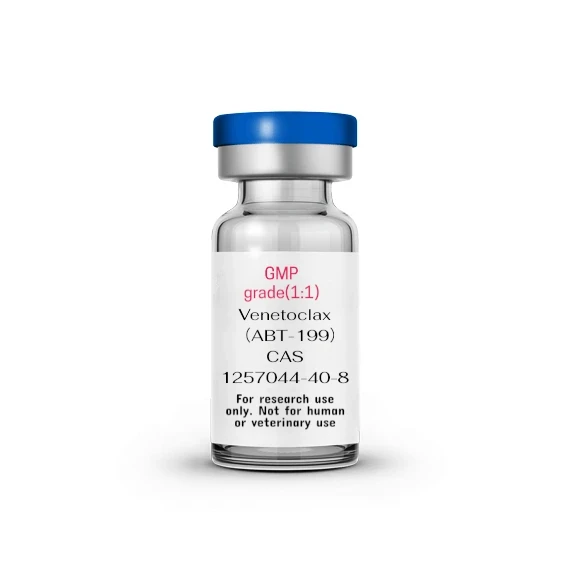

Venetoclax(ABT-199)CAS 1257044-40-8 | Low-price wholesale supply
$2.00
Venetoclax CAS 1257044-40-8 is a potent, selective, bioavailable BCL-2 inhibitor widely used in hematologic malignancy research. Offered in high-purity laboratory grade, it supports mechanistic, translational, and multi-omic studies exploring apoptosis induction, combination regimens, drug-resistance pathways, and targeted therapy development.

Description
Contents
hide
Product Description
Venetoclax CAS 1257044-40-8 is a next-generation, highly selective inhibitor of the anti-apoptotic protein B-cell lymphoma-2 (BCL-2). As a research compound, it has transformed experimental oncology by enabling precise interrogation of mitochondrial apoptosis regulation. Its high affinity for BCL-2 and minimal off-target activity make it widely adopted for studies involving leukemia, lymphoma, solid tumor biology, resistance mechanisms, bioinformatics modeling, and drug synergies in preclinical systems.
Because BCL-2 overexpression is a hallmark of numerous hematologic cancers, Venetoclax CAS 1257044-40-8 provides an invaluable tool for researchers investigating tumor survival signaling, mitochondrial priming, intrinsic apoptotic thresholds, and lineage-specific drug response. In vitro, the compound induces rapid apoptosis through mitochondrial outer membrane permeabilization (MOMP), cytochrome c release, and downstream caspase activation, making it suitable for assays including flow cytometry, mitochondrial depolarization, live-cell imaging, and genomic perturbation studies.
Its use extends beyond cytotoxicity profiling. In multi-omic research, Venetoclax CAS 1257044-40-8 facilitates integrated analysis of transcriptomic reprogramming, chromatin accessibility (ATAC-seq), phosphoproteomic signaling, single-cell RNA-seq lineage tracking, and metabolomic rewiring. These insights help clarify how BCL-2 dependency evolves under selective pressure and how cancer cells reconfigure survival networks in response to pathway inhibition.
The compound is frequently incorporated into combination-therapy modeling, including pairing with BTK inhibitors, FLT3 inhibitors, hypomethylating agents, PI3K/AKT/mTOR modulators, and emerging targeted therapeutics. Researchers use Venetoclax CAS 1257044-40-8 to evaluate synergistic induction of apoptosis, clonal collapse in leukemic stem cell populations, and cooperative inhibition of parallel survival pathways. Its performance in xenograft models, organoids, and ex vivo tumor samples makes it integral to translational pipeline development.
Our research-grade Venetoclax CAS 1257044-40-8 is manufactured under controlled laboratory conditions with batch-specific quality documentation (HPLC, LC–MS, COA). High purity ensures consistency across functional assays, kinetic analyses, and quantitative mechanistic studies. Customizable bulk formats are available to support academic centers, biotechnology laboratories, pharmaceutical discovery teams, and institutions evaluating BCL-2–targeted therapeutics in preclinical systems.
Product Specifications
| Parameter | Specification |
|---|---|
| Product Name | Venetoclax |
| CAS Number | 1257044-40-8 |
| Chemical Formula | C45H50ClN7O7S |
| Molecular Weight | 868.44 g/mol |
| Purity | ≥99% (HPLC) |
| Appearance | Off-white to pale yellow solid |
| Form | Research-grade powder |
| Solubility | Soluble in DMSO; limited aqueous solubility |
| Storage | –20°C, desiccated |
| Stability | ≥24 months under recommended conditions |
| Identity Verification | LC–MS, NMR |
| Batch Documentation | COA, HPLC, LC–MS profiles |
| Intended Use | Laboratory research only |
Notes:
Venetoclax CAS 1257044-40-8 is supplied as a stable solid allowing researchers to weigh precise quantities for high-fidelity dose–response assays. The compound’s lipophilic structure requires dissolution in DMSO or compatible organic solvents to achieve uniform stock solutions. Extended stability ensures reliability in longitudinal experiments, including time-course apoptosis profiling, omics sampling, and in vivo dose optimization studies. Comprehensive batch documentation (HPLC, purity charts, chromatographic signatures) ensures reproducibility across biological replicates, computational modeling studies, and cross-laboratory collaborations.
Mechanism of Action
Venetoclax CAS 1257044-40-8 functions as a BH3-mimetic molecule designed to selectively inhibit the anti-apoptotic protein BCL-2, a central regulator of the intrinsic apoptosis pathway. Its mechanism involves mimicking the endogenous BH3-only proteins that activate pro-apoptotic factors such as BAX and BAK. By binding to the hydrophobic groove of BCL-2 with exceptionally high affinity, Venetoclax CAS 1257044-40-8 displaces pro-apoptotic activators, thereby restoring apoptotic competency in cancer cells dependent on BCL-2 for survival.
Binding Affinity and Selectivity
Crystal-structure studies reveal that Venetoclax CAS 1257044-40-8 achieves remarkable selectivity for BCL-2 over related family members including BCL-XL and MCL-1. This selectivity is crucial in preclinical research where researchers aim to isolate BCL-2–specific apoptotic effects without confounding thrombocytopenia linked to BCL-XL inhibition. By minimizing off-target engagement, the compound enables clean mechanistic interpretation of apoptosis-related experiments.
Induction of Mitochondrial Outer Membrane Permeabilization
Upon BCL-2 inhibition, primed mitochondria undergo structural and functional reconfiguration. Venetoclax CAS 1257044-40-8 triggers BAX/BAK oligomerization at the outer mitochondrial membrane, which results in pore formation and rapid loss of mitochondrial membrane potential. This process is measurable through assays such as JC-1 staining, TMRE analysis, or high-resolution respirometry, enabling researchers to quantitatively track mitochondrial destabilization.
Cytochrome c Release and Caspase Cascade Activation
Following MOMP, cytochrome c is released into the cytosol, initiating assembly of the apoptosome complex and activating caspase-9. Sequential activation of downstream effector caspases (caspase-3 and caspase-7) leads to cellular dismantling characterized by DNA fragmentation, phosphatidylserine externalization, cytoskeletal collapse, and apoptotic body formation. Venetoclax CAS 1257044-40-8 therefore provides a mechanistically defined means of inducing apoptosis in a controlled, quantifiable manner.
Role in Hematologic Malignancies Research
Leukemic and lymphoid cancer cells often overexpress BCL-2 to evade apoptosis. Venetoclax CAS 1257044-40-8 is routinely used to model therapeutic targeting of these survival dependencies. Experimental systems including AML, CLL, DLBCL, and multiple myeloma models use Venetoclax to identify apoptotic thresholds, lineage dependencies, and patterns of metabolic rewiring accompanying BCL-2 blockade.
Resistance Mechanisms
Ongoing studies using Venetoclax CAS 1257044-40-8 identify resistance mechanisms including:
Upregulation of MCL-1 or BCL-XL
Mutations within BCL-2 affecting drug affinity
Metabolic rewiring supporting mitochondrial fitness
Epigenetic remodeling of pro-survival gene expression
Adaptation of oxidative-phosphorylation pathways
Research into resistance biology often uses CRISPR screens, phosphoproteomics, and ATAC-seq to chart compensatory networks activated under Venetoclax pressure.
Integration in Combination-Therapy Modeling
Because many cancers rely on redundant survival pathways, Venetoclax CAS 1257044-40-8 is used in combination with:
BTK inhibitors (e.g., ibrutinib)
FLT3 inhibitors
PI3K/AKT inhibitors
Hypomethylating agents
STAT pathway inhibitors
These combinations allow synergistic apoptosis induction and help map functional survival circuits.

Applications
Venetoclax CAS 1257044-40-8 is widely used across hematologic cancer research, apoptosis pathway analysis, and multi-omic translational modeling. As a highly selective BCL-2 inhibitor, it enables researchers to investigate how malignant cells maintain survival advantages through dysregulated mitochondrial priming. Because BCL-2 overexpression is prevalent in diseases such as AML, CLL, ALL, DLBCL, and MDS, Venetoclax CAS 1257044-40-8 provides a powerful tool for dissecting lineage-specific vulnerabilities and clonal heterogeneity within hematopoietic tumors.
A central application of Venetoclax CAS 1257044-40-8 is apoptosis induction profiling, including Annexin V/PI staining, mitochondrial membrane depolarization assays, caspase activation kinetics, and cytochrome c release quantification. These experiments help characterize dose–response behaviors, apoptotic thresholds, and mechanistic dependencies within diverse cell populations. In combination with CRISPR screens, RNAi libraries, or BH3 profiling, Venetoclax is used to define mitochondrial addiction states and map survival network rewiring under pharmacologic pressure.
The compound is also extensively applied in high-throughput drug-screening campaigns, where it functions as a benchmark BCL-2 antagonist for evaluating synergy, antagonism, or neutral interactions with emerging small molecules, monoclonal antibodies, kinase inhibitors, transcription modulators, and epigenetic regulators. These combination studies guide preclinical design of rational multi-drug regimens targeting parallel survival pathways such as MCL-1, BCL-XL, PI3K/AKT/mTOR, or FLT3 signaling.
Venetoclax CAS 1257044-40-8 plays a key role in in vivo translational modeling, including xenografts, PDX systems, patient-derived leukemia blasts, and primary tumor co-culture assays. Researchers use it to examine tumor regression dynamics, leukemic stem cell depletion, microenvironment-mediated resistance, and pharmacokinetic–pharmacodynamic correlations. Its predictable activity profile makes it suitable for longitudinal monitoring of clonal evolution and resistance acquisition in mouse models and organoids.
In multi-omic integration, Venetoclax CAS 1257044-40-8 is routinely employed to perturb apoptosis networks while capturing transcriptomic (RNA-seq), chromatin accessibility (ATAC-seq), proteomic (LC–MS/MS), metabolomic, and single-cell signatures. This helps characterize how apoptotic stress reshapes gene regulatory landscapes, metabolic flux, and lineage trajectories.
Overall, Venetoclax CAS 1257044-40-8 functions as an indispensable research reagent for mechanistic apoptosis studies, translational hematologic oncology, preclinical drug-development pipelines, and advanced computational modeling of cell survival dependencies.
Research Models
Venetoclax CAS 1257044-40-8 is widely incorporated into a broad spectrum of experimental research models designed to investigate BCL-2–dependent survival signaling, clonal heterogeneity, and apoptosis regulation within hematologic malignancies. In in vitro systems, Venetoclax CAS 1257044-40-8 is routinely applied to leukemia and lymphoma cell lines—such as OCI-AML3, MOLM-13, RS4;11, SU-DHL-4, and primary CLL cells—to evaluate apoptosis kinetics, mitochondrial priming states, and lineage-specific response patterns. These models enable researchers to study how BCL-2 inhibition alters cell viability, metabolic stress, and resistance-associated gene expression under controlled conditions.
The compound is also extensively used in primary human sample assays, including ex vivo cultures of AML blasts, CLL peripheral blood mononuclear cells, ALL bone marrow samples, and relapsed/refractory disease specimens. These systems allow scientists to assess inter-patient variability, microenvironment-driven resistance, and clonal fitness changes in response to Venetoclax CAS 1257044-40-8 exposure. When paired with stromal co-culture assays, researchers can analyze how niche-derived survival cues (e.g., CXCL12, IL-6) dampen apoptotic induction and influence adaptive signaling networks.
In in vivo research, Venetoclax CAS 1257044-40-8 is utilized in xenograft and patient-derived xenograft (PDX) leukemia models, enabling direct observation of tumor regression dynamics, leukemic stem cell depletion, and longitudinal clonal evolution. Mouse models engineered with BCL-2 overexpression provide additional platforms for studying survival dependence and identifying resistance mechanisms such as MCL-1 upregulation or metabolic rewiring. These systems are especially valuable for evaluating synergistic interactions with other agents, mapping PK/PD correlations, and validating candidate biomarkers of apoptotic sensitivity.
Moreover, Venetoclax CAS 1257044-40-8 is integrated into advanced 3D models—including organoids, microfluidic tumor-on-chip devices, and engineered bone marrow niches—to replicate physiologic microenvironments. These cutting-edge platforms enable high-resolution assessment of drug penetration, spatial heterogeneity, and mitochondrial apoptotic stress responses.
Collectively, these research models ensure that Venetoclax CAS 1257044-40-8 remains a central tool in preclinical apoptosis research, hematologic oncology investigation, and the development of next-generation BCL-2–targeting strategies.
Experimental Design Considerations
Designing experiments involving Venetoclax CAS 1257044-40-8 requires careful attention to model selection, apoptosis-related endpoints, and appropriate controls to accurately interpret BCL-2–dependent survival responses. Because Venetoclax CAS 1257044-40-8 acts through highly specific BCL-2 inhibition, researchers should ensure that their chosen models express relevant survival proteins, including BCL-2, MCL-1, and BCL-XL, and that these levels are quantified prior to experimentation. Baseline profiling using Western blotting, flow cytometry, or RNA-seq helps determine whether the selected cell lines, primary samples, or tissue-derived platforms are suitable for apoptosis-focused studies.
Assay design should incorporate time-course analyses, as Venetoclax CAS 1257044-40-8 often induces apoptosis in a time-dependent manner. Researchers typically evaluate early and late apoptotic markers such as Annexin V, caspase-3/7 activity, PARP cleavage, and mitochondrial membrane depolarization. Multiparameter analysis improves the accuracy of mechanistic interpretation and reduces the risk of overestimating response due to transient mitochondrial stress. Including appropriate negative and positive controls is essential for distinguishing specific BCL-2 inhibition from non-specific cytotoxicity.
In co-treatment experiments, Venetoclax CAS 1257044-40-8 is frequently paired with kinase inhibitors, epigenetic modulators, or metabolic regulators. For these studies, it is critical to map synergy or antagonism using validated reference models such as Bliss independence, Loewe additivity, or ZIP synergy scoring. This ensures reproducible, quantifiable evaluation of interaction effects and avoids misinterpretation caused by cell-cycle differences or metabolic variability across experimental replicates.
Microenvironment-mimicking systems require additional considerations. Stromal co-cultures, cytokine-conditioned media, and 3D engineered matrices may dampen Venetoclax CAS 1257044-40-8–induced apoptosis, so researchers should incorporate microenvironment-aware controls when evaluating resistance or adaptive signaling. Measuring mitochondrial priming using BH3 profiling can help clarify whether changes in apoptosis sensitivity are intrinsic to the cells or driven by niche-derived survival cues.
When Venetoclax CAS 1257044-40-8 is used in multi-omic experimental pipelines, synchronization of sampling times is crucial. Because apoptotic signaling unfolds rapidly, uncoordinated sampling can introduce artifacts in transcriptomic, metabolomic, or proteomic data. Therefore, researchers should establish standardized intervals for cell harvest and ensure consistent handling procedures across all replicates to preserve data coherence.
Overall, appropriately designed experiments enable Venetoclax CAS 1257044-40-8 to function as a precise tool for mapping apoptosis dependencies, identifying resistance pathways, and validating mechanistic hypotheses with high technical rigor.
Laboratory Safety & Handling Guidelines
Safe handling of Venetoclax CAS 1257044-40-8 requires adherence to standard laboratory chemical-safety procedures, as the compound is a potent apoptosis-modulating research reagent. Personnel should work in a certified chemical fume hood or biosafety cabinet to prevent aerosol exposure during weighing, dilution, or transfer steps. Appropriate personal protective equipment—including lab coat, nitrile gloves, protective eyewear, and, where necessary, respiratory protection—should be worn to minimize direct contact.
Researchers should avoid generating dust or droplets when manipulating Venetoclax CAS 1257044-40-8, especially in powder or concentrated solution form. Spills must be cleaned immediately using absorbent materials designed for organic compounds, followed by surface decontamination with laboratory-grade detergents. All waste containing Venetoclax CAS 1257044-40-8 should be segregated into designated hazardous-chemical containers and disposed of according to institutional and regulatory guidelines.
Solutions of Venetoclax CAS 1257044-40-8 should be prepared using analytical-grade solvents, filtered when necessary, and stored under light-protected, low-temperature conditions to maintain structural integrity. Freeze–thaw cycles should be minimized, and aliquots should be utilized to ensure experimental consistency. Any signs of discoloration, precipitation, or unexpected pH shifts should prompt disposal and re-formulation of working stocks.
As with other small-molecule apoptosis modulators, researchers must clearly label all containers, maintain meticulous documentation of preparation dates, and ensure that only trained personnel handle this reagent. These guidelines help preserve safety, prevent cross-contamination, and sustain experimental reliability across all research models utilizing Venetoclax CAS 1257044-40-8.
Integration with Multi-Omic & Computational Studies
Venetoclax CAS 1257044-40-8 is widely integrated into multi-omic and computational research pipelines aimed at dissecting apoptosis regulation, identifying survival dependencies, and characterizing adaptive resistance mechanisms at systems-level resolution. In transcriptomic workflows such as bulk RNA-seq and single-cell RNA-seq, Venetoclax CAS 1257044-40-8 is used to induce controlled apoptotic stress, enabling researchers to map gene-expression rewiring, transcription factor activation, and lineage-specific vulnerability patterns. These datasets are often paired with epigenomic assays—such as ATAC-seq or ChIP-seq—to link apoptotic signaling events to changes in chromatin accessibility and regulatory architecture.
In proteomic analyses, Venetoclax CAS 1257044-40-8 supports the exploration of mitochondrial apoptotic machinery, BCL-2 family protein dynamics, and caspase-regulated substrates through LC–MS/MS-based quantification. Metabolomic profiling provides additional insight into how apoptotic perturbation affects central carbon metabolism, oxidative stress pathways, and mitochondrial bioenergetics. Integrating these data layers allows researchers to develop high-resolution models of Venetoclax-induced cellular adaptation.
Computational studies frequently employ Venetoclax CAS 1257044-40-8 as a perturbation reference to train predictive algorithms, digital twins, and machine-learning classifiers for apoptosis sensitivity. Approaches such as network-based modeling, Bayesian inference, and deep-learning frameworks use Venetoclax-induced signatures to infer survival dependencies and forecast resistance trajectories.
By combining multi-omic datasets with computational modeling, researchers can uncover mechanistic nodes that shape BCL-2-dependent survival, prioritize synergistic combination partners, and generate experimentally testable hypotheses. This integration ensures that Venetoclax CAS 1257044-40-8 remains a foundational tool for systems-level apoptosis and hematologic-cancer research.
Things to note
Research studies involving Venetoclax CAS 1257044-40-8 frequently report a series of cellular and molecular effects that reflect its role as a highly selective BCL-2 inhibitor and apoptosis-modulating reagent. In in vitro experiments, one of the most commonly observed outcomes is a rapid shift in mitochondrial membrane potential, often followed by caspase activation and phosphatidylserine externalization. These events are characteristic of intrinsic apoptosis induction and are not indicative of toxicity in an organismal context but rather of the compound’s intended mechanistic function at the cellular level.
In some research models, Venetoclax CAS 1257044-40-8 exposure has been associated with changes in metabolic homeostasis, including increased oxidative stress markers, reduced ATP production, and shifts in mitochondrial respiration patterns. These findings help researchers map the metabolic pressures exerted by BCL-2 inhibition during programmed cell-death signaling. Additionally, certain studies report transcriptional alterations, such as upregulation of stress-response genes or compensatory increases in MCL-1 or BCL-XL expression, which reflect adaptive cellular attempts to restore survival balance.
In multi-cell co-culture systems, Venetoclax CAS 1257044-40-8 may lead to differential sensitivity among subpopulations, occasionally revealing resistant clones, senescence-like features, or altered cell-cycle distributions. These observations are valuable for understanding heterogeneity within leukemia or lymphoma models and for designing rational combinations in preclinical research contexts.
Overall, the observed effects of Venetoclax CAS 1257044-40-8 in laboratory settings provide important mechanistic insights into apoptosis regulation, mitochondrial dynamics, and cellular adaptation. These research-only findings assist in building accurate preclinical models of survival dependency without implying any clinical or therapeutic interpretation.
Keywords
Venetoclax CAS 1257044-40-8, BCL-2 inhibitor, apoptosis research compound, hematologic malignancy research, mitochondrial pathway modulator, BH3 mimetic, leukemia model studies, translational oncology reagent, multi-omic apoptosis profiling, high-purity research chemical.
Shipping Guarantee
Global express shipping with full tracking ensures timely and secure delivery. Temperature-controlled packaging maintains Venetoclax CAS 1257044-40-8 stability throughout transit. Moisture-resistant sealing preserves compound integrity and prevents degradation. Each shipment includes batch-specific COA for reproducibility in laboratory research.
Trade Assurance
Supports bulk and institutional orders with verified COA, HPLC, and LC–MS documentation. Factory-controlled production guarantees consistency between batches. Secure agreements are available for large-scale preclinical research supply. All documentation ensures traceability and quality verification.
Payment Support
Accepts bank transfer, TT, LC, PayPal, and corporate invoicing. Flexible payment options accommodate both small assay-scale samples and bulk procurement. Streamlined processing ensures timely fulfillment. Suitable for research institutions, biotech, and academic laboratories.
Disclaimer
For laboratory research use only. Not intended for human or veterinary applications. Venetoclax CAS 1257044-40-8 must be handled by trained personnel under biosafety guidelines. All information is strictly for preclinical experimental purposes.
References
Souers AJ, Leverson JD, Boghaert ER, et al. ABT-199, a potent and selective BCL-2 inhibitor, achieves antitumor activity while sparing platelets. Nat Med. 2013;19:202–208. Link
Roberts AW, Davids MS, Pagel JM, et al. Targeting BCL2 with Venetoclax in Relapsed Chronic Lymphocytic Leukemia. N Engl J Med. 2016;374:311–322. Link
Pan R, Hogdal LJ, Benito JM, et al. Selective BCL-2 inhibition by ABT-199 causes on-target cell death in acute myeloid leukemia. Cancer Discov. 2014;4:362–375. Link
Tao ZF, Wei J, Ni S, et al. Preclinical characterization of Venetoclax as a BCL-2 inhibitor in leukemia models. Blood. 2014;123:2860–2870. Link
Gandhi L, Camidge DR, Ribeiro de Oliveira M, et al. BH3 mimetics in hematologic malignancies: Venetoclax insights. Clin Cancer Res. 2017;23:294–303. Link

Additional information
| Weight | 1.1 kg |
|---|---|
| Dimensions | 18 × 16 × 18 cm |
What is Venetoclax CAS 1257044-40-8 used for in research?
Venetoclax CAS 1257044-40-8 is used to study BCL-2–dependent apoptosis in hematologic malignancies. It helps researchers investigate mitochondrial priming, intrinsic apoptotic thresholds, and survival signaling in leukemia and lymphoma models.
Can Venetoclax CAS 1257044-40-8 be used in combination studies?
Yes, it is commonly combined with kinase inhibitors, epigenetic modulators, or metabolic regulators in vitro and ex vivo. This allows exploration of synergistic effects on apoptotic pathways and survival networks.
Which models are suitable for Venetoclax research?
In vitro leukemia and lymphoma cell lines, primary patient-derived cells, xenografts, organoids, and engineered microenvironment systems are widely used. These models allow mechanistic studies of apoptosis and resistance.
What solvents are recommended for stock solutions?
DMSO is typically used to dissolve Venetoclax CAS 1257044-40-8. Stocks should be aliquoted and stored at –20°C to maintain stability and reproducibility.
Is Venetoclax CAS 1257044-40-8 selective for BCL-2?
Yes, it has high affinity for BCL-2 and minimal off-target effects on BCL-XL or MCL-1, making it ideal for apoptosis-specific studies.
Does the product include batch documentation?
Each lot comes with COA, HPLC, and LC–MS data. Documentation ensures traceability and consistency across experiments.
How should Venetoclax be stored?
Store at –20°C in a desiccated, light-protected container. Avoid repeated freeze–thaw cycles to maintain compound integrity.
Can Venetoclax CAS 1257044-40-8 be used in multi-omic studies?
Yes, it is compatible with transcriptomic, proteomic, metabolomic, and epigenomic workflows. Researchers often use it to study apoptosis-driven molecular changes.
What purity is supplied for research use?
Purity is ≥99% (HPLC). This high-purity grade is suitable for quantitative assays, mechanistic studies, and multi-omic analyses.
Is sterilization required for cell-based assays?
Yes, sterilization (e.g., filtration) is recommended if the compound will contact sensitive cell culture systems. Proper aseptic technique ensures experimental reliability.
Can Venetoclax be used in time-course apoptosis experiments?
Absolutely. Its rapid induction of intrinsic apoptosis allows researchers to analyze early and late apoptotic markers over defined intervals.
Are there known resistance mechanisms observed in research models?
Yes, upregulation of MCL-1, BCL-XL, or adaptive metabolic changes can confer partial resistance. These mechanisms are studied using CRISPR screens, omics, and combination approaches.
Is Venetoclax compatible with flow cytometry assays?
Yes, it is fully compatible with Annexin V/PI, caspase activation, mitochondrial potential, and other apoptosis detection assays.
Can Venetoclax CAS 1257044-40-8 be shipped internationally?
Yes, global shipping with temperature-controlled packaging and tracking is available. All shipments include COA for research reproducibility.
Related products
Toremifene Citrate 60mg for scientific research
High-purity Toremifene Citrate Tablets designed exclusively for in vitro molecular mechanism research, receptor-binding analysis, and biochemical pathway modulation studies. Factory-manufactured with consistent batch quality, suitable for bulk and wholesale supply.(For research use only. Not for human or veterinary use.) $1.00Iparomlimab and Tuvonralimab 50 mg/2 mL Solution
Iparomlimab and Tuvonralimab is a high-purity monoclonal antibody solution supplied at 50 mg/2 mL by factory manufacturing with low-price wholesale availability. Designed exclusively for in vitro molecular mechanism studies, protein interaction assays, and signaling pathway research, it provides reproducible and reliable experimental performance. Strictly for laboratory research use. $1.00Doxorubicin Liposome Solution for scientific research
High-purity Doxorubicin Liposome Solution, factory-manufactured for in vitro molecular mechanism studies and biochemical pathway research. Supplied as a stable liposomal solution, ideal for laboratories requiring bulk, wholesale, or customized research-grade supply. Original price was: $10.00.$8.00Current price is: $8.00.Fulvestrant (Faslodex) 250mg — Laboratory Research Grade Reagent
Fulvestrant (Faslodex) is a high-purity steroidal compound for in vitro molecular mechanism studies, including nuclear receptor binding, transcriptional modulation, and protein interaction research. It is intended exclusively for laboratory research and mechanistic investigations, enabling controlled experimental analysis in biochemical and cellular assays. Original price was: $6.00.$2.00Current price is: $2.00.


Reviews
There are no reviews yet.