
No products in the cart.
Cerebrolysin: Molecular Characteristics, Neurobiological Mechanisms, Clinical Evidence, and Translational Challenges
Contents
hide
Abstract
Neurodegenerative disorders, cerebrovascular injury, and traumatic brain injury remain major causes of long-term neurological disability worldwide. Despite substantial advances in neuroscience, the development of therapies capable of protecting neurons, promoting neural repair, and improving functional recovery remains a significant clinical challenge. Peptide-based biological preparations have attracted interest because of their potential to influence multiple cellular pathways involved in neuronal survival, neuroplasticity, inflammation, and tissue repair.
Cerebrolysin is a biologically derived neuropeptide preparation composed of low-molecular-weight peptides and free amino acids obtained through the controlled enzymatic processing of porcine brain tissue. Unlike a chemically defined single peptide, Cerebrolysin is a heterogeneous mixture whose biological activity may result from the combined effects of multiple peptide components. Experimental studies have suggested that the preparation may exhibit neurotrophic, neuroprotective, anti-apoptotic, and neuroplasticity-related activities. However, the precise identity of its active molecular components, their direct biological targets, and their pharmacokinetic behavior remain incompletely characterized.
Clinical studies have evaluated Cerebrolysin in conditions including acute ischemic stroke, vascular cognitive impairment, Alzheimer’s disease, traumatic brain injury, and other neurological disorders. Although some trials have reported improvements in selected neurological or cognitive outcomes, systematic reviews have identified substantial limitations related to study size, methodological heterogeneity, outcome selection, risk of bias, and the limited availability of large independent confirmatory trials.
This article critically reviews the molecular characteristics, proposed mechanisms of action, preclinical evidence, clinical research, safety considerations, and translational challenges associated with Cerebrolysin. Based on the current evidence, Cerebrolysin should be regarded as a complex neurobiological peptide preparation with plausible neuroprotective and neurotrophic properties, but its clinical efficacy and therapeutic role remain incompletely established and require further validation through rigorous, independently conducted clinical research.
Keywords: Cerebrolysin; neuropeptides; neuroprotection; neurotrophic activity; ischemic stroke; vascular dementia; neuroplasticity; translational neuroscience
1. Introduction
Neurological diseases are among the leading causes of disability and loss of functional independence. Ischemic stroke, neurodegenerative disorders, vascular cognitive impairment, traumatic brain injury, and age-associated neurological decline involve complex pathological processes that may include neuronal loss, excitotoxicity, mitochondrial dysfunction, oxidative stress, neuroinflammation, impaired synaptic signaling, and disruption of neural network connectivity.
Current neurological therapies often target specific pathological mechanisms. However, many neurological disorders involve multiple interacting biological pathways, and single-target interventions may not adequately address the complexity of neuronal injury and recovery. This limitation has encouraged research into multimodal biological preparations capable of influencing several neuroprotective and regenerative processes simultaneously.
Cerebrolysin is a peptide-based biological preparation that has been investigated as a potential neurotrophic and neuroprotective intervention. It is used clinically in some countries for neurological conditions such as ischemic stroke and cognitive impairment. However, its regulatory status, clinical indications, and level of acceptance vary substantially across different healthcare systems.
Unlike a conventional synthetic peptide drug, Cerebrolysin is not a single molecular entity with a fully defined amino acid sequence. It is a complex preparation containing a heterogeneous population of low-molecular-weight peptides and free amino acids derived from porcine brain tissue. This compositional complexity creates both potential biological advantages and important scientific challenges.
The proposed biological activity of Cerebrolysin has been associated with several mechanisms, including:
- neurotrophic signaling;
- neuronal survival and anti-apoptotic activity;
- modulation of synaptic plasticity;
- protection against excitotoxic and oxidative injury;
- support of neuronal differentiation and repair;
- regulation of neuroinflammatory processes.
However, the existence of plausible biological mechanisms does not by itself establish clinical efficacy. Experimental findings must be distinguished from evidence obtained in well-designed human clinical trials.
The purpose of this review is to evaluate Cerebrolysin from a molecular, mechanistic, preclinical, clinical, and translational perspective while clearly defining the current limits of scientific evidence.
2. Molecular Characteristics and Biological Composition
2.1 Cerebrolysin as a Complex Peptide Preparation
Cerebrolysin is produced through the enzymatic processing of porcine brain tissue. The resulting preparation contains low-molecular-weight peptides and free amino acids.
This composition differs fundamentally from that of a chemically synthesized peptide drug.
A conventional peptide therapeutic generally possesses:
- a defined amino acid sequence;
- a known molecular mass;
- a measurable purity profile;
- a specific pharmacological target;
- a relatively well-characterized mechanism of action.
In contrast, Cerebrolysin is a heterogeneous biological mixture. Its overall activity may reflect the combined effects of multiple peptide components rather than the action of one defined molecular sequence.
This distinction is scientifically important because the biological effects of a complex mixture cannot necessarily be attributed to a single peptide, receptor, or signaling pathway.
2.2 Molecular Heterogeneity
The peptide components of Cerebrolysin are generally characterized as low-molecular-weight molecules. However, the complete molecular composition and relative abundance of individual peptide sequences have not been comprehensively established in the public scientific literature.
Several questions remain unresolved:
- Which peptide sequences are biologically active?
- Are the same peptide components present consistently across manufacturing batches?
- Which components cross biological barriers and reach neural tissue?
- Do individual peptides act independently or synergistically?
- Are the observed biological effects attributable to peptides, free amino acids, or their combined activity?
Modern analytical technologies may help address these questions. Future studies should apply:
- high-resolution mass spectrometry;
- quantitative peptidomics;
- liquid chromatography;
- amino acid profiling;
- batch-to-batch compositional analysis;
- functional bioassays linked to specific molecular fractions.
Such approaches could improve the molecular definition and reproducibility of Cerebrolysin research.
2.3 Biological Standardization and Product Consistency
For complex biological preparations, manufacturing consistency is essential.
Future studies should provide detailed information regarding:
- source tissue characteristics;
- enzymatic processing procedures;
- molecular-weight distribution;
- peptide composition;
- amino acid content;
- biological activity assays;
- impurity profiles;
- batch-to-batch variability;
- long-term stability.
Without comprehensive compositional characterization, it is difficult to determine whether different research studies have evaluated biologically equivalent preparations.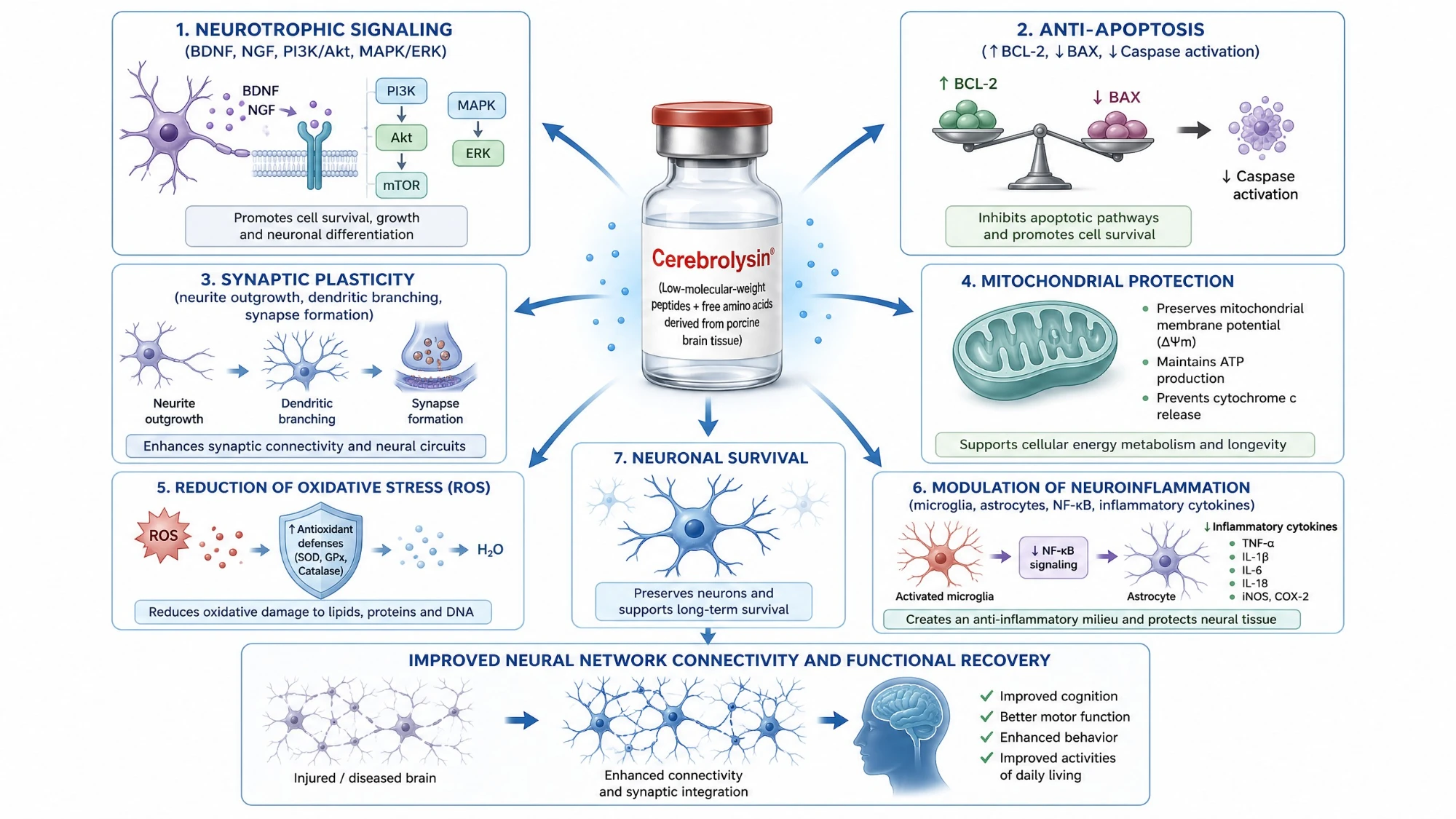
3. Proposed Neurobiological Mechanisms
The proposed biological actions of Cerebrolysin are multifactorial. Most mechanistic evidence has been derived from cell culture experiments and animal models.
These findings provide hypotheses for further investigation but should not be interpreted as direct evidence of clinical benefit.
3.1 Neurotrophic Activity
One of the primary hypotheses is that Cerebrolysin may produce neurotrophic effects resembling some aspects of endogenous neurotrophic signaling.
Neurotrophic factors are proteins that support neuronal survival, differentiation, growth, and synaptic maintenance. Important examples include:
- nerve growth factor;
- brain-derived neurotrophic factor;
- neurotrophin-3;
- neurotrophin-4.
Experimental studies have suggested that Cerebrolysin may influence signaling pathways associated with neuronal growth and survival. Proposed pathways include:
- phosphoinositide 3-kinase/protein kinase B signaling;
- mitogen-activated protein kinase signaling;
- extracellular signal-regulated kinase pathways;
- neurotrophin-associated receptor signaling.
However, it has not been conclusively established that Cerebrolysin directly activates endogenous neurotrophin receptors in humans.
Future research should determine:
- whether specific Cerebrolysin peptide components bind directly to neurotrophic receptors;
- whether receptor activation is sequence-specific;
- whether observed signaling effects occur at clinically relevant concentrations;
- whether these effects are reproducible across independent experimental systems.
3.2 Neuroprotection and Neuronal Survival
Neuronal injury may result from ischemia, excitotoxicity, oxidative stress, mitochondrial dysfunction, inflammation, or toxic protein accumulation.
Experimental studies have proposed that Cerebrolysin may support neuronal survival by influencing pathways involved in:
- apoptosis;
- mitochondrial integrity;
- oxidative stress;
- calcium homeostasis;
- excitotoxic signaling.
Potential anti-apoptotic effects have been associated with changes in proteins such as:
- BCL-2;
- BAX;
- caspases;
- p53-related signaling molecules.
However, the direction and biological significance of these effects may depend on the disease model, cellular environment, treatment concentration, and timing of administration.
Future studies should evaluate neuronal survival using multiple complementary endpoints, including:
- caspase activity;
- mitochondrial membrane potential;
- DNA fragmentation;
- neuronal morphology;
- electrophysiological function;
- long-term cell viability.
3.3 Synaptic Plasticity and Neural Network Function
Neuroplasticity refers to the ability of the nervous system to modify synaptic connections, reorganize neural networks, and adapt to injury.
Cerebrolysin has been proposed to influence:
- synaptic protein expression;
- neurite growth;
- dendritic structure;
- neuronal differentiation;
- synaptic connectivity.
These effects may be relevant to recovery after brain injury and to the preservation of cognitive function.
However, molecular changes in synaptic markers do not necessarily demonstrate improved neurological function.
Future studies should integrate molecular observations with functional measurements, including:
- electrophysiological activity;
- neural network connectivity;
- learning and memory performance;
- motor recovery;
- long-term behavioral outcomes.
3.4 Modulation of Neuroinflammation
Neuroinflammation contributes to the progression of stroke, neurodegeneration, traumatic brain injury, and cognitive decline.
Experimental studies have suggested that Cerebrolysin may influence inflammatory signaling and glial-cell activity. Potential mechanisms may involve changes in:
- microglial activation;
- pro-inflammatory cytokines;
- oxidative stress pathways;
- nuclear factor kappa B signaling.
However, the current evidence is insufficient to establish a clinically relevant anti-inflammatory mechanism.
Future research should investigate:
- microglial phenotypes;
- astrocyte responses;
- cytokine profiles;
- neuroimmune signaling networks;
- long-term effects on neural tissue repair.
3.5 Amyloid and Neurodegenerative Pathways
Some experimental studies have proposed that Cerebrolysin may influence pathological processes associated with Alzheimer’s disease, including amyloid-related toxicity and synaptic dysfunction.
These findings remain primarily preclinical.
The ability to modify experimental biomarkers does not establish disease-modifying activity in humans. Clinical disease modification requires evidence of sustained effects on:
- cognitive decline;
- functional independence;
- neurological progression;
- validated biological biomarkers;
- long-term clinical outcomes.
Therefore, Cerebrolysin should not currently be characterized as a clinically established disease-modifying therapy for Alzheimer’s disease.
4. Preclinical Research and Experimental Evidence
4.1 Cell-Based Studies
Cell culture studies have provided preliminary evidence that Cerebrolysin may influence neuronal survival, differentiation, neurite formation, and cellular stress responses.
These experiments are useful for identifying potential molecular pathways. However, in vitro systems have important limitations.
Cultured cells do not fully reproduce:
- the complexity of the human brain;
- interactions among neurons and glial cells;
- vascular and immune-system influences;
- blood–brain barrier function;
- long-term neural network organization.
In addition, experimental concentrations may not correspond to concentrations achieved in human neural tissue.
Therefore, cell-based findings should be interpreted as mechanistic observations rather than evidence of therapeutic efficacy.
4.2 Animal Models
Animal studies have evaluated Cerebrolysin in models of:
- cerebral ischemia;
- neurodegeneration;
- traumatic brain injury;
- aging;
- cognitive impairment.
Some studies have reported improvements in neuronal survival, behavioral outcomes, or markers of neural repair.
However, translation from animal models to human neurological disease is difficult.
Important limitations include:
- differences in brain structure;
- differences in disease biology;
- variable experimental protocols;
- small sample sizes;
- limited long-term follow-up;
- inconsistent outcome measures.
Future animal research should include:
- randomized treatment allocation;
- blinded outcome assessment;
- predefined study protocols;
- adequate sample-size calculations;
- independent replication;
- standardized functional endpoints.
5. Clinical Research and Evidence Assessment
5.1 Acute Ischemic Stroke
Cerebrolysin has been investigated as an adjunctive treatment for acute ischemic stroke.
Some clinical studies have reported improvements in neurological or functional measures. However, clinical results have been inconsistent, and differences in study design complicate interpretation.
Important sources of heterogeneity include:
- treatment initiation time;
- dose;
- treatment duration;
- stroke severity;
- concomitant therapies;
- outcome measures;
- duration of follow-up.
A Cochrane systematic review published in 2023 evaluated randomized evidence involving Cerebrolysin and a related peptide preparation in acute ischemic stroke. The review concluded that the addition of these interventions to standard treatment probably does not reduce all-cause mortality. The review also found no clear overall reduction in serious adverse events and identified a potential increase in non-fatal serious adverse events associated with Cerebrolysin. The authors emphasized that the evidence base was limited and that some included studies had industry involvement.
Therefore, current evidence does not establish Cerebrolysin as a proven therapy for reducing mortality after acute ischemic stroke.
5.2 Vascular Cognitive Impairment and Vascular Dementia
Cerebrolysin has also been investigated in vascular cognitive impairment and vascular dementia.
Some clinical trials have reported improvements in:
- cognitive performance;
- memory-related measures;
- activities of daily living.
However, systematic evidence remains uncertain.
A Cochrane review identified several randomized studies involving patients with vascular dementia. Although the included trials suggested possible benefits in cognition and daily functioning, the review concluded that the evidence was not definitive because of methodological limitations and the possibility of bias. The reported effects were generally modest, and the clinical importance of these findings remained uncertain.
Large, independently conducted, well-controlled studies are needed to determine whether the observed changes represent meaningful and sustained clinical benefits.
5.3 Alzheimer’s Disease
Cerebrolysin has been evaluated in patients with Alzheimer’s disease and other neurodegenerative cognitive disorders.
Some studies have reported improvements in selected cognitive or global clinical measures. However, the evidence remains insufficient to establish that Cerebrolysin:
- slows disease progression;
- modifies the underlying pathological process;
- preserves long-term independence;
- produces sustained improvement in cognitive function.
Future studies should use:
- standardized diagnostic criteria;
- biomarker-supported patient classification;
- clinically meaningful cognitive outcomes;
- functional endpoints;
- long-term follow-up;
- independent replication.
5.4 Traumatic Brain Injury
The potential neuroprotective properties of Cerebrolysin have generated interest in traumatic brain injury.
Preclinical findings suggest possible effects on neuronal survival and neural recovery. However, the clinical evidence remains limited and heterogeneous.
Future studies should evaluate:
- neurological recovery;
- cognitive outcomes;
- functional independence;
- quality of life;
- long-term disability;
- safety in patients with different injury severities.
6. Pharmacokinetic and Translational Challenges
6.1 Pharmacokinetic Characterization
The pharmacokinetic evaluation of Cerebrolysin is complicated by its heterogeneous composition.
For a single peptide drug, pharmacokinetic analysis can measure:
- plasma concentration;
- half-life;
- tissue distribution;
- metabolism;
- elimination.
For a complex peptide mixture, these measurements are more difficult because individual components may have different absorption, distribution, metabolism, and elimination profiles.
Key unanswered questions include:
- Which peptide components enter systemic circulation?
- Which components reach the central nervous system?
- What proportion crosses the blood–brain barrier?
- How long do active components remain in neural tissue?
- Are the biological effects mediated directly by peptides or indirectly through systemic signaling?
Advanced peptidomic and tracer-based studies are required to clarify these issues.
6.2 Blood–Brain Barrier Considerations
The blood–brain barrier limits the entry of many biological molecules into the central nervous system.
The proposed ability of Cerebrolysin components to influence brain function raises important questions regarding:
- peptide transport;
- receptor-mediated uptake;
- endothelial interactions;
- indirect peripheral-to-central signaling.
Direct evidence identifying which components reach specific brain regions remains limited.
6.3 Molecular Target Identification
The therapeutic development of peptide preparations requires the identification of molecular targets.
At present, the precise direct targets of Cerebrolysin have not been fully defined.
Future studies should combine:
- receptor screening;
- affinity-based proteomics;
- molecular interaction assays;
- transcriptomics;
- proteomics;
- functional genomic approaches.
These methods may identify biologically active components and clarify their signaling networks.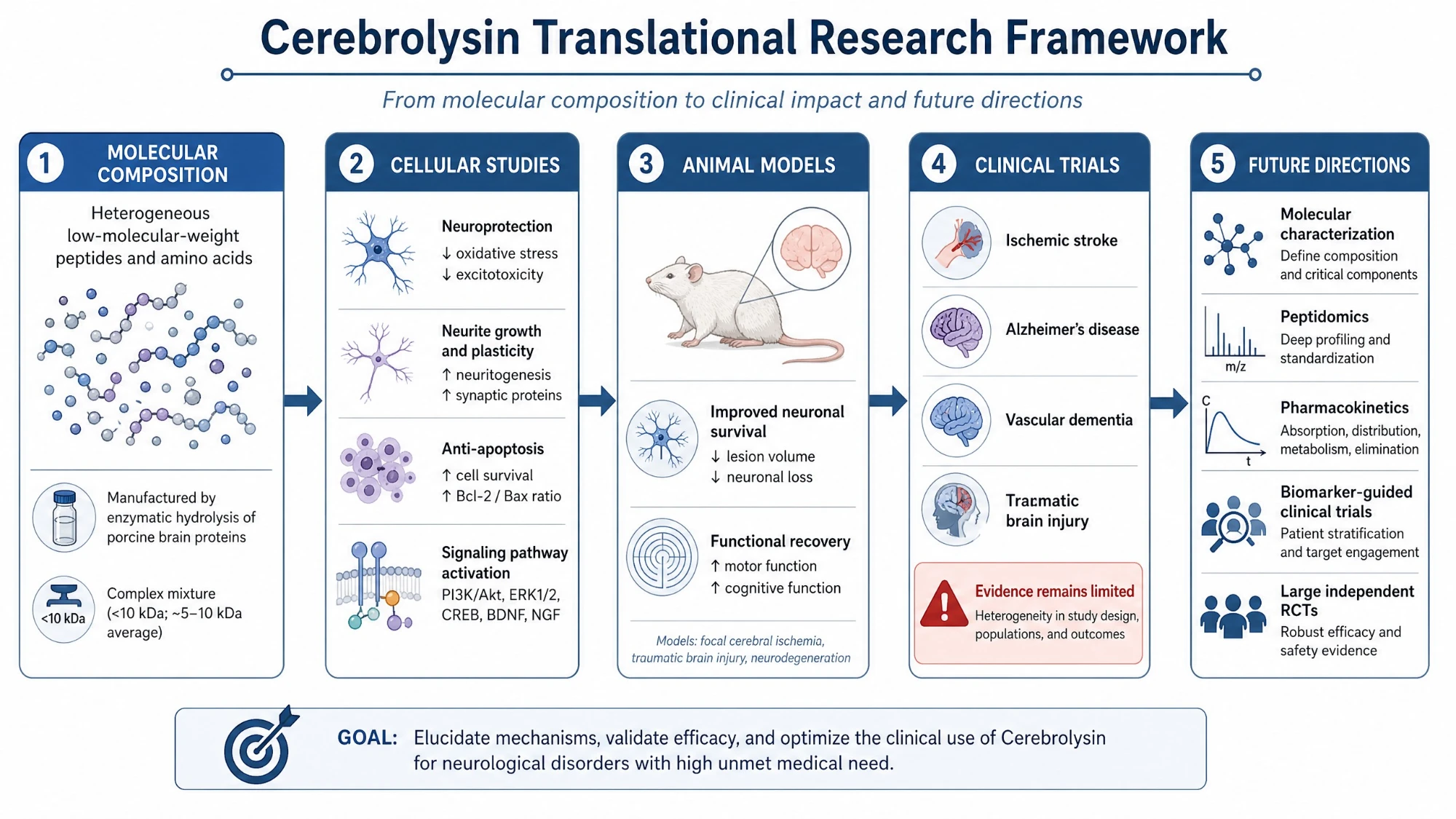
7. Safety and Tolerability Considerations
The clinical safety profile of Cerebrolysin should be evaluated separately from its proposed biological activity.
Potential safety considerations include:
- treatment-related adverse events;
- serious adverse events;
- hypersensitivity reactions;
- neurological effects;
- interactions with other medications;
- risks associated with specific patient populations.
The safety of a complex biological preparation cannot be inferred solely from its natural origin or peptide content.
Clinical safety assessments should include:
- standardized adverse-event reporting;
- long-term follow-up;
- dose-response analysis;
- evaluation of drug interactions;
- assessment of vulnerable patient populations.
The 2023 Cochrane review of acute ischemic stroke reported that Cerebrolysin probably did not reduce the overall occurrence of serious adverse events and may increase non-fatal serious adverse events. These findings require further investigation in adequately powered independent clinical trials.
8. Future Research Directions
8.1 Comprehensive Molecular Characterization
Future research should establish a detailed molecular profile of Cerebrolysin using:
- high-resolution mass spectrometry;
- quantitative peptidomics;
- peptide-sequence identification;
- compositional standardization;
- biological activity profiling.
Identifying active molecular components may improve reproducibility and support the development of more precisely defined peptide therapies.
8.2 Mechanism-Oriented Research
Mechanistic studies should determine:
- direct molecular targets;
- receptor interactions;
- intracellular signaling pathways;
- neural-cell specificity;
- concentration-dependent effects;
- relationships between molecular activity and functional outcomes.
8.3 Standardized Preclinical Models
Future animal studies should use:
- clinically relevant disease models;
- blinded assessments;
- predefined experimental protocols;
- standardized neurological outcomes;
- long-term follow-up;
- independent replication.
8.4 Biomarker-Guided Clinical Trials
Clinical trials may benefit from the use of biological and imaging biomarkers.
Potential approaches include:
- neuroimaging;
- circulating neuronal injury markers;
- inflammatory biomarkers;
- neurodegeneration-related biomarkers;
- electrophysiological measures.
Biomarkers may help identify patients most likely to respond and provide evidence of biological target engagement.
8.5 Large Independent Randomized Trials
The clinical role of Cerebrolysin cannot be established without large, rigorously designed, independently conducted randomized controlled trials.
Future trials should include:
- appropriate placebo controls;
- concealed randomization;
- double-blind assessment;
- prespecified primary outcomes;
- clinically meaningful functional endpoints;
- long-term follow-up;
- transparent reporting of adverse events;
- independent data analysis.
9. Conclusion
Cerebrolysin is a complex neurobiological preparation composed of low-molecular-weight peptides and free amino acids derived from porcine brain tissue.
Experimental research has suggested potential neurotrophic, neuroprotective, anti-apoptotic, and neuroplasticity-related effects. These findings provide a biological rationale for continued investigation but do not establish clinical efficacy.
Clinical studies have reported variable findings in ischemic stroke, vascular cognitive impairment, dementia, and other neurological conditions. Although some trials suggest possible improvements in selected neurological or cognitive outcomes, the overall evidence is limited by heterogeneity, methodological concerns, inconsistent endpoints, and the absence of sufficient large independent confirmatory studies.
Current evidence does not establish Cerebrolysin as a proven disease-modifying therapy for neurodegenerative disorders or as a clinically validated intervention for reducing mortality after acute ischemic stroke.
Future progress will depend on improved molecular characterization, identification of biologically active components, rigorous pharmacokinetic studies, standardized preclinical research, and large independent randomized clinical trials.
At present, Cerebrolysin is most appropriately regarded as a complex peptide-based neurobiological preparation with plausible neuroprotective and neurotrophic potential, but with an incompletely defined mechanism of action and an unresolved clinical benefit–risk profile.

