
No products in the cart.
Doxorubicin: Molecular Mechanisms, Therapeutic Applications, Cardiotoxicity, and Translational Challenges in Oncology
Contents
hide
Abstract
Doxorubicin is one of the most widely used anthracycline chemotherapeutic agents in modern oncology and remains a cornerstone treatment for numerous hematological malignancies and solid tumors. Since its introduction, doxorubicin has demonstrated significant anticancer activity across multiple cancer types, including breast cancer, lymphoma, leukemia, sarcoma, and various pediatric malignancies.
The biological activity of doxorubicin is primarily associated with DNA intercalation, inhibition of topoisomerase II-mediated DNA repair, disruption of nucleic acid synthesis, and induction of oxidative stress. These mechanisms collectively contribute to cancer cell apoptosis and growth inhibition. However, the same molecular properties responsible for its anticancer effects also contribute to dose-dependent toxicities, particularly cumulative cardiotoxicity.
Despite decades of clinical use, important challenges remain regarding therapeutic optimization, tumor selectivity, resistance mechanisms, and prevention of treatment-related adverse effects. Advances in drug delivery systems, molecular biomarkers, combination strategies, and precision oncology approaches have renewed interest in improving the therapeutic index of doxorubicin.
This article reviews the molecular characteristics, mechanisms of action, experimental evidence, clinical applications, safety considerations, and future directions of doxorubicin research, emphasizing the distinction between established pharmacological evidence and emerging translational hypotheses.
Keywords: Doxorubicin; anthracycline; chemotherapy; topoisomerase II; DNA damage; oxidative stress; cardiotoxicity; oncology
1. Introduction
Cancer remains one of the leading causes of mortality worldwide, and chemotherapy continues to play a fundamental role in the management of many malignant diseases. Among cytotoxic agents, anthracyclines represent one of the most extensively studied and clinically validated drug classes.
Doxorubicin, a member of the anthracycline family, was developed from natural products derived from Streptomyces species. Since its clinical introduction, it has become an essential component of therapeutic regimens for a broad spectrum of cancers.
Unlike targeted therapies designed to interact with specific molecular mutations, doxorubicin exerts broad cytotoxic effects by interfering with fundamental processes required for cancer cell survival, including DNA replication, transcription, and genomic stability.
The clinical importance of doxorubicin is balanced by significant limitations. Its lack of complete tumor specificity results in damage to normal tissues, particularly the myocardium. Cumulative exposure may lead to progressive cardiac dysfunction, limiting the total dose that can be safely administered.
Understanding the molecular basis, therapeutic benefits, and biological limitations of doxorubicin remains essential for developing improved cancer treatment strategies.
2. Molecular Characteristics and Chemical Properties
2.1 Chemical Structure
Doxorubicin belongs to the anthracycline class of compounds and consists of:
- A planar tetracyclic anthraquinone chromophore;
- A daunosamine amino sugar moiety;
- Multiple hydroxyl and carbonyl functional groups.
The planar aromatic structure allows doxorubicin to insert between DNA base pairs, while the sugar component contributes to interactions with DNA and associated enzymes.
The molecular architecture of doxorubicin enables its ability to interfere with DNA metabolism, but it also contributes to oxidative reactions involved in toxicity.
2.2 Physicochemical Properties
Important molecular characteristics include:
- Molecular weight: approximately 543 Da;
- Amphipathic structure;
- Ability to bind nucleic acids;
- Redox activity through quinone groups;
- Fluorescent properties useful for laboratory detection.
These characteristics influence cellular uptake, intracellular distribution, and biological activity.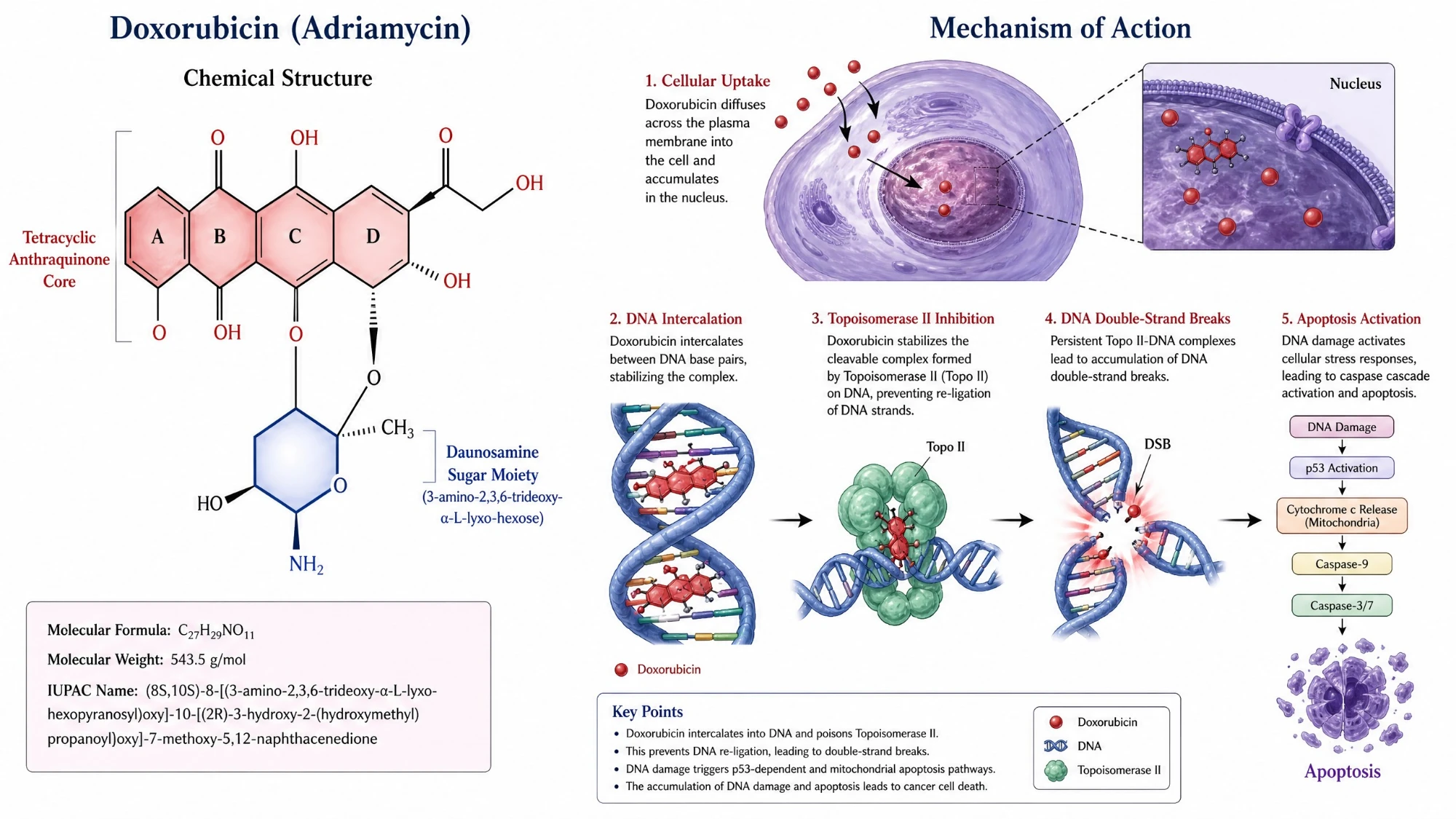
3. Mechanisms of Anticancer Action
Doxorubicin exhibits multiple interconnected mechanisms rather than a single pharmacological target.
3.1 DNA Intercalation
One of the classical mechanisms of doxorubicin involves insertion between adjacent DNA base pairs.
DNA intercalation can:
- Distort DNA structure;
- Interfere with replication machinery;
- Disrupt transcription;
- Impair genomic integrity.
Rapidly dividing cancer cells are particularly vulnerable because they rely heavily on accurate DNA replication.
However, DNA interaction is not completely cancer-specific, contributing to damage in normal proliferating tissues.
3.2 Topoisomerase II Inhibition
Topoisomerase II is an essential enzyme responsible for controlling DNA topology during replication and transcription.
Doxorubicin stabilizes the topoisomerase II-DNA cleavage complex, preventing normal DNA repair and leading to accumulation of double-strand DNA breaks.
This mechanism is considered one of the major contributors to its anticancer activity.
However, inhibition of topoisomerase II also affects healthy cells, and differences in topoisomerase II isoforms contribute to both therapeutic effects and toxicity.
3.3 Oxidative Stress and Reactive Oxygen Species Generation
The quinone structure of doxorubicin enables redox cycling, generating reactive oxygen species (ROS).
ROS production may cause:
- Lipid peroxidation;
- Protein oxidation;
- Mitochondrial damage;
- DNA injury.
Cancer cells often exhibit increased oxidative stress sensitivity, making ROS generation a component of anticancer activity.
However, oxidative damage is also strongly implicated in doxorubicin-associated cardiotoxicity.
3.4 Induction of Apoptosis
Doxorubicin activates multiple pathways leading to programmed cell death.
Experimental studies have demonstrated effects involving:
- p53 activation;
- Mitochondrial dysfunction;
- Cytochrome c release;
- Caspase activation;
- Regulation of BCL-2 family proteins.
The balance between pro-apoptotic and survival pathways influences cellular response.
Tumor cells with defective apoptotic signaling may develop resistance to doxorubicin.
4. Experimental Evidence
4.1 Cellular Studies
In vitro studies have extensively demonstrated doxorubicin-induced:
- DNA damage;
- Cell-cycle arrest;
- Apoptosis;
- Reduced proliferation;
- Mitochondrial dysfunction.
These experiments have been fundamental in defining its molecular mechanisms.
However, cell culture models cannot fully reproduce:
- Tumor microenvironment;
- Drug metabolism;
- Immune interactions;
- Pharmacokinetic exposure patterns.
Therefore, cellular findings provide mechanistic evidence but do not independently predict clinical outcomes.
4.2 Animal Studies
Animal models have contributed significantly to understanding:
- Antitumor activity;
- Tissue distribution;
- Cardiac toxicity;
- Combination therapy strategies.
Studies have demonstrated tumor growth inhibition across various experimental cancer models.
However, animal models have limitations due to differences between species in:
- Drug metabolism;
- Cardiac physiology;
- Immune responses;
- Tumor biology.
Translation from animal models to humans requires careful interpretation.
5. Clinical Applications
5.1 Hematological Malignancies
Doxorubicin remains a key component of treatment protocols for:
- Lymphomas;
- Leukemias;
- Multiple myeloma.
Its ability to rapidly eliminate dividing malignant cells has contributed to long-term clinical success.
5.2 Solid Tumors
Doxorubicin is widely used in several solid cancers, including:
- Breast cancer;
- Sarcomas;
- Ovarian cancer;
- Bladder cancer;
- Pediatric tumors.
Clinical benefit depends on tumor type, disease stage, combination regimen, and patient characteristics.
5.3 Combination Therapy
Doxorubicin is frequently combined with:
- Alkylating agents;
- Antimetabolites;
- Targeted therapies;
- Immunotherapies.
Combination strategies aim to improve tumor response while managing toxicity.
6. Cardiotoxicity and Safety Challenges
6.1 Mechanisms of Cardiac Injury
Doxorubicin-associated cardiotoxicity represents one of its most important clinical limitations.
Proposed mechanisms include:
- Mitochondrial dysfunction;
- ROS accumulation;
- Iron-dependent oxidative injury;
- DNA damage in cardiomyocytes;
- Impaired cardiac energy metabolism.
Unlike many rapidly dividing tissues, cardiomyocytes have limited regenerative capacity, making cumulative injury clinically significant.
6.2 Dose Dependence
Cardiotoxicity is strongly associated with cumulative exposure.
Risk factors include:
- Higher cumulative dose;
- Older age;
- Pre-existing cardiovascular disease;
- Concurrent cardiotoxic therapies;
- Genetic susceptibility.
Monitoring strategies are therefore essential during treatment.
6.3 Strategies to Reduce Toxicity
Current approaches include:
- Liposomal formulations;
- Cardioprotective agents;
- Biomarker monitoring;
- Echocardiographic surveillance;
- Individualized dosing strategies.
The goal is to preserve anticancer activity while reducing cardiovascular complications.
7. Drug Resistance Mechanisms
Resistance to doxorubicin may develop through multiple mechanisms.
Major mechanisms include:
7.1 Drug Efflux
Overexpression of ATP-binding cassette transporters can reduce intracellular drug accumulation.
7.2 Enhanced DNA Repair
Cancer cells may increase repair capacity and tolerate DNA damage.
7.3 Altered Apoptotic Signaling
Mutations affecting:
- p53 pathways;
- Mitochondrial regulation;
- Cell survival pathways
may reduce sensitivity.
7.4 Tumor Microenvironment Effects
Interactions between cancer cells and surrounding stromal components may influence drug response.
Understanding resistance mechanisms remains essential for improving therapeutic outcomes.
8. Translational Challenges and Future Directions
8.1 Improving Tumor Selectivity
A major goal of current research is developing strategies that selectively deliver doxorubicin to malignant tissues.
Approaches include:
- Nanoparticle delivery systems;
- Antibody-drug conjugates;
- Tumor-targeting peptides;
- Stimuli-responsive drug carriers.
8.2 Biomarker-Guided Treatment
Precision oncology approaches may help identify patients more likely to benefit from doxorubicin-based therapy.
Potential biomarkers include:
- Drug transporter expression;
- DNA repair capacity;
- Tumor genomic characteristics;
- Cardiac risk indicators.
8.3 Combination with Modern Therapies
Emerging strategies include combining doxorubicin with:
- Immune checkpoint inhibitors;
- Molecular targeted agents;
- DNA repair inhibitors;
- Metabolic regulators.
These approaches aim to enhance anticancer activity while reducing systemic toxicity.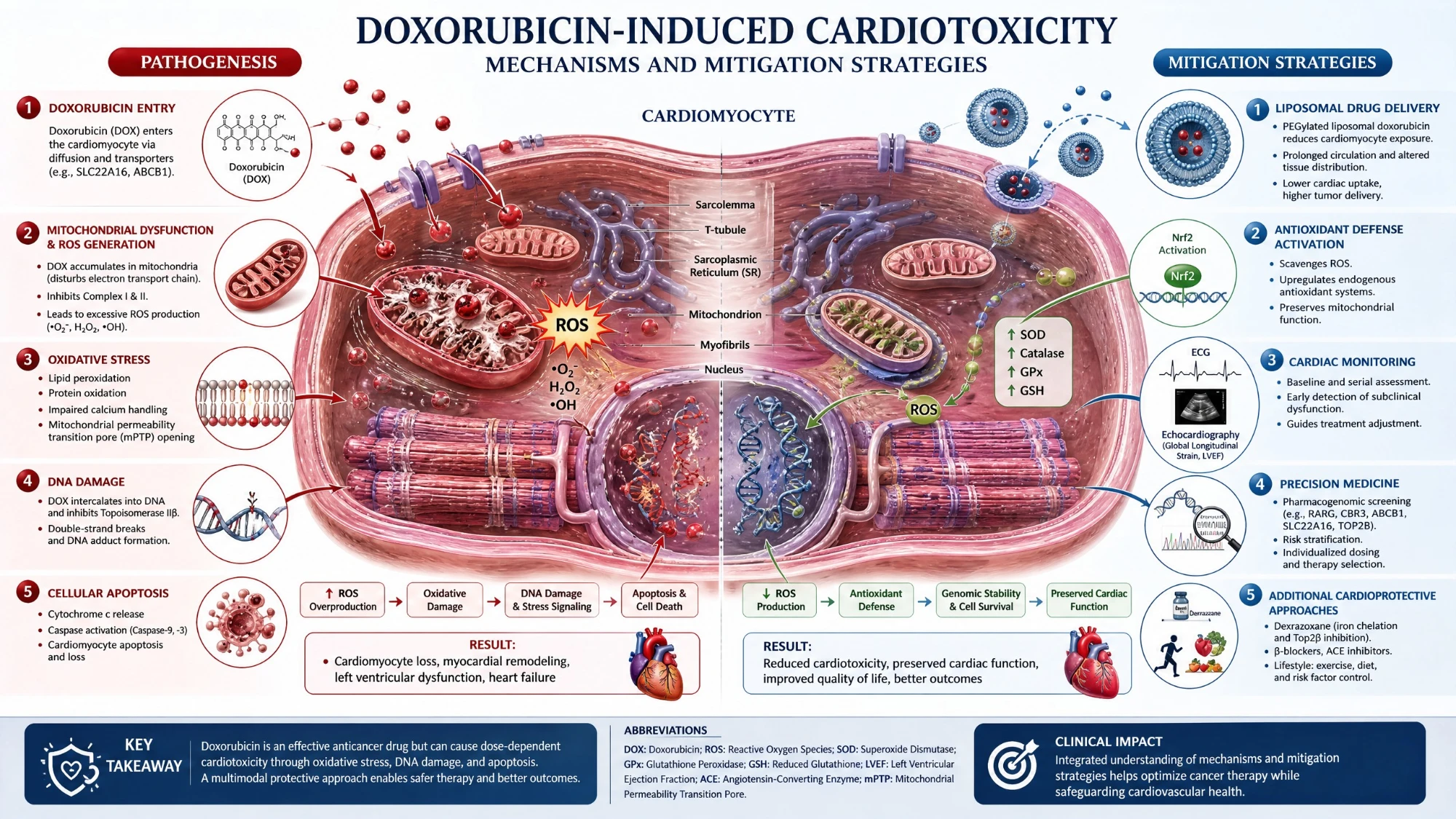
9. Conclusion
Doxorubicin remains one of the most important anticancer agents in modern oncology, supported by decades of experimental investigation and clinical experience.
Its therapeutic activity arises from multiple mechanisms, including DNA intercalation, topoisomerase II inhibition, oxidative stress induction, and apoptosis activation. These mechanisms explain both its powerful anticancer effects and its significant toxicity profile.
Despite its limitations, doxorubicin continues to provide substantial clinical benefit across numerous malignancies. Advances in drug delivery technologies, biomarker-driven treatment selection, and precision oncology may further improve its therapeutic index.
From a scientific perspective, doxorubicin represents a classic example of a highly effective but biologically complex therapeutic molecule. Future research should focus on improving tumor specificity, preventing cardiotoxicity, overcoming resistance, and integrating this established agent into next-generation cancer treatment strategies.

