
No products in the cart.
Sale

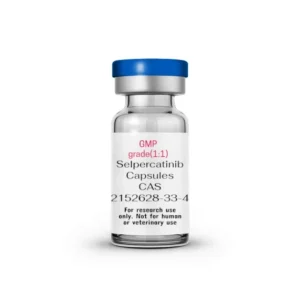
Selpercatinib Capsules | CAS 2152628-33-4 | High-Purity GMP-Grade RET Kinase Inhibitor for Research
Original price was: $3.00.$2.00Current price is: $2.00.
Selpercatinib Capsules (CAS 2152628-33-4) are high-purity research-grade capsules designed as a potent RET kinase inhibitor. These capsules provide precise dosing for in vitro and in vivo kinase signaling studies, molecular oncology research, and targeted drug screening applications.

Description
Product Description
Selpercatinib Capsules (CAS 2152628-33-4) are cutting-edge research compounds that function as highly selective inhibitors of RET (Rearranged during Transfection) kinases, which play pivotal roles in oncogenic signaling across multiple tumor types. Designed for laboratory and preclinical research, these capsules deliver consistent, high-purity doses, ensuring reproducible results in molecular biology, cell signaling, and pharmacodynamic studies.
Selpercatinib, as a RET inhibitor, targets both wild-type RET and various clinically relevant RET fusion proteins, which are implicated in thyroid, lung, and other solid tumors. Its high selectivity makes it ideal for investigating RET-dependent pathways without off-target kinase interference, providing a precise chemical probe for dissecting oncogenic mechanisms. Researchers can leverage these capsules to study RET-mediated MAPK, PI3K-AKT, and JAK-STAT signaling cascades, offering insight into cell proliferation, apoptosis, and differentiation.
The capsule formulation provides a stable and convenient delivery form for both in vitro and preclinical animal studies. Unlike powders or solutions, capsules minimize handling errors, ensure uniform dosing, and reduce degradation risks during storage. The product is manufactured under GMP conditions, with strict quality control measures including HPLC, LC-MS/MS, and NMR analysis to confirm identity, purity, and stability.
In addition to kinase inhibition, Selpercatinib Capsules are valuable in combination studies with other targeted agents, chemotherapeutics, or immunomodulatory compounds, enabling researchers to investigate synthetic lethality, resistance mechanisms, or pathway crosstalk in controlled experimental settings. These capsules are also suitable for pharmacokinetic modeling, dose-response studies, and in vitro enzymatic assays targeting RET signaling nodes.
Molecular Oncology Applications:
Investigation of RET fusion-positive non-small cell lung cancer (NSCLC) models.
Thyroid carcinoma RET mutation studies.
Preclinical exploration of kinase inhibitor resistance mechanisms.
Pathway-specific apoptosis and proliferation assays.
Targeted therapy combination studies.
Mechanistic Research Applications:
Analysis of MAPK and PI3K-AKT pathway suppression.
RET autophosphorylation inhibition profiling.
Cellular viability and clonogenic assays under RET inhibition.
Study of downstream transcription factor modulation and apoptosis induction.
Enzyme-substrate interaction and phosphorylation kinetics in vitro.
Quality and Consistency:
Selpercatinib Capsules are produced with rigorous GMP manufacturing processes to ensure batch-to-batch consistency, precise content uniformity, and long-term stability. Each capsule undergoes comprehensive analytical validation, including purity confirmation ≥99%, identity verification, and dissolution profiling, ensuring reliability for laboratory experimentation and reproducibility of research data.
By providing a highly selective RET inhibitor in a convenient capsule format, this product supports a broad range of experimental designs, from molecular oncology research to advanced preclinical studies. Its well-characterized pharmacological profile allows laboratories to focus on mechanistic studies, pathway elucidation, and targeted drug discovery, making Selpercatinib Capsules a valuable tool for both academic and industrial research applications.
Product Specifications
| Parameter | Specification |
|---|---|
| Chemical Name / Synonyms | Selpercatinib, LOXO-292, RET kinase inhibitor |
| CAS Number | 2152628-33-4 |
| Molecular Formula | C₃₀H₂₉ClN₆O |
| Molecular Weight | 520.05 g/mol |
| Purity | ≥99% (HPLC) |
| Appearance | Light yellow to off-white capsules |
| Dosage Form | Capsules |
| Solubility | Soluble in DMSO; partially soluble in ethanol; poorly soluble in water |
| Concentration | Available in 10 mg, 25 mg, 50 mg capsules for research dosing flexibility |
| Storage Temperature | 2–8°C, protect from moisture and light |
| Stability | Stable for ≥24 months under recommended storage conditions |
| Analytical Methods | HPLC, LC-MS/MS, NMR spectroscopy, FTIR |
| Mechanistic Target | RET (Rearranged during Transfection) tyrosine kinase |
| Structural Category | Small-molecule kinase inhibitor |
| Applications | In vitro RET signaling studies, preclinical oncology research, molecular pathway elucidation, combination therapy experiments |
| Batch Consistency | GMP-compliant manufacturing ensures uniformity and reproducibility |
| Regulatory Notes | For research use only, not for human or veterinary administration |
| Origin | China, GMP-certified facility |
| Additional Data | Certificates of Analysis (CoA) provided for each batch; stability and dissolution profiles verified |
Detailed Description:
Selpercatinib Capsules are designed for research-grade applications and are produced to ensure reproducible results in RET kinase pathway studies. Capsules are preferred in laboratory settings for precise dosing, minimizing variability, and reducing handling risks compared with powders or solutions. Each batch undergoes strict quality control, including purity verification ≥99% via HPLC, LC-MS/MS, and NMR spectroscopy.
Researchers can use these capsules to explore RET-driven molecular signaling, test drug resistance mechanisms, or investigate combination therapy effects in preclinical models. The capsules’ GMP-grade production ensures long-term stability, making them suitable for extended studies involving kinetic assays, cellular viability measurements, and enzymatic phosphorylation analysis.
Mechanism of Action
Selpercatinib Capsules (CAS 2152628-33-4) exert their research activity as highly selective inhibitors of the RET (Rearranged during Transfection) kinase, a receptor tyrosine kinase involved in multiple oncogenic signaling pathways. RET alterations, including activating point mutations and gene fusions, are central drivers in various malignancies, such as medullary thyroid carcinoma (MTC) and RET fusion-positive non-small cell lung cancer (NSCLC). By binding to the ATP-binding pocket of RET, Selpercatinib prevents autophosphorylation, thereby inhibiting downstream signaling pathways critical for cell survival, proliferation, and differentiation.
1. RET Kinase Binding and Inhibition
Upon cellular uptake, Selpercatinib targets RET kinase with high specificity, binding competitively to its ATP-binding domain. This interaction effectively blocks kinase catalytic activity, preventing phosphorylation of tyrosine residues that serve as docking sites for downstream signaling molecules. The inhibition of RET autophosphorylation halts the recruitment of adaptor proteins such as SHC, GRB2, and SOS, leading to suppression of mitogenic signaling through the RAS/MAPK, PI3K/AKT, and JAK/STAT pathways.
This precise targeting mechanism allows researchers to study the role of RET in oncogenesis while minimizing off-target effects commonly observed with broader kinase inhibitors. Experimental models using Selpercatinib Capsules can reliably dissect RET-mediated proliferation, survival, and migratory behavior in vitro and in preclinical animal models.
2. Downstream Signaling Modulation
By blocking RET activity, Selpercatinib Capsules modulate several critical signaling cascades:
RAS/MAPK Pathway: Inhibition reduces phosphorylation of MEK and ERK, leading to decreased transcription of proliferation-related genes and cell-cycle regulators.
PI3K/AKT Pathway: Suppression of AKT phosphorylation triggers pro-apoptotic mechanisms, enhances caspase activation, and reduces survival signaling.
JAK/STAT Pathway: Phosphorylation of STAT transcription factors is inhibited, affecting gene expression associated with tumorigenesis, immune response modulation, and cytokine signaling.
Laboratories utilize these pathways as readouts for kinase inhibition efficacy, studying dose-response relationships and investigating resistance mechanisms in RET-driven cancer models.
3. Apoptosis and Cell-Cycle Effects
The suppression of RET signaling by Selpercatinib Capsules triggers programmed cell death and cell-cycle arrest in RET-dependent models. Key mechanistic observations include:
G1/S-phase arrest: Downregulation of cyclin D1 and CDK4/6 activity.
Induction of apoptosis: Activation of intrinsic apoptotic pathways, including mitochondrial membrane potential disruption and caspase-3/7 cleavage.
Stress response activation: DNA damage and replication stress markers such as γH2AX increase, providing measurable endpoints for research assays.
These effects allow researchers to evaluate therapeutic index modeling, biomarker identification, and molecular pathway validation in preclinical studies.
4. RET Fusion-Specific Activity
Selpercatinib Capsules exhibit potent inhibition against multiple RET fusion variants (e.g., KIF5B-RET, CCDC6-RET), making them invaluable for mechanistic studies of oncogenic fusion proteins. This selectivity enables scientists to:
Compare the sensitivity of different RET fusion constructs to inhibition.
Examine downstream transcriptional programs modulated by RET fusion signaling.
Investigate adaptive resistance mechanisms and secondary mutation effects in cell models.
The capsule formulation ensures stable compound delivery, reproducible experimental outcomes, and compatibility with combinatorial research studies.
5. Pharmacological and Experimental Applications
In laboratory research, Selpercatinib Capsules support a wide array of studies, including:
In vitro kinase assays: Quantifying RET inhibition and evaluating phosphorylation kinetics.
Cell viability and clonogenic assays: Measuring growth suppression in RET-dependent cell lines.
Molecular oncology studies: Mapping RET-driven oncogenic networks and pathway cross-talk.
Combination therapy research: Assessing synergistic or antagonistic effects with chemotherapeutics, immunomodulators, or other kinase inhibitors.
Pharmacokinetic modeling: In preclinical studies, capsules allow controlled oral dosing to simulate systemic exposure.
6. Summary
Overall, the mechanism of Selpercatinib Capsules provides a precise and reproducible model for RET-targeted research, enabling in-depth analysis of kinase signaling, tumor biology, apoptosis, and drug resistance. The high selectivity and potency of these capsules make them a valuable tool for molecular oncology, preclinical pharmacology, and targeted therapeutic discovery.
Applications
Selpercatinib Capsules (CAS 2152628-33-4) are widely used in molecular and cellular research focused on RET kinase signaling, targeted oncology studies, and preclinical drug discovery. Their high specificity and stability make them an essential tool for laboratories investigating RET-dependent tumor biology and therapeutic intervention strategies.
1. Oncogenic RET Fusion Studies
In preclinical models, Selpercatinib Capsules are employed to examine RET fusion-driven oncogenesis, particularly in non-small cell lung cancer (NSCLC) and medullary thyroid carcinoma (MTC). Researchers use these capsules to:
Compare the sensitivity of various RET fusion constructs to pharmacological inhibition.
Study downstream signaling cascades, including MAPK, PI3K-AKT, and JAK-STAT pathways.
Investigate transcriptional programs induced or suppressed by RET activation.
Model drug resistance mechanisms and secondary mutation effects in fusion-positive cell lines.
Capsule-based delivery ensures consistent dosing across experiments, enhancing reproducibility in comparative studies.
2. Signal Transduction Research
Selpercatinib Capsules are ideal for dissecting cellular signaling mechanisms. Applications include:
Evaluating RET autophosphorylation and kinase activity in vitro.
Studying RET-mediated recruitment of adaptor proteins such as GRB2, SHC, and SOS.
Measuring downstream phosphorylation events and transcription factor modulation.
Investigating apoptosis, proliferation, and cell-cycle checkpoint responses under selective RET inhibition.
These experiments provide insights into kinase-substrate specificity, pathway cross-talk, and molecular determinants of RET-driven tumor growth.
3. Drug Resistance Mechanism Studies
Researchers utilize Selpercatinib Capsules to explore adaptive and acquired resistance mechanisms in RET-positive models. Applications include:
Screening for secondary RET mutations that reduce inhibitor sensitivity.
Evaluating upregulation of bypass signaling pathways, such as MET, EGFR, or KRAS activation.
Assessing combination strategies with other kinase inhibitors, chemotherapy agents, or immunomodulators.
Modeling clonal evolution and heterogeneity under selective pressure.
Such studies are essential for preclinical therapeutic optimization and for designing combination regimens to overcome resistance.
4. Preclinical Pharmacology and Toxicology
The capsules support controlled preclinical studies, including pharmacokinetics (PK), pharmacodynamics (PD), and dose-response evaluations. Researchers can:
Measure systemic exposure and clearance in animal models.
Correlate RET inhibition with downstream biomarker modulation.
Test oral dosing schedules to mimic clinical administration.
Assess tolerability and organ-specific effects in vitro or ex vivo.
These applications facilitate translational research and mechanistic validation of targeted therapies.
5. High-Throughput Screening and Combinatorial Research
Selpercatinib Capsules are frequently used in high-throughput screening of novel RET-targeted compounds or combination therapies:
Evaluating synergistic cytotoxicity with other small-molecule kinase inhibitors.
Investigating combination effects with immune-modulating agents or DNA-damage response inhibitors.
Performing parallel screening of multiple RET variants or patient-derived cell lines.
Standardizing compound handling in multi-well plate assays for reproducible results.
Capsule dosing provides convenient, stable delivery that minimizes experimental variability in large-scale assays.
6. Molecular Oncology and Biomarker Discovery
Applications extend to molecular oncology research and biomarker identification, including:
Profiling gene expression changes following selective RET inhibition.
Mapping signaling pathway rewiring in RET-driven cancer cells.
Identifying predictive biomarkers of response and resistance.
Integrating with omics technologies (transcriptomics, proteomics) to elucidate RET-dependent molecular networks.
These studies contribute to mechanistic understanding and preclinical validation of targeted therapy strategies.
7. Summary
In summary, Selpercatinib Capsules provide a versatile and reliable platform for RET-targeted research, supporting:
Molecular mechanism exploration
Preclinical pharmacology and PK/PD modeling
Resistance mechanism studies
High-throughput screening and combination therapy evaluation
Biomarker discovery and translational research
The capsule formulation ensures precise dosing, stability, and reproducibility, making them indispensable for laboratory studies, preclinical experiments, and mechanistic research in oncology and kinase signaling.
Side Effects
Selpercatinib Capsules (CAS 2152628-33-4), while strictly for research use, exhibit measurable effects on cellular and molecular systems that are critical for investigators to understand during experimental design. As a potent RET kinase inhibitor, the compound influences numerous signaling pathways, leading to both intended mechanistic outcomes and observable cellular responses in vitro and in preclinical models.
1. Cellular Effects
In RET-dependent cell lines, exposure to Selpercatinib Capsules frequently induces cell-cycle arrest, primarily at the G1 or S phase, depending on cell type and RET mutation status. This is accompanied by decreased proliferation markers, reduced cyclin D1/CDK4 activity, and upregulation of cell-cycle inhibitory proteins such as p21 and p27. Researchers can observe diminished colony formation and suppressed clonogenic potential in cultured cells treated with Selpercatinib, making it a valuable tool for assessing kinase-dependent growth modulation.
Additionally, prolonged exposure may trigger apoptosis through intrinsic mitochondrial pathways. Key laboratory markers include activation of caspase-3 and -7, cleavage of PARP, and loss of mitochondrial membrane potential. These responses are dose-dependent and provide measurable endpoints for mechanistic studies of RET inhibition.
2. Molecular and Signaling Effects
At the molecular level, Selpercatinib Capsules inhibit autophosphorylation of RET, reducing downstream signaling through RAS/MAPK, PI3K/AKT, and JAK/STAT pathways. Researchers often observe reduced phosphorylation of ERK1/2 and AKT, as well as decreased STAT3/5 activation. Such effects are essential for dissecting the RET-dependent signaling network and understanding pathway cross-talk in oncogenic contexts.
Furthermore, RET inhibition can indirectly induce stress responses, including DNA damage markers like γH2AX and increased reactive oxygen species (ROS) production in sensitive cell lines. While these are mechanistic effects beneficial for research, they highlight the need for careful handling to avoid unintended confounding in experiments.
3. Laboratory Handling Considerations
Although capsules reduce handling hazards compared with powders, Selpercatinib is a potent bioactive compound. Researchers should employ personal protective equipment (PPE), such as gloves and lab coats, and conduct experiments within a fume hood or biosafety cabinet. Avoiding direct skin contact, inhalation, or ingestion is critical. Proper disposal of unused material and contaminated consumables ensures laboratory safety and compliance with GLP standards.
4. Off-Target and Experimental Considerations
While highly selective for RET, Selpercatinib Capsules may exhibit off-target effects at high concentrations in certain experimental systems, particularly in kinase overexpression models or non-specific signaling assays. It is recommended to titrate doses carefully, validate effects in parallel control experiments, and corroborate observations with alternative molecular readouts. This approach ensures reproducibility and accurate interpretation of RET-dependent outcomes.
5. Summary
In research applications, the observed side effects of Selpercatinib Capsules—including cell-cycle arrest, apoptosis, downstream signaling inhibition, and stress response induction—are intrinsic to its mechanism as a selective RET kinase inhibitor. Understanding these effects allows researchers to design robust, reproducible experiments, anticipate potential confounders, and maintain laboratory safety when investigating oncogenic signaling, targeted therapy models, and preclinical drug discovery.
Keywords
Selpercatinib Capsules, CAS 2152628-33-4, RET kinase inhibitor, small-molecule research compound, targeted therapy tool, oncogenic signaling modulator, MAPK pathway inhibitor, PI3K-AKT pathway research, JAK-STAT signaling modulator, preclinical molecular oncology reagent, high-purity research chemical, GMP-grade kinase inhibitor, bulk production research-grade chemical, factory small-molecule supplier, China chemical manufacturer, RET-dependent cell signaling tool, apoptosis induction research compound, cell-cycle arrest model, high-throughput screening reagent.
These keywords are optimized for discoverability in scientific catalogs, laboratory procurement platforms, and academic research databases, ensuring maximum visibility for investigators seeking high-purity Selpercatinib Capsules for mechanistic, preclinical, or translational studies.
Shipping Guarantee
Selpercatinib Capsules (CAS 2152628-33-4) are shipped under strict temperature-controlled conditions to preserve compound integrity, stability, and purity. Each shipment utilizes cold-chain logistics, insulated packaging, tamper-evident containers, and secondary containment to minimize degradation risks.
Real-time tracking and insurance coverage are provided to guarantee delivery integrity. Special arrangements for express delivery, international shipping, and temperature-sensitive handling are available to ensure the capsules arrive in optimal condition. These protocols allow laboratories to perform reproducible studies without compromise due to transportation-related variability.
Trade Assurance
Each batch of Selpercatinib Capsules undergoes rigorous GMP-compliant manufacturing, ensuring consistent purity ≥99%, identity verification, and analytical confirmation using HPLC, NMR, and LC-MS/MS. Certificates of Analysis (CoA) are provided for every batch.
Bulk production, OEM services, and customized capsule strengths are available to meet academic and industrial research requirements. A reliable return or replacement policy guarantees that laboratories receive high-quality, research-grade RET inhibitors suitable for reproducible preclinical studies and mechanistic experiments.
Payment Support
We provide secure and flexible payment options for domestic and international customers, including PayPal, major credit cards, T/T bank transfers, USDT, Bitcoin, and Ethereum. All transactions are fully encrypted to protect sensitive financial information.
This payment support enables global research institutions, preclinical laboratories, and industrial R&D centers to acquire high-purity Selpercatinib Capsules efficiently, facilitating uninterrupted experimental workflows and large-scale procurement for preclinical studies.
Disclaimer
Selpercatinib Capsules (CAS 2152628-33-4) are intended strictly for laboratory and preclinical research use. They are not for human or veterinary administration. Researchers must follow institutional biosafety guidelines, wear appropriate PPE, and handle the compound according to GLP standards.
Improper use or dosing may alter cellular signaling pathways and experimental outcomes. The information provided herein is intended solely for scientific research and educational applications, and users are responsible for the safe storage, handling, and disposal of all materials.
References
PubChem – Selpercatinib
Contains chemical structure, molecular formula, physicochemical properties, and bioactivity data of Selpercatinib for laboratory research use.ChEMBL – Selpercatinib
Provides detailed bioactivity, target interactions, and mechanistic information suitable for preclinical research and kinase signaling studies.DrugBank – Selpercatinib
Includes pharmacological profile, molecular targets, and mechanism of action for laboratory experimentation and mechanistic analysis.PubMed – Selpercatinib Research Articles
Access peer-reviewed publications detailing RET kinase inhibition, preclinical models, and experimental applications of Selpercatinib.IUPHAR/BPS – Kinase Targets
Provides curated data on kinase targets, receptor interactions, and molecular pathways relevant to RET inhibition studies.Additional Resources
These references provide authoritative, peer-reviewed information for laboratories using Selpercatinib Capsules (CAS 2152628-33-4) in mechanistic, preclinical, and translational research applications.

Additional information
| Weight | 1.1 kg |
|---|---|
| Dimensions | 18 × 16 × 18 cm |
1. What are Selpercatinib Capsules used for in research?
Selpercatinib Capsules (CAS 2152628-33-4) are used to study RET kinase signaling, oncogenic pathway modulation, and targeted therapy mechanisms. They are essential for molecular oncology research, preclinical models, and drug resistance studies.
2. How should Selpercatinib Capsules be stored?
Store the capsules at 2–8°C in a dry environment, away from light. Proper storage ensures stability, purity, and reproducibility in all in vitro and preclinical experiments.
3. Are these capsules GMP-compliant?
Yes, all Selpercatinib Capsules are manufactured under GMP standards, ensuring high-purity chemical quality, consistent batch-to-batch performance, and suitability for laboratory research applications.
4. Can Selpercatinib Capsules be used in combination studies?
Yes, researchers use them in combination with other kinase inhibitors, chemotherapeutics, or immunomodulators to investigate synergistic effects, pathway crosstalk, and resistance mechanisms.
5. Is a Certificate of Analysis (CoA) provided?
Every batch includes a CoA, verifying purity ≥99%, identity confirmation, and analytical testing via HPLC, NMR, and LC-MS/MS. This ensures reliable results for mechanistic research.
6. What forms of bulk supply are available?
Selpercatinib Capsules are available in bulk production with various capsule strengths. Customization and OEM services are provided by a trusted China chemical manufacturer for research and preclinical use.
7. Can these capsules be used for apoptosis studies?
Yes, Selpercatinib Capsules induce programmed cell death in RET-dependent cell lines, allowing researchers to study apoptosis mechanisms and downstream pathway modulation.
8. Are the capsules suitable for pharmacokinetic and pharmacodynamic studies?
Yes, the capsules support preclinical PK/PD studies, enabling researchers to model systemic exposure, target engagement, and RET pathway inhibition in vivo.
9. How do Selpercatinib Capsules affect RET fusion proteins?
They selectively inhibit RET autophosphorylation in RET fusion proteins (e.g., KIF5B-RET, CCDC6-RET), allowing investigation of fusion-driven oncogenic signaling in laboratory models.
10. Can these capsules be used in high-throughput screening assays?
Yes, they are compatible with high-throughput research assays, enabling reproducible screening of RET inhibitors, combination therapies, and cellular viability experiments.
11. Are there precautions for laboratory handling?
Researchers must use PPE, handle capsules under fume hoods, and follow GLP standards. Proper disposal and containment are critical for safety and experimental integrity.
12. Can OEM or custom labeling be provided?
Yes, the factory small-molecule supplier offers OEM and custom labeling, including capsule strength, packaging, and batch-specific CoA for research institutions and industrial laboratories.
13. What analytical methods are recommended for verification?
HPLC, NMR, and LC-MS/MS are standard for confirming identity, purity, and stability of Selpercatinib Capsules, ensuring reproducible and accurate experimental outcomes.
14. How can researchers confirm dosage accuracy?
Capsules provide precise, uniform dosing suitable for in vitro and preclinical studies, reducing variability and enabling reliable concentration-dependent experimental design.
15. Who supplies Selpercatinib Capsules globally?
Selpercatinib Capsules are supplied by reputable China chemical manufacturers and small-molecule suppliers offering high-purity bulk production for academic, industrial, and preclinical research purposes.
Related products
Rilertinib Mesylate 100mg – High Purity | Factory Manufactured | For laboratory use only
High-purity Rilertinib Mesylate, manufactured under controlled factory conditions for in vitro pathway analysis, receptor-binding studies, and molecular mechanism research. Available in bulk and wholesale quantities with consistent batch quality and secure global shipping. $1.00Propranolol Hydrochloride Solution 10 mg/mL (40 mL)
Propranolol Hydrochloride Solution (10 mg/mL, 40 mL) is a high-purity small-molecule reagent manufactured under controlled factory conditions for laboratory research and in vitro molecular mechanism studies. The solution format enables precise concentration control, reproducible assay preparation, and seamless integration into biochemical and signaling pathway research workflows.
$1.00Lenalidomide 25mg High Purity | Factory Manufactured
High-purity Lenalidomide Tablets designed for laboratory research, in vitro mechanistic studies, and multi-omic pathway analysis. Factory-manufactured with consistent quality for bulk and wholesale supply, these tablets provide reliable receptor-modulation and molecular mechanism research capabilities. Original price was: $3.00.$2.00Current price is: $2.00.Fulzerasib 150mg High Purity | Factory Manufactured
High-purity Fulzerasib (also known as IBI351, GFH925) is a factory-manufactured small-molecule research reagent optimized for in vitro mechanistic studies, KRAS G12C pathway inhibition analysis, and molecular signaling research. Available for bulk and wholesale laboratory use with batch-verified purity and consistent quality. $1.00


Reviews
There are no reviews yet.