
No products in the cart.
Sale
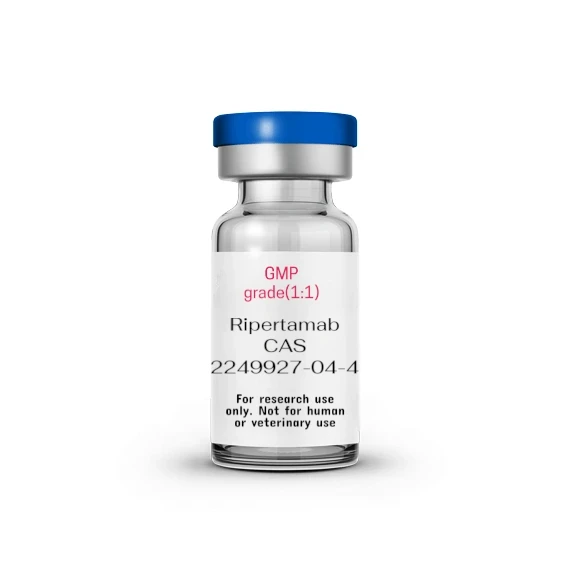

Ripertamab | CAS 2249927-04-4 | High-purity bulk wholesale and GMP factory OEM
Original price was: $3.00.$2.00Current price is: $2.00.
Ripertamab (CAS 2249927-04-4) is a high-purity lyophilized powder and a selective receptor-targeting biologic, enabling detailed studies on receptor-ligand interactions, signal transduction pathways, and cellular functional assays. Widely used in receptor profiling, structural biology, and preclinical research, Ripertamab supports reproducible molecular and cellular experiments. Available in bulk and with GMP factory customization, it ensures consistent quality for both academic laboratories and industrial pharmaceutical R&D projects.

Description
Product Description
Ripertamab is a monoclonal biologic of high purity, supplied as a lyophilized powder to ensure long-term stability and bioactivity. It selectively targets cell-surface receptors, modulating downstream signaling cascades to facilitate in-depth mechanistic studies. Its applications encompass receptor-ligand binding analysis, functional cellular assays, structural characterization, and preclinical translational models.
Molecular Background and Scientific Relevance
Receptor-targeted research is fundamental in understanding cellular physiology, signaling, and pathological mechanisms. Ripertamab was developed to provide a high-purity, stable, and reproducible biologic tool for receptor-focused investigations. By selectively binding to its target receptor, it modulates activation, inhibition, or internalization, allowing researchers to dissect complex receptor-mediated pathways with high precision. The biologic is widely utilized in oncology, immunology, and neurobiology research, supporting studies on proliferation, apoptosis, differentiation, migration, and receptor-ligand interactions.
Applications in Receptor Research
Ripertamab enables a wide array of experimental applications:
Receptor-Ligand Binding Studies: Quantitative binding assays, competitive inhibition, and receptor occupancy determination provide insights into receptor dynamics.
Signal Transduction Analysis: Modulation of MAPK/ERK, PI3K/AKT, JAK/STAT, and NF-κB pathways is assessed to study downstream cellular effects.
Functional Cell Assays: Proliferation, apoptosis, migration, invasion, and reporter gene activation assays enable precise measurement of receptor-mediated cellular outcomes.
Structural and Biophysical Studies: Cryo-EM, X-ray crystallography, surface plasmon resonance (SPR), and isothermal titration calorimetry (ITC) provide molecular-level insights into receptor-antibody interactions.
Preclinical Models: 3D organoids, spheroids, and xenograft studies help elucidate receptor function in complex tissue-like environments.
Drug Development: Dose-response studies, receptor saturation analysis, and efficacy profiling facilitate target validation and translational research.
High-Throughput Screening: Compatible with automated liquid handling platforms for large-scale receptor-targeted compound evaluation.
Advantages of Lyophilized Format
Lyophilized Ripertamab maintains bioactivity, stability, and consistency across experiments. The powder format supports flexible reconstitution in PBS, DMSO, or other compatible buffers, enabling both small-scale laboratory experiments and large-scale industrial research applications. Lyophilization minimizes degradation during storage and transport, ensuring reproducible and reliable experimental outcomes.
Manufacturing Quality Assurance
Ripertamab Produced under GMP conditions, each batch undergoes rigorous quality control, including HPLC, LC-MS, SDS-PAGE, ELISA, and functional validation assays. Certificates of Analysis (CoA) and Material Safety Data Sheets (MSDS) are provided with all shipments. Bulk production and GMP customization ensure high-purity, reproducible supply suitable for both academic and industrial research environments.
Advanced Preclinical Applications
Ripertamab supports advanced research in 3D culture systems, including organoids and spheroids. In oncology research, it enables modeling of tumor microenvironments, receptor-mediated angiogenesis, and immune cell interactions. Researchers can analyze receptor-dependent signaling, intercellular crosstalk, drug-response heterogeneity, and combinatorial therapeutic strategies. Its high specificity ensures accurate interpretation of receptor-mediated effects across diverse cell types.
Receptor Pharmacology and Functional Studies
Quantitative receptor pharmacology studies using Ripertamab include:
Affinity and Specificity Assays: Determining binding kinetics, receptor occupancy, and competitive ligand interactions.
Functional Assays: Assessing proliferation, apoptosis, migration, invasion, and reporter activity in receptor-dependent cells.
High-Content Imaging: Evaluating receptor internalization, trafficking, and cellular morphological changes.
Ripertamab is also suitable for mechanistic studies of drug resistance, compensatory signaling pathways, and identification of secondary receptor targets for combination therapy strategies.
Product Specifications
| Parameter | Specification |
|---|---|
| Chemical Name / Synonyms | Ripertamab; Monoclonal Receptor Biologic; CAS 2249927-04-4 |
| CAS Number | 2249927-04-4 |
| Molecular Formula | Not disclosed (biologic protein) |
| Molecular Weight | ~150 kDa |
| Purity | ≥99% verified by SDS-PAGE and HPLC |
| Appearance | White to off-white lyophilized powder |
| Dosage Form | Lyophilized powder |
| Solubility | Reconstitutable in PBS, DMSO, or compatible buffers |
| Concentration | Customizable upon reconstitution |
| Storage Temperature | -20°C to -80°C |
| Stability | Stable up to 24 months lyophilized |
| Analytical Methods | HPLC, LC-MS, SDS-PAGE, ELISA |
| Mechanistic Target | Specific cell-surface receptors |
| Structural Category | Monoclonal biologic |
| Applications | Receptor signaling, functional assays, preclinical studies |
| Batch Consistency | Each batch validated for reproducibility |
| Regulatory Notes | Laboratory research only, not for human or veterinary use |
| Origin | China, factory direct supply |
| Additional Data | CoA, MSDS, functional and spectral assay data available |
Mechanism of Action
Ripertamab selectively binds its target receptor, inducing conformational changes that regulate receptor function. This modulation can result in receptor activation, inhibition, internalization, or degradation. By controlling downstream signaling pathways such as MAPK/ERK, PI3K/AKT, JAK/STAT, and NF-κB, Ripertamab influences transcriptional programs, cellular proliferation, apoptosis, differentiation, and migration.
Receptor-Ligand Dynamics
High-affinity binding ensures stable receptor engagement, allowing detailed analysis of receptor trafficking, recycling, and degradation. Competitive and dose-response assays enable mechanistic studies of receptor occupancy and functional efficacy.
Downstream Signaling Modulation
Phosphorylation of key proteins is enhanced or inhibited.
Transcription factors including NF-κB, STATs, and AP-1 are modulated.
Gene expression changes associated with cell cycle, apoptosis, and differentiation are observed.
Cellular and Molecular Research Applications
Flow cytometry for receptor occupancy
Western blot and ELISA for pathway evaluation
Reporter gene assays for transcriptional activation
Imaging-based assays for receptor internalization and trafficking
High-Throughput and Combinatorial Studies
Ripertamab is compatible with 384- and 1536-well plate high-throughput assays and automated screening platforms. It supports combinatorial drug studies with kinase inhibitors, chemotherapeutics, or immune modulators to investigate receptor interactions and therapeutic synergy.
Mechanism of Action
Receptor Internalization and Trafficking
Upon binding, Ripertamab induces receptor conformational changes that trigger internalization. This process involves clathrin-mediated endocytosis or caveolin-dependent pathways, depending on receptor type. Internalized receptors may undergo lysosomal degradation or recycling to the plasma membrane. Researchers can leverage this mechanism to study receptor turnover, ligand-induced endocytosis, and trafficking dynamics in live-cell imaging assays.
Signal Amplification and Feedback Loops
Ripertamab can modulate both positive and negative feedback loops in receptor signaling pathways. Activation or inhibition of MAPK/ERK and PI3K/AKT pathways results in downstream modulation of transcriptional networks controlling cell proliferation, survival, and apoptosis. Researchers can investigate compensatory signaling mechanisms that contribute to drug resistance or adaptive cellular responses.
Influence on Cellular Phenotypes
Proliferation: Dose-dependent inhibition or stimulation depending on receptor context.
Apoptosis: Activation of intrinsic and extrinsic apoptotic pathways in receptor-sensitive cells.
Differentiation: Modulation of stem cell or progenitor cell differentiation through receptor-dependent transcriptional changes.
Migration and Invasion: Alteration of cytoskeletal organization and cell motility, supporting studies in oncology and immune cell behavior.
Applications in Translational Research
Preclinical Cancer Models: Evaluate receptor-targeted therapies and signaling dependencies.
Immune Modulation Studies: Analyze T cell, B cell, and macrophage receptor activation.
Drug Resistance Mechanisms: Explore compensatory pathways and identify secondary targets.
Combination Therapy Assessment: Test synergistic effects with kinase inhibitors, monoclonal antibodies, or chemotherapeutic agents.

Side Effects
Ripertamab Cellular and Molecular Effects
In vitro exposure to Ripertamab may result in:
Receptor-dependent apoptosis or proliferation changes
Altered transcriptional profiles affecting cell cycle and survival
Cytoskeletal rearrangements influencing migration and adhesion
Modulation of intracellular signaling cascades, including feedback inhibition
Experimental Considerations
Reconstitute in compatible buffer immediately prior to use
Minimize repeated freeze-thaw cycles to preserve activity
Perform assays in sterile conditions to prevent contamination
Monitor cell health closely when testing in sensitive cell lines
Laboratory Safety Guidelines
Use personal protective equipment (PPE), including gloves, lab coats, and eye protection
Handle lyophilized powder in a biosafety cabinet when appropriate
Dispose of all waste and residues according to institutional biosafety protocols
Storage and Stability
Lyophilized Ripertamab is stable for up to 24 months at -20°C to -80°C
Avoid exposure to moisture and light
Reconstituted solutions should be used immediately or stored short-term at 4°C
Keywords
high-purity Ripertamab, receptor-targeting biologic, lyophilized protein powder, signal transduction probe, cell-surface receptor inhibitor, preclinical research reagent, monoclonal biologic supplier, China chemical manufacturer, bulk GMP biologic, translational research reagent, high-purity biologic, receptor profiling, in vitro receptor study, oncology research reagent, drug discovery biologic, receptor-ligand studies, receptor pharmacology, functional cell assay reagent, high-throughput receptor screening, immune modulation reagent
Shipping Guarantee
Ripertamab is shipped via cold-chain logistics with insulated, moisture-proof packaging. Shipments include tracking, insurance, and complete customs documentation. Bulk orders receive reinforced packaging to maintain lyophilized integrity and bioactivity during transit. Each shipment is validated to ensure reproducible experimental outcomes upon arrival.
Trade Assurance
Purity ≥99% confirmed via HPLC, SDS-PAGE, and functional assays
Certificates of Analysis (CoA) and Material Safety Data Sheets (MSDS) included
Bulk and GMP-grade customization ensures batch consistency
Quality assurance guarantees replacement or refund in case of discrepancies
Payment Support
PayPal, major credit cards, T/T
USDT, Bitcoin, Ethereum accepted
Secure encrypted transactions for both domestic and international purchases
Flexible purchasing options for small-scale research or large-scale industrial studies
Disclaimer
Ripertamab is strictly for laboratory and preclinical research purposes. Not intended for human or veterinary use. Researchers must comply with institutional biosafety guidelines, use appropriate PPE, and handle all materials according to safety protocols.
References
Additional information
| Weight | 1.1 kg |
|---|---|
| Dimensions | 18 × 16 × 18 cm |
1. What is Ripertamab used for in research?
For receptor-ligand studies, signal transduction analysis, functional assays, and preclinical modeling.
2. Can I purchase bulk Ripertamab?
Yes, bulk production and GMP-grade customization are available.
3. What purity does Ripertamab meet?
≥99%, verified via HPLC, SDS-PAGE, and functional assays.
4. How should Ripertamab be stored?
Lyophilized: -20°C to -80°C, protected from moisture and light.
5. Can it be used in vivo?
No, strictly for laboratory and preclinical research.
6. How is it reconstituted?
Reconstitute in PBS, DMSO, or compatible buffer immediately before use.
7. Is GMP-grade Ripertamab available?
Yes, GMP-grade and bulk customization are supported.
8. Are Certificates of Analysis provided?
Yes, CoA and functional assay data accompany every batch.
9. Can it be shipped internationally?
Yes, via cold-chain logistics with tracking and insurance.
10. Can it be used in high-throughput screening?
Yes, compatible with automated 384- and 1536-well plate platforms.
11. Can it be labeled for imaging studies?
Yes, fluorescent or isotopic labeling is possible.
12. Is it suitable for co-culture studies?
Yes, supports intercellular receptor interaction analysis.
13. Can it be used for drug resistance studies?
Yes, to evaluate compensatory signaling and secondary targets.
14. Can it be combined with chemotherapeutics or kinase inhibitors?
Yes, ideal for combination therapy research.
15. What quality control methods are used?
SDS-PAGE, HPLC, LC-MS, ELISA, and functional assays ensure batch consistency.
Related products
Toremifene Citrate 60mg for scientific research
High-purity Toremifene Citrate Tablets designed exclusively for in vitro molecular mechanism research, receptor-binding analysis, and biochemical pathway modulation studies. Factory-manufactured with consistent batch quality, suitable for bulk and wholesale supply.(For research use only. Not for human or veterinary use.) $1.00Pirtobrutinib 100mg | High purity | Factory manufactured
Pirtobrutinib is a high-purity small-molecule research compound, factory manufactured and supplied at low-price wholesale scale, specifically developed for in vitro biochemical assays, molecular interaction analysis, and signaling pathway investigations. This product is intended exclusively for laboratory research use. $2.00Granisetron Hydrochloride Dispersible 1mg
High-purity Granisetron Hydrochloride Dispersible is a factory-manufactured research reagent optimized for in vitro receptor binding studies, 5-HT3 receptor mechanistic analysis, and molecular signaling research. Available for bulk and wholesale laboratory use with batch-verified purity and reproducible performance. $1.00Ivodazumab solution (lvonescimab) High Purity | Factory Manufactured
High-purity Ivodazumab Injection (lvonescimab) designed for laboratory research, in vitro mechanistic studies, and receptor-targeted molecular pathway analysis. Factory-manufactured with consistent quality for bulk and wholesale supply, this injectable formulation provides reliable antibody-mediated receptor modulation for mechanistic and multi-omic studies.
Original price was: $3.00.$2.00Current price is: $2.00.


Reviews
There are no reviews yet.