
No products in the cart.
Sale
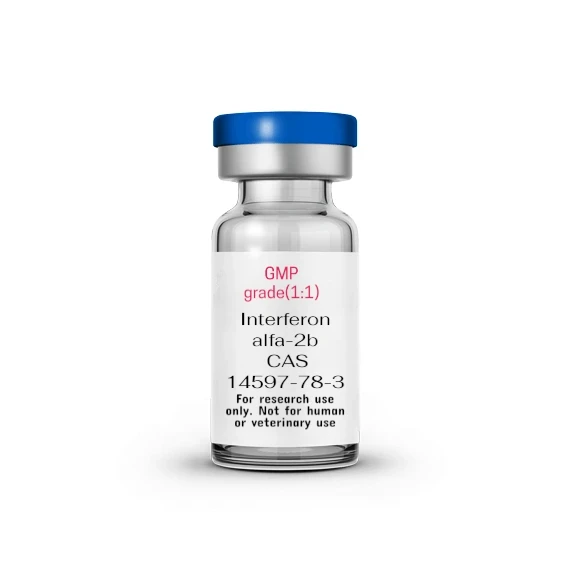
Interferon alfa-2b | CAS 14597-78-3 | Recombinant Cytokine for Antiviral and Immunomodulatory Research
Original price was: $3.00.$2.00Current price is: $2.00.
Interferon alfa-2b is a recombinant cytokine widely used in preclinical research to investigate antiviral mechanisms, immune signaling, and cytokine-mediated cell responses. It serves as a model compound for studying JAK-STAT pathways, immune modulation, and antiviral gene expression in vitro and in vivo.

Description
Product Description
Interferon alfa-2b (CAS 14597-78-3) is a recombinant human type I interferon, expressed in E. coli or mammalian systems, with high biological activity. It is a single-chain polypeptide of 165 amino acids that acts as a potent immunomodulator and antiviral agent in preclinical research.
Physical and Chemical Properties:
Molecular formula: C876H1390N246O251S9 (approximate, varies with expression system)
Molecular weight: ~19.2 kDa
Appearance: Lyophilized white to off-white powder
Solubility: Soluble in water, PBS, or physiological buffers; avoid repeated freeze-thaw cycles
Stability: Stable at –20 °C; short-term storage at 2–8 °C for experimental use
Research Applications:
Antiviral Studies: Interferon alfa-2b induces transcription of interferon-stimulated genes (ISGs), including PKR, OAS, and Mx proteins, which inhibit viral replication and protein synthesis.
Immune Signaling Research: It activates the JAK-STAT pathway, enhancing antiviral and immunomodulatory responses.
Cytokine Profiling: Used to evaluate downstream effects on cytokine production (e.g., IL-6, TNF-α, CXCL10) in various immune cell lines.
Cellular Apoptosis and Proliferation: Modulates apoptosis in infected or malignant cells, providing a model for studying immune-mediated cytotoxicity.
Combination Studies: Frequently used in preclinical experiments with antiviral compounds, vaccines, or immune checkpoint modulators to investigate synergy or pathway interactions.
Animal Models: Employed in murine, primate, or ex vivo human cell studies to simulate interferon responses and antiviral defense mechanisms.
Mechanistic Studies: Investigates IFN receptor binding, STAT phosphorylation, ISG induction, and negative regulators such as SOCS proteins.
Experimental Considerations:
Handling: Lyophilized powder should be reconstituted in sterile buffers under aseptic conditions.
Dosing: Concentrations depend on cell type, assay sensitivity, and intended pathway activation.
Solvent Compatibility: PBS, sterile water, or culture media without serum are recommended for reconstitution.
Storage and Stability: Avoid repeated freeze-thaw cycles to preserve bioactivity; store aliquots at –20 °C for long-term use.
Interferon alfa-2b’s consistent biological activity, high purity (≥99%), and reproducible immune-modulatory profile make it indispensable for preclinical research on antiviral mechanisms, immune signaling, apoptosis, and cytokine regulation.
Product Specifications
| Parameter | Specification / Data |
|---|---|
| Chemical Name / Synonyms | Interferon alfa-2b; Recombinant human IFN-α2b; rHuIFN-α2b; Intron A® |
| CAS Number | 14597-78-3 |
| Molecular Formula | C876H1390N246O251S9 (approximate) |
| Molecular Weight | ~19.2 kDa |
| Purity / Assay | ≥99% by HPLC / SDS-PAGE |
| Appearance | Lyophilized white to off-white powder |
| Solubility | Soluble in water, PBS, or physiological buffers |
| Storage Temperature | –20 °C long-term; 2–8 °C short-term |
| Stability | Maintain at recommended temperatures; avoid repeated freeze-thaw cycles |
| Analytical Methods | HPLC, SDS-PAGE, MS, bioactivity assay |
| Mechanistic Target | JAK-STAT signaling, antiviral gene induction, immune modulation |
| Structural Category | Recombinant cytokine / protein therapeutic model |
| Applications | Antiviral research, immune modulation studies, cytokine signaling assays, apoptosis research |
| Batch Consistency | Verified by HPLC, SDS-PAGE, and bioactivity assay |
| Origin | Recombinant expression in E. coli or mammalian cells; factory peptide and protein supplier; OEM & bulk production available |
| Additional Data | Bioactivity: ≥1 × 10^7 IU/mg; endotoxin ≤0.1 EU/µg |
Mechanism of Action
Interferon alfa-2b (IFN-α2b) functions as a type I interferon by binding to the IFNAR1/IFNAR2 receptor complex on target cells. This receptor engagement activates the JAK-STAT signaling pathway, leading to phosphorylation of STAT1 and STAT2, which then form a complex with IRF9 to create the ISGF3 transcription factor. ISGF3 translocates to the nucleus and binds interferon-stimulated response elements (ISREs) to initiate transcription of hundreds of interferon-stimulated genes (ISGs).
Key Biological Effects in Preclinical Research:
Antiviral Activity:
Induces ISGs such as PKR, OAS, Mx proteins, and IFITs, which inhibit viral replication at multiple stages, including RNA translation, genome replication, and virion assembly.
Blocks viral protein synthesis and promotes degradation of viral RNA.
Immunomodulatory Effects:
Enhances antigen presentation by upregulating MHC class I molecules.
Activates natural killer (NK) cells and cytotoxic T lymphocytes (CTLs).
Modulates cytokine secretion, including IL-6, IL-12, TNF-α, and CXCL10, shaping the immune response.
Cell Proliferation and Apoptosis:
IFN-α2b can induce growth arrest in certain cancer cell lines by activating p21, p27, and other cyclin-dependent kinase inhibitors.
Promotes apoptosis via caspase pathways, mitochondrial depolarization, and modulation of Bcl-2 family proteins.
Signal Regulation and Feedback:
Negative regulators, such as SOCS1 and USP18, modulate the intensity and duration of IFN signaling.
Fine-tuning of JAK-STAT and ISG expression allows researchers to study pathway kinetics, feedback loops, and signal desensitization.
Experimental Applications:
In vitro: Studying ISG induction, viral replication inhibition, apoptosis induction, and immune modulation in human or murine cell lines.
In vivo: Evaluating antiviral responses, immune cell activation, and cytokine-mediated effects in animal models.
Combination studies: Used with antiviral agents, vaccines, or immunomodulatory compounds to explore synergistic effects.
Comparative Studies:
Compared to IFN-α1 or IFN-β, IFN-α2b exhibits higher specific activity and more predictable immunomodulatory effects in preclinical models.
Recombinant IFN-α2b allows precise dosing and reproducible activation of the JAK-STAT pathway for mechanistic studies.

Interferon alfa-2b
Side Effects
While Interferon alfa-2b is a research-grade recombinant protein, laboratory handling requires caution:
Cytotoxic Effects: In vitro, IFN-α2b can induce apoptosis and growth arrest in sensitive cell lines. High concentrations may cause nonspecific cytotoxicity.
Immune Modulation: In preclinical models, it may cause upregulation of proinflammatory cytokines, which can affect surrounding cell populations.
Handling Safety:
Wear gloves, lab coat, and eye protection.
Reconstitute lyophilized powder in sterile buffers under aseptic conditions.
Avoid repeated freeze-thaw cycles to preserve bioactivity.
Storage: Store at –20 °C for long-term storage or 2–8 °C for short-term experimental use. Protect from moisture and light.
Environmental Precautions: Dispose of residual protein and contaminated materials according to institutional biosafety guidelines.
Experimental Observations:
In vitro: STAT phosphorylation, ISG induction, apoptosis, cytokine secretion.
In vivo: Immune cell activation, antiviral gene induction, cytokine modulation.
Keywords
Interferon alfa-2b, CAS 14597-78-3, recombinant cytokine, type I interferon, antiviral research, immune modulation, JAK-STAT signaling, apoptosis induction, cytokine profiling, high purity, ≥99% purity, factory peptide supplier, peptide wholesale China, China peptide manufacturer, OEM & bulk peptide production.
Shipping Guarantee
All Interferon alfa-2b shipments of Interferon alfa-2b are managed using validated cold-chain logistics to maintain protein stability and bioactivity. Lyophilized powder is sealed in moisture-proof, light-protected containers with secondary wrapping. Full tracking, insurance, and international courier support are provided to ensure safe delivery.
Trade Assurance
Interferon alfa-2b authenticity is guaranteed, with ≥99% purity verified by HPLC, SDS-PAGE, MS, and bioactivity assays. Each batch includes a Certificate of Analysis (CoA). Trade assurance covers replacement or refund for any deviation from listed specifications, ensuring high-purity, batch-consistent protein for preclinical research.
Payment Support
Secure global payment options include PayPal, major credit cards (Visa, MasterCard, American Express), telegraphic transfer (T/T), and cryptocurrencies (USDT, Bitcoin, Ethereum). Transactions are encrypted and verified for confidentiality and fund protection.
Disclaimer
This Interferon alfa-2b product is intended for laboratory research use only. It is not for human or veterinary administration. Researchers must follow institutional safety protocols. Data generated with Interferon alfa-2b should not be interpreted as clinical or therapeutic guidance.
References
ChEMBL: Interferon alfa-2b Bioactivity (ChEMBL ID CHEMBL1201191) ↗
PubMed ID 12692302 – IFN-α2b antiviral and immunomodulatory mechanisms ↗
IUPHAR/BPS Guide to Pharmacology: Interferon α receptor signaling ↗

Additional information
| Weight | 1.1 kg |
|---|---|
| Dimensions | 18 × 16 × 18 cm |
Q1: What is Interferon alfa-2b used for in research?
A1: It is used to study antiviral mechanisms, immune modulation, cytokine signaling, JAK-STAT pathway activation, apoptosis, and immune response in preclinical models.
Q2: What is the purity of Interferon alfa-2b?
A2: ≥99% purity, ensuring reliable bioactivity and reproducibility in research studies.
Q3: Can Interferon alfa-2b be used in vivo?
A3: Yes, it is suitable for animal studies to investigate antiviral responses and immune modulation.
Q4: How should Interferon alfa-2b be stored?
A4: Store lyophilized powder at –20 °C long-term; short-term at 2–8 °C. Avoid repeated freeze-thaw cycles.
Q5: What are common synonyms for Interferon alfa-2b?
A5: Recombinant human IFN-α2b, rHuIFN-α2b, Intron A®.
Q6: Is OEM & bulk production available?
A6: Yes, factory peptide and protein suppliers provide high-purity recombinant Interferon alfa-2b with CoA certification.
Q7: How is Interferon alfa-2b verified analytically?
A7: Verified via HPLC, SDS-PAGE, MS, and bioactivity assays for identity, purity, and batch consistency.
Q8: Can it be combined with other antivirals in research?
A8: Yes, commonly used in combination studies to evaluate synergy and immune pathway interactions.
Q9: What laboratory safety precautions are recommended?
A9: Use gloves, lab coat, and eye protection; reconstitute under sterile conditions; follow biosafety disposal protocols.
Q10: Can it be sourced from peptide wholesale China suppliers?
A10: Yes, ensure suppliers provide CoA, high-purity verification, and cold-chain shipping.
Q11: What makes a factory peptide supplier reliable for Interferon alfa-2b?
A11: Verified ≥99% purity, CoA documentation, consistent batch quality, and secure shipping.
Q12: Beyond antiviral activity, what applications exist?
A12: Immune modulation, cytokine signaling analysis, apoptosis research, preclinical cancer and viral infection modeling.
Q13: How does Interferon alfa-2b induce antiviral responses?
A13: By binding IFNAR receptors, activating JAK-STAT, inducing ISGs, and inhibiting viral replication.
Q14: How is JAK-STAT pathway activation measured in experiments?
A14: STAT phosphorylation assays, ISRE-luciferase reporter assays, flow cytometry for downstream markers.
Related products
Clodronate Disodium 10 pills | High purity | Factory manufactured
Clodronate Disodium is a high-purity laboratory research compound supplied by factory manufacturing at low-price wholesale scale. It is designed for in vitro molecular mechanism studies, biochemical assays, and signaling pathway investigations, ensuring consistent and reproducible experimental results. Strictly for laboratory research use. Original price was: $6.00.$2.00Current price is: $2.00.Mechlorethamine Hydrochloride High Purity | Factory Manufactured | Laboratory Research Use Only
High-purity Mechlorethamine Hydrochloride Solution manufactured under strict factory-controlled conditions, designed exclusively for in vitro, biochemical, and molecular mechanism research. Suitable for laboratories requiring bulk, wholesale, or customized research-grade supply.
$1.00Ivodazumab solution (lvonescimab) High Purity | Factory Manufactured
High-purity Ivodazumab Injection (lvonescimab) designed for laboratory research, in vitro mechanistic studies, and receptor-targeted molecular pathway analysis. Factory-manufactured with consistent quality for bulk and wholesale supply, this injectable formulation provides reliable antibody-mediated receptor modulation for mechanistic and multi-omic studies.
Original price was: $3.00.$2.00Current price is: $2.00.Iparomlimab and Tuvonralimab 50 mg/2 mL Solution
Iparomlimab and Tuvonralimab is a high-purity monoclonal antibody solution supplied at 50 mg/2 mL by factory manufacturing with low-price wholesale availability. Designed exclusively for in vitro molecular mechanism studies, protein interaction assays, and signaling pathway research, it provides reproducible and reliable experimental performance. Strictly for laboratory research use. $1.00




Reviews
There are no reviews yet.