
No products in the cart.
Sale
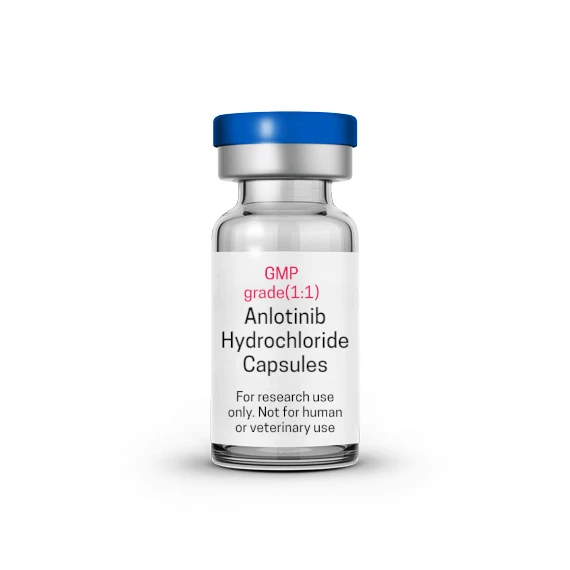
Anlotinib Hydrochloride | CAS 1360460-82-7 | Multi-Target Tyrosine Kinase Inhibitor for Oncology Research
Original price was: $3.00.$2.00Current price is: $2.00.
Anlotinib Hydrochloride is a potent, orally available multi-target tyrosine kinase inhibitor (TKI) that selectively inhibits VEGFR, FGFR, PDGFR, and c-Kit. It is widely used in oncology research to investigate angiogenesis suppression, tumor growth inhibition, and resistance mechanisms across various cancer models. This compound serves as a valuable tool in molecular and cellular pharmacology research for anti-angiogenic and tumor signaling studies.

Description
Product Description
Anlotinib Hydrochloride is a synthetic, small-molecule tyrosine kinase inhibitor (TKI) known for its broad-spectrum inhibition of angiogenic and oncogenic pathways. It demonstrates significant activity against vascular endothelial growth factor receptors (VEGFR1/2/3), fibroblast growth factor receptors (FGFR1-4), platelet-derived growth factor receptors (PDGFRα/β), and the stem cell factor receptor c-Kit. This broad inhibitory profile makes it a key compound in cancer biology and pharmacological mechanism research.
Anlotinib Hydrochloride functions primarily by interrupting the VEGF and FGF signaling cascades, essential pathways responsible for tumor angiogenesis and metastasis. By targeting these receptors, Anlotinib effectively suppresses endothelial cell proliferation, migration, and new vessel formation—thereby starving tumors of essential oxygen and nutrients. In preclinical cancer models, it demonstrates potent anti-angiogenic and anti-tumor properties with minimal off-target cytotoxicity compared to earlier TKIs.
Molecular Features and Research Relevance
Chemically, Anlotinib Hydrochloride possesses high lipophilicity, ensuring efficient cellular uptake and sustained receptor occupancy. This contributes to prolonged kinase inhibition in in vitro and in vivo research systems. Researchers have extensively employed it to explore mechanisms of anti-angiogenesis, tumor hypoxia adaptation, and TKI resistance.
In addition to anti-angiogenic activity, Anlotinib modulates downstream signaling cascades such as PI3K/Akt, ERK/MAPK, and STAT3—key pathways that regulate cell proliferation, apoptosis, and autophagy. Consequently, Anlotinib is often included in studies focused on signal transduction, gene expression profiling, and combined therapeutic modeling.
Applications in Research
Anlotinib Hydrochloride is utilized across various oncology research domains:
Angiogenesis studies: Inhibits VEGF-induced endothelial cell proliferation and migration.
Signal transduction research: Modulates FGFR and PDGFR-dependent downstream cascades.
Resistance mechanism exploration: Investigates adaptive responses in tumor microenvironments to chronic kinase inhibition.
Combination therapy evaluation: Enhances efficacy of chemotherapeutics, radiotherapy, and immune checkpoint inhibitors in preclinical studies.
Tumor metabolism studies: Suppresses glycolysis and hypoxia signaling pathways in solid tumor cell lines.
These applications make Anlotinib Hydrochloride a versatile compound for translational oncology and pharmacodynamics research.
Pharmacological Insights
In cancer cell models, Anlotinib demonstrates dose-dependent inhibition of proliferation and migration. It effectively reduces phosphorylated VEGFR2 and FGFR3 levels, impairing endothelial tube formation. Furthermore, it induces G2/M cell cycle arrest and promotes apoptosis via activation of caspase-3 and downregulation of anti-apoptotic proteins such as Bcl-2.
Experimental data indicate that long-term exposure to Anlotinib may alter tumor metabolism and enhance immune recognition, offering valuable insights for next-generation therapeutic development.
Experimental Usage
In vitro: Effective in endothelial and tumor cell assays at micromolar concentrations.
In vivo: Commonly used in xenograft and angiogenesis mouse models for mechanism studies.
Analytical tools: LC-MS and HPLC methods confirm compound integrity and purity.
Researchers often pair Anlotinib with growth factors, receptor agonists, or genetic knockdowns to delineate pathway interactions.
Summary
Anlotinib Hydrochloride is a high-purity, multi-target kinase inhibitor indispensable for studying tumor angiogenesis, signaling cross-talk, and resistance mechanisms. Its ability to modulate multiple oncogenic pathways simultaneously positions it as a cornerstone reagent in molecular oncology and preclinical pharmacology.
Product Specifications
| Item | Details |
|---|---|
| Product Name | Anlotinib Hydrochloride |
| CAS Number | 1360460-82-7 |
| Synonyms | AL3818, AL-3818 Hydrochloride |
| Molecular Formula | C23H30ClN9O3 |
| Molecular Weight | 519.99 g/mol |
| Purity | ≥99% |
| Appearance | White to off-white powder |
| Solubility | Soluble in DMSO, methanol, and ethanol |
| Storage | -20°C, dry and protected from light |
| Category | Multi-target tyrosine kinase inhibitor |
| Applications | Angiogenesis, tumor signaling, pharmacological mechanism research |
| Stability | Stable under recommended storage |
| Shelf Life | 24 months |
| Supplier Type | Laboratory reagent manufacturer |
| Intended Use | For laboratory research use only |
Mechanism of Action
Anlotinib Hydrochloride inhibits several receptor tyrosine kinases (RTKs) critical for angiogenesis and tumor progression. It blocks ATP binding to VEGFR, FGFR, and PDGFR kinase domains, preventing receptor phosphorylation and downstream signaling activation.
VEGFR Inhibition
VEGFR1-3 play essential roles in blood vessel formation and endothelial cell migration. Anlotinib’s inhibition of VEGFR2 results in reduced endothelial proliferation, migration, and vascular permeability. This leads to suppression of neovascularization and inhibition of tumor growth in research models.
FGFR and PDGFR Modulation
The FGFR signaling pathway supports fibroblast proliferation and tissue remodeling within the tumor microenvironment. Anlotinib disrupts this pathway, decreasing fibroblast activation and extracellular matrix deposition. Its PDGFR inhibition complements anti-angiogenic effects by reducing pericyte recruitment and vessel stability.
Downstream Pathway Effects
By targeting multiple receptors, Anlotinib suppresses:
PI3K/Akt/mTOR signaling: Reduces cell survival and metabolic activity.
Ras/Raf/MEK/ERK cascade: Inhibits proliferation and mitogenic signaling.
STAT3 activation: Attenuates inflammatory cytokine production and tumor immune evasion.
This multi-pathway inhibition establishes a strong preclinical rationale for Anlotinib in anti-tumor mechanism exploration.
Apoptosis and Cell Cycle Regulation
Anlotinib induces apoptosis in cancer cell lines by modulating Bax/Bcl-2 ratios, activating caspase-9, and cleaving PARP. It also halts cell cycle progression at G2/M, providing a model to study checkpoint regulation and DNA damage response in oncogenic contexts.
Resistance and Adaptive Mechanisms
Research indicates that chronic exposure to Anlotinib may upregulate alternative pro-angiogenic signals (e.g., HIF-1α, VEGF-A), leading to adaptive resistance. These features make it valuable for investigating resistance biomarkers and designing second-line TKI strategies.
Immunomodulatory Role
Anlotinib may reshape the tumor immune landscape by decreasing regulatory T-cell infiltration and enhancing cytotoxic T-cell activity in experimental tumor models. This emerging research direction is critical for understanding combinational effects with immunotherapies.

Side Effects
In laboratory settings, Anlotinib Hydrochloride may induce concentration-dependent cytotoxic effects such as:
Mitochondrial dysfunction and oxidative stress.
Cell cycle arrest and altered proliferation in endothelial and tumor cells.
Metabolic perturbations in glycolysis and oxidative phosphorylation studies.
Increased apoptotic signaling, observed through caspase activation assays.
Proper handling and protective equipment are required during use. The compound should not be used for human or veterinary purposes.
Keywords
Anlotinib Hydrochloride, CAS 1360460-82-7, multi-target TKI, VEGFR inhibitor, PDGFR blocker, FGFR modulation, angiogenesis research, tumor signaling pathway, anti-angiogenic compound, oncology reagent, high purity kinase inhibitor
Shipping Guarantee
All Anlotinib Hydrochloride shipments are handled using validated cold-chain logistics to preserve compound integrity. Each package is sealed in moisture-proof containers with secondary protective wrapping and continuous temperature monitoring. Products are shipped via express international couriers with full tracking and insurance coverage.
Trade Assurance
We Anlotinib Hydrochloride ensure product authenticity, verified ≥99% purity, and compliance with analytical standards (HPLC, MS, and NMR). Each batch is supplied with a Certificate of Analysis (CoA). Our trade assurance policy guarantees replacement or refund for any deviation from listed specifications.
Payment Support
We Anlotinib Hydrochloride provide flexible and secure global payment options to support international research transactions. Accepted payment methods include PayPal, major credit cards (Visa, MasterCard, American Express), telegraphic transfer (T/T), and cryptocurrencies (USDT, Bitcoin, Ethereum). All transactions are protected by industry-standard encryption and verified payment gateways to ensure confidentiality and fund security.
Disclaimer
All Anlotinib Hydrochloride products are intended for laboratory research use only and not for human or veterinary use. They are not drugs, medical devices, or diagnostic tools. Researchers must handle materials according to institutional chemical and biosafety regulations. The provided information is for scientific reference only and does not imply therapeutic efficacy or regulatory approval.

Additional information
| Weight | 1.1 kg |
|---|---|
| Dimensions | 18 × 16 × 18 cm |
What is Anlotinib Hydrochloride used for in research?
It is used to study angiogenesis inhibition, tumor signaling, and resistance mechanisms in cancer models.
Which signaling pathways does Anlotinib inhibit?
It inhibits VEGFR, FGFR, PDGFR, and c-Kit, blocking angiogenesis and tumor cell growth.
What is the purity of Anlotinib Hydrochloride?
All batches are ≥99% pure and verified via HPLC and MS analyses.
Can Anlotinib be combined with other agents?
Yes, it’s frequently combined with immunotherapies, chemotherapeutics, and targeted inhibitors.
How should it be stored?
Store at -20°C, in a dry, dark environment.
Is Anlotinib suitable for in vivo research?
Yes, but only for preclinical animal studies under authorized research settings.
Can I order bulk quantities?
Yes, bulk and OEM production options are available for research institutions.
Is Anlotinib soluble in water?
It is sparingly soluble in water but readily soluble in DMSO and methanol.
What are its main research advantages?
Broad kinase inhibition, potent anti-angiogenic activity, and minimal off-target cytotoxicity.
Does it affect immune signaling pathways?
Yes, it can modulate tumor immune responses through STAT3 and cytokine regulation.
What type of analytical data accompanies the product?
Certificate of Analysis (CoA) with HPLC, MS, and NMR verification.
Is it safe for laboratory handling?
Yes, when standard biosafety and PPE guidelines are followed.
How long is it stable?
Stable for 24 months under -20°C with protection from light.
Do you provide technical support for Anlotinib experiments?
Yes, our technical team provides support for experimental design and solubility guidance.
Why choose us as a peptide and compound supplier?
We are a verified factory peptide supplier and high-purity compound manufacturer offering OEM and bulk production services at competitive prices.
Related products
Temozolomide 100mg — Laboratory Research Grade Chemical
Temozolomide is a high-purity alkylating research compound widely used in in vitro molecular mechanism studies focusing on DNA methylation, damage response pathways, and cell cycle regulation. It is suitable for laboratory-based biochemical and mechanistic research applications only.
Original price was: $6.00.$3.00Current price is: $3.00.Aprepitant 80mg | 99% High Purity | Laboratory Research Use Only
High-purity Aprepitant, factory-manufactured for in vitro mechanistic studies and molecular pathway research. Supplied as a stable powder for laboratories requiring bulk, wholesale, or customized research-grade supply. $1.00Granisetron Hydrochloride Dispersible 1mg
High-purity Granisetron Hydrochloride Dispersible is a factory-manufactured research reagent optimized for in vitro receptor binding studies, 5-HT3 receptor mechanistic analysis, and molecular signaling research. Available for bulk and wholesale laboratory use with batch-verified purity and reproducible performance. $1.00Toremifene Citrate 60mg for scientific research
High-purity Toremifene Citrate Tablets designed exclusively for in vitro molecular mechanism research, receptor-binding analysis, and biochemical pathway modulation studies. Factory-manufactured with consistent batch quality, suitable for bulk and wholesale supply.(For research use only. Not for human or veterinary use.) $1.00


Reviews
There are no reviews yet.