
No products in the cart.
Sale
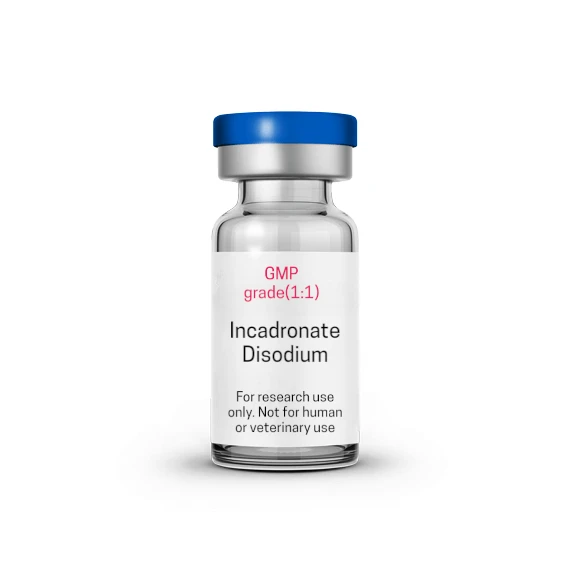
Incadronate Disodium | CAS 138330-18-4 | Bisphosphonate for Bone Research
Original price was: $3.00.$2.00Current price is: $2.00.
Incadronate Disodium is a potent nitrogen-containing bisphosphonate widely used in preclinical and laboratory research for its inhibitory effects on osteoclast-mediated bone resorption. Researchers utilize this compound to study bone metabolism, osteoclast biology, and anti-resorptive mechanisms in vitro and ex vivo models.

Description
Product Description
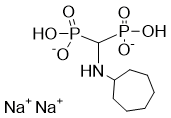
Incadronate Disodium is a synthetic bisphosphonate designed for laboratory research into skeletal biology, particularly osteoclast-mediated bone resorption. Its nitrogen-containing structure confers high potency, allowing it to inhibit farnesyl pyrophosphate synthase (FPPS) in the mevalonate pathway, thereby preventing protein prenylation necessary for osteoclast function and survival.
In preclinical research, Incadronate Disodium is used to investigate molecular pathways of bone remodeling, including apoptosis induction in osteoclasts, modulation of cytokine signaling, and the impact on mineralized matrix turnover. In vitro assays show dose-dependent inhibition of osteoclast differentiation and activity, while ex vivo models using bone slices demonstrate decreased resorption pit formation.
Researchers also employ Incadronate Disodium to study interactions with other therapeutic agents, explore combination strategies, and evaluate anti-resorptive mechanisms relevant to osteoporosis, metastatic bone disease, and other bone-related pathologies. Its high water solubility, chemical stability, and consistent purity make it suitable for mechanistic studies, high-throughput screening, and reproducible preclinical experiments.
Beyond osteoclast inhibition, Incadronate Disodium has been investigated for its potential immunomodulatory effects in bone microenvironments and for its capacity to influence cytokine release from bone marrow-derived cells. These multifaceted activities make it a versatile tool in the study of skeletal biology and pharmacology.
Product Specifications
| Item | Details |
|---|---|
| Product Name | Incadronate Disodium |
| CAS Number | 138330-18-4 |
| Synonyms | Sodium Incadronate; Incadronate Na2 |
| Molecular Formula | C6H10NNa2O7P2 |
| Molecular Weight | 305.09 g/mol |
| Purity | ≥99% |
| Appearance | White to off-white crystalline powder |
| Solubility | Soluble in water |
| Storage Temperature | 2–8 °C |
| Category | Bisphosphonate |
| Applications | Bone research, osteoclast inhibition studies, osteoporosis models, anti-resorptive mechanism research |
| Formulation | Suitable for in vitro, ex vivo, and preclinical studies |
| Stability | Stable under recommended storage conditions |
| Shelf Life | 24 months |
| Supplier Type | Research chemical supplier |
| Intended Use | For laboratory research use only |
Mechanism of Action
Incadronate Disodium primarily inhibits osteoclast-mediated bone resorption through the following mechanisms:
Farnesyl Pyrophosphate Synthase Inhibition
The nitrogen-containing bisphosphonate binds to FPPS in the mevalonate pathway, blocking the synthesis of isoprenoid lipids. This prevents prenylation of small GTP-binding proteins (e.g., Ras, Rho, Rac) essential for osteoclast function.Osteoclast Apoptosis Induction
Disruption of protein prenylation leads to cytoskeletal abnormalities, loss of resorptive activity, and apoptosis of mature osteoclasts, reducing bone resorption.Bone Matrix Binding
Incadronate exhibits high affinity for hydroxyapatite in bone, preferentially localizing to resorption surfaces and ensuring targeted activity where osteoclasts are active.Cytokine Modulation
Research indicates that Incadronate can modulate RANKL and OPG signaling, influencing osteoclast differentiation and survival indirectly via paracrine signaling from osteoblasts or bone marrow cells.Synergistic Research Applications
Incadronate is commonly used in combination with other bone-targeting agents or immunomodulatory compounds to study synergistic effects on bone turnover and osteoclast-mediated pathology.
Side Effects
In laboratory research, side effects relate primarily to its cytotoxic effects on osteoclasts:
Dose-dependent apoptosis in osteoclast cultures.
Reduced resorption pit formation in bone slice assays.
Potential cytotoxicity in non-target cells at very high concentrations.
Proper handling with PPE and adherence to institutional biosafety guidelines is required.
The compound is for laboratory research only and should not be administered to humans or animals.
Keywords
Incadronate Disodium, bisphosphonate, osteoclast inhibitor, bone resorption, osteoporosis research, anti-resorptive agent, skeletal biology, high-purity research compound, laboratory chemical, preclinical bone studies.
Shipping Guarantee
All Incadronate Disodium shipments are handled using validated cold-chain logistics to preserve compound integrity. Each package is sealed in moisture-proof containers with secondary protective wrapping and continuous temperature monitoring. Products are shipped via express international couriers with full tracking and insurance coverage.
Trade Assurance
We Incadronate Disodium ensure product authenticity, verified ≥99% purity, and compliance with analytical standards (HPLC, MS, NMR). Each batch is supplied with a Certificate of Analysis (CoA). Our trade assurance policy guarantees replacement or refund for any deviation from listed specifications.
Payment Support
We Incadronate Disodium provide flexible and secure global payment options to support international research transactions. Accepted payment methods include PayPal, major credit cards (Visa, MasterCard, American Express), telegraphic transfer (T/T), and cryptocurrencies (USDT, Bitcoin, Ethereum). All transactions are protected by industry-standard encryption and verified payment gateways to ensure confidentiality and fund security.
Disclaimer
All Incadronate Disodium products listed are intended for laboratory research use only and not for human or veterinary use. They are not drugs, medical devices, or diagnostics and should not be administered to humans or animals. Researchers must handle all materials in accordance with institutional biosafety and chemical safety guidelines. The information provided is for scientific reference only and does not imply therapeutic efficacy, safety, or regulatory approval.
Additional information
| Weight | 1.1 kg |
|---|---|
| Dimensions | 18 × 16 × 18 cm |
Q1: What is Incadronate Disodium used for in research?
A1: It is used to study osteoclast inhibition, bone resorption, and skeletal biology in preclinical and laboratory models.
Q2: What is the purity of Incadronate Disodium?
A2: Supplied at ≥99% purity, verified by analytical methods including HPLC.
Q3: How should the compound be stored?
A3: Store at 2–8°C, protected from light and moisture for optimal stability.
Q4: Is Incadronate Disodium soluble in water?
A4: Yes, it is water-soluble, making it suitable for in vitro and ex vivo experiments.
Q5: Can it be used in vivo?
A5: No, it is for laboratory research use only; not for human or veterinary administration.
Q6: How does it inhibit osteoclast activity?
A6: By blocking FPPS in the mevalonate pathway, preventing prenylation of proteins necessary for osteoclast function.
Q7: Does it induce osteoclast apoptosis?
A7: Yes, inhibition of protein prenylation leads to osteoclast dysfunction and programmed cell death.
Q8: Can it interact with other research compounds?
A8: Yes, it is commonly used with other anti-resorptive agents or immunomodulatory compounds to study synergistic effects.
Q9: Is analytical verification provided?
A9: Each batch comes with a Certificate of Analysis (CoA) confirming purity and quality.
Q10: What experimental models is it compatible with?
A10: Suitable for in vitro osteoclast cultures, bone slice resorption assays, and ex vivo bone models.
Q11: Can it be purchased in bulk?
A11: Yes, bulk supply and OEM options are available for research laboratories.
Q12: Are there safety considerations?
A12: Use proper PPE and follow biosafety protocols. Avoid inhalation or skin contact.
Q13: Can it be used to study osteoporosis?
A13: Yes, it serves as a model compound for osteoclast-targeted research in osteoporosis and bone turnover studies.
Q14: Is it suitable for mechanistic studies?
A14: Absolutely, ideal for research into FPPS inhibition, protein prenylation, and osteoclast signaling pathways.
Q15: Do you offer OEM supply for research labs?
A15: Yes, custom OEM production, bulk supply, and private labeling are available.
Related products
Propranolol Hydrochloride Solution 10 mg/mL (40 mL)
Propranolol Hydrochloride Solution (10 mg/mL, 40 mL) is a high-purity small-molecule reagent manufactured under controlled factory conditions for laboratory research and in vitro molecular mechanism studies. The solution format enables precise concentration control, reproducible assay preparation, and seamless integration into biochemical and signaling pathway research workflows.
$1.00Limertinib (ASK120067) 80mg — Laboratory Research Grade Chemical
Limertinib is a high-purity, irreversible small-molecule inhibitor that selectively targets mutant EGFR in vitro. Designed specifically for laboratory research, it is ideal for investigating signal transduction, kinase activity, and receptor molecular mechanisms in cell-free or in vitro systems. This compound is suitable for mechanistic studies, target validation, and enzymatic assays. Original price was: $3.00.$2.00Current price is: $2.00.Rilertinib Mesylate 100mg – High Purity | Factory Manufactured | For laboratory use only
High-purity Rilertinib Mesylate, manufactured under controlled factory conditions for in vitro pathway analysis, receptor-binding studies, and molecular mechanism research. Available in bulk and wholesale quantities with consistent batch quality and secure global shipping. $1.00Fulzerasib 150mg High Purity | Factory Manufactured
High-purity Fulzerasib (also known as IBI351, GFH925) is a factory-manufactured small-molecule research reagent optimized for in vitro mechanistic studies, KRAS G12C pathway inhibition analysis, and molecular signaling research. Available for bulk and wholesale laboratory use with batch-verified purity and consistent quality. $1.00


Reviews
There are no reviews yet.