
No products in the cart.
Sale
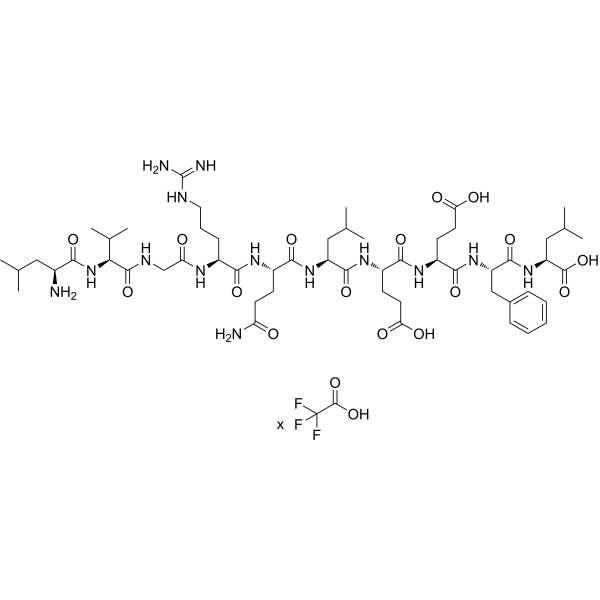
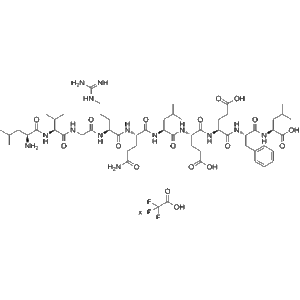
LVGRQLEEFL (mouse) TFA | GMP Supplier & Wholesale Research Peptide
Original price was: $18.00.$16.00Current price is: $16.00.
LVGRQLEEFL (mouse) TFA is a synthetic research peptide derived from apolipoprotein J (apoJ). It shows anti-inflammatory, anti-atherogenic properties, and can form part of HM-10/10 peptide, a novel chimeric HDL protecting retinal pigment epithelium and photoreceptors. Supplied by a GMP-certified manufacturer. For laboratory research use only.?If you need to place an order or inquire about wholesale product prices, specifications and uses, please contact our staff?

Description
LVGRQLEEFL (mouse) TFA is a synthetic peptide corresponding to amino acids 113–122 in apolipoprotein J (apoJ). Also known as G* peptide, it is widely studied for its anti-inflammatory and anti-atherogenic properties. Researchers use this peptide to better understand the role of apoJ in lipid metabolism, vascular function, and retinal protection.
One of the most significant applications of LVGRQLEEFL (mouse) TFA is its ability to be incorporated into apoJ mimetics, such as the HM-10/10 peptide, which is a chimeric HDL mimetic. These mimetics demonstrate protective effects on retinal pigment epithelium (RPE) and photoreceptors against oxidative stress-induced damage. This makes LVGRQLEEFL (mouse) TFA a valuable research tool in ophthalmology, especially in studies focused on retinal degeneration and oxidative injury.
In cardiovascular research, LVGRQLEEFL (mouse) TFA has been shown to modulate inflammatory responses and lipid metabolism pathways. By mimicking HDL-like properties, it contributes to reducing vascular inflammation and inhibiting atherogenesis. Studies indicate its potential role in promoting vascular health through anti-inflammatory and anti-oxidative mechanisms.
Produced by GMP-certified facilities, LVGRQLEEFL (mouse) TFA ensures reliable purity, stability, and reproducibility. This quality assurance is critical for consistent results in advanced experimental research. Available in both wholesale and retail quantities, LVGRQLEEFL (mouse) TFA offers researchers flexibility to scale studies according to their needs.
For laboratory research use only. Not intended for human or veterinary applications.
Product Specifications
| Parameter | Details |
|---|---|
| Product Name | LVGRQLEEFL (mouse) TFA |
| Synonym | G* peptide, ApoJ [113–122] fragment |
| Sequence | LVGRQLEEFL |
| Source | Synthetic peptide |
| Salt Form | TFA salt |
| Properties | Anti-inflammatory, anti-atherogenic, HDL-mimetic potential |
| Applications | Cardiovascular research, retinal protection, oxidative stress studies |
| Purity | ? 98% (GMP grade) |
| Manufacturer | GMP-certified Supplier |
| Storage Conditions | Store at –20°C, avoid repeated freeze-thaw cycles |
| Research Use | For laboratory research only; not for human or veterinary use |
Mechanism of Action & Research Applications
LVGRQLEEFL (mouse) TFA exerts its biological effects primarily through its role as a peptide mimetic of apolipoprotein J (apoJ). ApoJ is known for its protective functions in lipid metabolism, inflammation regulation, and cellular defense against oxidative stress.
Mechanism of Action
Anti-inflammatory properties: LVGRQLEEFL (mouse) TFA reduces inflammatory responses in vascular and retinal tissues.
Anti-atherogenic effects: By mimicking apoJ, it interferes with lipid accumulation and the progression of atherosclerotic lesions.
HDL-mimetic function: When incorporated into chimeric peptides such as HM-10/10, it enhances HDL-like activities including cholesterol efflux and vascular protection.
Oxidative stress protection: It protects retinal pigment epithelium (RPE) and photoreceptors from oxidative damage, preserving cellular integrity.
Research Applications
Cardiovascular Research: Investigating mechanisms of vascular inflammation and lipid metabolism.
Atherosclerosis Studies: Exploring apoJ mimetics as potential HDL alternatives in reducing plaque formation.
Ophthalmology: Assessing protective roles against retinal oxidative injury and degeneration.
Lipid Metabolism Research: Understanding HDL-like mechanisms and mimetic peptide design.
Neuroinflammation Models: Potential use in studying inflammation-linked neurodegenerative conditions.
By combining these properties, LVGRQLEEFL (mouse) TFA continues to be a valuable research peptide, offering insights into novel therapeutic strategies.
Side Effects (For Reference Only in Models)
Currently, there are no documented toxic side effects of LVGRQLEEFL (mouse) TFA in experimental studies. However, potential considerations in laboratory models may include:
Mild cytotoxicity at high concentrations.
Peptide instability under improper storage conditions.
Potential off-target effects in certain biological models.
All effects reported are based on laboratory research. Safety in humans or animals has not been established.
Disclaimer
LVGRQLEEFL (mouse) TFA is supplied strictly for laboratory research use only. It is not intended for diagnostic, therapeutic, or clinical applications in humans or animals. Researchers must follow appropriate laboratory safety protocols when handling this compound.
Keywords
ApoJ mimetic peptide
G* peptide apoJ fragment
HDL mimetic research peptide
Anti-inflammatory peptide
Anti-atherogenic peptide
Cardiovascular research peptide
Retinal protection peptide
Laboratory research peptide wholesale
Additional information
| Weight | 0.8 kg |
|---|---|
| Dimensions | 53 × 86 × 53 cm |
Related products
Wholesale 99% Purity Epitalon Peptide Raw Powder for Skin Repair
Epitalon Peptide Raw Powder for Skin Repair Original price was: $33.00.$22.00Current price is: $22.00.Best-Selling Weight Loss Peptide: Slimming Peptide Reta with Safe Delivery
Weight Loss Peptide Lab-Tested Purity (99%+) – Ensures maximum effectiveness Original price was: $56.00.$23.00Current price is: $23.00.GLP-1 Retatrutide Weight Loss Slimming low price wholesale
GLP-1 peptide slimming product, 5mg 10mg 15mg vials, metabolic health- Application: Health Care Supplement
- Form: Disposable vials
- Dosages: 5mg, 10mg, 15mg
- Purity: >99%
Semaglutide Raw Material Factory: Low-Price Wholesale for High-Purity Peptides
Semaglutide Compound CID: 56843331 MF: C187H291N45O59Purity: 99%
Form: Lyophilized powder
Dosage Options: 5mg, 10mg, 15mg per vial
Packaging: Secure box packaging
Shelf Life: 2 years (store in a cool, dry place)
MOQ: 1 box

Reviews
There are no reviews yet.