
No products in the cart.
Sale

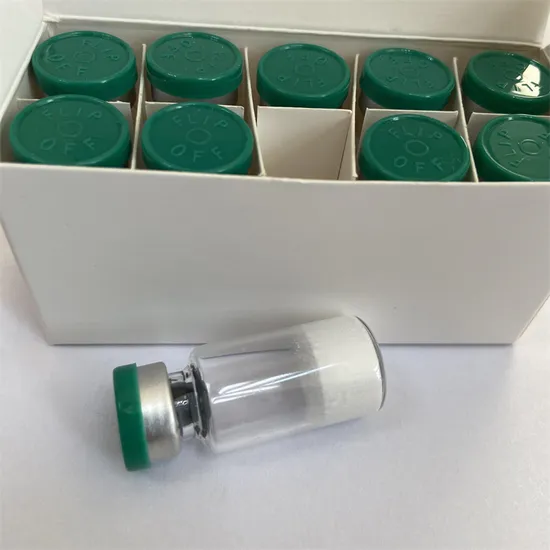
Balixafortide (CAS No. 1051366-32-5) – GMP Grade CXCR4 Antagonist for Research
Original price was: $26.00.$23.00Current price is: $23.00.
Balixafortide (POL6326) is a selective CXCR4 antagonist peptide with IC50 < 10 nM. It demonstrates high selectivity (>1000-fold vs. CXCR7), blocks ?-arrestin recruitment, and mobilizes hematopoietic stem and progenitor cells. Supplied with GMP quality assurance for laboratory research only.(Please contact our staff to place an order or learn about product wholesale prices, specifications, uses and lists)

Description
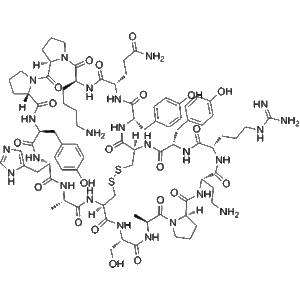
Balixafortide (CAS No. 1051366-32-5), also known as POL6326, is a synthetic peptidic antagonist targeting the chemokine receptor CXCR4. With an IC50 value below 10 nM, Balixafortide has demonstrated exceptional potency and specificity, showing over 1000-fold selectivity for CXCR4 compared with a wide panel of other receptors, including CXCR7.
The molecule’s ability to block ?-arrestin recruitment and calcium flux positions it as a critical research tool for dissecting the mechanisms of chemokine signaling. Its hematopoietic stem and progenitor cell (HSPC) mobilizing properties have made it a focus of scientific investigation in stem cell biology, oncology, and immunology.
Balixafortide is produced in compliance with Good Manufacturing Practice (GMP) standards, ensuring reliable purity, reproducibility, and batch-to-batch consistency for laboratory research applications. With purity exceeding 98%, it is well-suited for cancer biology studies, stem cell mobilization models, and immunological pathway research.
In oncology-focused research, Balixafortide’s ability to antagonize CXCR4 provides insights into tumor metastasis, cancer cell migration, and tumor–microenvironment interactions. It has been studied in combination with chemotherapeutic agents, where its blockade of the CXCR4/CXCL12 axis enhances sensitivity to anticancer treatments.
As a hematopoietic stem cell mobilizing agent, Balixafortide offers a unique platform for investigating alternative transplantation methods, stem cell trafficking, and immune system regeneration. Its selective mechanism allows scientists to examine the distinct role of CXCR4 in stem cell homing and mobilization without interference from other chemokine receptors.
Overall, Balixafortide is regarded as a versatile and powerful research peptide, enabling studies in cancer, stem cell biology, immunology, and pharmacological development.
For laboratory research use only. Not for human administration.
Product Specifications
| Parameter | Specification |
|---|---|
| Product Name | Balixafortide |
| Synonyms | POL6326 |
| CAS Number | 1051366-32-5 |
| Molecular Formula | C63H111N21O12 |
| Molecular Weight | Approx. 1367.67 g/mol |
| Target | CXCR4 receptor antagonist |
| IC50 | < 10 nM |
| Selectivity | ~1000-fold selective vs. CXCR7 and other receptors |
| Mechanism | Blocks ?-arrestin recruitment and calcium flux |
| Appearance | White to off-white powder |
| Purity | ? 98% (HPLC) |
| Grade | GMP compliant |
| Applications | Oncology research, HSPC mobilization, immunology, chemokine receptor biology |
| Storage | –20°C (long-term) in sealed container; avoid repeated freeze-thaw cycles |
| Supplier | GMP-certified manufacturer |
Mechanism of Action & Research Applications
Balixafortide functions as a potent peptidic antagonist of the chemokine receptor CXCR4, a receptor widely implicated in cell migration, tumor progression, metastasis, angiogenesis, and stem cell biology.
CXCR4 Blockade and Cancer Research
CXCR4 is overexpressed in many tumor types, including breast cancer, ovarian cancer, prostate cancer, and hematological malignancies.
By binding selectively to CXCR4, Balixafortide disrupts the CXCR4/CXCL12 (SDF-1) signaling axis, which is responsible for directing cancer cell migration and metastasis.
Blocking CXCR4 leads to reduced cancer cell invasion, impaired tumor–stromal interactions, and potential resensitization of tumors to chemotherapeutic agents.
?-Arrestin and Calcium Flux Inhibition
CXCR4 activation triggers ?-arrestin recruitment, leading to downstream signaling events that regulate tumor growth and immune cell migration.
Balixafortide effectively blocks ?-arrestin activity and calcium signaling with IC50 values below 10 nM, allowing precise exploration of chemokine-driven pathways in research models.
Hematopoietic Stem and Progenitor Cell (HSPC) Mobilization
CXCR4 plays a central role in anchoring HSPCs within the bone marrow niche.
Balixafortide disrupts this retention, mobilizing HSPCs into the peripheral blood, enabling research into alternative transplantation approaches and immune reconstitution models.
It serves as a comparative tool alongside other mobilizing agents, such as plerixafor, in preclinical hematology research.
Immunological Research
CXCR4 is crucial in T-cell trafficking, dendritic cell function, and inflammatory responses.
Balixafortide provides researchers with a selective tool for exploring the impact of CXCR4 blockade on immune homeostasis, viral infection dynamics, and autoimmune disease mechanisms.
Combination Therapy Models
In oncology research, Balixafortide has been investigated in combination with chemotherapeutics, where CXCR4 inhibition sensitizes tumor cells to drug-induced apoptosis.
It also facilitates studies on synergistic drug interactions targeting tumor microenvironmental signaling pathways.
Through these applications, Balixafortide is positioned as a powerful research-grade peptide for advancing understanding in oncology, hematology, immunology, and regenerative medicine.
Side Effects (For Reference in Research Models)
In preclinical research models, Balixafortide has been associated with the following observations:
Hematological effects: Increased mobilization of white blood cells and hematopoietic progenitors.
Immune-related responses: Alterations in T-cell trafficking and immune cell distribution.
Local tissue effects: Transient inflammation or irritation in animal injection models.
Systemic effects: Possible changes in chemokine receptor signaling balance.
These effects are noted from experimental research models only. The compound is not approved for human or veterinary use, and all data should be interpreted within a laboratory context.
Disclaimer
Balixafortide is supplied exclusively for laboratory research use only. It is not intended for human or veterinary applications. All handling should be performed by trained professionals in controlled research environments.
Keywords
Balixafortide, CAS 1051366-32-5, POL6326, CXCR4 antagonist peptide, GMP peptide supplier, HSPC mobilizing agent, chemokine receptor inhibitor, anti-cancer research peptide, stem cell mobilization research, CXCR4/CXCL12 axis inhibitor
Additional information
| Weight | 0.7 kg |
|---|---|
| Dimensions | 53 × 26 × 53 cm |
2 reviews for Balixafortide (CAS No. 1051366-32-5) – GMP Grade CXCR4 Antagonist for Research
Related products
Top Quality Peptides Lyophilized Powder – Reta Trutide Fitness and Weight Loss Peptide in Stock | Factory Wholesale
Peptides Function Weight Loss Peptides Moq:10 vials per box Original price was: $38.00.$22.00Current price is: $22.00.Semaglutide Raw Material Factory: Low-Price Wholesale for High-Purity Peptides
Semaglutide Compound CID: 56843331 MF: C187H291N45O59Purity: 99%
Form: Lyophilized powder
Dosage Options: 5mg, 10mg, 15mg per vial
Packaging: Secure box packaging
Shelf Life: 2 years (store in a cool, dry place)
MOQ: 1 box
99% Pure Peptide Reta Trutide Epitalon in Stock Factory wholesale
Peptide Reta Purity 99%Over Original price was: $39.00.$26.00Current price is: $26.00.Retatrutide Raw Material Factory: Low-Price Wholesale for High-Purity Peptides
Retatrutide MOQ 1 Box Source Dry Powder Original price was: $38.00.$22.00Current price is: $22.00.




carame –
Overall, a reliable supplier with stable product quality.
Palend –
We are delighted to be working with reputable suppliers,it would be even better if the logistics progress could be improved.