
No products in the cart.
Sale
Palmitoyl tetrapeptide-20 TFA (PTP20 TFA) | Biomimetic Peptide Agonist for Hair Pigmentation and Anti-Graying
Original price was: $3.00.$2.00Current price is: $2.00.
Palmitoyl tetrapeptide-20 TFA (PTP20 TFA) is a synthetic biomimetic peptide that acts as an α-MSH agonist. It enhances catalase and SIRT1 activity, promotes melanin production, and delays hair graying.

Description
Product Description
Palmitoyl tetrapeptide-20 TFA (PTP20 TFA) is a bioengineered cosmetic peptide designed to mimic the natural activity of alpha-melanocyte-stimulating hormone (α-MSH). This biomimetic compound activates the MC1-R signaling pathway, thereby promoting melanin synthesis and restoring natural hair pigmentation. Through the enhancement of catalase enzyme activity, Palmitoyl tetrapeptide-20 TFA (PTP20 TFA) reduces the accumulation of hydrogen peroxide (H₂O₂) — one of the key biochemical triggers of hair graying. Concurrently, it upregulates SIRT1 activity, a molecular factor associated with cellular longevity and oxidative stress resistance.
In cosmetic peptide research, Palmitoyl tetrapeptide-20 TFA (PTP20 TFA) has become a focus for anti-aging and anti-graying formulations due to its dual effects on melanin regulation and oxidative defense. Its mechanism offers an advanced biomimetic approach that directly addresses the molecular causes of pigment loss in hair follicles. The peptide is often used in hair pigmentation studies and topical formulations that explore rejuvenating or restorative functions for the scalp.
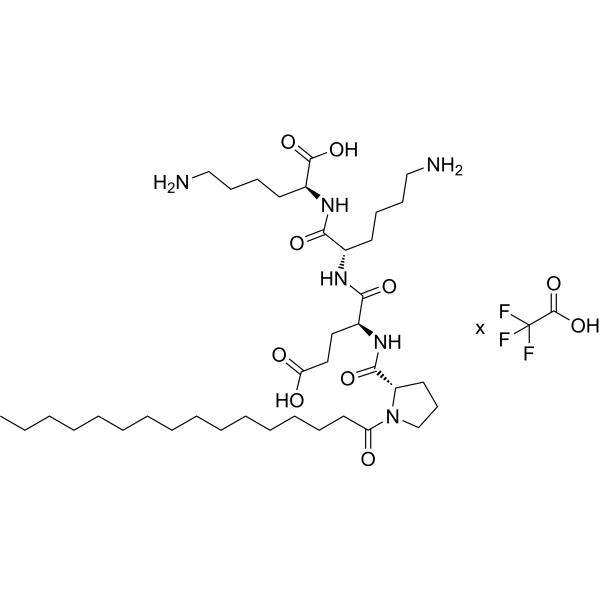
Structurally, Palmitoyl tetrapeptide-20 TFA (PTP20 TFA) contains a lipidated tetrapeptide backbone that enhances transdermal penetration, making it suitable for topical application research. Its palmitoyl modification improves peptide stability, lipophilicity, and membrane affinity, which ensures better bioavailability when incorporated into cosmetic emulsion systems or carrier complexes. Researchers utilize this peptide as a molecular probe to study pigment cell signaling, oxidative damage reduction, and melanogenic pathway restoration.
When used in combination with antioxidants or growth factor mimetics, Palmitoyl tetrapeptide-20 TFA (PTP20 TFA) shows synergistic results in stimulating melanin production while protecting follicular stem cells from oxidative degradation. Laboratory data suggest that this peptide may help maintain the vitality of melanocytes and delay age-related depigmentation processes, making it an important tool in modern hair pigment biology and anti-aging cosmetic research.
The research applications of Palmitoyl tetrapeptide-20 TFA (PTP20 TFA) span multiple areas of cosmetic science, including scalp rejuvenation, hair pigmentation restoration, and dermal tissue regeneration. It provides a reliable biomimetic model for understanding how neuropeptides influence follicular melanogenesis. In topical formulation studies, PTP20 TFA is also valued for its compatibility with other peptides, vitamins, and herbal actives used in the development of hair pigmentation and anti-gray prototypes.

Product Specifications
| Property | Description |
|---|---|
| Product Name | Palmitoyl tetrapeptide-20 TFA (PTP20 TFA) |
| CAS Number | — |
| Synonyms | PTP20 trifluoroacetate; Palmitoyl-tetrapeptide-20 TFA |
| Purity | ≥99% |
| Molecular Formula | CₓₓHₓₓNₓₓOₓₓF₃ (approx., depending on peptide sequence modification) |
| Appearance | White to off-white lyophilized powder |
| Solubility | Soluble in water or aqueous buffer |
| Storage Conditions | -20°C, protected from light and moisture |
| Stability | Stable for 24 months under proper storage |
| Category | Cosmetic Peptide, Biomimetic Peptide |
| Applications | Hair pigmentation, anti-graying research, antioxidant activity studies, scalp rejuvenation |
| Intended Use | For laboratory research use only |
Mechanism of Action
Palmitoyl tetrapeptide-20 TFA (PTP20 TFA) operates as a biomimetic α-MSH agonist. The α-MSH pathway plays a pivotal role in melanogenesis — the process by which melanocytes produce melanin pigments. Activation of the MC1-R (melanocortin-1 receptor) triggers a cAMP-dependent signaling cascade that enhances tyrosinase activity, a key enzyme involved in melanin biosynthesis.
By binding to the MC1-R receptor, Palmitoyl tetrapeptide-20 TFA (PTP20 TFA) stimulates melanin production in melanocytes. This peptide shows remarkable potency in upregulating melanogenic gene expression, increasing the formation of eumelanin, and restoring pigment loss associated with oxidative stress or aging. The reported AC₅₀ value of 0.16 nM reflects its high receptor-binding efficiency and strong mimicry of α-MSH biological function.
Furthermore, Palmitoyl tetrapeptide-20 TFA (PTP20 TFA) enhances catalase enzyme activity within hair follicle cells. Catalase decomposes hydrogen peroxide (H₂O₂), preventing oxidative accumulation that can damage melanin-producing cells. Elevated H₂O₂ levels are known to bleach natural hair pigments by oxidizing methionine residues in tyrosinase and disrupting the melanogenic process. By neutralizing H₂O₂, the peptide helps preserve normal pigmentation processes and protect cellular proteins from oxidative damage.
Another crucial aspect of the mechanism is the upregulation of SIRT1 (Sirtuin 1), a nicotinamide adenine dinucleotide (NAD⁺)-dependent deacetylase that regulates mitochondrial function and cellular stress responses. SIRT1 activation contributes to enhanced DNA repair, mitochondrial biogenesis, and overall cell survival, thereby supporting long-term follicular health. This effect correlates with delayed hair graying and improved hair vitality.
Through these interconnected molecular pathways — MC1-R activation, catalase stimulation, and SIRT1 upregulation — Palmitoyl tetrapeptide-20 TFA (PTP20 TFA) provides a multifaceted protective and regenerative mechanism. It acts not only on melanogenic cells but also on the oxidative defense systems of the scalp environment.
Researchers investigating this peptide have noted its value as a biomimetic tool for understanding aging-associated pigment loss, oxidative stress control, and neuroendocrine regulation in dermal tissues. Its broad compatibility with other cosmetic actives such as copper tripeptides, arginine derivatives, and antioxidant vitamins further expands its potential for synergistic applications in hair care research.

Side Effects
Palmitoyl tetrapeptide-20 TFA (PTP20 TFA) is a synthetic cosmetic peptide intended strictly for in vitro and topical research use. Current data indicate that it exhibits low cytotoxicity at standard experimental concentrations. In laboratory tests, it demonstrates excellent biocompatibility with keratinocytes, fibroblasts, and melanocytes.
As with all bioactive peptides, side effects in experimental systems may depend on formulation, concentration, and exposure duration. At excessive concentrations, transient irritation or cellular stress responses may be observed in sensitive cell lines. Researchers are advised to validate appropriate dose ranges and conduct control assays to ensure consistent results.
Because Palmitoyl tetrapeptide-20 TFA (PTP20 TFA) is not a therapeutic compound, it should not be applied directly to human or animal skin outside of controlled research environments. No systemic or clinical side effects have been reported in laboratory applications, and the peptide remains considered safe under standard experimental conditions.
Keywords
Palmitoyl tetrapeptide-20, PTP20 TFA, biomimetic peptide, α-MSH agonist, melanin synthesis peptide, anti-gray peptide, hair pigmentation research, antioxidant peptide, peptide supplier China, cosmetic peptide manufacturer, bulk peptide powder, ≥99% purity, OEM peptide production.
Shipping Guarantee
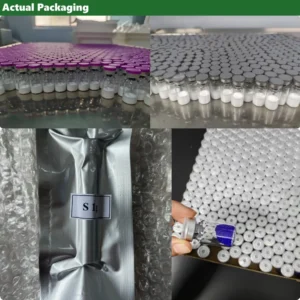
All Palmitoyl tetrapeptide-20 TFA (PTP20 TFA) shipments are handled using validated cold-chain logistics to preserve peptide integrity. Each package is sealed in moisture-proof containers with secondary protective wrapping and continuous temperature monitoring. Products are shipped via express international couriers with full tracking and insurance coverage.
Trade Assurance
We ensure product authenticity, verified ≥99% purity, and compliance with analytical standards (HPLC, MS, and NMR). Each batch is supplied with a Certificate of Analysis (CoA). Our trade assurance policy guarantees replacement or refund for any deviation from listed specifications.
Payment Support
We provide flexible and secure global payment options to support international research transactions. Accepted payment methods include PayPal, major credit cards (Visa, MasterCard, American Express), telegraphic transfer (T/T), and cryptocurrencies (USDT, Bitcoin, Ethereum). All transactions are protected by industry-standard encryption and verified payment gateways to ensure confidentiality and fund security.
Disclaimer
All Palmitoyl tetrapeptide-20 TFA (PTP20 TFA) products listed are intended for laboratory research use only and not for human or veterinary use. They are not drugs, medical devices, or diagnostics and should not be administered to humans or animals. Researchers must handle all materials in accordance with institutional biosafety and chemical safety guidelines. The information provided is for scientific reference only and does not imply therapeutic efficacy, safety, or regulatory approval.

Additional information
| Weight | 1.5 kg |
|---|---|
| Dimensions | 62 × 58 × 62 cm |
What is Palmitoyl tetrapeptide-20 (PTP20) TFA?
It is a biomimetic α-MSH agonist peptide that promotes melanin synthesis and reduces oxidative stress in hair pigmentation research.
What are the main research applications of PTP20 TFA?
It is used in studies of hair pigmentation, anti-graying mechanisms, and oxidative enzyme regulation in scalp tissues.
Does PTP20 TFA contain any toxic substances?
No. It is a synthetic peptide with high purity (≥99%) and exhibits low cytotoxicity under laboratory conditions.
Is this peptide suitable for topical formulation studies?
Yes, the palmitoyl modification enhances lipophilicity, making it suitable for transdermal absorption studies.
Can PTP20 TFA be combined with other cosmetic peptides?
Yes. It is compatible with peptides such as copper tripeptide-1, acetyl hexapeptide-8, and palmitoyl tripeptide-5.
Who supplies this peptide?
We are a professional factory peptide supplier and research peptide manufacturer in China, offering OEM peptide production and bulk peptide powder supply.
What is the purity level?
All batches are guaranteed ≥99% purity verified by HPLC, MS, and NMR.
What is the recommended storage condition?
Store at -20°C in a dry, dark environment to maintain long-term stability.
Does it come with analytical documentation?
Yes, every batch is provided with a Certificate of Analysis (CoA).
Can this peptide be used for human application?
No. It is intended strictly for laboratory research use only.
How is shipping handled?
We provide validated cold-chain logistics with moisture-proof packaging and international tracking.
Can I order in bulk?
Yes. We support OEM and bulk peptide production with factory-direct pricing for peptide wholesale China.
What payment methods are available?
PayPal, T/T, cryptocurrency, and major credit cards are accepted globally.
What are the advantages of sourcing from a China peptide manufacturer?
Lower cost, verified quality, and scalable OEM customization for cosmetic research projects.
Is there trade assurance for quality issues?
Yes, replacement or refund is guaranteed if the product does not match listed specifications.
Related products
SPACE Peptide | CAS 1621717-95-0 | Skin-Penetrating Peptide for Enhanced Cosmetic Ingredient Delivery
SPACE Peptide (CAS 1621717-95-0) is a skin-penetrating peptide (SPP) designed to enhance the transdermal delivery of macromolecules such as hyaluronic acid. It is widely used in cosmetic research for improving active ingredient absorption and optimizing topical formulation performance. Original price was: $3.00.$1.00Current price is: $1.00.Nonapeptide-1 acetate | CAS 158563-45-2 | Melanin-Inhibiting Peptide for Skin Brightening and Pigmentation Research
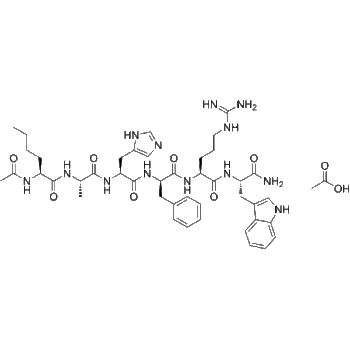
Nonapeptide-1 acetate (Melanostatine-5) is a synthetic cosmetic peptide that selectively inhibits α-MSH-induced melanogenesis. It is widely used in research for skin brightening, melanin inhibition, and pigmentation modulation, making it a core molecule in dermatological peptide studies. Original price was: $26.00.$22.00Current price is: $22.00.Acetyl hexapeptide-1 acetate | CAS 2828433-36-7 | Anti-Wrinkle Cosmetic Peptide for Skin Aging Research
Acetyl hexapeptide-1 acetate (Melitane acetate) is a bioactive cosmetic peptide designed for anti-wrinkle and skin aging research. It modulates neuromuscular signaling to reduce expression lines and supports laboratory studies on skin relaxation and rejuvenation. Original price was: $3.00.$2.00Current price is: $2.00.Dipeptide-2 | CAS 24587-37-9 | Bioactive Cosmetic Peptide for Anti-Aging and Skin Firming Research
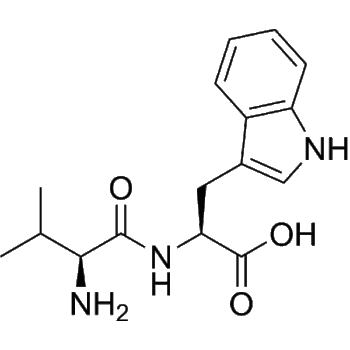
Dipeptide-2 (N-Valyltryptophan; Val-Trp) is a synthetic bioactive peptide widely studied for its anti-aging and skin-rejuvenating properties. It supports lymphatic drainage and skin firmness, making it a valuable ingredient in cosmetic research focused on reducing puffiness and under-eye bags. Original price was: $3.00.$2.00Current price is: $2.00.

Reviews
There are no reviews yet.